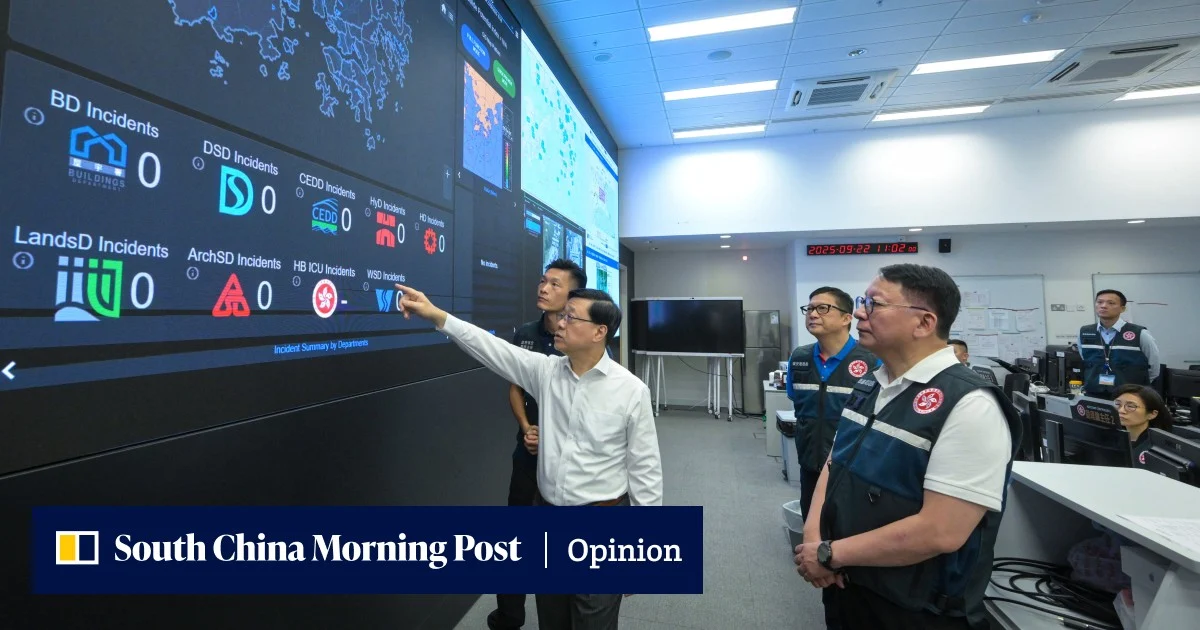
行政长官李家超提出的“AI城市大脑”构想既大胆又及时。这一整合性系统若能把交通、公共工程、环境监测及应急响应等各领域的数据联结起来,定能助力香港更主动地防范风险,并提升各项服务的协调效率。
Chief Executive John Lee Ka-chiu’s vision of an “AI city brain” is bold and timely. An integrated system linking data across transport, public works, environmental monitoring and emergency response could help Hong Kong manage risks more proactively and coordinate services more effectively.
这一举措值得高度肯定。不过它也引出了一个关键问题:如果城市大脑无法理解当地民众的交流方式,它又怎能真正读懂这座城市呢?
The initiative is highly commendable. It also raises a critical question: can a city brain truly understand a city if it does not understand how its people communicate?
事实上,在香港,人们的交流极少只使用单一语言。像我这样的人每天都会在粤语、普通话、英语及其他语言之间自如切换,甚至在一段对话中也会频繁转换。这并非需要解决的问题,相反,这正是香港最大的优势所在——这座城市拥有双语双文甚至三语多文的人才储备。
The truth is that communication is rarely monolingual in Hong Kong. People like myself move between Cantonese, Mandarin, English and other linguistic resources every day, often within a single conversation. This is not a problem to be solved. On the contrary, it is one of Hong Kong’s greatest strengths. The city’s advantage lies in its biliterate and trilingual population.
政策制定者在探讨多语言环境时,往往只关注人们能说多少种语言。但同样重要的问题是:人们如何在不同语言间灵活切换?只会多种语言的人只是具备多种语言能力而已;而善于跨语言交流的人则能根据语境、交流对象及目的动态调用各种语言资源。语言使用并非由若干彼此独立的“心理模块”组成,而是一个灵活的体系,能帮助人们实时传递信息、建立关系并表达自我身份。
When policymakers discuss multilingualism, they often focus on how many languages people can speak. An equally important question is how people move between them. A multilingual person possesses multiple languages. A translanguaging person draws on them dynamically according to context, audience and purpose. Language use is not like a fixed set of separate mental compartments. It is a flexible system that allows people to convey and negotiate meaning, relationships and identity in real time.
这种区别绝非仅停留在字面上。基于多语言理念设计的系统可能会将来电者标记为“说粤语者”或“说英语者”,并据此安排处理流程;而基于跨语言交流理念设计的系统则会意识到:同一个来电者完全有可能在一句话里切换多种语言,这种语言转换本身也可能传递着特定信息。前者将语言视为一种固定属性,后者则将其视作一种动态可调用的资源。
The distinction is not merely semantic. A system built around multilingualism might classify a caller as being “Cantonese-speaking” or “English-speaking” and route the call accordingly. A system built around translanguaging would recognise the same caller might move between languages within a single sentence and that the movement itself could carry information. The first approach treats language as a fixed attribute, the second one treats it as a dynamic resource.
这一点至关重要,因为拟建的“城市人工智能大脑”不仅会与基础设施互动,还会与人类行为产生交互。因此,政府在开发过程中应当吸纳语言学家和认知科学家参与。语言并不仅仅是另一种数据集,它是人们体验公共服务、报告紧急情况以及表达自身需求的主要途径之一。
This matters because the proposed AI city brain will interact with human behaviour, not just infrastructure. The government should therefore include linguists and cognitive scientists in its development. Language is not simply another data set. It is one of the primary ways through which people experience public services, report emergencies and communicate their needs.
为理解这一点的实际意义,我们不妨设想一个真实的紧急场景:台风来袭时,一家酒店的接待员拨打了999报警电话。她起初使用粤语,随后短暂切换至英语来描述大楼的技术细节,最后又回到粤语以安抚周围惊慌的住客。她所传递的信息绝不仅仅局限于语言本身;语言的转换本身也反映了当时的情境、紧急程度以及人际互动关系。
To see why this matters in practice, consider a realistic emergency scenario. During a typhoon, a hotel receptionist calls 999. She begins in Cantonese, switches briefly to English to describe technical details about the building, then returns to Cantonese to reassure frightened guests nearby. The information conveyed is not merely linguistic. The language shifts themselves reveal context, urgency and social dynamics.
若人工智能系统仅按单一语言类别进行设计,它或许能捕捉到话语内容,却可能遗漏那些在关键时刻能挽救生命的关键信息。具备语言感知能力的系统不应取代人工接线员,而应保留通话中的语言语境,标记出可能出现的误解,并建议相应的澄清问题。这并非试图用机器模拟同理心,而是为了向决策者提供更全面的信息,助其做出更精准的判断。
An AI system designed around rigid monolingual categories might capture the words but miss part of the meaning that could help save lives at a critical moment. A language-aware system should not replace the human operator. It should preserve the linguistic context of the call, flag possible misunderstandings and suggest clarification questions. This is not about automating empathy. It is about giving human decision-makers better information so they can exercise judgment more effectively.
紧急事务管理尤为关键,因为“城市人工智能大脑”的首期建设重点正是保安局的紧急监测与支援中心。在危机时刻,人们的沟通方式往往变得更加灵活而非僵化。研究表明,人在压力状态下未必会刻意选择某种语言,而是会调用当下最容易获取的语言资源。
Emergency management is particularly relevant because the first phase of the AI city brain focuses on the Security Bureau’s Emergency Monitoring and Support Centre. In crises, communication can become more fluid rather than less. Research suggests people do not necessarily choose languages deliberately under stress. They draw on whatever resources are most accessible at the moment.
这并不意味着人工智能(AI)应当从任何语言转换中推断人们的意图。相反,它应当识别出多语言交流可能带来的不确定性,保留原始表述内容,并鼓励人们进一步澄清而非过早下结论。在应急响应场景中,识别不确定性其实与准确理解语义同样重要。
This does not mean artificial intelligence (AI) should infer people’s intentions from every language shift. Rather, it should recognise when multilingual communication creates uncertainty, preserve the original wording and encourage clarification rather than premature conclusions. In emergency response, recognising uncertainty can be just as important as recognising meaning.
这一点对于弱势群体而言尤为重要。公共服务体系并非仅为那些能轻松适应其运作方式的多数人而设计,它也必须服务于那些在复杂环境下面临诸多困难的人群。绝不能让任何人被排除在外。
This is especially important for vulnerable populations. Public systems are not designed only for the majority who can navigate them easily. They must also serve those who struggle most when circumstances become difficult. No one should be left behind.
这一逻辑同样适用于应急响应之外的领域。以澳门的博彩业为例:一名荷官可能在短时间内分别与讲普通话的游客、讲英语的观光客以及讲粤语的本地人交流。这项工作所需的技能并非仅仅是掌握三种语言,更在于能在不同语言间自如切换的同时妥善处理各方预期、人际关系及文化差异。
The same logic extends beyond emergency response. Consider Macau’s gaming sector. A dealer might interact with a Mandarin-speaking visitor, an English-speaking tourist and a Cantonese-speaking local within a short period. The skill involved is not simply speaking three languages. It is moving between them smoothly while managing expectations, relationships and cultural cues.
随着人工智能系统越来越多地应用于客户服务、公共服务及决策流程,它们在大湾区各类场景中都会频繁遇到类似情况。这些系统是仅按语言类别对人群进行分类,还是应当准确反映现实生活中语言的实际使用方式呢?
As AI systems become more involved in customer support, public services and decision-making, they will increasingly encounter similar patterns across the Greater Bay Area. Should these systems merely classify people according to language categories, or should they recognise how language is actually used in real life?
香港具备应对这一挑战的独特优势。我们的竞争力不仅体现在众多居民能掌握多种语言,更在于人们惯于在语言、文化及职业领域间灵活切换。粤语构成了我们日常生活的根基,英语将这座城市与世界紧密相连,而普通话则助力香港融入国家发展大局。这座城市的诸多成功,恰恰源于人们能在不同领域间自如穿梭,而非固守于单一领域。
Hong Kong is uniquely placed to address this challenge. Our competitive advantage is not simply that many residents know more than one language. It is that people routinely connect linguistic, cultural and professional worlds. Cantonese anchors our everyday life, English connects the city globally and Mandarin links Hong Kong to national development. Much of the city’s success comes from moving between these worlds rather than remaining within one of them.
一个高效的人工智能城市大脑应当反映这一现实。能够理解多语言交流的城市大脑更有可能做出明智的决策,因为它正是基于人们实际的生活、工作与互动方式而构建的。
An effective AI city brain should reflect that reality. A city brain that understands multilingual communication is more likely to make sound decisions because it is built around how people actually live, work and interact.
香港未来的竞争力或许并不取决于能说多少种语言,而在于能否认识到在不同语言间自由切换的价值。倘若我们希望人工智能城市大脑能更好地服务并理解这座城市,它也必须理解那些塑造了这座城市的民众。
Hong Kong’s future competitiveness might depend not on speaking more languages but on understanding the value of moving between them. If our AI city brain is intended to serve and understand the city better, it should also understand the people who make the city what it is.