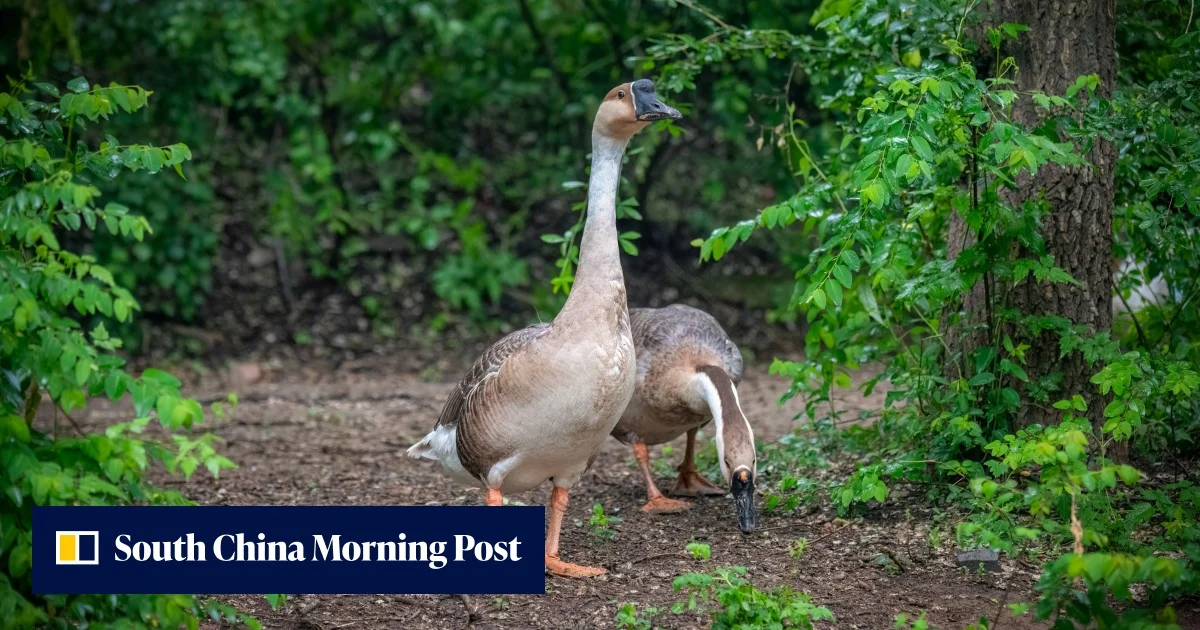
一项研究发现,气候变化和农业发展已将一个具有独特迁徙模式的新雁群引入中国。
Climate change and agricultural development have brought a new goose population to China with unique migratory patterns, a study has found.
在中国科学院网站上发表的一篇文章中,中国科学院动物研究所的研究人员表示,他们发现了一个“基因上独特”的雁群,该雁群在过去一个世纪里出现在北京。
In an article on the Chinese Academy of Sciences website, researchers from the CAS Institute of Zoology said they had discovered a “genetically distinct” population of swan geese that emerged in Beijing over the past century.
研究人员称,这些雁群的出现时间与20世纪初该地区的环境变化相吻合——即气候变暖、稻田扩张以及灌溉农业的发展。
They said the timing of their arrival coincided with environmental shifts in the region during the early 20th century – namely climate warming, the expansion of rice fields and the development of irrigated agriculture.
9月17日发布的文章指出:“这项研究为理解候鸟如何响应快速环境变化的潜在机制提供了新证据,也为东亚地区候鸟水鸟的保护与管理提供了科学依据。”
“This study provides new evidence for understanding the underlying mechanisms of how migratory animals respond to rapid environmental changes, and also offers a scientific basis for the conservation and management of migratory waterbirds in East Asia,” according to the article posted on September 17.
研究人员于6月中旬在同行评审期刊《科学通报》上发表了他们的研究成果。该研究由中国科学院动物研究所的国家动物生物多样性保护与综合害虫管理重点实验室、北京麋鹿生态研究中心及其他机构的科学家共同完成。
The researchers published the findings of their study in the peer-reviewed journal Science Bulletin in mid-June. It was conducted by scientists from the CAS institute’s State Key Laboratory of Animal Biodiversity Conservation and Integrated Pest Management, the Beijing Milu Ecological Research Centre, and other institutions.
雁是一种分布于东亚的候鸟。其野生种群主要在蒙古、俄罗斯和中国东北地区繁殖,并沿内陆和沿海路线向南迁徙越冬。由于种群数量不断减少,雁已被国际自然保护联盟列为濒危物种。
The swan goose is a migratory species endemic to East Asia. Its wild populations mainly breed in Mongolia, Russia and Northeast China, migrating south for the winter along inland and coastal routes. Due to its dwindling population, the swan goose is listed as an endangered species by the International Union for Conservation of Nature.
尽管历史记录显示该物种从未在北京本地繁殖,但论文指出,近期的实地调查表明情况发生了显著变化。
While historical records show no evidence of the species breeding locally in Beijing, recent field surveys indicate a dramatic shift, according to the paper.
如今,北京周边已形成了稳定的繁殖种群,其迁徙路线与该地区其他区域已记录的雁群明显不同。
Breeding populations are now established around the capital and their migratory routes differ markedly from previously recorded swan goose populations elsewhere in the region.
为了追溯北京鹅群的起源,研究人员对从北京和蒙古国的野生天鹅以及家禽鹅中收集的样本进行了全基因组重测序。
To trace the origins of the Beijing flock, the researchers conducted whole-genome resequencing on samples collected from wild swan geese in Beijing and Mongolia, as well as from domestic geese.
遗传数据显示,北京的这些鸟与家禽和其他野生种群都显示出明显的分歧,但它们仍然与蒙古国东部和中国东北地区的野生谱系最为亲密。
The genetic data revealed that the Beijing birds show a clear divergence from both domestic and other wild populations, though they remain most closely related to wild lineages in eastern Mongolia and Northeast China.
研究人员得出结论,北京种群可能是在过去100年内从蒙古东部的祖先种群中分离出来的。"这种分歧的时间恰好与20世纪初以来北京及其周边地区的重大环境变化相吻合,"来自动物所的研究人员写道,强调了该地区的气温升高和灌溉农田的快速扩张。这些变化可能为鹅群建立新的本地种群创造了理想的生态条件。
The researchers concluded that the Beijing population had likely splintered from their eastern Mongolian ancestors within the last 100 years. “The timing of this divergence aligns with significant environmental changes in Beijing and its surrounding areas since the early 20th century,” the Institute of Zoology researchers wrote, highlighting regional warming and the rapid expansion of irrigated agricultural land. These shifts likely created the ideal ecological conditions for the geese to establish a new local population.
为了追踪这些鸟的习性变化,研究人员在2020年和2022年的繁殖季节,在北京的米鹿公园——一个自然湿地栖息地——给16只天鹅配戴了GPS发射器。
To track the birds’ altered habits, researchers fitted 16 swan geese with GPS transmitters at Beijing’s Milu Park – a natural wetland habitat – during the 2020 and 2022 breeding seasons.
截至2024年11月,团队已经收集了163,887个追踪数据点。监测揭示了一种明显的"部分迁徙"模式:虽然三分之二的鸦群按照预期在秋天向南迁徙,但剩下的三分之一留在北京过冬。
By November 2024, the team had amassed 163,887 tracking data points. The monitoring exposed a distinct “partial migration” pattern: while two-thirds of the flock migrated south in the autumn as expected, the remaining third stayed in Beijing to overwinter.
鉴于天鹅在中国被列为二类国家重点保护动物——涵盖稀有或濒危物种——该论文得出结论,理解这些迁徙策略和种群动态的快速变化对于有效的保护规划至关重要。
With the swan goose listed as a Class II state-protected animal in China – covering rare or endangered species – the paper concluded that understanding these rapid shifts in migratory strategies and population dynamics was critical for effective conservation planning.