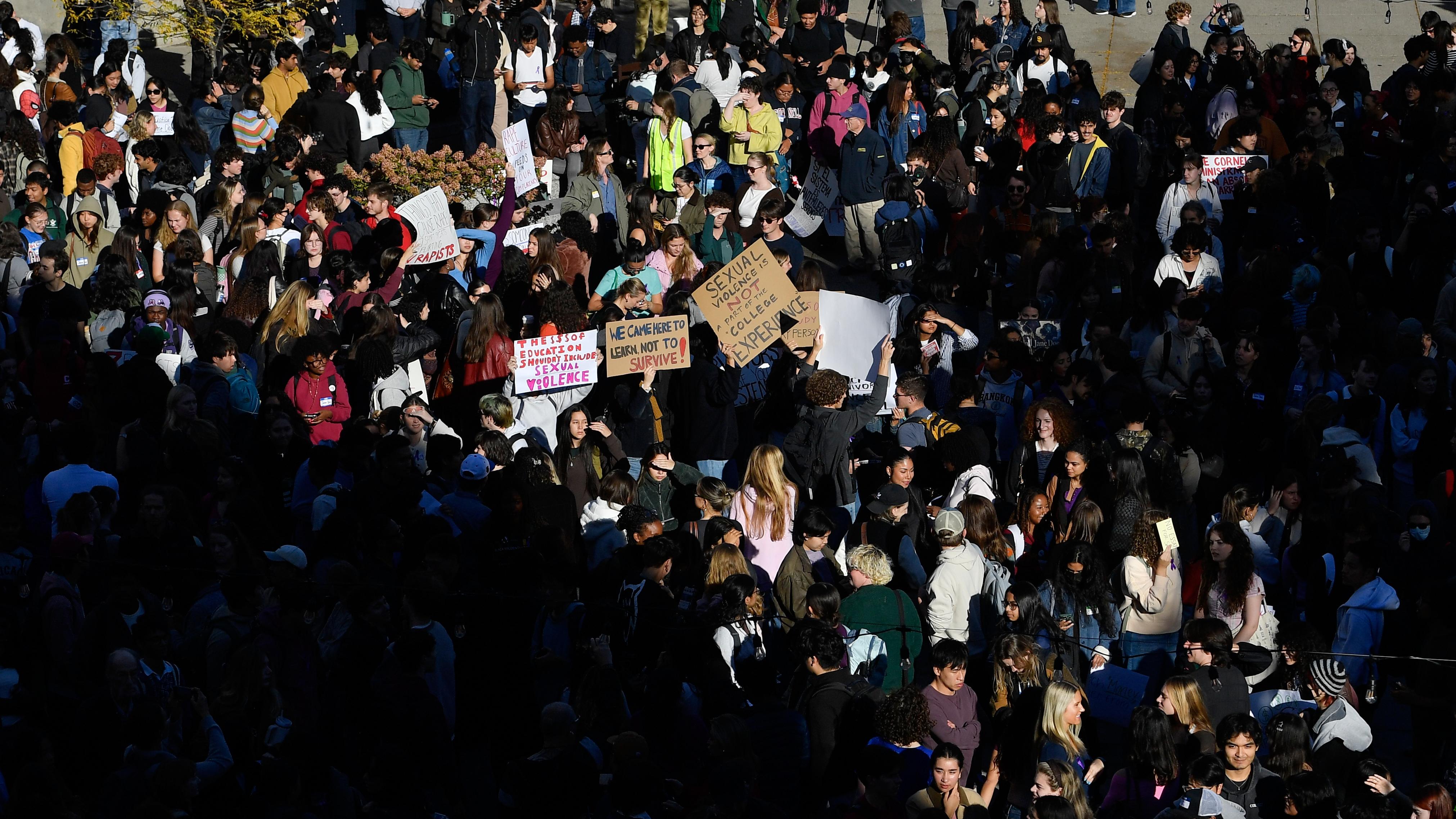
一起诉讼指控称,2024年康奈尔大学Chi Phi兄弟会的数名成员对一名女学生下药并实施轮奸,此事引发了各界呼吁加强对校园内兄弟会的监管,甚至要求予以取缔。
A lawsuit alleging the drugging and gang rape of a student by seven members of Cornell University's Chi Phi fraternity in 2024 has led to calls for greater scrutiny of fraternities on campus, and even banning them.
近几周来,这起案件引起了全国关注。据披露,在涉嫌参与犯罪的7名男子中,仅有两人被开除。康奈尔大学及当地执法部门均因处理不当而遭到批评。
The case has drawn national attention in recent weeks after it was revealed that only two of the seven men alleged to have been involved were expelled. Both the university and local authorities have come under criticism for their handling of the case.
周六,康奈尔大学校长迈克尔·科特利科夫在致全校师生的视频讲话中表示,学校将“认真审视兄弟会与姐妹会在校园生活中的作用”,并采取其他措施以营造更加安全的校园环境。周一,在校园内举行的抗议活动中,人们高呼“取缔兄弟会!”《时代周刊》就此案、兄弟会的特殊性以及为何难以对其进行有效管控等问题,采访了《The Company He Keeps: A History of White College Fraternities》一书的作者、威斯康星大学麦迪逊分校性别与女性研究系主任兼教授尼克·西雷特。本次访谈经过删减与润色,以确保篇幅适中且表述清晰。
Cornell President Michael Kotlikoff said in a video message to the university community on Saturday that the school would take “a serious look at the role of fraternities and sororities in campus life” among other steps aimed at creating a safer campus environment. At a protest on the university campus on Monday, people chanted “Ban the frats!”TIME spoke to Nick Syrett, author of The Company He Keeps: A History of White College Fraternities and chair and professor of gender and women’s studies at the University of Wisconsin-Madison, about the case, what makes fraternities different, and why they have proved so hard to rein in. This interview has been edited for length and clarity.
《时代周刊》:您曾撰写过关于白人大学兄弟会的著作。这起案件中有哪些内容让您感到震惊或意外呢?
TIME: You've written a book about white college fraternities. What about this case shocked or surprised you, if anything?
此类事件在兄弟会的历史上屡见不鲜。至少从上世纪70至80年代起,就有多起关于兄弟会成员对醉酒或失去行动能力的女性实施轮奸的报道。因此,此类事件再次发生也并不令人意外。
There's a long history of events like this happening in fraternities. Since at least the 1970s and 1980s, there have been incidents of gang rape of intoxicated, incapacitated women in fraternity houses. So it is not surprising that it has happened once again.
《时代周刊》:兄弟会是否存在某些特殊特质,从而助长了这类行为的发生呢?
TIME: Is there something unique about fraternities that encourages this kind of behavior?
我确实认为兄弟会具有一些独特之处。其中一点就是这类组织的单一性别属性。除了大学校园里的运动队之外,兄弟会就是仅有的单一性别组织;加入其中的男性都明确表示希望身处这样一个单一性别的环境中,从而以特定的方式展现自己的男子气概。他们清楚这些组织素以举办派对、酗酒、实施入会仪式折磨新成员以及成为结识异性的场所而著称,因此有些男性选择加入,有些则不会。
I do think there is something particular about fraternities. One of the things is the single-sex nature of the organization. Aside from sports teams on college campuses, these are the only single-sex organizations, and the men who join them have decided that they want to be in a single-sex organization that allows them to live out their masculinity in particular kinds of ways. They know that these organizations already have a reputation for partying, for drinking, for sometimes hazing, for being places where you can meet women, and so some men join them and other men don't.
不过一旦加入之后,压力便会陡增,因为组织内部极其强调性、约会以及随意的性关系。有些兄弟会甚至要求成员汇报自己与谁发生过性关系,大家也常谈论这类话题,这被视为彰显男子气概的一种方式。
But when they get in the organizations, the pressure ratchets up because there is an emphasis upon sex and dating and hooking up. That is some fraternities' mandate that like people report who they've hooked up with, who they've had sex with, they talk about these things. It's a way to enhance masculinity.
另一个特点是兄弟会在校园里拥有极大的影响力。大多数兄弟会都拥有自己的会所,这意味着校方很难对其实施有效监管。
The other thing is fraternities just have lots of power on campus. Most of them own their own houses, which means they don't have lots of oversight from university officials.
问:康奈尔大学事件之后,有人呼吁加强对兄弟会的监管,甚至予以取缔。您认为这些监管措施应当是什么样的呢?
TIME: In the wake of the Cornell case, there have been calls for greater regulation and even bans on fraternities. What do you think those regulations would look like, or should look like?
答:很难说。首先需要明确的是,所有兄弟会及姐妹会都至少受到一定程度的监管。它们属于经校方认可的学生组织,必须遵守诸多规定,尤其是关于入会流程的相关规定。此外,兄弟会与姐妹会之间,或是它们与非会员学生共同举办社交活动时,通常也都需要事先获得校方许可。
It's hard to say. I think one of the things to know is that all fraternities and sororities are regulated at least to a certain degree. That is, they're recognized student organizations. They have to abide by certain rules that often have to do with things like rushing and pledging—that is how people become members of the organizations in the first place. Social events where fraternities and sororities mix with one another and with unaffiliated members are usually at leasted with university officials.
问题在于,当大学采取极端措施——彻底禁止某个兄弟会进入校园时,它就失去了对该组织的监管能力,因为此时该组织已不再属于官方认可的团体。不过总体而言,这些兄弟会都拥有自己的会所,因此只要该兄弟会的全国性组织仍承认它,任何大学的男生都可以自愿选择加入并入住会所。这种情况其实屡见不鲜。就在两周前,我所在的威斯康星大学就有一家兄弟会因涉及非法体罚行为而遭到警方查处。
The difficulty here is that when a university does the ultimate thing, which is to ban an organization from campus altogether, it loses any ability to regulate because now they're not an official organization. But by and large, the fraternities own their own houses, and so young men who are students at any university can still choose to become members of that fraternity and live in that house if they want to, if that chapter remains recognized by its national organization. So we see that happen with some regularity. There's a fraternity right here at my school, the University of Wisconsin, that two weeks ago the police busted for illegal hazing.
这家兄弟会早在10年前就未被学校承认,却依然在招收新成员、让他们宣誓入会并实施体罚,甚至违法乱纪。
That fraternity hasn't been recognized by the university for 10 years, but it's still admitting members, having them pledge, hazing them, and breaking the law.
问:您提到的这些问题在兄弟会中有多普遍呢?是仅存在于少数不良兄弟会中,还是说这已然成了兄弟会文化的一部分?
TIME: How widespread are these issues that you’re talking about among fraternities? Is it limited to a few bad fraternities, or is this kind of just a part of the life?
答:这个问题很难回答,部分原因在于我们往往无法知晓成员们在闭门之后的具体行为。不过有几点是可以确定的:首先,加入兄弟会的男生实施性侵犯或参与体罚的可能性,要高于那些未加入兄弟会的男生。当然,并非所有兄弟会成员都会做出这些行为,只是他们做出此类行为的概率高于非成员。在我看来,主要问题就是性侵犯、体罚以及酗酒。
It's a hard question to answer, in part because we don't always know how people are behaving behind closed doors. There are a few things we know. One, we know that men in fraternities are more likely to sexually assault and participate in hazing than men who choose not to join fraternities. Of course, not all men who are in fraternities do either of those things. It's just that they are more likely to do so than non-affiliated men. So, to my mind, those are the major problems: that is, sexual assault, hazing, and also binge drinking.
多数证据表明,兄弟会成员的饮酒量确实高于非成员,但这又引出了一个类似“先有鸡还是先有蛋”的问题:是不是那些本身就热衷于这类活动的人更容易加入兄弟会呢?我认为答案很可能是肯定的;而一旦加入之后,年长成员又会进一步强化这些行为,营造出助长此类行为的环境。
And most evidence suggests that people in fraternities do drink more than those who are unaffiliated, but it also gets to this question, sort of a chicken and egg question: like, are people who are more interested in those activities more likely to join fraternities in the first place? I think the answer is probably yes, but then those behaviors are simply reinforced in fraternities by older members as well, who make environments that are conducive to those behaviors.
事实上,有些兄弟会确实竭尽全力来限制酗酒行为。有些甚至完全废除了入会仪式中的欺辱行为。实际上,在大多数州,此类欺辱行为都是违法的,所有全国性兄弟会组织也都明令禁止。不过仍有人我行我素。
There are, in fact, chapters that have gone to great lengths to limit binge drinking. Some have eliminated hazing altogether. Hazing is in fact illegal in most states, and all the national fraternities forbid it. But some people do it anyway.
《TIME》:为何发生这类事件时,兄弟会成员极少互相举报呢?这种忠诚感从何而来?
TIME: Why do fraternity members so rarely report on each other when these things happen? Where does that loyalty come from?
部分原因在于历史因素:兄弟会最初成立时属于秘密组织,在1825年至1850年代这25年间,它们在大学校园内均属非法存在。因此加入兄弟会本身就意味着违反校规且必须保守秘密。如今,入会仪式中仍会传授一些秘密,比如会训的真正含义之类的内容。这些秘密其实毫无特别之处也并不有趣,但新成员在入会期间确实能培养出忠诚感——因为他们常被要求去做一些有辱人格的事。
Part of it is historical in that when fraternities were first founded, they were secret organizations and they were illegal on college campuses for about the first 25 years of their existence, from 1825 through the 1850s. So joining at all was breaking the rules and keeping a secret. And now there are secrets that are imparted during the rituals, like the secret of what the meaning of the motto is, and that sort of thing. They're not unique or interesting in any way, but definitely fraternity pledges learn loyalty during the period of pledging because they're often asked to do things that are demeaning.
若涉及欺辱行为,这在多数州均属违法,但新成员们通过这种入会仪式彼此结下羁绊:他们被迫忍受羞辱,有时甚至遭受身体伤害。这种经历使得同届新成员之间、以及他们与整个兄弟会之间建立起紧密的联系,而他们之所以愿意承受这些,正是为了向组织展现忠诚。从本质上讲,这一切都属于典型的人类学仪式范畴,最终也确实能培养出成员间的忠诚感。
If it's hazing, it's illegal in most states, and they're bonded to one another through the process of pledging and having to be humiliated and sometimes physically harmed in some way. So that creates a bond between the members of that pledge class and then the fraternity to which they are demonstrating their loyalty by being hazed and pledged in the first place, so all of it is pretty classic anthropological ritual, and it does in the end create loyalty.
《TIME》:即便明天所有兄弟会都消失,这些问题恐怕也不会完全绝迹,对吧?它们其实只是加剧了这些问题,而非其根源所在,是这样吗?
TIME: If all fraternities went away tomorrow, these issues probably wouldn't disappear entirely, right? Is it the case that they exacerbate these issues rather than create them?
我认为说得对。虽然性侵行为不会就此消失,但兄弟会这类组织确实会加剧并助长性侵、酗酒以及恶作剧行为。更重要的是,我认为有组织的性侵和酗酒事件也会减少,尤其是那种一群男性共同策划性侵的情况——某种程度上康奈尔大学发生的事件就属于此类。这种情况会减少是因为加入这些组织的男性们所承受的去做这类事情的压力会减轻。诚然,这种压力来自组织内部,但通常是年长者对年轻成员施加的压力。
I think that's right. I don't think sexual assault would go away, but I think that fraternities are organizations that exacerbate and encourage both sexual assault and binge drinking and hazing. I also think, importantly, we would see less organized versions of sexual assault and binge drinking, especially, fewer occasions when a group of men together planned out a sexual assault, which in some sense is what happened at Cornell. I think we would see less of it because there would be less pressure placed upon the men in these organizations to carry out these sorts of things. And granted, it's pressure from within, but it's generally pressure from older brothers upon younger ones.
问:尽管几十年来丑闻不断,兄弟会成员数量却依然保持稳定。这是为何呢?
TIME: Fraternity membership has proved remarkably resilient despite decades of scandal. Why?
答:每当大学试图对兄弟会进行监管甚至禁止时,都会遭到强烈抵制。有证据表明,曾加入兄弟会的校友往往更积极地参与学校事务,捐款也更多。这些慷慨且有影响力的校友是大学不愿得罪的重要群体。
When universities have attempted to regulate and/or ban fraternities, they get big pushback. There's evidence to show that alumni who were in fraternities are more active in their schools and give more, and so that is a base of alumni that universities don't want to upset because they're generous and they're powerful.
另外,有一部分大一新生,无论男女,都觉得这类组织极具吸引力,这种心理其实完全可以理解。在规模庞大的大学里,兄弟会和姐妹会能为你提供一群现成的朋友,这对于初来乍到、谁都不认识的大学新生来说实在是个莫大的安慰。尤其是那些离家较远、高中同学都没去的学校,新生们更是举目无亲。因此,兄弟会和姐妹会承诺给予的那种友谊与归属感对年轻人极具吸引力。
对于许多缺乏自信的18岁年轻人来说,这些组织还传递着“这样就能受欢迎、能交到朋友、能尽情玩乐、能参加精彩派对并成为圈内人”的信息。
There is a subset of incoming college first year students, men and women, who find these organizations really appealing, and some of it is entirely understandable. That is, at a big school, what fraternities and sororities promise you is an instant group of friends, which is very comforting on a college campus where you know no one. Especially if you're going to a school that's farther away from home, when others from your high school are not going there, so you don't know anyone at all. So fraternities promise that kind of friendship and loyalty, and also for young people, 18-year-olds, many of whom are unsure of themselves, fraternities and sororities say this is the way to be popular. This is the way to make friends, have a good time, and you'll get to go to the good parties and you'll be part of an in-group.