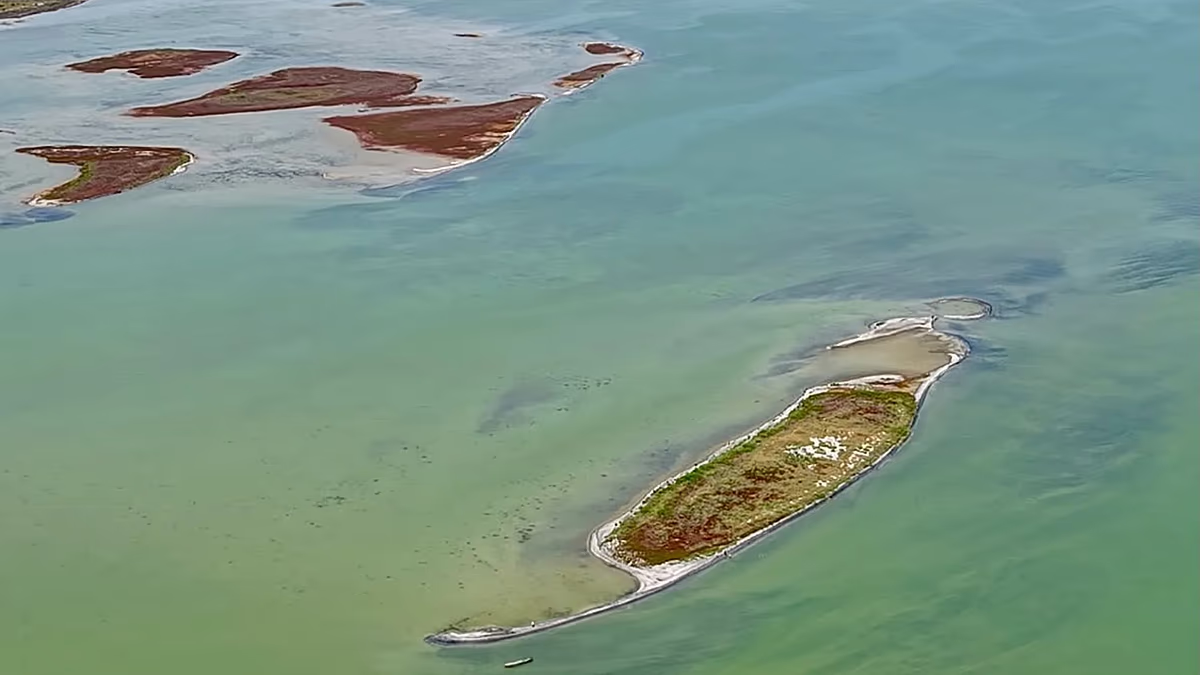
里海是地球上最大的内陆水域,但多年来它的面积一直在持续缩小。位于哈萨克斯坦海岸线附近的北部和东北部区域是里海最浅的部分,水深通常只有3到6米。由于数十年的气候变化和人类活动的影响,海水水位持续下降,环保人士们发现了一些新的水下岛屿。最近一次发现是在几天前对库拉利岛(Kulaly Island)进行的航空勘测中发现的。
The Caspian Sea is the largest inland body of water on Earth, but for years it has been shrinking. The northern and north-eastern parts along Kazakhstan's coast form the shallowest sector of the Caspian Sea, typically ranging between just three and six metres. But as water levels continue to fall, following decades of climate change and human activity, environmentalists are discovering clusters of under-water islands. The latest was spotted days ago near Kulaly Island during a recent aerial survey.
志愿者兼环保活动家丹尼尔·阿基姆扎诺夫(Daniyar Akimzhanov)参与了这一发现过程的报告工作。他表示,这个新出现的岛屿面积较小,但这种现象绝非个例;在过去四到五年里,他已经在里海的这一区域记录了多个新岛屿的出现。“我发给你的照片中的那个岛屿是最小的,实际上还有更大的新岛屿存在,”他解释道。
Volunteer and environmental activist Daniyar Akimzhanov was part of the group that reported the discovery. He says that the newly emerged island is relatively small, but it is far from an isolated case. In fact, over the past four to five years, Akimzhanov says he has documented several new islands in this part of the Caspian Sea.“The one in the photo I sent you is the smallest. There are much bigger new islands,” he explains.
这些新出现的岛屿有些长度达到约1公里,宽度在200到300米之间,野生动物已经开始迁移到这些新暴露出来的陆地上。阿基姆扎诺夫亲自在其中一个岛屿上看到过野猪,狼也通过冰层迁移到了那里。他说,这些新岛屿通常不会被赋予特定的名称。
The Caspian Sea's secret islandsSome stretch around one kilometre in length and 200 to 300 metres in width and wildlife has already begun reaching the newly exposed land. Akimzhanov says he personally spotted a wild boar on one of the islands, while wolves also make their way there across the ice. The newly emerged islands usually do not get names, he says.
根据哈萨克斯坦里海研究所(Kazakh Research Institute of the Caspian Sea)的说法,该机构是在卡西姆-若马尔特·托卡耶夫(Kassym-Jomart Tokayev)总统的指示下于2025年9月成立的,预计未来还会有更多陆地区域逐渐露出水面。不过,并非所有这些新露出的陆地都会成为永久性的岛屿。“每个新暴露出来的陆地的未来命运,都取决于海底地形、海浪的影响、风对水位的变化以及里海水位本身的动态变化,”该研究所表示。
The Kazakh Research Institute of the Caspian Sea, which began work in September 2025 after being established on the instructions of President Kassym-Jomart Tokayev, says more areas of land are likely to emerge. However, not all of them will become permanent islands.“The future of each newly exposed area depends on the seabed topography, waves, wind-driven changes in water levels and the subsequent dynamics of the Caspian Sea level,” the institute says.
新岛屿的出现,只是里海正在发生更广泛变化的一个明显迹象——里海正在逐渐萎缩。里海是世界上最大的内陆水域。
The emergence of new islands is one of the most visible signs of a much broader transformation: the Caspian Sea is retreating. The Caspian Sea is retreatingThe Caspian Sea is the world's largest landlocked body of water.
它毗邻五个国家:哈萨克斯坦、俄罗斯、阿塞拜疆、伊朗和土库曼斯坦。其河流输入量的超过80%来自俄罗斯的伏尔加河。
It is bordered by five countries: Kazakhstan, Russia, Azerbaijan, Iran and Turkmenistan. More than 80 per cent of its river inflow comes from Russia’s Volga River.
阿拉巴马大学的水气候科学家赛凡·科里切博士(Dr. Sifan Koriche)发表了多项关于黑海的研究,对其水平衡作出了简单的解释。
“这就像一个简单的水平衡问题。输入的水来自河流输入和降水,而输出的水仅通过蒸发,”他说。
Dr. Sifan Koriche, a hydroclimate scientist at the University of Alabama who has published several studies on the Caspian Sea, explains its water balance in simple terms.“It's like a simple water balance. The incoming water is from river inflow and precipitation, while the outgoing water is only through evaporation,” he says.
根据仪器观测,哈萨克斯坦 sector 的黑海海面从1996年的-26.82米下降到2025年的-29.27米。这代表在过去的三十年中下降了2.45米,即平均每年约8-9厘米。
According to instrumental observations, the Caspian Sea level in the Kazakh sector fell from -26.82 metres in 1996 to -29.27 metres in 2025. This represents a decline of 2.45 metres over the past three decades, or an average of around 8–9 centimetres per year.
这一下降趋势仍在继续。根据哈萨克斯坦黑海研究所的数据,截至2026年7月,库拉利岛监测站的平均海面为-29.42米,这是整个研究周期内记录到的最低水位。
The decline has continued. According to the Kazakh Research Institute of the Caspian Sea, the average sea level at the Kulaly Island monitoring station stood at -29.42 metres as of July 2026, the lowest level recorded during the entire study period.
包括哈萨克斯坦阿特拉乌地区海岸线在内的东北部黑海,对下降的海平面特别脆弱。由于平均水深约为6米且海床坡度非常缓缓,即使相对较小的水位下降也可能导致海岸线向远处后撤。
The north-eastern Caspian, including the coast of Kazakhstan's Atyrau region, is particularly vulnerable to falling water levels. With an average depth of around six metres and a very gentle seabed slope, even a relatively small drop in water level can cause the shoreline to retreat over long distances.
这种后撤的规模已经显而易见。根据哈萨克斯坦黑海研究所的数据,2000年至2025年间,研究区域内东北部黑海的水域面积减少了约16,384平方公里。
The scale of the retreat is already visible. According to the Kazakh Research Institute of the Caspian Sea, between 2000 and 2025, the area covered by water in the studied part of the north-eastern Caspian decreased by around 16,384 square kilometres.
该研究所还分析了卫星图像,显示近年来海岸线的变化情况。在2021年至2026年间,下降的水位逐渐露出了库拉利岛和托乌列尼半岛附近的新海床区域。
Satellite images analysed by the institute also show how the coastline has changed in recent years. Between 2021 and 2026, falling water levels gradually exposed new areas of seabed near Kulaly Island and the Tyuleniy Archipelago.
历史上,黑海曾经历过水位下降和上升的时期。从1930年代到1977年,其水位下降了约3米。
The Caspian has historically experienced periods of both falling and rising water levels. From the 1930s to 1977, its level dropped by around three metres.
在接下来的二十年里,它又上升了约2.5米,然后开始另一轮下降。但尽管里海水位的波动并不是新鲜事,科学家们表示,气候变化和人类活动现在正在影响其水量平衡。
Over the following two decades, it rose again by about 2.5 metres, before beginning another period of decline. But while fluctuations in the Caspian Sea level are not new, scientists say climate change and human activity are now affecting its water balance.
之前的研究主要将近几十年的下降归因于区域温度升高导致里海蒸发量增加。降水减少也有所贡献,但程度较小。
Previous research has linked the decline in recent decades mainly to increased evaporation from the Caspian Sea as regional temperatures have risen. A decrease in precipitation has also contributed, but to a smaller degree.
人类活动也影响着流向里海的水量。水坝调节了流入海中的河流,而整个流域的水资源被用于灌溉和其他用途。水库的管理方式也会影响到达海中的河流流量。为什么里海海豹数量在下降独一无二的里海海豹已经经历了惨重的种群下降。过去100年间,其种群数量从约100万只下降到约10万只。
Human activity also affects how much water reaches the Caspian. Dams regulate the rivers flowing into the sea, while water is extracted across the basin for irrigation and other uses. The way reservoirs are managed can also affect river flows reaching the sea. Why Caspian seals are decliningThe Caspian seal, found nowhere else in the world, has already undergone a dramatic population decline. Over the past 100 years, its population has fallen from around one million to about 100,000.
退水的海面正在通过改变海豹用于季节性栖息地的孤立岛屿,给该物种施加压力。据海豹研究员阿塞尔·贝穆卡诺娃介绍,自1995年以来,岛屿栖息地的面积缩减了15倍以上。
The retreating sea is adding pressure on the species by transforming the isolated islands it uses as seasonal haul-out sites. According to seal researcher Assel Baimukanova, the area of island haul-out sites has decreased more than 15-fold since 1995.
2021年,贝穆卡诺娃和其他来自水生生物学研究所和生态学研究所的研究人员驻扎在一个他们称之为"新多恩耶夫"的小岛上,那里聚集着数千只海豹。当他们2023年返回时,岛屿已显著扩大,有时甚至可以开车到达。后来它与大陆连接起来。"对于海豹来说,它变得无法到达。没有孤立的岛屿就没有海豹。"贝穆卡诺娃说。
In 2021, Baimukanova and other researchers from the Institute of Hydrobiology and Ecology stayed on a small newly formed island they called New Durnev, where thousands of seals gathered. When they returned in 2023, the island had expanded significantly and could at times be reached by car. It later connected to the mainland.“For seals, it became inaccessible. No isolated island means no seals,” Baimukanova said.
随着海面的退缩,海豹也被推向西部。东北里海长期以来一直作为动物的自然避难所,因为那里难以被人类到达。
As the sea retreats, seals are also being pushed westwards. The north-eastern Caspian had long served as a natural refuge for the animals because it was difficult for people to access.
西部更远处,海豹面临着更多的人类活动,包括渔业、航运、旅游业和油气作业。气温升高给海豹带来了另外一个威胁:冬季浮冰的丧失。贝姆卡诺娃表示,冬季变暖使得浮冰更薄且不稳定。退水的影响超出了野生动物。哈萨克斯坦喀斯帕海研究所表示,浅水缩减也在影响湿地,并可能给渔业、港口、航运和其他沿海基础设施带来日益严峻的挑战。
Further west, seals face more human activity, including fishing, shipping, tourism and oil and gas operations. Warming temperatures pose another threat to the seals: the loss of stable winter ice. Caspian seals give birth on ice, but Baimukanova says warmer winters are making it thinner and less stable. The effects of the retreating sea go beyond wildlife. The Kazakh Research Institute of the Caspian Sea says shrinking shallow waters are also affecting wetlands and could pose growing challenges for fisheries, ports, shipping and other coastal infrastructure.
接下来会怎么样?大多数气候情景表明,21世纪喀斯帕海将继续下降,尽管科学家们强调确切规模仍不确定。科里切的研究预测,在中等气候情景下,到本世纪末海平面可能下降多达8米,尽管不同模型的结果差异较大。为了说明即使是较小的下降也可能意味着什么,科里切表示,5米的下降可能暴露出约7.7万平方公里的北喀斯帕海海底。
What happens next? Most climate scenarios suggest that the Caspian Sea will continue to decline during the 21st century, although scientists stress that the exact scale remains uncertain. Koriche's research projects a decline of up to eight metres by the end of the century under an intermediate climate scenario, although results vary significantly between models. To illustrate what even a smaller decline could mean, Koriche says a five-metre drop could expose around 77,000 square kilometres of seabed in the northern Caspian.
科里切表示,整个喀斯帕海并非面临类似于亚尔尔海的情景,因为其中南部盆地要深得多。但浅水的北喀斯帕海部分可能面临严重的干涸。“北部地区覆盖了四分之一到三分之一的水体。有可能这个北部区域面临类似亚尔尔海的情景,”他说。但未来下降的规模并非既定。科里切的研究表明,在某些情景下,人类取水可能额外增加多达7米的下降幅度。
Koriche says the entire Caspian is not facing an Aral Sea-like scenario because its central and southern basins are much deeper. But parts of the shallow northern Caspian could face significant desiccation.“The northern part covers a quarter to one third of the water body. There is a chance that this northern region could face a scenario similar to the Aral Sea,” he says. But the scale of the future decline is not predetermined. Koriche's research suggests that human water extraction could add up to seven metres to the decline under some scenarios.
他表示,应采取措施既减缓下降速度,也适应这一变化。这包括更好地管理喀斯帕流域的用水,特别是伏尔加河,以及加强各国之间的监测和数据共享。哈萨克斯坦喀斯帕海研究所也表示,适应措施变得越来越重要。
He says measures should focus both on slowing the decline and adapting to it. This includes better management of water use across the Caspian basin, particularly the Volga, as well as stronger monitoring and data sharing between countries. The Kazakh Research Institute of the Caspian Sea also says adaptation is becoming increasingly important.
措施包括保护脆弱生态系统、监测新露出的海床以及适应港口和其他沿海基础设施的变化。一些地区性倡议已经展开。哈萨克斯坦提出了一项跨国计划,以保护乌兹贝克斯坦的水资源,而五个卡斯皮海国家也正在根据德黑拉斯公约制定2026年至2036年的行动计划,以改善监测工作,评估海平面变化的影响并制定适应措施。该研究所表示:“只有通过所有五个卡斯皮海国家的协同行动,才能找到有效的解决方案。”
Measures include protecting vulnerable ecosystems, monitoring newly exposed seabed and adapting ports and other coastal infrastructure. Some regional initiatives are already underway. Kazakhstan has proposed an interstate programme to conserve the Caspian Sea's water resources, while the five Caspian states are also working on a 2026–2036 action plan under the Tehran Convention to improve monitoring, assess the impacts of sea-level changes and develop adaptation measures.“Effective solutions are only possible through coordinated action by all five Caspian states,” the institute says.