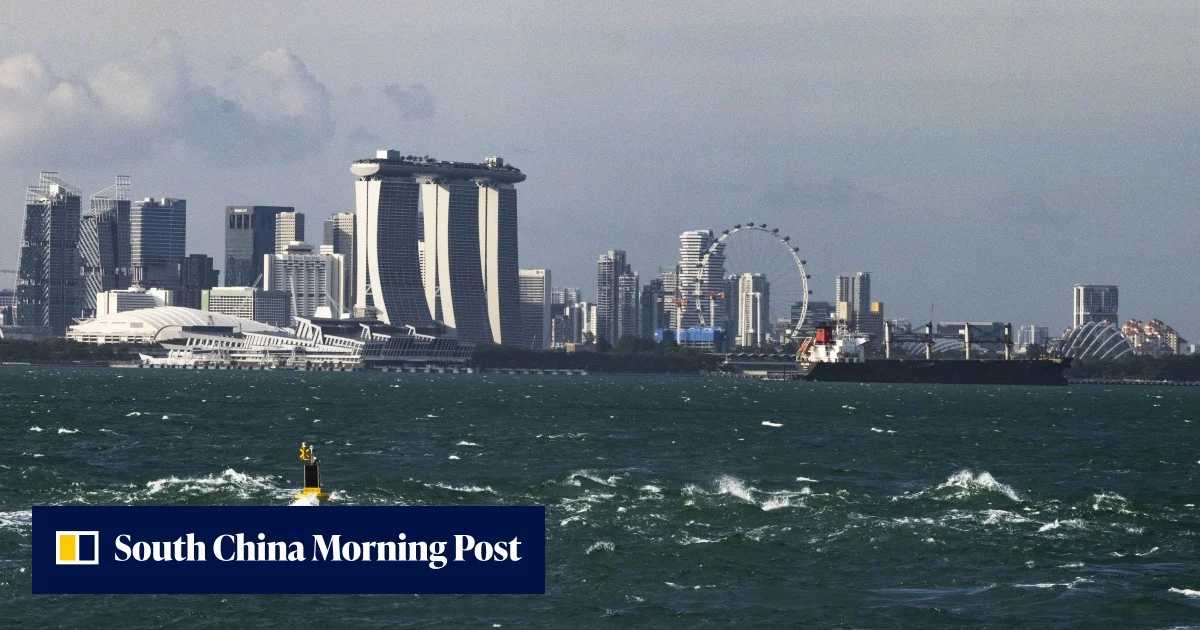
新加坡处于一个“极其敏感的生存困境”之中——因为它必须在两大强国之间的竞争之中努力保持自身的战略灵活性,外交部长薇薇安·巴拉克里希南如此表示。她重申了新加坡坚持中立立场的立场,拒绝在任何一方中选边站队的决心。
Singapore occupies a “peculiarly sensitive existential point” as it seeks to retain strategic options amid a great power rivalry, Foreign Minister Vivian Balakrishnan has said, doubling down on the city state’s stance of refusing to take sides. He also warned that the global landscape would remain unsettled if China and the United States failed to address their respective domestic issues.
她还警告称,如果中国和美国无法解决各自国内的问题,全球局势将持续动荡不安。
Speaking at the Milken Institute Asia Summit 2026 in Singapore on Wednesday, Balakrishnan identified maintaining trust with both Washington and Beijing – whose relationship was in a “difficult phase” – as a key challenge.
周三在新加坡举行的2026年米尔肯亚洲峰会上,巴拉克里希南指出,在与华盛顿和北京(两国关系正处于“困难阶段”)保持信任是新加坡面临的关键挑战。她表示,新加坡必须向这两大强国保证:自己既能继续发挥重要作用,又不会成为任何一方的代理人或工具。
The city state had to assure both superpowers that it would remain useful without serving as a proxy for either, he said. Balakrishnan warned that assets and investments would leave Singapore the moment it lost its ability to say no – a position which might be easier said than done.
巴拉克里希南警告说,一旦新加坡失去了“说“不”的能力,其资产和投资很可能会外流——不过这说起来容易做起来难。
“For us, this is a peculiarly sensitive existential point. What do we have in Singapore? We’ve got a wonderful location, but everything else depends on trust,” he said.
“对我们来说,这确实是一个极其敏感的生存问题。新加坡的优势在于其优越的地理位置,但其他一切都取决于信任。”她说。
Washington was economically crucial due to its heavy investments and technology ties, Balakrishnan said.
巴拉克里希南强调,美国在经济上对新加坡至关重要——美国是新加坡去年最大的外国直接投资来源国,投资额达352亿新元(约合275亿美元),这一数据来自新加坡统计局。她还提到了中国的观点:新加坡的外交政策应建立在两国共同的文化联系基础上。
The US was Singapore’s top source of foreign direct investment inflows last year at S$35.2 billion (US$27.5 billion), according to data from Singapore’s Department of Statistics. He also acknowledged Chinese sentiment that Singapore should base its foreign policy on shared cultural ties.
“我在中国的同事经常对我说:‘在世界上所有人中,你们——也就是新加坡——应该最了解我们,无论是在语言、文化还是历史等方面。’其实他们的真正意思是:你们应该认同我们的观点。’”巴拉克里希南呼吁这两大强国共同努力,解决各自国内的问题,以促进全球的和谐与发展。
“My colleague in China will regularly say to me: ‘Of all people in the world, you – meaning Singapore – should understand us the best, linguistically, culturally, historically and so on and so forth.’ Actually, what he means is, you should agree with us.”Balakrishnan urged both superpowers to tackle internal challenges for the collective global good.
他说,华盛顿正受到收入不平等和政治分裂的严重冲击;而北京则面临着人口老龄化及经济结构失衡的问题。中国的经济长期以来一直处于不平衡状态:强劲的出口推动了工业发展,但疲软的消费和投资却抑制了国内需求的增长。
Washington was being pulled apart by income inequality and political division, while Beijing faced an ageing population and economic imbalances, he said. China’s economy has experienced a prolonged imbalance, with resilient exports supporting industrial activity while weak consumption and investment weigh on domestic demand.
“这不仅仅是一场竞争,也不只是为了争斗或对抗。除非国内政治得到调整,国际秩序也能实现新的变革,否则我们仍将生活在动荡不安的时代中。”他说。
“It’s not just about competition. It’s not just for contestation or rivalry, but until and unless you get a rebalancing of domestic politics, followed by a new paradigm, a new world order internationally, we are going to be in unsettled times,” he said.
Balakrishnan补充道,在全球秩序逐渐瓦解的过程中,那些能够掌握人工智能、生物技术和能源等新兴技术的国家将会脱颖而出;他呼吁国际社会在这些领域建立统一的监管框架。
The countries that emerge stronger amid the erosion of global order would be those that master new technologies, such as artificial intelligence, biotechnology and energy, Balakrishnan added, calling for global regulatory frameworks in these sectors.
“人工智能和合成生物学领域既存在新的威胁,也蕴藏着巨大的潜力……如果你想快速发展,就必须同时具备有效的‘制动机制’(即必要的监管措施),并且需要制定国际统一的标准。”他说。
“There are emerging threats and great potential in AI and synthetic biology … If you want to move fast, you also need to have good brakes, and you need to have international standards,” he said.
尽管建立全球性的监管框架变得越来越困难,但仍然是可行的,Balakrishnan认为。
While establishing global frameworks was increasingly difficult, it was still possible, Balakrishnan said.
他提到了新加坡的一贯立场:认为通过国际水域航行是一项基本权利,而非特权。上个月在纽约举行的联合国大会上,Balakrishnan敦促各国领导人共同反对任何试图封锁霍尔木兹海峡的行为。
He pointed to Singapore’s consistent position that transit through international waterways was a right rather than a privilege. At the United Nations General Assembly in New York last month, Balakrishnan urged global leaders to collectively reject the closure of the Strait of Hormuz.
Balakrishnan强调,《联合国海洋法公约》对新加坡至关重要;他指出,全球约40%的贸易活动都要经过马六甲海峡和新加坡海峡。他说:“无论我们站在哪一方,任何试图剥夺船舶和飞机在国际航线上通行权利的行为,都将对我们的商业模式构成严重威胁。”
The United Nations Convention on the Law of the Sea was “absolutely crucial” for Singapore, Balakrishnan said, noting that about 40 per cent of global trade traversed the Straits of Malacca and Singapore. “When we look at the Strait of Hormuz, even without taking sides, any full-frontal assault on this regime of the right of transit passage for ships and aircraft over straits used for international navigation is a full-frontal threat to our business model,” he said.
原文内容:今年 4 月,时任印度尼西亚财政部长普尔巴亚·尤迪·萨德瓦(Purbaya Yudhi Sadewa)提出了对穿越该海峡的船只收取费用的建议,但后来他撤回了这一提议。
In April, then Indonesian finance minister Purbaya Yudhi Sadewa floated the idea of charging vessels to cross the strait, though he later backtracked on the proposal.
当被问及新加坡明年将担任东南亚国家联盟(ASEAN)主席国一事时,巴拉克里希南(Balakrishnan)表示,新加坡希望推动该联盟内部的进一步融合,并与包括欧盟在内的传统及非传统盟友建立更广泛的合作伙伴关系。
Asked about Singapore’s chairmanship of the Association of Southeast Asian Nations next year, Balakrishnan said the city state was aiming for deeper integration within the bloc, alongside broader partnerships with both traditional and non-traditional allies, such as the European Union.
“我们希望与非洲、南美洲、太平洋岛国以及加拿大等地开展合作,实施一项跨太平洋的战略,”他说。
“We want to do stuff with Africa, South America, Pacific Islands, across Canada as well – a trans-Pacific strategy,” he said.
尽管存在地区性挑战——例如缅甸的内战、泰国与柬埔寨之间的边界争端以及南海地区的紧张局势——巴拉克里希南仍对东盟充满信心,他提到了越南和马来西亚等成员国的强劲经济增长。
Despite regional challenges – including Myanmar’s civil war, an unresolved Thailand-Cambodia border dispute and simmering tensions in the South China Sea – Balakrishnan expressed confidence in the bloc, pointing to healthy economic growth in member states such as Vietnam and Malaysia.
“如果我们能够顺利应对这些挑战,不仅对新加坡本身,对整个东盟来说都具有重要意义;我认为东盟拥有巨大的发展潜力,”他说。“因此,我依然是一个坚定的支持者,我相信东盟的未来。”
“If we can thread the needle, and not just for Singapore, but for Asean as a whole, I think we’ve got quite a compelling narrative and great potential for Asean,” he said. “So I’m still an advocate. I’m a believer in Asean.”