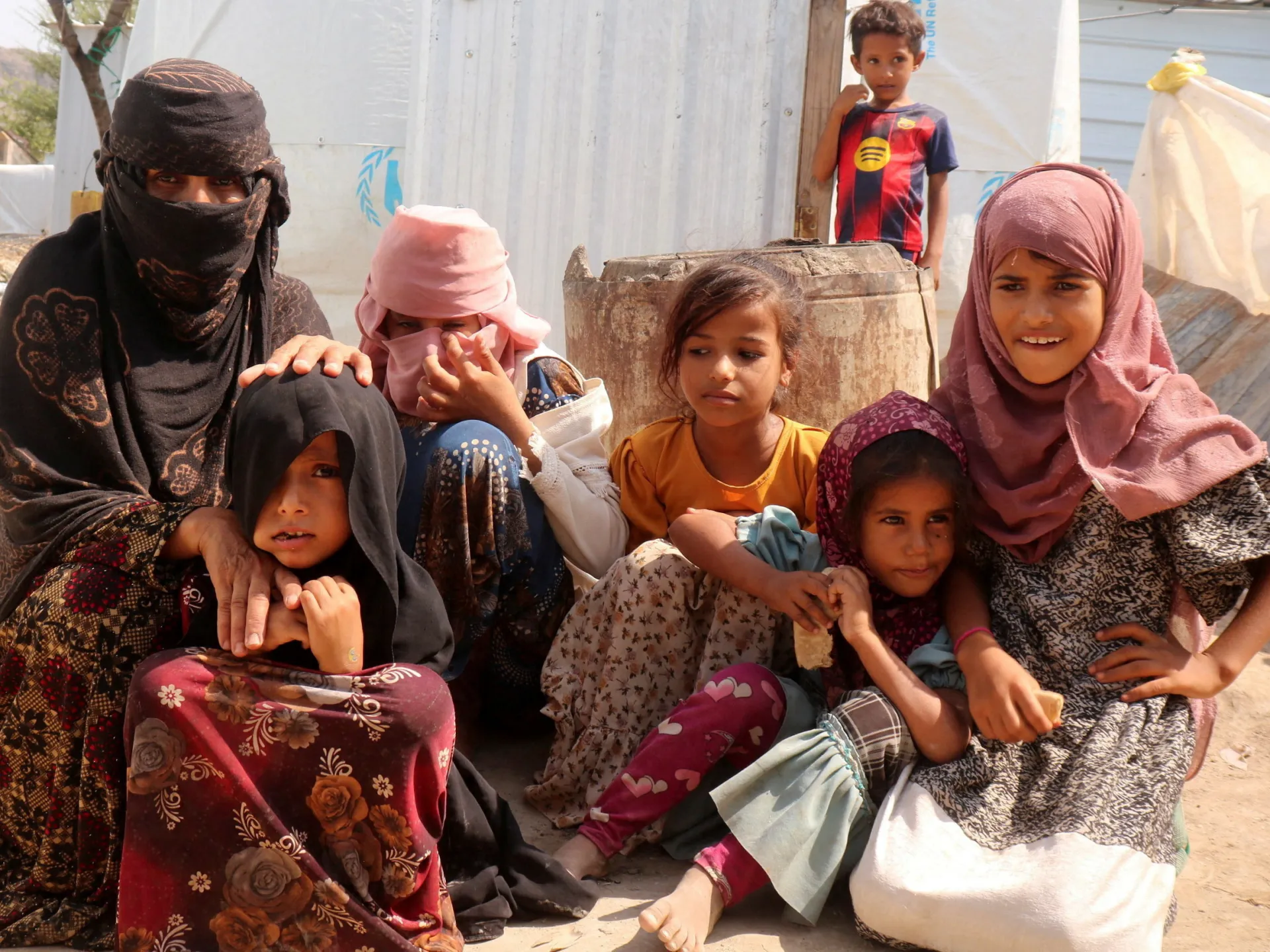
日出时分,12岁的艾哈迈德在塔伊兹省贾巴尔·哈巴希区瓦迪·巴尼·卡乌兰地区的难民营里醒来。他每天要么和其他孩子们一起玩耍,要么回到帐篷里休息。这是他过去两周以来的日常生活——自从他不得不逃离位于塔伊兹市西部的阿尔-阿什罗赫村之后,他就一直过着这样的生活。
At sunrise, 12-year-old Ahmed wakes up under the roof of a tent in a displacement camp in the Wadi Bani Khawlan area of Taiz governorate’s Jabal Habashi district. He spends his days playing with other children or retreating to lie down inside the tent. This has been his routine for the past two weeks, ever since he had to flee his village of al-Ashroh, west of the city of Taiz.
“难民营的生活很无聊,”他说。他非常想念家乡和村庄的一切,尤其是他的书包,以及每天早上步行去学校的时光。
Life in the camp is “boring”, he says. He misses everything about his home and his village, particularly his school bag and his walk to school every morning.
“我们在逃离冲突时把书包忘在家里了,我不知道自己是否还能再回到学校,见到老师和同学,”艾哈迈德告诉半岛电视台。
“I left my school bag in the house as we fled the clashes, and I do not know if I will carry it again and go back to my classroom and meet my teachers and classmates,” Ahmed told Al Jazeera.
在难民营里,没有学校可供艾哈迈德上学;即使他回到了家乡,那里的学校也已经关闭了。根据联合国儿童基金会的统计,在也门受冲突影响的地区,已有数百所学校暂停了教学活动,导致超过13.7万名学生无法继续接受教育。
There’s no school at the displacement camp for Ahmed to attend, and even if he were back home in his village, his school there is also closed. Across conflict-affected parts of Yemen, hundreds of schools have suspended classes, disrupting education for more than 137,000 students, according to UNICEF.
联合国儿童基金会还表示,在9月的前两周里,由于也门的冲突,已有超过5.7万名儿童流离失所;随着战斗的持续,这一数字很可能会继续上升。
The United Nations body added that more than 57,000 children had been displaced as a result of the fighting in Yemen in the first two weeks of September, a number that will likely have increased as fighting continues.
在经历了四年的相对平静后,支持政府的武装力量与胡塞武装之间的冲突在8月和9月急剧加剧,这对也门的学校和学生造成了新的打击,进一步加剧了该国的教育危机。
After four years of relative calm, armed clashes between pro-government forces and the Houthis intensified sharply in August and September, dealing a new blow to Yemeni schools and students and further deepening the country’s education crisis Survival over education After arriving at the displacement camp, Ahmed’s family had immediate priorities: securing shelter and meeting their basic needs.
抵达难民营后,艾哈迈德的家人最紧迫的任务是寻找住所并满足基本生活需求。
“Before the war reached my house and school, my family would care if I completed my school homework,” Ahmed said.
“在战争波及我的家园和学校之前,我的家人还会关心我是否完成了作业,”艾哈迈德说。“如今,在难民营里,没有人再关心教育问题了;人们把全部精力都放在了搭建帐篷、寻找食物和水源上。”对于那些试图帮助流离失所者的人道主义组织来说,满足这些基本需求是一项艰巨的任务。联合国在10月2日表示,由于冲突的再次爆发,已有超过15万人流离失所,预计这一数字还会继续上升。此外,自2014年胡塞武装控制萨那以来,也门已有超过500万人被迫离开家园。
贾巴尔·哈巴希地区的流离失所者管理协调员穆罕默德·拉德曼告诉半岛电视台,成千上万的儿童被迫中断学业,他们生活在“极其恶劣的环境”中。
“Today, no one cares about education in the camp. Families’ focus shifted to tents, food and water.”Meeting those needs is a difficult task for the humanitarian groups attempting to help the displaced. The UN said on October 2 that more than 150,000 people had been displaced by the renewed conflict, a number that is expected to rise. That is on top of the more than five million Yemenis who had previously been displaced as a result of the war, which began with the Houthi takeover of Sanaa in 2014. Mohammed Radman, a displacement coordinator with the Executive Unit for IDP Camp Management in Jabal Habashi district, told Al Jazeera that thousands of students are displaced, and that many of them have been forced to put their education aside amid what he described as “horrific circumstances”.
“这些孩子别无选择,”拉德曼说:“前线附近的学校都已经关闭了;即使他们愿意每天步行数公里去那些还能正常运作的学校,那些学校也已经人满为患,根本无法容纳更多的学生。”他将冲突地区的学校分为三类:一类是用于安置流离失所者的临时学校,另一类是已经超员的学生就读的学校,还有一类则是位于或靠近前线的学校。
“These students do not have options,” Radman said. “All schools near the front lines are closed. And even if these students wanted to travel several kilometres every day to reach functioning schools, those schools are already crowded. So, the displaced students cannot be accommodated.”He divided schools in conflict-affected areas into three groups: schools being used to shelter the displaced, overcrowded schools and schools on or near the front lines.
“这对也门政府和国际组织来说都是一个巨大的挑战,”他补充道。
“This creates a real challenge for society, the Yemeni government and international organisations,” he said.
根据联合国儿童基金会的统计,在最近冲突升级之前,也门就有320万儿童无法正常上学。也门权利与自由组织(SAM Organization for Rights and Liberties)的主席塔菲克·阿尔-胡迈迪表示,随着新一轮流离失所潮的持续,也门儿童所面临的困境只会进一步恶化。
‘Homelessness and begging await them’Before the latest escalation, 3.2 million children were already out of school in Yemen, according to UNICEF. And now, with the new and ongoing wave of displacement, the ordeal facing Yemeni children is set to worsen, said Tawfiq al-Humaidi, the president of SAM Organization for Rights and Liberties.
“这场战争使他们容易陷入无家可归、乞讨,甚至可能被强制招募的境地,” al-Humaidi说道。“因此,儿童在课堂之外可选择的替代方案并不安全。”尽管家庭希望他们在流离失所营暂住的日子会很短暂,但 al-Humaidi表示,由流离失所所引起的教育中断可能会持续很长时间。
“This war leaves them vulnerable to homelessness, begging, and potentially forced recruitment,” al-Humaidi said. “So, alternatives available to children outside the classroom are not safe.”While families hope that their stay in the displacement camps will be temporary, al-Humaidi said that the disruption to education caused by displacement may last for a long time.
他表示,长期停留在流离失所营可能会使儿童形成不同的日常生活习惯,使他们日后返回学校变得更加困难。
He said that prolonged stays in displacement camps can pull children into a different daily routine and make their eventual return to school more difficult.
“这些后果不仅包括教育资源的匮乏和学习内容的流失,还包括学校所提供的社会和心理保护的丧失,” al-Humaidi说道。“当学校关闭时,儿童将更容易面临暴力、剥削、被招募以及童工等危险。”重返学校之路阿德努卡林(Abdulkarim),一位来自 taiz 的教师,拒绝透露全名,对 al Jazeera 表示,在“战 zone”中提供教育是一项极具挑战的任务。
“The repercussions extend beyond deprivation and the loss of educational lessons to the loss of the social and psychological protection provided by schools,” al-Humaidi said. “When schools close, children become more vulnerable to violence, exploitation, recruitment and child labour.”Finding a way back to school Abdulkarim, a teacher in Taiz who did not wish to give his full name, told Al Jazeera that providing education in a “war zone” is challenging.
“当学生听到爆炸声、担惧枪弹、住在摇摇欲坠的帐篷中,教育是无法进行的。我曾目睹小孩子们一听到枪声就哭泣的场景,”他说道。阿德努卡林表示,为学生营造安全的环境是首要任务。
“When students hear explosions, fear bullets and stay in shaky tents, education cannot happen. I saw how little children cry when they hear the sounds of heavy gunfire,” he said. Providing students with a safe environment is the priority, Abdulkarim said.
“一旦实现这一目标,我们就可以尝试将学生安置在正常运作的学校,或是创建替代性教学中心,以便学生能够继续接受教育,”他补充道。
“Once that is achieved, we can try to accommodate students in functioning schools or create alternative centres so that students can continue to receive education,” he added.
阿德恩的社会学家阿夫拉·阿尔胡买吉阿尼(Afrah al-Humaiqani)表示,最近叶门多地的交战可能使数千名学生失去接受教育的机会,她警告这可能会导致该国出现“新一代文盲”。
Afrah al-Humaiqani, a sociologist in Aden, said the recent hostilities in different parts of Yemen risk denying thousands of students access to education, which she warned could contribute to creating a “new illiterate generation” in the country.
然而,减轻这场危机的影响是可能的,阿尔胡买吉阿尼告诉 al Jazeera,表示叶门政府与国际组织可以携手合作,协调应对措施。
However, reducing the impact of this crisis is possible, and the Yemeni government and international organisations can cooperate and coordinate to address it, al-Humaiqani told Al Jazeera.
“我们需要建立安全的营地,让学生们能感到安心,”她说。“随后还应配备教师和教科书,实施弥补学习损失的相关计划,并为孩子们提供心理社会支持。”
“There is a need for safe camps where students can feel secure,” she said. “This can be followed by the provision of teachers and textbooks, programmes to address learning loss, and provide psychosocial support for children.”