基拉·沙赫特 2026年10月7日 可再生能源电力比以往任何时候都更便宜。因此,尽管西方国家依靠煤炭和石油致富,但世界上一些最贫穷的国家却转而押注太阳能、风能和水电。
Kira Schacht October 7, 2026 Renewable electricity is cheaper than ever. So while the West got rich on coal and oil, some of the poorest countries in the world are banking on solar, wind and water instead.
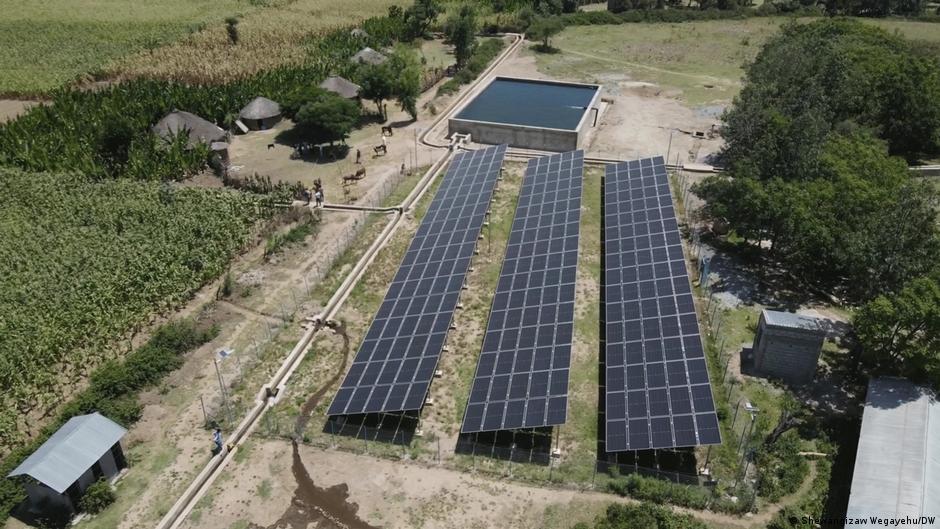
在埃塞俄比亚的农村地区,太阳能电池板正变得司空见惯。过去使用柴油发电机进行灌溉的农民正在转向太阳能,例如2026年位于锡达马地区的多雷巴费诺村。
Solar panels are becoming a common sight in rural parts of Ethiopia. Farmers who previously used diesel generators for irrigation are switching to solar power, like here in the village Dore Bafeno in the Sidama region in 2026.
随着新兴经济体和全球生活水平的提高,世界是否会迎来另一轮化石燃料繁荣?数据表明不会。从东南亚到撒哈拉以南非洲,各国并未像西方那样投资化石燃料,而是投资于由可再生能源驱动的电力。
As emerging economies and global standards of living grow, is the world in for another fossil fuel boom? The data says not. Countries from Southeast Asia to Sub-Saharan Africa aren't investing in fossil fuels like the West did, but in electricity, powered by renewables.
当美国和欧洲在19世纪和20世纪实现工业化时,它们依靠的是化石能源。从煤炉、燃气供暖和内燃机汽车,到由燃煤和燃气发电厂生产的电力,整个社会都依赖于污染性的燃料来源。
When the US and Europe industrialized in the 19th and 20th century, they did so using fossil energy. From coal ovens, gas heating and combustion engine cars to electricity produced in coal and gas power plants, entire societies relied on polluting sources of fuel.
然而,尽管燃烧化石燃料使工业化国家得以繁荣,但也导致了与当今全球极端天气事件相关的气候危机。
Yet while burning fossil fuels allowed industrialized countries to boom, it also caused the climate crisis that is linked to extreme weather events around the world today.
可再生能源电力正迅速成为最便宜的选择。许多凭借化石燃料获得经济实力的国家,如今正试图向可再生能源转型。但它们受到数百年遗留基础设施的制约。
Renewable electricity is rapidly becoming the cheapest option Many of the same countries that became economically powerful off the back of fossil fuels are now trying to transition to renewables. But they are held back by centuries of legacy infrastructure.
因为燃气锅炉无法靠风力运行,柴油卡车也无法靠太阳能驱动,所以希望转向绿色能源的社会需要更多地使用电力,并提高可再生能源的比例。这正是许多中等和低收入国家的优势所在。由于围绕化石燃料建设的现有能源基础设施较少,它们更有条件更快地推广可再生能源电力。
Because a gas boiler won't run on wind power, and a diesel truck cannot be solar-powered, societies looking to shift to green energy need to use more electricity and increase their share of renewables That is where many middle- and lower-income countries have an advantage. With less existing energy infrastructure built around fossil fuels, they are better placed for a faster rollout of renewable electricity sources.
在许多情况下,如今太阳能发电的成本已低于化石燃料发电。与需要数年建设时间且投入数百万资金的大型煤电厂或天然气发电厂不同,太阳能与风能发电场的建设速度更快,前期投入成本也低得多。
In many instances, solar power in particular is now cheaper to produce than fossil electricity And unlike large coal or gas plants, which take years to construct and millions in investments solar and wind farms can be built quickly and with much less upfront cost.
与此同时,根据可再生能源研究机构Ember的分析,过去几十年间,冰箱、电炉、空调等电子设备的价格均大幅下降,这使得电力成为烹饪、供暖及其他用途更为经济实惠的能源选择。
At the same time, according to an analysis by renewables think tank Ember electronic devices like refrigerators, electric stoves or air conditioners have all become much cheaper in the last decades, making electricity a more affordable option as an energy source for cooking, heating and more.
虽然电动汽车在多数地区仍属于奢侈品,但其价格也在持续走低。联合国的一项研究显示,在印度、印度尼西亚和越南,电动摩托车的售价已与燃油版车型持平,而使用成本却要低得多。
While electric cars are still a luxury item in most places, their prices are coming down too. And a UN study found that in India, Indonesia and Vietnam electric scooters and motorbikes already cost the same as petrol models Yet a lot less to fuel.
这一切都意味着,可再生能源发电正迅速成为最划算的能源选择——不仅对气候有利,对经济也大有裨益。各国也纷纷注意到了这一趋势。
All this means that renewable electricity is quickly becoming the best choice for the wallet — not just for the climate. And countries are taking note.
“我们看到新兴市场正在实现‘跨越式发展’,”Ember的能源战略专家金斯米尔·邦德说道,“整个亚洲的电气化进程迅速推进,而欧洲和美国则相对停滞。”低收入国家的电气化速度更快。2023年全球仅有约四分之一的电力来自可再生能源,但这一比例正在快速上升,如今新增的发电能力几乎全部来自太阳能或风能。与高收入国家相比,低收入国家使用的化石燃料更少,可再生能源占比更高。
"We're seeing a leapfrog take place right across the emerging markets,” said Kingsmill Bond, energy strategist at Ember. "The whole of Asia is electrifying quickly, and the whole of Europe and the United States is stagnant." Lower-income countries are electrifying faster In 2023, only around a quarter of global electricity was generated by renewables. But that figure is rising fast, and almost all new capacity added these days is based on solar or wind power Lower-income countries already use less fossil fuels and more renewables than higher-income ones.
此外,大型中等收入经济体的发展速度也超过了富裕国家。2023年,太阳能发电在印度和越南的电力结构中分别占比至少6%和10%,而全球平均水平为5%。
And large middle-income economies are outpacing richer ones as well. In 2023, solar power alone made up at least six percent and ten percent of electricity in India and Vietnam respectively. The global average was five percent.
低收入国家正在跳过化石燃料阶段实现电气化。这一热潮意味着中等和低收入国家的电气化进程正在加速,它们直接从化石燃料中消耗的能量比富裕国家更少。例如,越南使用的电力已经超过了美国、欧洲甚至中国,印度也正沿着同样的道路前进。
Lower-income countries are electrifying without the fossil detour This boom has meant middle- and lower income countries are electrifying fast, consuming less energy directly from fossil fuels than richer countries. Vietnam, for instance, is already using more electric energy than the US, Europe and even China, and India is following the same path.
但能源跨越式发展的潜力在低收入国家可能尤为突出,其中大多数位于撒哈拉以南非洲地区。
But the potential for energy leapfrogging might be particularly high in low-income countries, most of them across Sub-Saharan Africa.
肯尼亚、埃塞俄比亚和纳米比亚等国目前正在迅速扩展其能源基础设施,以满足不断增长且年轻人口的需求。但在许多国家,农村地区并未接入电网。南非非政府组织“可持续能源非洲”的项目经理乔尔·纳纳表示:“即使能够获得电力,其供应往往也不稳定。”他说,直到几年前,人们通常不得不依赖柴油发电机来满足能源需求。但这带来了高昂的成本,因为在许多非洲国家,进口燃料尤其昂贵,这意味着能源危机和油价波动带来的冲击更为严重。
Countries such as Kenya, Ethiopia or Namibia are expanding their energy infrastructure rapidly right now to meet the demands of a growing, young population. But rural areas in many countries are not connected to electricity grids And Joel Nana, project manager at South African NGO Sustainable Energy Africa says that "even when there is access to power, it's often not reliable.”Until a few years ago, he says, people would default to diesel generators to fill their energy needs. But that came at a cost, because importing fuel is particularly expensive in many African countries, meaning energy crises and oil price fluctuations hit much harder.
可再生能源助力能源获取与独立。这些因素使得太阳能成为解决能源获取和能源独立问题的方案。而且太阳能的成本已经变得如此低廉,纳纳称其为“显而易见的选择”。
Renewables for energy access and independence These factors make solar power a solution for both energy access and independence. And it has become so cheap that Nana says it's a "no brainer”.
“一些企业只需两年就能收回投资,那你为什么还要部署其他东西呢?”他说。“太阳能已迅速成为事实上的默认技术,成为所有人的首选。”而且一旦建成,其效果非常显著。撒哈拉以南非洲地区非常适合发展太阳能。该地区获得的日照几乎比世界上任何地方都多,并且拥有足够的空间建设太阳能农场,其发电量足以满足电力需求的数百倍。“如果你将太阳能与电池结合使用,仅靠太阳就能在大约90%的时间里获得廉价的电力,”金斯米尔·邦德说。
"Some businesses can make back their investment in just two years, so why would you want to deploy anything else?” he said. "Solar has rapidly become the de facto default technology that everyone falls back on.”And once it is set up, it is very effective. Sub-Saharan Africa is extremely well-suited to solar power. It gets more sun than almost anywhere in the world and has enough space for solar farms to cover electricity demand hundreds of times over "If you add solar plus batteries, you can get cheap electricity about 90 percent of the time from the sun alone”, said Kingsmill Bond.
近年来,纳米比亚、南非、肯尼亚和塞内加尔等国大幅提升了太阳能发电能力。
Countries like Namibia, South Africa, Kenya and Senegal have expanded their solar capacity massively in the past few years.
在2026年为非洲科技未来实验室撰写的一份报告中,纳纳分析了中国对非洲的太阳能产品进口数据,并估算出2026年非洲大陆每天约有10万块太阳能板被安装使用,这一数字较上一年增长了45%。
In a 2026 report for African Tech Futures Lab and Ember Nana analyzed import data from China and estimated that around 100,000 solar panels were installed across Africa every day in 2026, up 45 percent from just the previous year.
全球范围内也出现了类似趋势。以巴基斯坦为例,过去几年里当地民众纷纷从中国购买太阳能板,以此规避高昂的电网电价以及频繁发生的停电现象。
Similar trends are emerging all across the world. In Pakistan, for example, people have been buying solar panels from China en masse in the past few years to avoid steep electricity grid prices and frequent power outages.
国际可再生能源协会知识、政策与金融事务主管阿莱克西·卢米亚尔维指出,廉价的能源能够推动经济发展,这类举措在未来几十年内将对全球经济产生深远影响。
Cheap energy boosts economies Aleksi Lumijärvi, director for knowledge, policy and finance at the International Renewable Energy Association says these decisions can have a major impact on the global economy in the coming decades.
金斯米尔·邦德表示,在那些电力价格低廉且供应充足的地区,财富也会随之聚集。他说:“工业企业会发现,把生产基地迁至撒哈拉以南非洲等地更为划算,因为那里有价格亲民且清洁的太阳能电力以及配套的蓄电池。”
"Industrial companies will find that it will be cheaper to move production to, for example, somewhere in Sub-Saharan Africa, because they have this cheap, clean solar power plus batteries available.”Kingsmill Bond says where electricity is cheap and abundant, wealth will follow.
纳纳强调,非洲各国接下来的当务之急是制定相关政策,确保全体民众都能从太阳能产业的繁荣中获益。“未来五年内,我们将建立起全球最分散化的电网体系,”他向德国之声说道。他告诫各国政府:“无论是否愿意接受,这一趋势都不可避免。”据他预计,一系列新的能源法规——其中许多目前正处于最终谈判阶段——将在未来数月及数年内在非洲各国陆续实施。
"You're going to have faster growth in the emerging markets, you will have fewer financial crises. It will make a material difference to people's quality of lives.”Nana says the next step for African countries is to establish policies that ensure everyone benefits from the solar boom.
“各国正意识到,将这项技术纳入国家战略、共享其红利并利用这一竞争优势,符合其自身利益。”
"We are heading towards the most decentralized grid in the whole world within the next five years,” he told DW. His mantra for governments, he says, is: "This is happening, whether you like it or not.”He expects a wave of new energy regulations, many of which are now in the final stages of negotiation, to come into effect across Africa in the coming months and years.
编辑:坦辛·沃克(Tamsin Walker)和吉安娜·格吕恩(Gianna Grün)本分析背后的所有数据和代码均可在此GitHub仓库中找到。德国之声(DW)更多数据驱动的报道可在此处查阅。
"Countries are realizing it's in their interest to integrate this technology into national strategies, to share the benefits and to make use of this competitive advantage.”