9月23日,即以色列议会选举前几周,部长们和立法者聚集在被占领的约旦河西岸山顶,为新定居点Metzoke Eretz揭幕,该定居点根据国际法是非法的。财政部长贝扎勒·斯莫特里奇利用仪式向定居者前哨站致敬,该前哨站使最终的解决成为可能。
On September 23, weeks before Israel’s parliamentary elections, ministers and lawmakers gathered on an occupied West Bank hilltop to inaugurate a new settlement, Metzoke Eretz, illegal under international law. Finance Minister Bezalel Smotrich used the ceremony to salute the settler outpost that made the eventual settlement possible.
斯莫特里奇说:“农场里的第一批先驱定居者……我们将把他们提升为我们最大的快乐。”“这表明这种方法是有效的:建立一个农场,夺取土地,准备它,将其变成一个社区,转移到下一个点。有很多很多这样的英雄--那些证明自己不是在做房地产的人。他们正在搞犹太复国主义。”Metzoke Eretz此前是一个前哨基地--即使根据以色列法律也是非法的犹太定居点的名称--名为Netzah Harel,于2023年在al-Muarrajat中心建立,这是一个贝都因社区,位于拉马拉以东的巴勒斯坦私人土地上。
“The first pioneering settlers who were here on the farm… we will lift them up as our greatest joy,” Smotrich said. “It shows that the method works: establish a farm, seize the land, prepare it, turn it into a community, move to the next point. There are many, many such heroes – those who prove they are not doing real estate. They are doing Zionism.”Metzoke Eretz was previously an outpost – the name given to the Jewish settlements illegal even under Israeli law – called Netzah Harel, established in 2023 in the middle of al-Muarrajat, a Bedouin community on private Palestinian land east of Ramallah.
29岁的Alia Mleihat和社区其他人都对这些定居者记忆犹新。“当然,这个前哨基地在穆阿拉贾特和拉马拉以东地区的巴勒斯坦贝都因社区流离失所方面发挥了重要作用,”阿利亚说,她现在住在几公里外al-Awsaj的一个帐篷里。2025年7月被迫流离失所。“[内扎·哈雷尔定居者]在以色列警察和军队的保护下,参与了定居者对家庭发动的每一次袭击,并没收了羊。”
Alia Mleihat 29, and others from the community remember those settlers well. “Of course, this outpost played a major role in displacing the Palestinian Bedouin communities in al-Muarrajat and the areas east of Ramallah,” said Alia, now living in a tent in al-Awsaj, a few kilometres away, after her forced displacement in July 2025. “[The Netzah Harel settlers] took part in every attack the settlers carried out on families, and confiscated sheep, under the protection of the Israeli police and army.”
以色列非政府组织Kerem Navot的创始人Dsor Etkes表示,斯莫特里奇对他的“方法”的描述非常准确,除了一个遗漏。埃特克斯说:“政治话语跳过了驱逐[巴勒斯坦]的章节。”他暗示斯莫特里奇和其他政客避免明确这样做,以避免国际刑事法院的潜在审查。“他们希望它发生,他们知道它发生,但他们让它发生。”据《国土报》报道,梅佐克·埃雷茨是内塔尼亚胡政府在附近的巴勒斯坦人被暴力驱逐后合法化的19个前哨基地之一。
Dror Etkes, founder of Israeli NGO Kerem Navot, said Smotrich’s description of his “method” was spot-on – except for one omission. “The political discourse skips the [Palestinian] expulsion chapter,” said Etkes, suggesting Smotrich and other politicians avoid doing so explicitly to avoid potential scrutiny from international criminal courts. “They want it to happen, and they know that it happens, and they let it happen.”Haaretz reported that Metzoke Eretz is one of 19 outposts legalised by the Netanyahu government after nearby Palestinians were violently expelled.
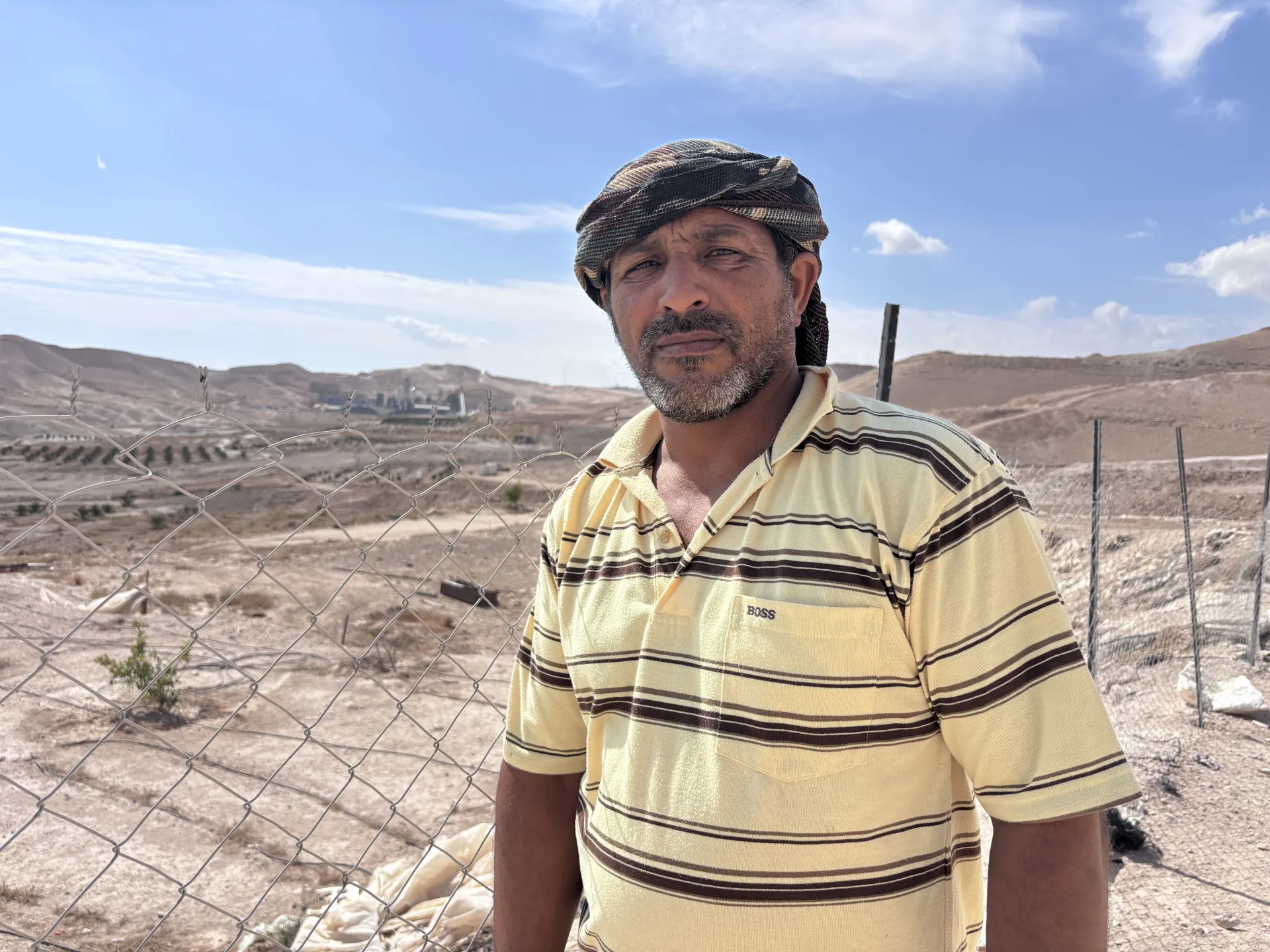
穆罕默德·加万梅(Muhammad Ghawanmeh)位于奥萨伊(al-Awsaj)的家中的景色,俯瞰着山上的以色列前哨基地[半岛电视台称“没有一刻的快乐”阿利亚45岁的叔叔贾迈勒·姆莱哈特(Jamal Mleihat)和八个亲戚坐在一起,依偎在奥萨伊山脊上一栋光秃秃的混凝土砖房子里,他的女儿塞瓦尔(Sewar)挂在他的腿上。
The view from Muhammad Ghawanmeh’s home in al-Awsaj, looking out towards an Israeli outpost on a hill in the background [Al Jazeera]‘Not a single moment of joy’ Jamal Mleihat, Alia’s 45-year-old uncle, sits with eight relatives nestled inside a bare concrete-block house on the ridge in al-Awsaj, with his daughter Sewar hanging off his lap.
山脊下方,一排排树苗爬上一个耕种的斜坡,走向山脚下的一家工厂。山脊本身是岩石和灰尘,现在居住着大约25个穆阿拉贾特家庭,其中包括过去三年被迫流离失所的家庭。
Below the ridge, rows of young trees climb a cultivated slope towards a factory at the foot of the hills. The ridge itself is rock and dust, now home to about 25 families from al-Muarrajat, among others forcibly displaced in the past three years.
“在2023年10月7日哈马斯袭击以色列以及以色列随后对加沙发动的种族灭绝战争之前,我们还能在牧场上自由活动,不受任何骚扰,”七个孩子的父亲贾马尔说道。“我们当时有医疗条件,有学校,同一个营地还有水。那时的生活比现在好上千万倍。”自10月7日以来,以色列政府加强了对被占领的约旦河西岸的突袭,而定居者则基本被放任对巴勒斯坦人实施迫害,以色列国内也几乎没有对此进行抵制。
“Before October 7 [2023 Hamas attack on Israel, and Israel’s subsequent genocidal war on Gaza], we were in the pastures – no harassment, we moved around freely,” said Jamal, a father of seven. “We had healthcare. We had a school. We had water in the same encampment. Life was a million times better than this.”Since October 7, the Israeli government has stepped up its raids on the occupied West Bank, while settlers have largely been given free rein to pursue a pogrom against Palestinians, with little pushback from within Israel.
在贾马尔住所的下方,穆罕默德·加瓦恩梅独自住在一处山坡上,与妻子和七个孩子生活在一起。他的厕所无法使用,只能依靠水箱供水,而且几乎没有任何电力。通往穆莱哈特地区的岩石小路过于陡峭,车辆无法通行。在最近定居者发动的袭击之后,他在房屋周围建起了围栏,如今还要面对以色列定居者持续不断的无人机监视。
Just below Jamal’s shelter, alone on a slope, Muhammad Ghawanmeh lives with his wife and seven children. His toilet does not work; he relies on water tanks and has almost no electricity. The rocky track to the Mleihats’ area is too steep to drive. He built a fence around the house after recent settler attacks, and now faces constant drone surveillance from Israeli settlers.
加瓦恩梅来自拉斯·艾因·奥贾,那里曾是约旦谷中部最大的贝都因社区——曾经如此稳固,以至于人道主义协调员在2023年10月告诉半岛电视台,该村庄不太可能被迫流离失所。然而,在周边四个定居点定居者反复袭击之后,这个拥有超过600名巴勒斯坦居民的社区却经历了过去三年中贝都因人单个社区规模最大的驱逐事件。
Ghawanmeh is from Ras Ein al-Auja which had been the largest Bedouin community in the central Jordan Valley – so robust that humanitarian coordinators told Al Jazeera in October 2023 that the village’s displacement was unlikely. Instead, its more than 600 Palestinian inhabitants experienced the largest single-community expulsion of Bedouins in the last three years, after repeated attacks by settlers from four surrounding outposts.
“从我童年起,这片土地就是开放的,水源也是开放的。我们生活得很幸福。我们带着羊群走10公里、15公里去放牧,然后再回来,”他说。“如今,我们连离开家500米都做不到。”他的羊群从大约300只减少到只剩100只左右,而且羊群日渐瘦弱。现在他不得不为它们购买饲料,而不是让它们在这片土地上自由放牧——而他如今说,这片土地已经被以色列定居者和军队基本禁止使用。
“From my childhood, the land was open. The water was open. We were living happily. We’d graze 10 kilometres, 15 kilometres with the sheep, and come back,” he said. “Today we can’t go 500 metres from the house.”His flock has shrunk from about 300 to roughly 100 physically thinning sheep, which he now must buy fodder for, instead of letting them graze on the land, which he now says is largely forbidden by Israeli settlers and the army.
贾马尔·姆莱哈特与女儿塞瓦尔在约旦河西岸被占领土上的阿瓦萨杰村 [半岛电视台]“除了这些,什么都没剩下。”在加万梅围栏外几百米处,一辆白色拖车和几个集装箱标志着以色列的一个前哨站。该前哨站大约六个月前建立在一座小山上,俯瞰着90号公路以及山脊沿线流离失所的家庭。加万梅说,两个月前,士兵们来到他家,告诉他不能再前往公路。他说,定居者“和军队在一起”。
Jamal Mleihat with his daughter Sewar in al-Awsaj in the occupied West Bank [Al Jazeera]‘Nothing was left except this’ A few hundred metres beyond Ghawanmeh’s fence, a white trailer and a few containers mark an Israeli outpost, established about six months ago on a hill overlooking Highway 90 and the displaced families along the ridge. Two months ago, Ghawanmeh said, soldiers came to his house and told him he could no longer pass to the highway. The settlers, he said, “are with the army”.
“你离开这个地方,去另一个地方,问题却如影随形——同样的问题,始终得不到解决,”加万梅说。“每隔三个月,就会有一次强制迁移行动。”此前,阿瓦萨杰几乎算不上有人居住的地方,但现在,来自不同被清空社区的贝都因人已经聚集到这片贫瘠的山脊上,俯瞰着大片再次被宣布为禁牧区的土地。
“You leave this place, go to another one, and it follows you – the same problem, unsolved,” Ghawanmeh said. “Every three months, there’s a displacement operation.”Al-Awsaj barely existed as an inhabited place before, but Bedouin from different depopulated communities have now converged on this barren ridge, overlooking land largely declared – again – off-limits to grazing.
约旦河西岸保护联盟负责人阿莱格拉·帕切科称,阿瓦萨杰“基本上就是一个难民营,一个国内流离失所者营地,我们在其他国家也见过类似的营地。但在这里,没有任何安全空间。像阿瓦萨杰这样的居民无论走到哪里,都会被定居者驱逐,或者他们的帐篷被以色列人拆除。”她说:“要说服当局——巴勒斯坦当局和国际领导人——承认我们眼前正在发生的大规模强制迁移,以及人们无处可去,这个过程非常痛苦。”
Allegra Pacheco, head of the West Bank Protection Consortium, calls al-Awsaj “basically a refugee camp, an internally displaced camp, that we see in other countries. But here, there’s no safe space. Wherever people like in al-Awsaj go, they’re chased by settlers or their tents are demolished by the Israelis.”“It’s been very painful to get the authorities, the Palestinian authorities, the international leaders, to recognise that this is a mass displacement happening in front of us, and people have nowhere to go,” she said.
强制转移计划 在约旦河西岸,联合国人道主义事务协调厅(OCHA)统计称,自2023年1月以来,至少有130个巴勒斯坦社区因定居者袭击及相关限制而全部或部分流离失所,超过6400人被强行驱逐。
Project of forced transfer In the West Bank, the United Nations Office for the Coordination of Humanitarian Affairs (OCHA) counts at least 130 Palestinian communities fully or partly displaced by settler attacks and related restrictions since January 2023, and more than 6,400 people uprooted.
根据巴勒斯坦殖民与围墙抵抗委员会的数据,自2023年10月7日以来,定居者发动了近15,000次袭击,导致66名巴勒斯坦人被定居者杀害。OCHA表示,定居者袭击的频率在2023年10月7日之前约为每天三次,而今年已增至每天近七次。
According to the Palestinian Colonization and Wall Resistance Commission, since October 7, 2023 there have been almost 15,000 attacks by settlers, with 66 Palestinians killed by settlers. OCHA says the rate of settler attacks increased from about three a day before October 7, 2023, to almost seven per day this year.
2023年10月之后流离失所人数的增加,也体现在该年度的数据中。2023年因定居者暴力而流离失所的所有巴勒斯坦人中,近80%是在10月7日之后被迫离开家园的。
The increase in displacement after October 2023 can also be seen in the numbers for that year. Nearly 80 percent of all Palestinians displaced by settler violence in 2023 were uprooted after October 7.
“和平现在”组织与Kerem Navot发布的一份报告发现,到2025年底,以色列的农业前哨站已占领约18%的约旦河西岸地区。“我们谈论的是一片比整个加沙地带还要大的土地面积,”Pacheco说道。
A report by Peace Now and Kerem Navot found that Israeli farm outposts had seized roughly 18 percent of the West Bank by the end of 2025. “We’re talking about a land area bigger than the size of the Gaza Strip altogether,” Pacheco said.
“我们正在目睹的是一项持续且系统性的强制转移和大规模破坏计划,”她说。“以色列当局和以色列军队实施拆除和破坏,而以色列平民——武装团体——也在进行破坏并制造恐惧,以迫使人们离开。”以色列非政府组织B’Tselem于9月发布的报告《清除计划》将这一现象与Smotrich在2017年提出的“决定性计划”联系起来。该计划为巴勒斯坦人提供了三个选择:生活在犹太人的统治之下、离开,或面临暴力镇压。
“What we’re seeing is a continuous, sustained project of forced transfer and mass destruction,” she said. “Israeli authority demolitions and destructions by the Israeli army, and Israeli civilians – armed groups – carrying out destructions and sowing fear to push people out.”Israeli NGO B’Tselem’s September report, “The Elimination Project”, links this to Smotrich’s 2017 “Decisive Plan”, which offers Palestinians three choices: live under Jewish supremacy, leave, or face violent repression.
“斯莫特里奇计划已经实施,”帕切科说。“他清楚地说明了目前正在发生的一切,并且对自己的成功感到非常自豪。现在,他想要将这种成功转移到[约旦河西岸的其他地区],以及加利利地区[以色列境内巴勒斯坦公民占人口多数的一个地区]。只要有巴勒斯坦人居住的地方,他都想让他们的生活变得极其艰难,迫使他们离开。”
“The Smotrich Plan has been implemented,” Pacheco said. “He laid out exactly what is going on now, and he’s very proud of his success. He now wants to transfer that success to [other areas of the West Bank], and also in the Galilee [an area in Israel with a large population of Palestinian citizens of Israel]. Wherever there are Palestinians living, he wants to make life so difficult that they will leave.”
由于斯莫特里奇通过国防部下属的定居点管理局在约旦河西岸行使广泛权力,而以色列西岸军事指挥官层也越来越多地来自极右翼的定居者背景,整个约旦河西岸的巴勒斯坦人表示,军队、警察、行政机构和定居者之间的共生关系正在不断加深,并导致巴勒斯坦人遭受系统性驱逐。“他们所有人都在协同工作,就像一个细胞一样,彼此配合,”贾马尔·姆莱哈特说。
With Smotrich exercising broad powers over the West Bank through the Settlement Administration within the Ministry of Defence, and leaders in the Israeli West Bank military command increasingly coming from far-right, settler backgrounds themselves, Palestinians across the West Bank describe a deepening symbiosis of military, police, administration and settlers in exacting Palestinian dispossession. “They all work together, like a cell, one completing the other,” said Jamal Mleihat.
“军队、警察和定居者——正是他们在驱逐人们,正是他们在建立定居点,正是他们参与盗窃和一切不法行为。而军队则为他们提供庇护。”半岛电视台已就这篇报道向以色列当局寻求评论,但尚未收到回应。
“The army, the police, the settlers – they’re the ones who displace, they’re the ones who establish the settlement, they’re the ones who take part in the thefts, in everything. And the army covers for them.”Al Jazeera has reached out to the Israeli authorities for comment on this piece, but has yet to receive a response.
更糟糕的是,在过去三年中的大部分时间里,斯莫特里奇都扣留了以色列为巴勒斯坦权力机构征收的部分或全部税收——约占其收入的60%。如今,巴权力机构连最基本的服务都难以提供。在阿瓦萨杰和其他地区,这意味着学校无法开学。“今天的公立学校已经关闭,工资也没有发放,”加万梅说。
Worse future Smotrich has withheld part or all of the tax revenues Israel collects for the Palestinian Authority – roughly 60 percent of its income – for much of the past three years. The PA now struggles to provide the most basic of services. In al-Awsaj and elsewhere, that means classrooms that do not open. “The government school is shut down today, no salaries,” Ghawanmeh said.
这里没有校车,家庭必须支付私人交通费用,“孩子们今天上学,明天就可能不上学,全看司机的心情,”贾马尔说。这使得流离失所的人们只能独自留在这片不毛的岩石之地。
There is no school bus; families pay for private transport, and “one day they study, one day they don’t, depending on the mood of the driver,” Jamal said. It has left the displaced alone on an inhospitable patch of rock.
“巴勒斯坦人在约旦河西岸没有任何保障,”帕切科说。“他们完全暴露在袭击、谋杀未遂、纵火和家园被入侵的风险之下。以色列军队本应保护他们,却并未做到。巴勒斯坦权力机构也无法介入,而国际社会也没有保护他们。”
“Palestinians have no protection in the West Bank,” said Pacheco. “They are completely vulnerable to assault, attempted murder, arson, invasion of their homes. The Israeli army is supposed to protect them and doesn’t. The Palestinian Authority can’t come in, and the international community is not protecting them.”
“我们开始感到,无论在哪里都没有安全可言,”加万梅说。“恐惧、恐怖、迫害、种族清洗——这就是我们的感受。”
“We started to feel there’s no safety anywhere,” Ghawanmeh said. “Fear. Terror. Persecution. Ethnic cleansing. That’s what we feel.”
在失去家园的背景下,加万梅凝视着这片不欢迎他的土地,他知道这里不会成为他家人的庇护所,而只是另一个短暂的停留地。他现在一年半到两个月才能见到自己的兄弟一次。“贝都因人的生存正面临近乎灭绝的威胁,”他说。“我们现在生活在被隔离的飞地中。”
Amid the dispossession, Ghawanmeh looks out at the unwelcoming land he knows will not be his family’s refuge – only another transient stop. He sees his own brother now only once every month and a half or two. “The threats to Bedouin life have almost become extinction,” he said. “We now live in enclaves, separated.”
“三年来,过去的一天都比即将到来的一天要好,”加万梅说。“昨天比今天好,今天又比明天好。”
“For three years now, the day that’s passing is better than the one that’s coming,” Ghawanmeh said. “Yesterday is better than today. Today is better than tomorrow.”