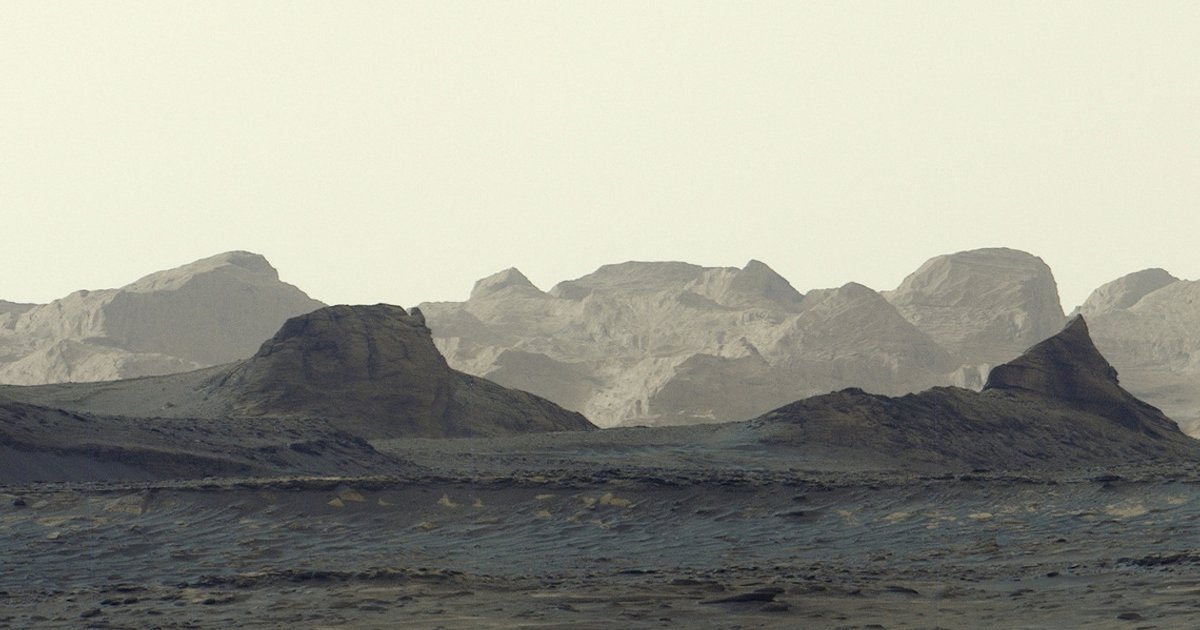
华盛顿,10月7日——美国国家航空航天局(NASA)发布了由其“好奇号”火星车拍摄的火星表面黎明时分的震撼画面。画面中,阳光洒落在数十亿年前形成的嶙峋岩壁上,而这辆汽车大小的火星车仍在继续探索这颗地球的行星邻居。
WASHINGTON, Oct 7 - NASA has released a striking image of dawn on the Martian surface taken by its Curiosity rover, showing sunlight bathing jagged crags formed billions of years ago as the car-sized vehicle continues to explore Earth's planetary neighbor.
“好奇号”于2012年登陆火星赤道附近的盖尔陨石坑,自2014年以来一直在攀登夏普山——一座从陨石坑底部拔地而起、高3英里(5公里)的山峰。这张照片由这辆六轮火星车的桅杆相机拍摄,拍摄时间是在太阳从远处风蚀悬崖构成的地貌中升起约一小时后。
Curiosity landed in 2012 in Gale Crater near the Martian equator, and since 2014 has been climbing Mount Sharp, a 3-mile-tall (5-km-tall) mountain rising from the crater floor. The image was taken by the six-wheeled rover's Mastcam camera about an hour after the sun rose above a landscape featuring wind-carved cliffs in the distance.
“远处那些明亮嶙峋的山峰,是一层与‘好奇号’迄今为止所经过的所有岩层在外观上截然不同的岩石层。我们认为,它最初可能是被风吹动的沉积物,或许是沙子,甚至可能是来自附近火山活动的火山灰。在沉积物硬化成岩之后,经过漫长的岁月,风力将这一岩层雕刻成了被称为‘雅丹’的山脊。”NASA位于加利福尼亚州喷气推进实验室的行星科学家、同时也是“好奇号”项目科学家的阿什温·瓦萨瓦达表示。
"The bright craggy peaks in the distance are a rock layer that is quite different in appearance from all the layers the rover has driven through so far. We think it once was wind-blown sediment, maybe sand or maybe even ash that blew into the crater from nearby volcanic activity. After the sediment hardened into rock, eons of wind carved up the rock layer into ridges called yardangs," said planetary scientist Ashwin Vasavada of NASA's Jet Propulsion Laboratory in California, the Curiosity project scientist.
据瓦萨瓦达称,这层雅丹岩层很可能形成于大约30亿年前,与这座山脉的其他部分形成于同一时期。该岩层横跨夏普山西北部约10英里(16公里)的范围。
The yardang layer most likely formed about 3 billion years ago, around the same time as the rest of the mountain, according to Vasavada. This layer spans about 10 miles (16 kilometers) across the northwestern reaches of Mount Sharp.
“然而,这层雅丹岩层似乎并非构成夏普山‘层状蛋糕’结构的连续岩层堆叠的一部分,而是稍晚一些才形成的。它位于地质学家所称的‘不整合面’之上——即一个时间断层,在此之前的岩层被侵蚀殆尽,之后新的岩层才沉积在其上。”瓦萨瓦达说道。
"However, the yardang layer doesn't appear to be part of the continuous stack of layers that make up the layer-cake of Mount Sharp. It was added on a little later. It's above what geologists call an unconformity: a gap in time where previous layers eroded down before new layers were deposited on top," Vasavada said.
据NASA称,“好奇号”在缓慢攀登这座山脉的过程中,其海拔已上升超过0.6英里(1公里),创下火星历史上最高的攀登纪录。
The rover on its gradual ascent up the mountain has gained upwards of 0.6 miles (1 km) in elevation, the most ever climbed on Mars, according to NASA.
夏普山由层层岩层构成,每一层都记录了火星地质历史的一个时期。通过研究这些岩层,科学家们对远古时期曾覆盖该地区的湖泊和溪流等水体有了更深入的了解。那时的火星比如今这个寒冷荒凉的地方更加湿润和温暖。
Mount Sharp is built of layers, each recording a period of the planet's geological past. In studying these layers, scientists have learned more about bodies of water — lakes and streams — that long ago covered this region, at a time when Mars was wetter and warmer than the cold and desolate place it is today.
瓦萨瓦达表示,美国国家航空航天局(NASA)希望“好奇号”火星车能在2027年或2028年抵达雅丹地貌层,届时它将利用其搭载的仪器对该地区的地质情况进行细致考察。
Vasavada said NASA hopes Curiosity will reach the yardang layer in 2027 or 2028, at which time it will use its instruments to scrutinize the geology there. Curiosity has been studying the geology and climate of Mars and examining whether it once bore conditions conducive to harboring microbial life.
“好奇号”一直在研究火星的地质和气候,并考察其过去是否曾具备孕育微生物生命的适宜条件。它是NASA目前在火星上运行的两台火星车之一。另一台“毅力号”火星车目前正在北半球的杰泽罗撞击坑边缘行驶。“好奇号”拍摄的这张火星黎明新照片确实充满了异域风情。
It is one of two NASA rovers operating on Mars. The Perseverance rover is currently traversing the margins of Jezero Crater in the northern hemisphere. Curiosity's new image of Martian dawn is certainly otherworldly. "This scene has a wildness that reminds me of a road trip through Monument Valley, Arizona. You can almost feel the silence and the endless open space under the sky.
瓦萨瓦达说:“这幅景象有一种狂野之美,让我想起在亚利桑那州纪念碑谷的公路旅行。你几乎能感受到天空下那片无尽开阔空间中的寂静。虽然这种描述听起来很熟悉,但那里的天空是橙色的,日出时还泛着蓝色的色调。它就像地球,但绝对是火星。”
But as familiar as that sounds, the sky is orange and the sunrise has shades of blue. It's like Earth, but it's definitely Mars," Vasavada said.