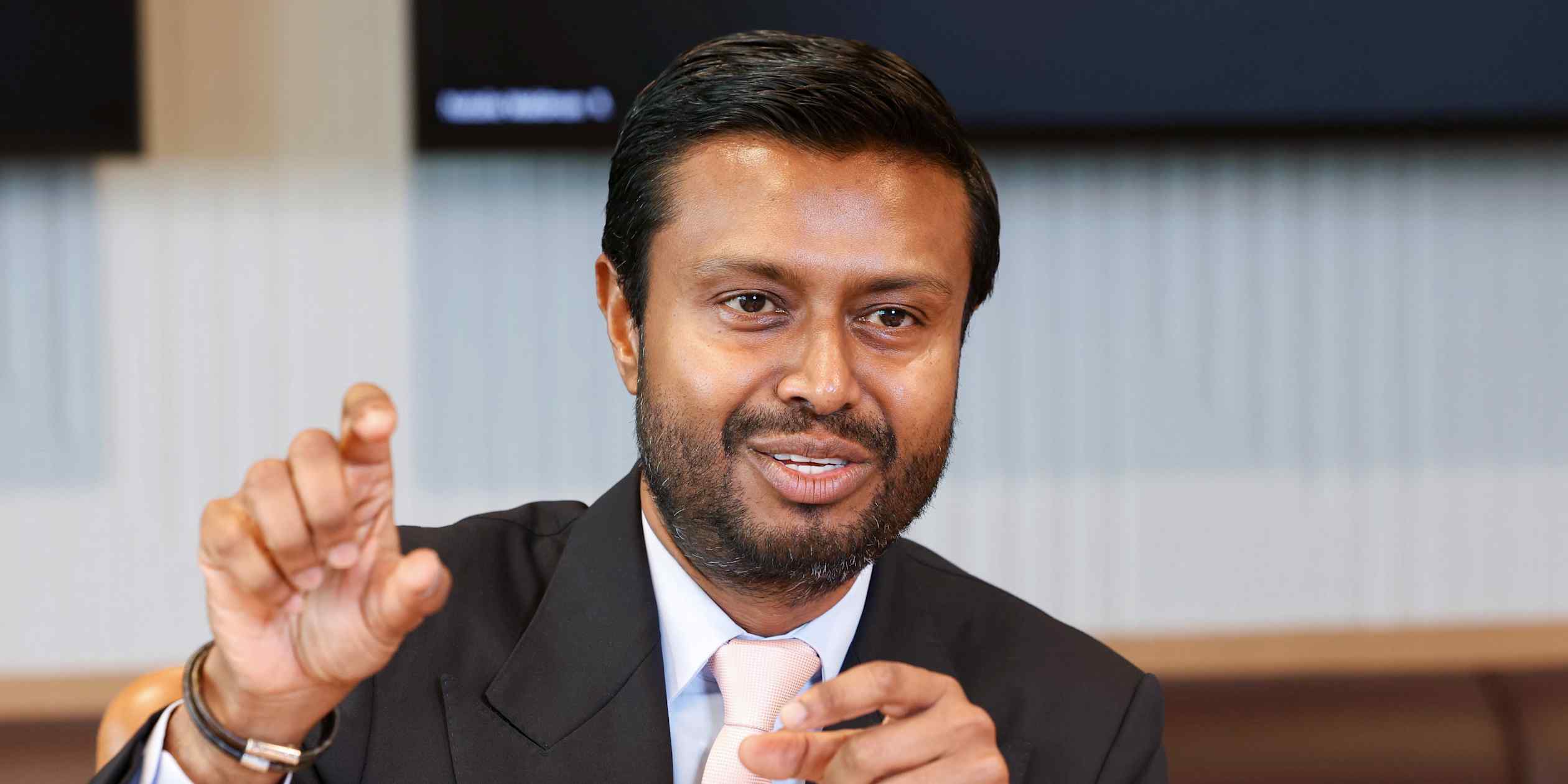
东京——澳大利亚运营商AirTrunk计划在未来五年内将其在日本的总数据中心投资扩大至三倍,最高可达300亿美元,以应对亚洲人工智能基础设施日益增长的需求。
TOKYO -- AirTrunk plans to triple its total data center investment in Japan to as much as $30 billion over the next five years, as the Australian operator expands to meet growing demand for artificial intelligence infrastructure in Asia.
“日本市场的需求前景……将非常巨大,”首席执行官Robin Khuda在周三接受《日经亚洲》采访时说道,并补充称AirTrunk对该市场仍“非常乐观”。
"The prospect of demand in Japan ... will be massive," CEO Robin Khuda told Nikkei Asia in an interview on Wednesday, adding that AirTrunk remained "very bullish" on the market.
这项计划中的投资凸显了日本已成为亚洲最大的数据中心市场之一,目前主要由云计算驱动。但Khuda表示,AirTrunk正越来越多地感受到人工智能工作负载的强劲需求,包括模型训练和查询响应的推理阶段。
The planned investment underscores that Japan has become one of Asia's largest data center markets, driven to date mainly by cloud computing. But Khuda said AirTrunk was increasingly seeing strong demand for AI workloads, including model training and the inference stage of answering queries.
AirTrunk还计划将其在日本当前已承诺的530兆瓦容量翻倍,达到超过1吉瓦。
AirTrunk also plans to double its current 530 megawatts of committed capacity in Japan to over 1 gigawatt.
位于东京东部印西市的TOK1园区的一项重大扩建项目,是对液冷技术投资10亿美元,使其在日本现有园区的总承诺投资超过90亿美元。公司计划在五年内实现270亿至300亿美元的总投资。
One major expansion at its TOK1 campus in Inzai, east of Tokyo, is a $1 billion investment in liquid-cooling technology, bringing the total committed investment across its existing Japanese campuses to over $9 billion. It is targeting $27 billion to $30 billion in total investment within five years.
Khuda表示,较高的建设和融资成本使日本成为一个相对昂贵的市场,但地缘政治的稳定性和强劲的国内需求持续吸引着全球科技公司。他说,与那些局势不太稳定的市场相比,客户“愿意支付溢价”在日本部署算力。
Khuda said higher construction and financing costs had made Japan a relatively expensive market, but geopolitical stability and strong domestic demand continued to attract global tech companies. Customers are "happy to pay a premium" to deploy capacity in Japan compared with less stable markets, he said.
AirTrunk于2024年被美国私募股权集团黑石收购,目前在全球七个市场拥有22个数据中心园区,运营和规划容量约为3.3吉瓦,主要服务于大型科技公司和超大规模云服务商。
AirTrunk, acquired by U.S. private equity group Blackstone in 2024, has 22 data center campuses with about 3.3 GW of operating and planned capacity across seven markets, and focuses primarily on serving major tech firms and hyperscalers.
Khuda表示,美国数据中心开发面临限制,大型项目在当地社区中遭遇的阻力日益增加,这可能会促使更多投资转向亚洲地区。“最大的受益者将是亚洲,”他说。
Khuda said constraints on data center development in the U.S., where large projects have faced growing resistance from local communities, could shift more investment toward the region. "The biggest beneficiary would be Asia," he said.
麦肯锡咨询公司表示,2025年亚太地区的数据中心需求达到28吉瓦(GW),约占全球总量的三分之一,低于北美43%的份额;预计到2030年,该地区的容量将增长至原来的三倍。
Data center demand in the Asia-Pacific region stood at 28 GW in 2025, or about one-third of the global total, behind North America's 43% share, with capacity expected to triple by 2030, according to consultancy McKinsey & Co.
据《日经新闻》的一项调查,日本计划建设的AI数据中心预计到2033年将使该国容量从2025年底的1.1吉瓦增长至4.9吉瓦,增幅超过四倍。
In Japan, planned AI data centers are expected to more than quadruple the country's capacity to 4.9 GW by 2033 from 1.1 GW at the end of 2025, according to a Nikkei survey.
AirTrunk将澳大利亚、日本、马来西亚和印度视为其扩张的四大主要枢纽。Khuda还将韩国描述为一个“颇具吸引力的市场”,具有巨大潜力,尽管短期内公司的努力仍将集中在现有枢纽上。
AirTrunk sees Australia, Japan, Malaysia and India as its four main hubs for expansion. Khuda also described South Korea as an "interesting market" with significant potential, although near-term efforts would remain concentrated on existing hubs.
随着主要城市周边电力供应日益紧张,该公司也在考虑在日本国内增设更多区域性站点。Khuda表示,尤其是AI训练任务并不总是需要部署在东京附近。
The company is also considering more regional locations within Japan as electricity becomes harder to secure around major cities. AI training workloads in particular do not always need to be located close to Tokyo, Khuda said.
尽管需求强劲,Khuda也承认,由于大型数据中心对电网、水资源和土地造成压力,亚洲对数据中心的反对声音正在蔓延。他表示,该行业的“社会运营许可”将越来越决定哪些项目能够获批推进。
Despite strong demand, Khuda acknowledged that opposition to data centers is spreading in Asia as larger facilities put pressure on power grids, water and land. The industry's "social license to operate" would increasingly determine which projects were allowed to proceed, he said.
他补充说,当地社区“完全有理由”质疑大型数据中心是否能为资源消耗提供足够的本地效益。更严格的标准可能会增加经验较少的开发者的进入壁垒,并迫使运营商证明其项目能为周边社区带来更大收益。
Communities are "quite rightly" asking whether large data centers provide enough local benefits to justify their use of resources, he added. Tougher standards could raise barriers for less-experienced developers and force operators to demonstrate greater benefits for surrounding communities.
Khuda指出,马来西亚南部的柔佛州是亚洲增长最快的数据中心市场之一。在邻国新加坡收紧新设施限制后,该地区的开发进程明显加快。他表示,AirTrunk位于柔佛州的园区约有90%的员工为本地招聘,项目支出的近五分之一也用于本地供应商。该公司还正在当地投资一个大型再生水项目。
Khuda pointed to Malaysia's southern state of Johor one of Asia's fastest-growing data center markets, where development accelerated after neighboring Singapore tightened limits on new facilities He said around 90% of AirTrunk's workforce at its Johor campus was hired locally, and close to a fifth of project spending went to local suppliers. The company is also investing in a large recycled-water project there.
“我不会说政府[或]社区会对数据中心实施制约,”库达说。相反,他们将越来越多地决定他们希望作为邻居的数据中心“运营商的质量”。
"I wouldn't say the government [or] community will put a brake on data centers," Khuda said. Instead, they would increasingly determine "the quality of data center" operators they wanted as neighbors.