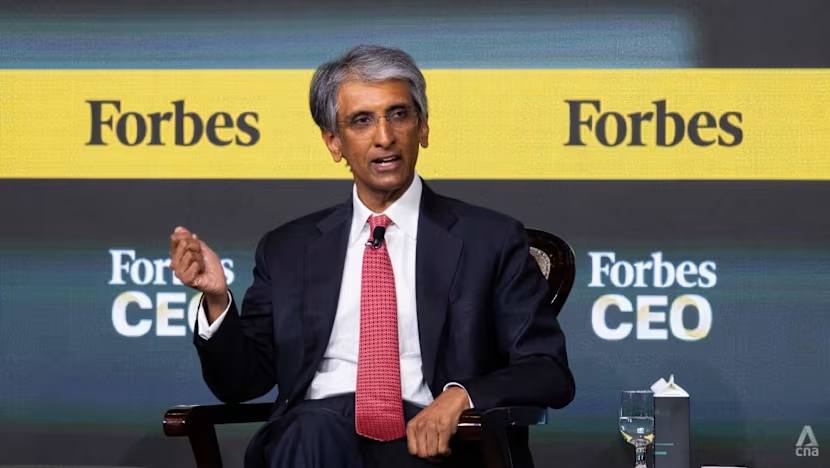
新加坡:淡马锡控股首席执行官迪尔汉·皮莱·桑德拉塞加兰周三(10月7日)表示,随着“惊人”规模的资金涌入人工智能领域,资本可能会广泛流向AI应用等领域。
SINGAPORE: With a “phenomenal” amount of money going into artificial intelligence, the capital could be spwidely to areas such as AI adoption, Temasek Holdings CEO Dilhan Pillay Sandrasegaran said on Wednesday (Oct 7).
这位新加坡主权财富基金掌门人在福布斯全球CEO大会的一个小组讨论中表示,大量资金正流向芯片和基础设施。与会者还包括亿万富翁雷·达里奥、富兰克林邓普顿首席执行官珍妮·约翰逊以及曼谷银行行长查西里·索彭帕尼奇。
Speaking on a panel at the Forbes Global CEO Conference, the head of Singapore's sovereign wealth fund said much of the money is flowing into chips and infrastructure. The panel included billionaire Ray Dalio, Franklin Templeton CEO Jenny Johnson and Bangkok Bank president Chartsiri Sophonpanich.
桑德拉塞加兰质疑,由于对AI基础设施的投资带来通胀压力,资本成本是否会上升。
Mr Sandrasegaran questioned whether the cost of capital will rise because of inflationary pressures from investment in AI infrastructure.
他说:“如此巨量的资金涌入AI基础设施等领域,我们现在必须开始思考,未来用于AI应用的资本还将有多少可用。”
“So much (is) moving into AI infrastructure and so on that we have to start thinking now about how much capital is available for the adoption going forward,” he said.
他表示,淡马锡正在考量此事,因为其旗下企业需要借贷以支持运营、转型及AI应用。
Temasek is considering this now because its companies need to borrow for their operations, transformation and AI adoption, he said.
桑德拉塞加兰指出,资本正流向英伟达首席执行官黄仁勋所界定的五大层级:能源、芯片、基础设施、模型和应用。其中大部分利润池流向了芯片行业。
Capital is flowing into the five layers laid out by Nvidia CEO Jensen Huang: energy, chips, infrastructure, models and applications, said Mr Sandrasegaran. Much of the profit pool has gone to the chip sector.
他说:“与半导体历史上任何时期相比,存储芯片厂商现在赚得盆满钵满。”
“The memory chip guys are making a bundle now compared to any time in the history of semiconductors,” he said.
他还回应了淡马锡子公司新电信电讯媒体决定以66亿新元(约51.6亿美元)向投资公司KKR和新电信出售其持有的新电信环球数据中心82%股权的决定。
He also addressed the decision by ST Telemedia, a Temasek subsidiary, to sell its 82 per cent stake in ST Telemedia Global Data Centres to investment firm KKR and Singtel for S$6.6 billion (US$5.16 billion).
桑德拉塞加兰说:“有人问我,‘既然这么多钱都在涌向AI,为什么你们要出售一家数据中心运营商?’”他表示,该子公司依靠淡马锡的AAA评级获得了优惠的信贷条件,并补充说,如果继续投资数据中心的能源容量或更先进技术,成本本会上升。
“People asked me, ‘Why would you want to sell a data centre operator when all that money is going to AI right now?’” said Mr Sandrasegaran. The subsidiary relied on Temasek's triple-A rating to get good credit at good rates, he said, adding that costs would have risen had it continued to invest in energy capacity or better technology for its data centres.
“当你成为一家企业的老板时,你必须考虑第二天早上会面临什么,而你的风险承受能力与投资者不同,因为你们调整策略的能力并不相同,”他补充道。
“You have to think about the morning after when you're the owner of a business, and then your risk tolerance level is different from that of an investor, because the ability to rotate is not the same,” he added.
人工智能应用中的试验与信任 在稍后的一个小组讨论中,DBS集团首席执行官Tan Su Shan探讨了企业如何鼓励采用人工智能。
EXPERIMENTATION AND TRUST IN AI ADOPTION On a later panel, DBS Group CEO Tan Su Shan discussed how companies can encourage AI adoption.
该小组讨论涵盖了地缘政治和劳动力变化背景下技术的发展,参与讨论的有东北大学校长Joseph E Aoun、新加坡交易所主席Koh Boon Hwee、Trip.com集团首席执行官Jane Sun以及SM投资公司副主席Teresita Sy-Coson。
The panel, which covered the growth of technology amid geopolitical and workforce changes, included Northeastern University president Joseph E Aoun, Singapore Exchange chairman Koh Boon Hwee, Trip.com Group CEO Jane Sun and SM Investments vice-chairperson Teresita Sy-Coson.
Tan女士表示,推动人工智能应用的一种方式,是在安全的环境中允许试验和失败。她补充说,DBS为员工提供了一个基于企业知识的安全空间,并配有相应的控制和管理政策,让他们能够自行构建人工智能代理。
One way to drive AI adoption is to allow experimentation and failure in a safe environment, said Ms Tan. DBS gives employees a safe space grounded in enterprise knowledge, with controls and governance policies, to build their own AI agents, she added.
2026年10月7日,DBS集团首席执行官Tan Su Shan在香格里拉酒店举行的《福布斯》全球CEO大会上的发言。
DBS Group chief executive officer Tan Su Shan during the Forbes Global CEO conference at Shangri-La on Oct 7, 2026.
当她接任银行领导职务时,她向各团队发起挑战,要求他们开发出可供他人使用的最佳人工智能代理,并推动各业务部门实现“大规模、深层次的运营模型变革”。
When she took the helm of the bank, she challenged teams to come up with the best AI agent others could use, and units to create “big, massive operating model transformation changes”.
Tan女士还强调了数据治理和问责制的重要性,因为现有遗留数据量庞大,同时每天还会产生新的数据。她指出,数据生命周期的所有权往往不明确,而数据的标记、存储和使用方式也必须随之改变。
Ms Tan also highlighted the importance of data governance and accountability, given the large volume of existing legacy data and new data created every day. Ownership of the data lifecycle is often unclear, and the way data is tagged, stored and used will have to change, she said.
“因此,首先,必须建立一个坚实的基础,确保从数据诞生到被清除的整个过程中,你拥有清晰的所有权和问责机制,并清楚数据的位置。其次,还需要制定一套处理结构化和非结构化数据的标准规范,”她说。
“So first of all, it's really creating a foundation of making sure that your end-to-end data, from the day it's born to the day it's purged, you have clear ownership, accountability and you know where it sits. And then a rubric around how you deal with structured data and unstructured data,” she said.
Tan女士还表示,企业的文化是另一个关键因素。企业必须始终专注于为客户做正确的事,而不仅仅是追求利润最大化。她说,在应对就业转型时,也必须考虑如何保护人们。
A firm's culture is another factor, said Ms Tan. It must stay focused on doing the right thing for the customer rather than just optimising profits. Protecting people in the face of job transformations must also be considered, she said.
“对我们来说,我们的主张是:我们此行的目的不是保护工作岗位,而是保护人们。”她补充说,员工需要正确的态度来利用人工智能,并提升生产力。
“For us, we have a rhetoric that says we're here not to protect jobs, we're here to protect people,” she said, adding that employees need the right attitude to harness AI and move up the productivity ladder. For instance, someone in operations whose role disappears can look at becoming an AI agent manager – the human in the loop who watches the AI agents as they operate, she said.
例如,她指出,那些岗位消失的运营人员,可以转型成为人工智能代理经理——即作为“人在回路”中的角色,监督人工智能代理的运行。达利奥警告称存在“经典泡沫”达利奥先生告诉听众,人工智能正是一个即将破裂的“经典泡沫”。他表示,市场目前处于一个周期阶段:利率上升和形势变化尚未对其他资产造成冲击。
DALIO WARNS OF 'CLASSIC BUBBLE' Mr Dalio told the audience that AI is a "classic bubble" close to bursting. The market is at a stage of the cycle where rising interest rates and changing circumstances have yet to hurt other assets, he said.
达利奥先生长期警告存在人工智能泡沫,他表示,当利率持续攀升时,泡沫就会开始破裂。
The bubble starts to pop when rates keep climbing, said Mr Dalio, who has long warned of an AI bubble.
他的言论发表之际,普华永道分析师预测,为满足日益增长的人工智能需求,全球数据中心的支出到2050年将达到31.6万亿美元。这一数字超过了美国30万亿美元的经济总量。
His comments come as PWC analysts predicted that global data centre spending will reach US$31.6 trillion by 2050 to meet the growing appetite for AI. That is more than the United States’ gross domestic product of US$30 trillion.
富兰克林·邓普顿公司的约翰逊女士表示,重大技术进步往往伴随着过度投资。
Overinvestment often accompanies big technological advancements, said Franklin Templeton's Ms Johnson.
她说:“我们所说的泡沫,体现在那些超大规模科技公司身上,它们正在投入巨额资本,并大量举债。”
“What we’re talking about with the bubble is in these hyperscalers who are deploying a huge amount of capital, raising a ton of debt,” she said.
她强调,所有这些关于投资所需能源的预测都基于当前的技术。因此,在技术快速创新的背景下,基于这些预测所做的长期承诺“风险会稍大一些”。
She stressed that all projections of the energy these investments will need are based on today's technology. Long-term commitments built on those projections are therefore "a little bit more hazardous" amid rapid innovation, she said.