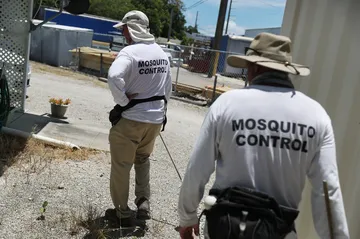
对于一个政府官方不承认气候变化真实存在的州来说,佛罗里达仍然是美国最繁忙的气候变化实验室。
For a state whose government officially doesn’t believe climate change is real, Florida remains our nation’s busiest climate-change laboratory.
对阳光之州的最新考验是登革热疫情,这是自20世纪40年代以来美国最大规模的登革热疫情。数字相对较小:根据美国疾病控制与预防中心的最新统计,截至统计时为485例,主要集中在坦帕所在的县。但这种疾病——有时被称为“断骨热”,因为患者会感到骨头剧痛——不久前在美国还很罕见。
The latest test for the Sunshine State is an outbreak of dengue fever, the largest in the US since the 1940s. The numbers are relatively small: 485 cases as of the latest count from the Centers for Disease Control and Prevention, largely concentrated in Tampa’s home county. But any case of the disease — sometimes called “break-bone fever” because of how it makes sufferers’ bones feel — was rare in the US not long ago.
现在就将这次特定疫情归因于气候变化还为时过早,因为在任何情况下,佛罗里达的高温都足以引发登革热疫情。但全球变暖正在使地球上更广阔的区域变得对携带疾病的蚊子更加友好,而这些蚊子正是登革热的传播媒介。佛罗里达今天的经历,将成为不久的将来更高纬度地区的前车之鉴。
It’s too soon to attribute this particular episode to climate change because Florida can certainly be hot enough for a dengue outbreak under any circumstances. But a warming planet is making broader swaths of the planet friendlier to disease-carrying mosquitoes, which spread dengue fever. Florida’s experience today will be an example for places at higher latitudes in the near future.
根据澳大利亚莫纳什大学研究人员本周发表在《科学进展》期刊上的一项研究,传播登革热的埃及伊蚊和白纹伊蚊在26至31摄氏度(79至88华氏度)的持续温度下最为危险。这些昆虫还喜欢高湿度和降雨(不过它们也能应对干旱,因为干旱意味着人们会储存更多敞口水容器)。
TheAedes aegypti and Aedes albopictusmosquitoes that spread dengue are most dangerous in sustained temperatures of 26 to 31 degrees Celsius (79 to 88 degrees Fahrenheit), according to a study published this week in the journal Science Advances by researchers from Monash University in Australia. These insects also love high humidity and rainfall (though they can also deal with drought because it means people keep more open containers of water).
佛罗里达一向炎热潮湿。在第二次世界大战之前,美国曾多次遭遇类似登革热的疫情。但全球根除黄热的努力使许多蚊媒疾病在美国消失了数代人之久。直到2009年,登革热才重返佛罗里达,当时基韦斯特有少数人感染了该病。
Florida has always been hot and humid. And the US struggled repeatedly with dengue-like outbreaks before World War II. But a global effort to end yellow fever quashed many mosquito-borne illnesses here for generations. Dengue didn’t return to Florida until 2009, when a handful of people caught it in Key West.
自那以后,该州一直是美国本土登革热病例数最多的地区。根据美国疾病控制与预防中心的数据,2010年至2025年间,该州共有606例本地感染病例和近4200例与旅行相关的病例。排名第二的是加利福尼亚州,拥有近2600例病例,其中绝大多数与旅行有关。这些数字均远不及波多黎各,后者病例数超过42000例。但仍有充足的时间开始扭转局势。
Since then, the state has been the mainland’s runaway dengue leader, with 606 locally acquired cases and nearly 4,200 travel-associated cases between 2010 and 2025, according to the CDC. Second on the list is California, with nearly 2,600 mostly travel-related cases. None of them approach Puerto Rico, with more than 42,000 cases. But there’s plenty of time to start gaining ground.
正如我在《彭博观点》的同事拉拉·威廉姆斯多次记录的那样,全球变暖扩大了传播登革热、疟疾、基孔肯雅热、寨卡病毒及其他疾病的蚊子的活动范围。50年前,登革热仅在9个国家流行,如今已蔓延至140个国家。更炎热的地球也增加了传播莱姆病、脑炎、无形体病及其他可怕疾病的蜱虫的数量和分布范围。除了常见的洪水、野火和热浪之外,气候变化正是通过这些媒介攻击人类健康和经济福祉。
As my Bloomberg Opinion colleague Lara Williams has documented many times, global heating has expanded the territory of the mosquitoes that carry dengue, malaria, chikungunya, Zika and other diseases. Dengue was endemic to just nine countries 50 years ago. Now it’s in 140. A hotter planet is also boosting the numbers and range of ticks that carry Lyme, encephalitis, anaplasmosis and other horrors. All of these are vectors by which climate change attacks human health and economic well-being beyond the usual floods, wildfires and heat waves.
地球越热,这些害虫能征服的土地就越多。根据蒙纳士大学的研究,即使在非极端的温室气体排放情景下,到2080年,面临登革热风险的人口将比2015年多出23亿。这意味着到2080年,将有61亿人——大致相当于2000年的全球总人口——会定期暴露于该疾病的风险之中。
And the hotter the planet gets, the more land these pests can conquer. Even under less-than-extreme greenhouse-gas emissions scenarios, the number of humans at risk of dengue will be 2.3 billion greater in 2080 than in 2015, according to the Monash study. That means 6.1 billion people, roughly the entire global population in 2000, will be regularly exposed to the disease by 2080.
但人类行为与气候变化的影响也相互强化。蒙纳士研究指出,人们持续涌入佛罗里达和得克萨斯等炎热地区,有助于解释近期及未来登革热暴露风险的上升。广泛使用DDT喷洒(这一做法的终止是合理的)为蚊子提供了另一个微小的立足点。
But human behavior and climate-change effects also reinforce each other. The steady rush of people into hot places like Florida and Texas helps explain the recent and expected future rise in dengue exposure, the Monash study noted. The (justified) end of widespread DDT spraying gave mosquitoes another tiny toehold.
这意味着人类也拥有反击的手段,正如我们从黄热病中所学到的。数十年的教育和数十亿美元在预防和治疗方面的投入,帮助遏制了疟疾的肆虐,全球发病率在2000年至2016年间下降了三分之一以上,而死亡率下降了60%(尽管人口增长意味着疟疾病例数量仍在上升)。日益加快的城市化和经济状况的改善也有助于遏制这种疾病。
That means people also have the means to fight back, as we learned with yellow fever. Decades of education and billions of dollars of investment in prevention and treatment have helped slow the scourge of malaria, the global incidence rate of which fell by more than a third between 2000 and 2016, while the death rate fell by 60% (though population growth means the number of malaria cases is still rising). Increasing urbanization and economic well-being also help curb that disease.
“休斯敦本该是疟疾流行区,”研究蚊媒疾病的哥伦比亚大学教授、气候学家和传染病专家杰弗里·沙曼告诉我。“那里沼泽遍布、气候温暖,给蚊子提供了大量繁衍机会。但它们并没有,原因在于开发。”但沙曼和莫纳什大学的研究指出,伊蚊实际上在城市环境中繁衍旺盛。对抗登革热将需要不同的武器。
“Houston should be a malaria zone,” Columbia University professor Jeffrey Shaman, a climatologist and infectious-disease specialist who studies mosquito-borne diseases, told me. “It’s swampy, warm, and has lots of opportunities for mosquitoes to do their thing. But they don’t, and the reason is development.”But the Aedes mosquitoes actually thrive in urban environments, Shaman and the Monash study pointed out. Fighting dengue will require different weapons.
Alphabet旗下的Google、莫纳什大学的“世界蚊子计划”及其他团体都在开展项目,让蚊子感染一种名为沃尔巴克氏体的细菌并予以释放,这能在一定程度上抑制蚊虫数量,至少暂时有效。环境保护局已搁置Google在加利福尼亚州和佛罗里达州释放感染蚊子的请求数月之久。但特朗普总统上周下令政府加快一切遏制蚊媒和蜱媒疾病的努力,这些疾病正肆虐沼泽遍布的华盛顿特区,最终将波及全国其他地区,这可能会有所帮助。
Alphabet Inc.’s Google, Monash University’s World Mosquito Program and other groups have programs to infect and release mosquitoes with a bacteria called wolbachia, which can curb bug populations, at least temporarily. The Environmental Protection Agency has been sitting for months on a Google request to release infected mosquitoes in California and Florida. But President Donald Trump last week ordered his government to speed up any efforts to rein in all the mosquito- and tick-borne diseases terrorizing boggy Washington, DC, and eventually the rest of the country, which could help.
佛罗里达州已经在开展自己的实验。《迈阿密先驱报》报道,李县(福尔斯迈尔斯所在地)自2017年起就开始释放感染沃尔巴克氏体的蚊子。该县还利用辐射给雄蚊绝育,并通过飞机和无人机将它们投送给毫无防备的雌蚊。尽管该县距离坦帕以南120英里,但目前仅有11例登革热病例。
Florida is already running its own experiments. Lee County, home of Fort Myers, has been releasing wolbachia-infected mosquitoes since 2017, the Miami Herald reported. It’s also using radiation to sterilize male bugs and delivering them to unsuspecting mates by plane and drone. The county currently has just 11 dengue cases, though it’s 120 miles south of Tampa.
沃尔巴克氏体并非完美的解决方案,也并非在所有地方都有效。此外,人们往往对“弗兰肯蚊子”嗡嗡飞舞的想法感到不安,佛罗里达群岛在提议利用基因改造昆虫来控制蚊子数量时便遭遇了这种情况。
Wolbachia isn’t a perfect solution and isn’t effective everywhere. People also tend to get weirded out by the idea of Frankensquitoes buzzing around, as the Florida Keys discovered when it proposed using genetically modified bugs to curb populations.
因此,威廉姆斯在文章中指出,最佳方案是综合采用上述所有方法。这首先要从减缓有利于蚊子繁殖的全球变暖做起。同时,还需要结合细菌、辐射、无人机、(安全的)杀虫剂、以蚊子为食的鱼类以及任何其他可用的手段,并建立监控和预警系统。人们还需要养成定期排干鸟类浴盆及其他蚊子繁殖容器中积水的习惯。
The best approach, then, is all of the above, as Williams has written. That starts with slowing down mosquito-friendly global heating. And it includes surveillance and warning systems to go along with bacteria, radiation, drones, (safe) pesticides, mosquito-eating fish and whatever else is handy. People need to get in the habit of drying out bird baths and other water containers where mosquitoes breed.
沙曼表示,任何能减少人类与蚊子接触机会的方法都值得一试。“这正是控制疫情爆发的关键所在。”如果这种方法在佛罗里达行之有效,那么在其他任何地方也值得尝试。
Anything that gives humans and mosquitoes fewer chances to interact is worth trying, Shaman said. “That’s the name of the game for controlling outbreaks.”And if it works in Florida, it’s worth trying anywhere.