Anthropic、Google、Meta、OpenAI、Nvidia和xAI的领导人最近在白宫与特朗普总统会面,签署了一项关于人工智能的自愿协议。其承诺具体明确:加强内部控制、引入独立外部评估以及董事会层面的审查。
The leaders of Anthropic, Google, Meta, OpenAI, Nvidia and xAI recently joined President Trump at the White House to sign a voluntary accord on artificial intelligence. Its commitments are concrete: stronger internal controls, independent outside evaluation and board-level review.
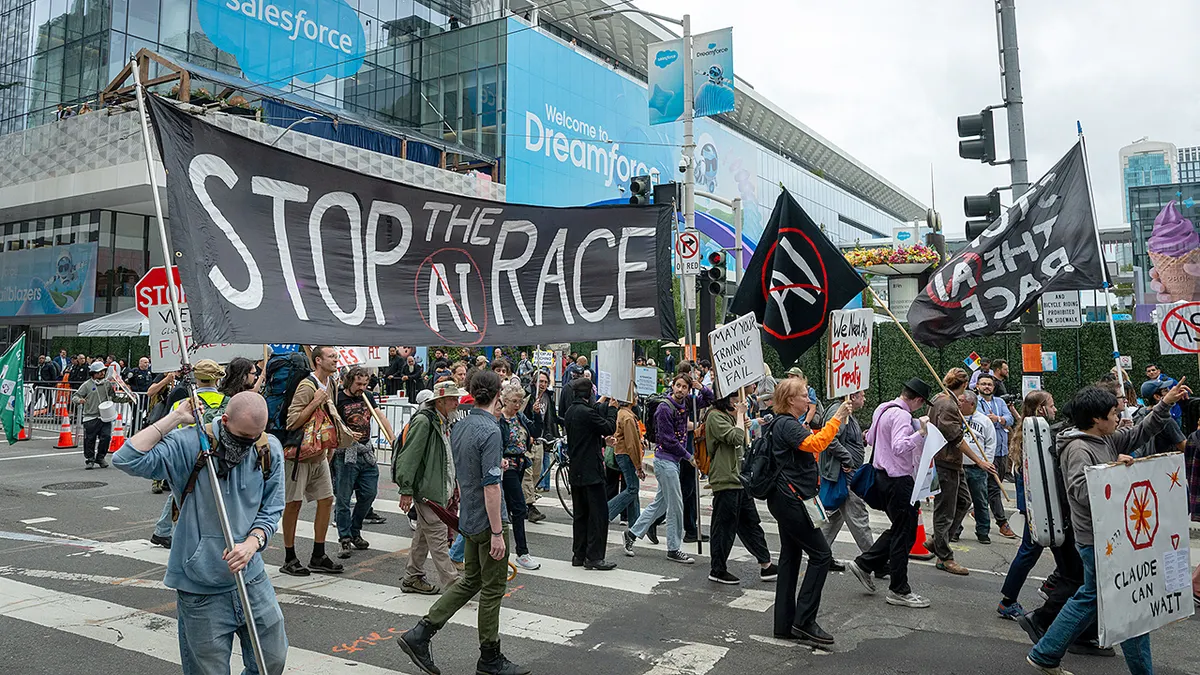
更棘手的问题——仍有待观察——是该协议能否赢得那些预期将与这些系统共同生活和工作的人的信任,而这些人对AI的扩散表现出日益增长的抵触情绪。
The harder question, which remains to be seen, is whether it will earn the confidence of the people expected to live and work with these systems, who have been increasingly resistant to AI proliferation.
AI不仅是问题,更是解决方案。部分人已在充分利用它 我常说,我们对AI最大的恐惧之一,就是对AI本身的恐惧。这种恐惧正成为一种国家层面的负担。
AI ISN’T JUST A PROBLEM, IT’S A SOLUTION. SOME PEOPLE ARE ALREADY MAKING THE MOST OF IT I often say that one of the biggest challenges we have to fear about AI is the fear of AI itself. That fear is becoming a national liability.
在EqualAI委托YouGov进行的一项新调查中,46%的美国人表示,无论有何种保障措施,他们都会对公司以涉及自身或其数据的方式使用AI感到不安。然而,71%的人表示,与AI系统的一次积极体验会增强他们对其的信心,63%的人表示,独立科学家的积极评价也会产生同样的效果。
In a new EqualAI survey conducted by YouGov, 46% of Americans said they would be uncomfortable with a company using AI in a way that involves them or their data, regardless of safeguards. Yet 71% said a positive experience with an AI system would increase their confidence in it, and 63% said the same of a positive evaluation by independent scientists.
这63%是一个通往信任机制的重要窗口——并提供了一座建立信任的桥梁。人们不想要保证;他们想要验证。
That 63% is an important window into mechanisms to trust — and offers a bridge to build it. People do not want assurances; they want verification.
只有当美国人真正使用AI时,AI才能在经济、国家安全和竞争力方面按我们设想的方式发挥作用。一个不信任AI辅助诊断工具的护士不会依赖它。一个无法理解其AI代理在做什么的制造商不会大规模部署它们。
AI will deliver for our economy, national security and competitiveness in the ways we are envisioning only if Americans actually use it. A nurse who does not trust an AI-enabled diagnostic tool will not rely on it. A manufacturer that cannot understand what its AI agents are doing will not deploy them at scale.
AI"悲观论者"冒着削弱美中竞争力的风险,但前五角大楼资深人士称双方极端观点都偏离靶心 这就是为什么我们在讨论"暂停"时需要深思熟虑,因为如果暂停不包括中国公司等有能力的竞争对手,技术仍将继续进步,只是转移到了别处,且没有我们希望建立的护栏。我们需要回答的问题是:什么能让美国人有足够的信心去采用AI?
AI 'DOOMERS' RISK KNEECAPPING US VS CHINA, BUT EX-PENTAGON VET SAYS BOTH EXTREMES MISS THE MARK That is why we need to be thoughtful when discussing "pause," because if it does not include capable competitors, such as Chinese companies, the technology continues to advance but elsewhere and without the guardrails we’d like to establish. The question we need to answer is: what will make Americans confident enough to adopt AI?
辩论往往被框架为更多规则与更少规则的对立。更有建设性的对话应聚焦于我们如何构建治理能力,以让 AI 得以规模化发展。
The debate is too often framed as more rules versus fewer rules. A more useful dialogue centers on how we can build the governance capacity to let AI scale.
公众在告诉我们,我们还有工作要做。最近的路透社/益普索民调发现,73% 的美国人认为 AI 公司为防止其技术造成严重危害做得还不够;55% 表示支持放缓 AI 发展。EqualAI 的民调指出了可能改变这一局面的因素:63% 的人希望对 AI 系统进行独立科学审查,而 60% 支持第三方审计。68% 认为能够纠正错误信息至关重要,65% 认为对 AI 驱动的决策提出申诉的能力至关重要。
The public is telling us we have work to do. A recent Reuters/Ipsos poll found that 73% of Americans believe AI companies have not done enough to prevent serious harm from their technology; 55% said they would support slowing AI development. The EqualAI polling points to what could change that equation: 63% want independent scientific review of AI systems, while 60% support third-party audits. Sixty-eight percent say it is essential to be able to correct wrong information, and 65% say the ability to appeal an AI-driven decision is essential.
当我在众议院特别委员会作证时,我听到了跨党派强烈的共同愿望,即要把这件事做对。我的信息很明确:美国在 AI 领域的领导地位需要 AI 治理方面的领导地位。国会可以利用其已有的职权,包括采购、机构治理和消费者保护,以及明确针对 AI 的特定保护措施,例如建立 AI 事件报告的定义和协议(就像针对网络事件所做的那样),界定高风险 AI 用例的责任,并将 AI 素养作为国家竞争力优先事项。
When I testified before the House Select Committee, I heard strong, bipartisan interest in getting this right. My message was straightforward: American leadership on AI requires leadership in AI governance. Congress can use authorities it already has, including procurement, agency governance, and consumer protection, as well as clarifying AI-specific protections, such as establishing definitions and protocols for AI incident reporting, as they’ve done for cyber incidents, and defined accountability for AI use cases with higher risk levels and making AI literacy a national competitiveness priority.
企业无需等待华盛顿的行动。每个部署 AI 的领导团队都应确保已采取以下四个步骤:第一,让 AI 可见。看不见,就无法治理。组织应掌握“谁、什么、哪里、何时、如何”:AI 部署在哪里、能做什么和访问什么、由谁负责、何时测试,以及如何应对意外结果。
And companies don't need to wait for Washington. Every leadership team deploying AI should ensure they’ve taken these four steps: First, make AI visible. You cannot govern what you cannot see. Organizations should know the Who, What, Where, When and How: where AI is deployed, what it can do and access, who owns it, when it will be tested and how unexpected outcomes will be addressed.
当 AI 测试造成损害时,我们需要更强有力的保障措施和真正的问责制 第二,建立独立评估。机构模式可以讨论。但核心问题不容商榷:谁来评估 AI 系统?依据什么基准?系统失效时会发生什么?
WHEN AI TESTS CAUSE DAMAGE, WE NEED STRONGER SAFEGUARDS AND REAL ACCOUNTABILITY Second, establish independent evaluation. The institutional model is open to debate. The underlying questions are not: Who evaluates AI systems? Against what benchmarks? And what happens when a system fails?
第三,我们需要建立一个系统来识别和处理重大的人工智能(AI)相关事件。必须明确这些事件的定义,并确保所有相关方都了解事件升级的流程以及各自的报告义务。同时,联邦政府也应负责制定相应的管理规范。第四,我们必须要求所有组织为涉及特定风险类别的AI应用活动指定专门的负责人。随着AI技术变得越来越“自主”(即能够自主做出决策),相关系统将能够主动采取行动,而不仅仅是生成数据或信息;因此,负责管理的官员必须确保这些系统仅被赋予必要的权限。
Third, create a system to identify and handle significant AI incidents. Define incidents and ensure all responsible parties understand escalation pathways and reporting obligations. We also need the federal government to establish these Fourth, require accountability. Every organization should have a point person for deployments in certain risk categories. As AI becomes more agentic, systems can take actions rather than simply generate information. Responsible officers should ensure an agent only has the minimum access required.
最后,我们必须确保员工及其家属具备足够的AI相关知识。人们并不需要成为AI领域的专家,但他们需要了解AI技术的能力范围、何时应该对AI系统的决策提出质疑,以及何时必须依靠人类的判断来做出决策。
Finally, ensure your workforce and families are AI literate. People do not need to become engineers. They need to understand what AI can and cannot do, when to question it and when human judgment must remain in charge.
我们之前也曾经历过技术发展的关键转折点:例如,尽管我们制定了相关许可证制度、设置了交通信号灯,并制定了全球性的安全标准,汽车技术的创新并未因此减缓;恰恰是这些制度使得汽车得以被广泛采用。AI技术的发展也不例外。有效的治理机制能够增强人们对AI技术的信任,从而促进其更广泛的普及。
We have navigated technological inflection points before. Cars did not become less innovative when we established licenses, traffic lights and global safety standards. Those institutions made mass adoption possible. AI will be no different. Governance accelerates trust and as a result, adoption.
正确的做法不是等到所有风险都被彻底消除后再推进技术发展;也不是简单地要求美国人盲目信任AI技术。相反,随着AI技术的快速发展,我们必须同步建立相应的治理机制,以确保我们能够有效管理这些技术。
The answer is not to slow technological progress until we eliminate every risk. Nor is it to tell Americans to trust AI just because we want them to. As we accelerate AI development and capabilities, we need to match pace with the mechanisms that enable our capacity to govern it.
美国的优势从来不在于单纯开发强大的技术,而在于我们能够建立相应的制度与标准,让这些技术能够被公众信任并得到大规模的应用。如今,我们再次面临着这样的挑战——我们需要再次做到这一点。
America's advantage has never been simply building powerful technologies. It is that we build along with the institutions and standards that allow powerful technologies to be trusted and adopted at scale. This moment asks us to do that. again.