在莫斯科一座曾陈列斯大林时代镇压证据的博物馆里,屏幕上闪烁着宁静的家庭场景,旁白则颂扬着苏联二战前生活的平静祥和。
In a Moscow museum that once housed evidence of Stalin-era repression, serene family scenes flickered on a screen as a narrator hailed the tranquillity of pre-World War II life in the Soviet Union.
这座博物馆的设立旨在纪念“苏联人民的种族灭绝”,它已取代了曾获奖项的“古拉格历史博物馆”——后者多年来通过令人痛心的展品,揭示了苏联独裁者约瑟夫·斯大林统治下数百万人被屠杀和监禁的惨状。
The museum – set up to commemorate the “genocide of the Soviet people” – has elbowed out the award-winning Gulag History Museum, a harrowing collection that had for years cast a light on the killings and imprisonment of millions under Soviet dictator Joseph Stalin.
但自2022年俄罗斯对乌克兰发动进攻以来,对俄罗斯历史的此类批评被斥为不爱国,并从教科书和官方叙事中被彻底清除。
But since Russia launched its assault on Ukraine in 2022, such criticism of the country’s past has been cast as unpatriotic, scrubbed from textbooks and the official narrative.
相反,克里姆林宫则更加强调对斯大林时代暴行的掩盖,不仅为这位独裁者平反,还在全国范围内竖立起他的雕像和半身像。
Instead, the Kremlin has doubled down on glossing over the horrors committed under Stalin, rehabilitating the dictator and erecting statues and busts of his likeness across the country.
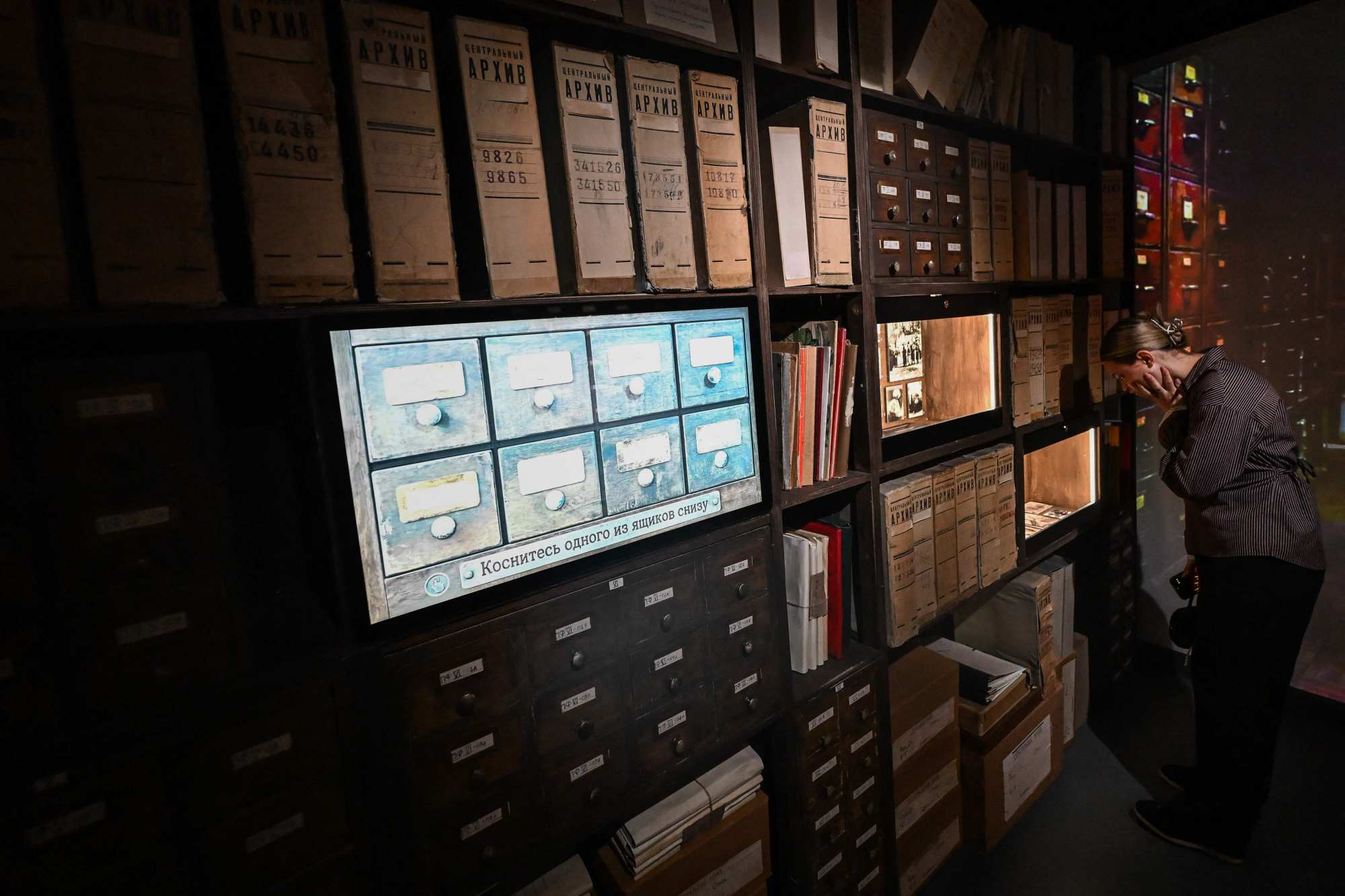
据新博物馆的一位导游称,“古拉格历史博物馆”于2024年因被指控违反消防安全规定而“暂时”关闭,其展品也“被转移至仓库”。
The Gulag History Museum was “temporarily” closed in 2024 on allegations of fire safety violations.
一位致力于保留古拉格记忆、但要求匿名的俄罗斯女性表示:“从今以后,镇压的历史将永远笼罩在迷雾之中,我们共同的历史也将持续被扭曲。”而从任何角度来看,这段历史都极其残酷。
Its exhibits “moved to storage”, according to a guide at the new museum. “From now on, the history of the repressions will remain a murky area, and our shared history will remain distorted,” a Russian woman who fights to preserve the Gulag memory said on condition of anonymity.
从20世纪30年代到50年代初,多达1800万人被政府关押在古拉格系统中,他们被指控为叛国者和国家敌人。
That history is grim from both perspectives.
历史学家普遍认为,其中至少有150万人死亡,而一些学者认为实际数字可能更高。
Up to 18 million people were imprisoned by their government in the Gulag system between the 1930s and early 1950s, accused of being traitors and enemies of the state.
根据几十年后解密的苏联档案,另有300万至500万人死于20世纪30年代乌克兰人为制造的大饥荒“霍洛多莫尔”,另有160万人被处决或在强制人口迁徙中丧生。
Historians generally accept that at least 1.5 million of them died, with some suggesting the real figure is higher.
与此同时,第二次世界大战也造成了巨大的伤亡——苏联的伤亡人数最高,据估计有2000万至2700万人死亡,其中包括平民和军人。
Another 3 million to 5 million died in the man-made Holodomor famine in Ukraine in the 1930s and 1.6 million were either executed or died as a result of forced population transfers, according to Soviet archives declassified decades later.
新博物馆内的扬声器中,一位旁白讲述道:在第二次世界大战期间——俄罗斯称之为“伟大的卫国战争”,并认为这场战争始于1941年纳粹对苏联的入侵——“我们的祖国遭遇了前所未有的暴力”。
World War II, meanwhile, inflicted its own deadly toll – the Soviet Union suffered the highest casualties, with 20 million to 27 million people estimated to have died, both civilians and military.
但博物馆中并未提及那些被逮捕、处决或关押在古拉格(苏联庞大的劳改营网络)中的人。
On speakers throughout the new museum, a narrator recounts how during World War II – which Russia calls the “Great Patriotic War” and says started with the 1941 Nazi attack on the USSR – “our homeland faced violence never seen before”.
尽管“记忆博物馆”以夸张的方式展现了克里姆林宫的官方叙事,但至今它一直保持着低调。目前,博物馆仅通过提前预约,为小团体提供导览服务。
There is not a word about those arrested, executed or imprisoned in the gulag, the Soviet Union’s vast network of prison labour camps. Despite its bombastic display of the official Kremlin narrative, the “Museum of Memory” has kept a low profile so far.
其网站上写道,博物馆“尤其”欢迎乌克兰战争的老兵及其家人,以及学生和中小学生。
It offers only guided tours to small groups by prior arrangement.
馆内,为数不多的参观者跟随一个由人工智能生成的故事,了解一个虚构的家族——列别杰夫一家——在列宁格勒围城战、集中营以及被夷为平地的村庄中所遭受的恐怖经历。
On its website, it says it welcomes “above all” veterans of the Ukraine war and their families, as well as students and schoolchildren.
“这是一个综合性的形象。这个家族的每个成员都有多个原型,”导游解释道。他还安慰说,这些场景“都有真实演员参与拍摄”。
Inside, the handful of visitors follow an AI-generated story of an imaginary family – the Lebedevs – recalling horrors endured during the Siege of Leningrad, in concentration camps and villages that were razed to the ground. “It’s a composite image. Each member of this family has several prototypes,” the guide explained.
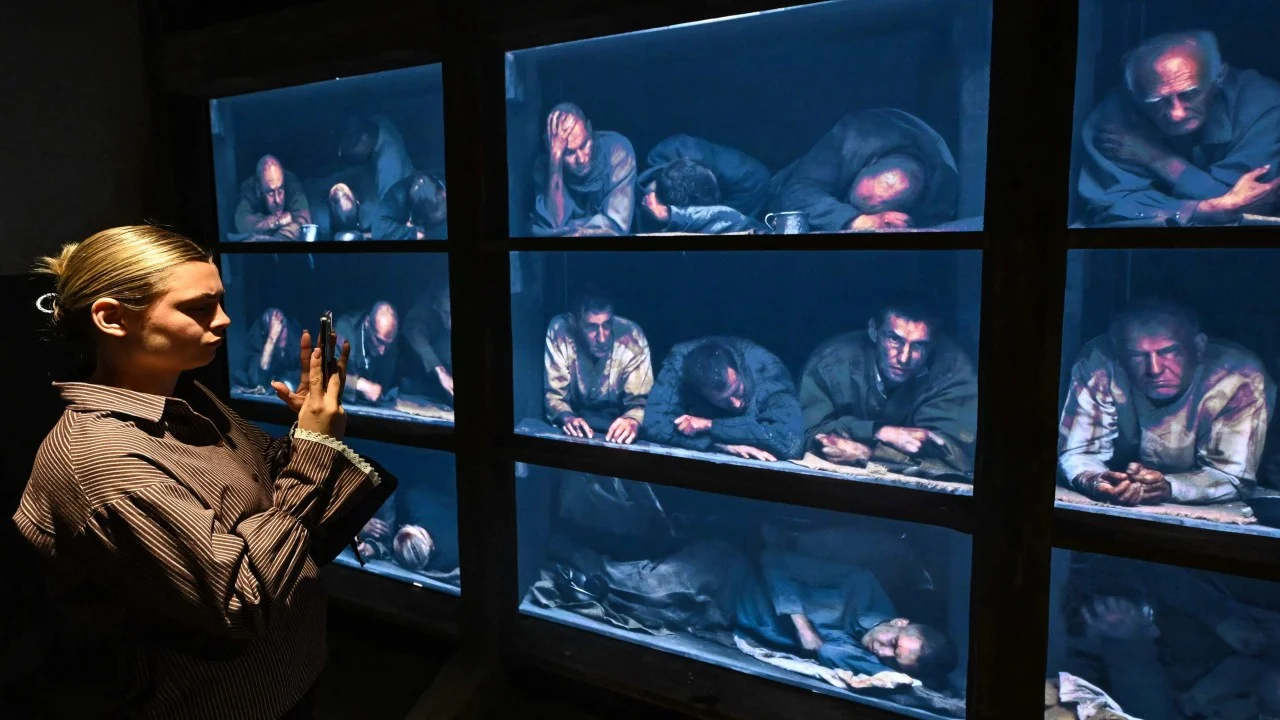
巨大的屏幕上播放着纳粹集中营床铺和奥斯威辛-比克瑙灭绝营入口的重现画面。
The scenes were, he reassured, “filmed with the participation of real actors”.
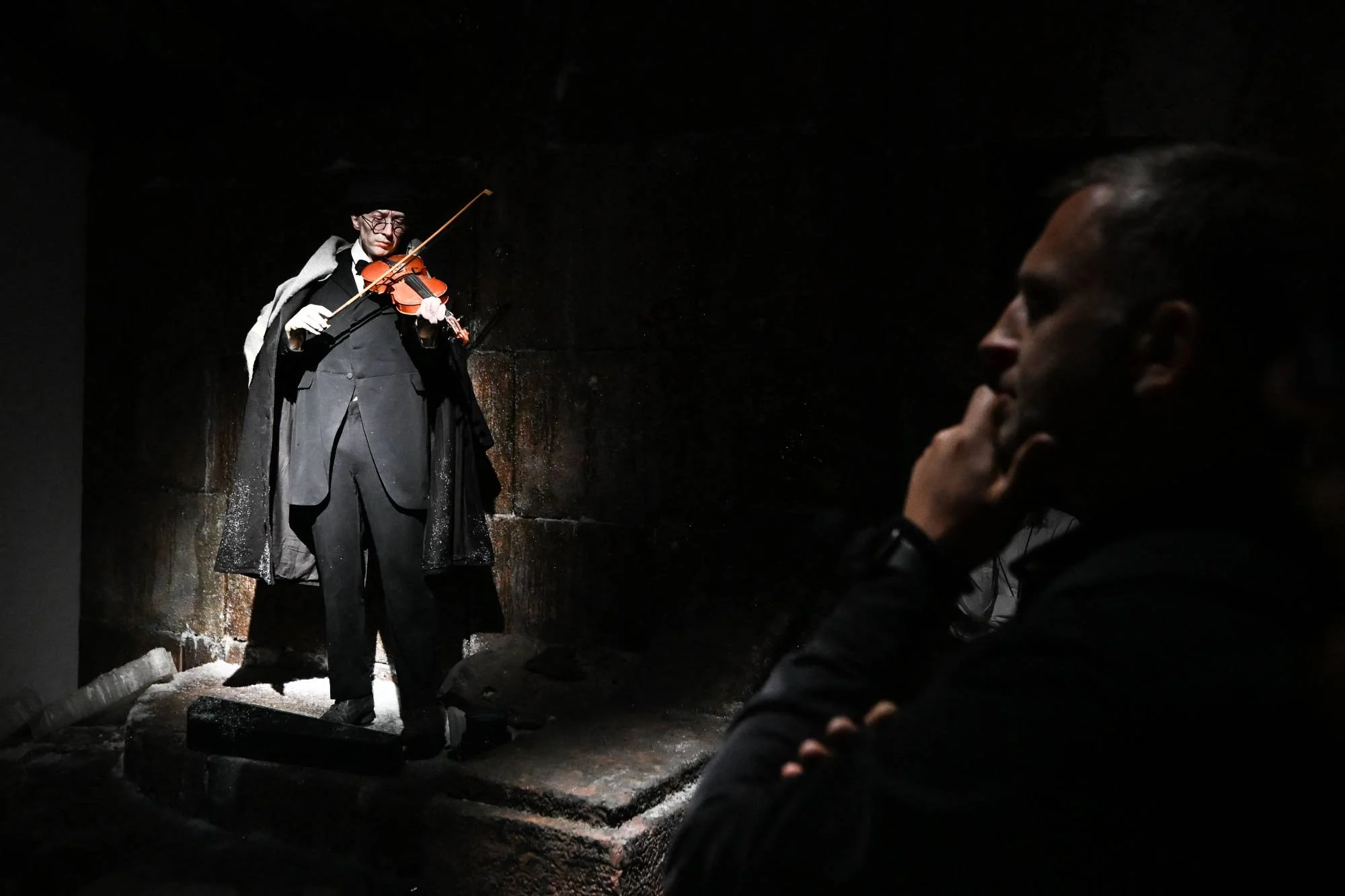
展厅四周摆放着蜡像式的人物——妇女和儿童,衣衫褴褛、血迹斑斑,正被纳粹士兵用枪指着。
Giant screens display recreations of bunks in Nazi concentration camps and the entrance to the Auschwitz-Birkenau death camp.
批评者既对原古拉格博物馆的关闭表示不满,也对新博物馆的内容提出质疑。
Around the hall are waxwork-style figures – women and children, their clothes torn and bloodstained, being held at gunpoint by Nazi soldiers.
由于博物馆选择不收录那个时期的第一手口述记录,许多内容都是依靠人工智能创作的。
Critics have balked both at the closure of the original Gulag museum and at the content of its replacement.
最后一个展厅专门介绍纽伦堡审判,纳粹官员于1945年11月至1946年10月期间在此受审并被定罪。
Much was created by AI, as the museum has chosen not to include first-hand accounts from the period.
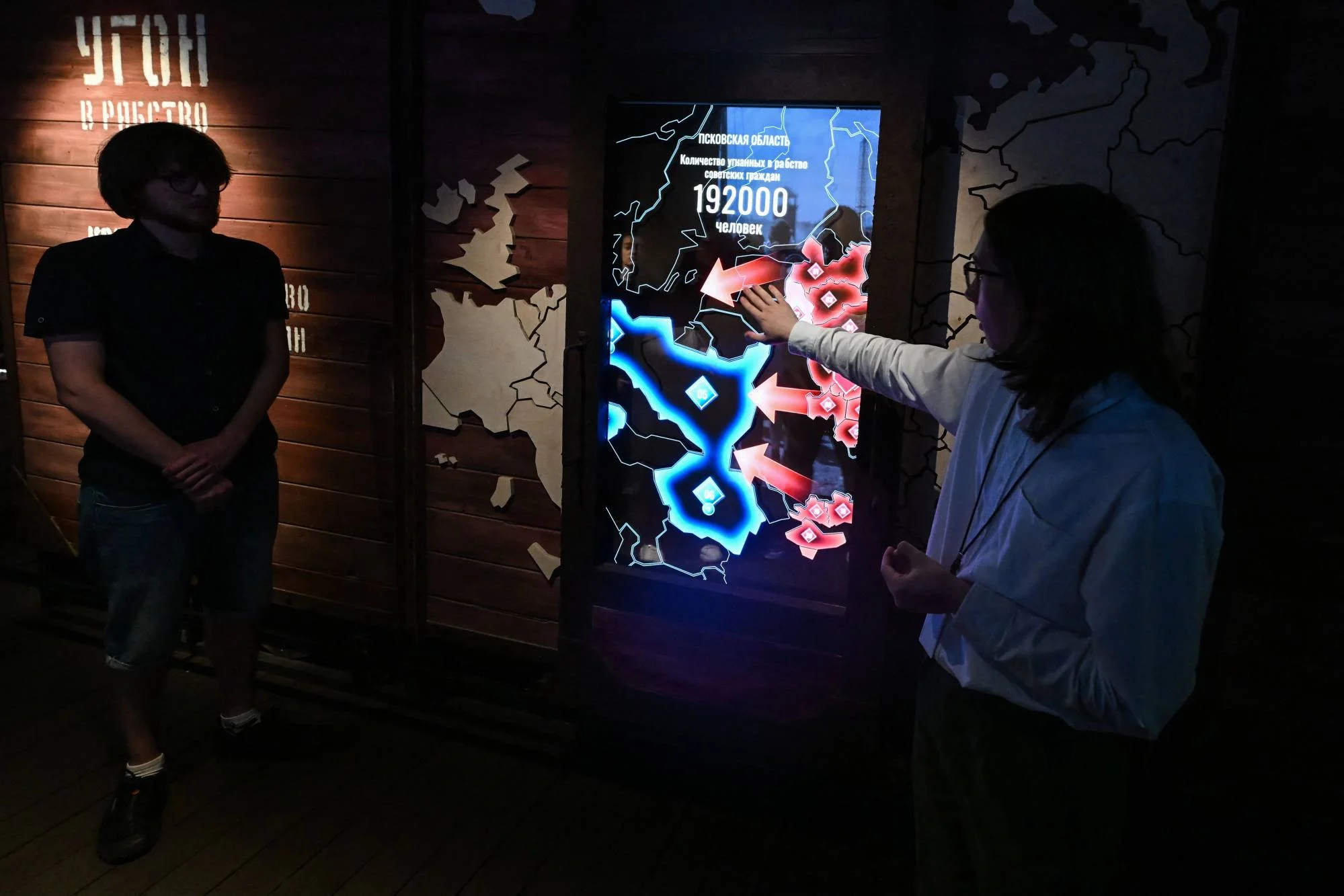
“所有战争最终都会以和平告终,所有罪行也都会由法庭审判,”导游说道。
The final room is dedicated to the Nuremberg trials, where Nazi officials were tried and convicted between November 1945 and October 1946.
43岁的历史学家马克西姆·诺维科夫参加了这次导览,他表示:“新博物馆有一部分专门介绍曾被纳粹占领的俄罗斯领土,这让我感到惊喜。”但他叹了口气说,它的前身却是“独一无二的”。
“All wars end in peace, and all crimes are judged by a court,” the guide said. Maxime Novikov, a 43-year-old historian on the tour, said he was “pleasantly surprised that part of the new museum is dedicated to Russian territories that were under Nazi occupation”.
他补充说,关闭它“很可能是一项政治决定,旨在让人们忘记古拉格的这段历史……而这是一段令人不安的历史。毕竟,这是俄罗斯情报机构——克格勃的历史”。
But its predecessor was “unique”, he said with a sigh.
自对乌克兰发动攻势以来,俄罗斯加大了对异议人士的监禁力度,并实施了严格的军事审查制度,以禁止批评当局。
Closing it was “most likely a political decision aimed at making people forget the history of the Gulag … which is a disturbing history. It is, after all, the history of the KGB”, the Russian intelligence services, he added.
72岁的医生丽娜表示,她觉得“非常难过……这个充满回忆的地方——我们本可以带子孙后代来参观的地方——如今已不复存在”。
Since launching its offensive on Ukraine, Russia has ramped up the jailing of dissenters and ushered in strict military censorship to outlaw criticism of the authorities.
她说:“历史上确实存在黑暗的篇章,但我们仍然必须意识到它们的存在。而且,历史无疑会重演。”“它甚至可能以比之前更可怕的方式再次发生。”法新社报道
Lina, a 72-year-old doctor, said she found it “terribly sad … that this place of memories – the place where we could have taken our children and grandchildren – no longer exists”. “There are dark chapters in history that we must nevertheless be aware of. And yes, history undoubtedly repeats itself,” she said. “It could happen again in an even more terrible way than before.”