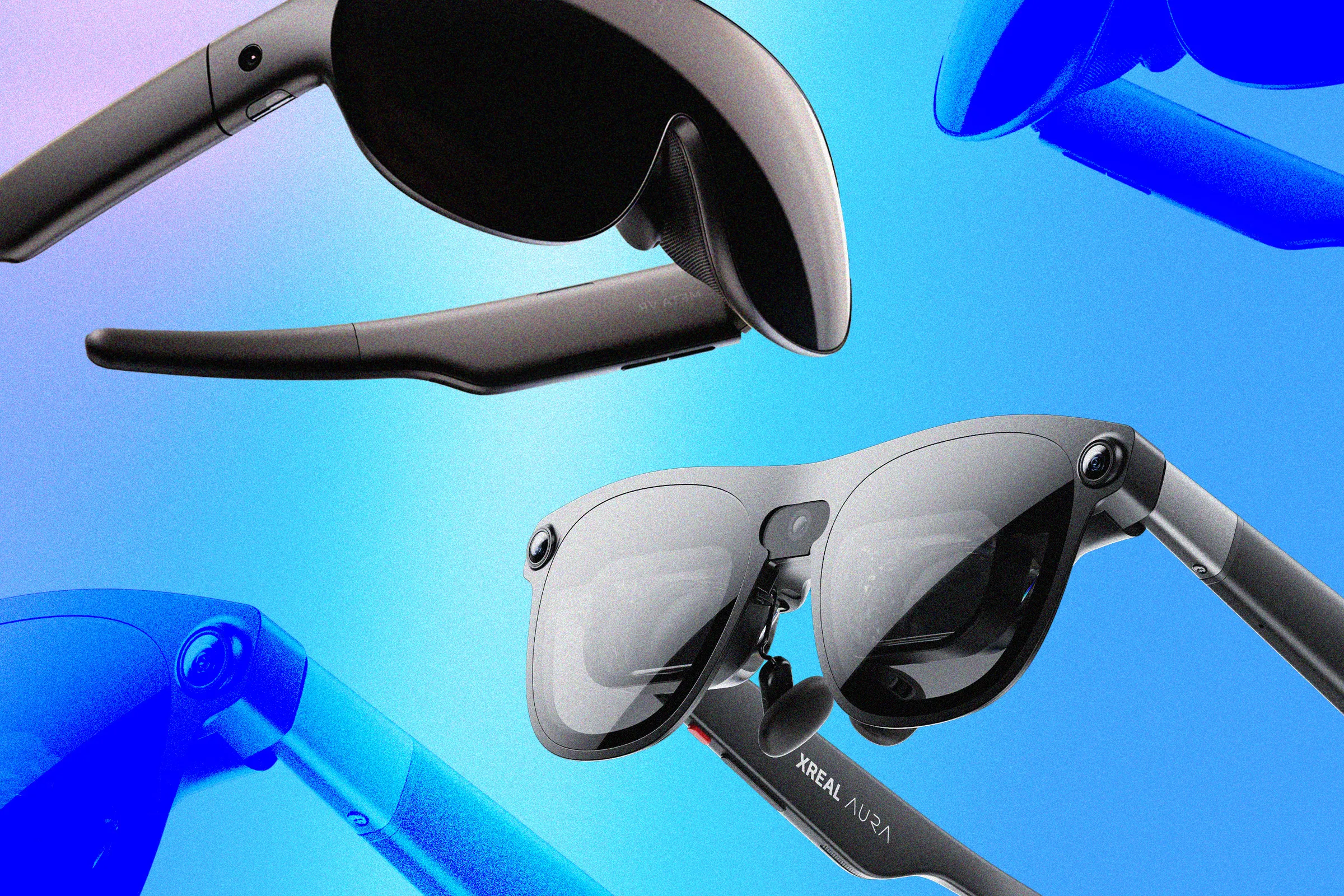
很抱歉要这么说,但这款售价1299美元的Meta VR眼镜其实可能相当不错。
I’m sorry to say, but the $1,299 Meta VR Glasses might just be very good.
尽管该公司因智能眼镜的隐私问题而备受诟病,以及人们对被录像的普遍不安,但在9月份Meta Connect活动上,我花了大约30到45分钟试戴这款混合现实眼镜,结果惊讶于它的视频质量和佩戴舒适度,尤其是这种长期以来一直以笨重发热的头戴式设备。
That's despite the company's well-earned flak over privacy issues with its smart glasses and the general uneasiness people feel about being recorded. But in the 30 to 45 minutes or so I spent wearing the mixed-reality glasses at Meta’s Connect event in September, I was astounded by the video quality and wearability of a device that has for so long come in the form of a heavy, hot headset.
但在面向计算机领域,Meta并不是唯一的佼佼者,远的还不止一点点。以虚拟显示眼镜闻名的Xreal公司已与谷歌合作,在Android XR平台上开发混合现实智能眼镜——Xreal Aura。周三该公司宣布了正式售价,起价1279美元,比Meta的VR眼镜便宜20美元。与Meta的产品不同的是,Aura眼镜将在今年上市。
But it’s not the only big dog in the face computer world. Not by a long shot. Xreal, known for its virtual-display glasses, has partnered with Google to build mixed-reality smart glasses on the Android XR platform—the Xreal Aura. On Wednesday, the company announced the official price, starting at $1,279. That’s 20 bucks cheaper than Meta’s VR glasses. Unlike Meta’s option, the Aura glasses come out this year.
Aura眼镜已开始接受预订,但仅限已支付定金的客户。预订选项将在“未来几周”对公众开放。起价型号配备12GB内存和256GB存储。Xreal表示,该公司将在美国、加拿大、日本和韩国发货,并计划于2027年进入更多地区市场。
The Auras are available for preorder, but only for people who have already placed paid reservations. Preorder options will open up for the general public “in the coming weeks.”The starting price is for a model with 12 GB of RAM and 256 GB storage. Xreal says units will ship in the US, Canada, Japan, and South Korea. It will launch in more regions in 2027.
我试戴了两款产品。我参加了Aura眼镜的演示会,该演示会特别安排在Meta在Meta Connect上发布VR眼镜的第二天。我的第一印象是,这些眼镜是直接竞争对手,体验非常相似。戴上后,你可以观看视频、玩游戏或投影多屏工作环境。其中一些体验在其中一款设备上效果更好。
I tried both. I attended a demo of the Aura glasses, which was deliberately held a day after Meta announced its VR Glasses at Meta Connect. My immediate takeaway was that these glasses are direct competitors, with very similar experiences. Put on a pair, and you can watch videos, play games, or project a multi-monitor workplace setup. Some of those experiences work better on one device or the other.
智能眼镜有多种类型。简单的那种可以插入你的手机或笔记本电脑,将屏幕投影到眼镜上,像一个便携式显示器一样使用,不需要你仰头看屏幕。还有像Ray-Ban Meta这样的眼镜,它们配备了摄像头用于拍摄照片和视频,以及一个你可以与之对话的AI助手。这些眼镜的显示版本——以及来自谷歌和三星的产品——增加了视觉组件,让你可以看到实时字幕、翻译、导航指令等信息。
Same but Different Smart glasses come in several varieties. The simple ones plug into your phone or laptop and project the screen onto the glasses, acting like a portable monitor that doesn’t require you to crane your neck. Then there are glasses like the Ray-Ban Meta, which feature a camera to capture photos and videos and an AI assistant you can talk to. Display versions of these glasses—and ones coming from Google and Samsung—add a visual component so you can see real-time captions when people speak, translations, navigation instructions, and more.
但混合现实眼镜更进一步,搭桥虚拟现实和增强现实之间的世界。它们更像是苹果Vision Pro或Meta Quest这样的头戴设备,但设计更轻薄、更紧凑,佩戴起来不那么笨重。Snap最近也宣布了一款名为Specs的竞品眼镜,售价为2195美元,今年晚些时候发货。
But mixed reality glasses go a step further, bridging the world of virtual and augmented reality. They’re more akin to headsets like the Apple Vision Pro or the Meta Quest, but in slimmer, lighter designs that aren’t as cumbersome to wear. Snap also recently announced a competing pair called Specs, which cost $2,195 and are shipping later this year.
Meta和Xreal的眼镜都无法误认为是普通的日常眼镜。Meta的未来感框架就像VR头戴设备的前半部分一样佩戴。Xreal的框架更注重眼镜本身的设计;厚重但远不如Snap的Specs那么厚。两款眼镜都有一个附带的有线计算盒(存放所有内存和处理能力的设备),你需要把它放在口袋里。
Neither Meta nor Xreal’s glasses can be mistaken for regular everyday glasses. Meta’s futuristic frames fit like the front half of a VR headset. The Xreal frames are more glasses-forward; chunky but nowhere near as thicc as Snap's Specs. Both have an attached wired compute puck (the thing that houses all the memory and processing power) that you'll need to put in your pocket.
在Meta VR眼镜上,交互体验感觉流畅自然。这些眼镜可以在一块壮观的5K微OLED屏幕上运行Meta Quest设备上已有的服务。它们还配备了更多的摄像头。(有两个摄像头直接对着你的腿部,所以使用这些东西时最好还是穿上裤子。)这使得手部追踪功能感觉非常精准。在虚拟键盘上输入句子几乎感觉无缝。而在Xreal的眼镜上,这感觉更像是在搜寻和点击。
On the Meta VR Glasses, the interactive experiences feel smooth and fluid. The glasses can run all the services that already exist on Meta’s Quest devices on a gorgeous 5K micro-OLED screen. They also have more cameras. (Two point straight down at your lap, so you should probably keep pants on when using these things.) That enables hand tracking features that feel very precise. Typing sentences out on a virtual keyboard feels almost seamless. On Xreal’s glasses, it feels more like hunting and pecking.
Xreal Aura眼镜通常感觉不那么抛光。该眼镜可以运行Android内置的任何东西。这在大多数情况下都有效,但在我的演示中,它也导致一些应用程序无法正常同步。Android是一个巨大的平台,并非所有东西都能适应混合现实。
The Xreal Aura glasses generally feel less polished. The glasses can run anything built in Android. That works most of the time, but in my demo it also led to some apps not syncing right. Android is a huge platform, and not everything will adapt to mixed reality.
您在Aura中可以做的比Meta VR Glasses更好的事情就是四处走走。Aura的镜头具有现实世界的穿透力,这意味着当您关闭屏幕时,就像通过一副普通眼镜观看一样。Meta的VR眼镜具有视频传递功能,看起来可能很模糊。
What you can do in the Aura much better than Meta’s VR Glasses is walk around. The Aura has lenses with real-world passthrough, meaning when you turn the screen off, it’s like looking through a regular pair of glasses. Meta’s VR Glasses have video passthrough, which can look fuzzy.
最终,Meta VR眼镜在坐着体验内容或打字时感觉更好。但Xreal Aura更好地适应现实世界,或者至少让您在走动时更容易看到眼前的东西。
Ultimately, the Meta VR Glasses feel better for sitting and experiencing content, or typing something out. But the Xreal Aura adapts to the real world better—or at least makes it easier to see what’s in front of you while you’re walking around.
Meta的眼镜将于明年初推出,因此一旦我们对最终硬件有了大量的时间,我们就会有更明确的结论。
Meta’s glasses launch early next year, so we’ll have a clearer verdict once we get extensive time with the final hardware.