10月7日:Biohub于周三表示,美国政府与科技巨头Meta平台公司以及谷歌母公司Alphabet将加入非营利组织Biohub,共同构建用于训练生物研究AI模型的开放数据集,使该项目的总投资额达到18亿美元。
Oct 7 : The US government and tech heavyweights Meta Platforms and Google parent Alphabet are joining nonprofit Biohub to build open datasets to train AI models for biological reasearch, bringing total investment in the effort to $1.8 billion, Biohub said on Wednesday.
Meta、谷歌DeepMind和药物发现初创公司Isomorphic Labs将共同投资3亿美元。美国能源部将在五年内投资5亿多美元用于实验室测量、建模和计算。美国国立卫生研究院将统筹利用前期超过5亿美元联邦资金建立的数据集和存储库,Biohub将对这些数据进行标准化处理以用于AI训练。
Meta, Google DeepMind and drug discovery startup Isomorphic Labs are jointly investing $300 million. The Department of Energy will invest more than $500 million over five years in laboratory measurement, modeling and computation. The National Institutes of Health will coordinate datasets and repositories built with more than $500 million in earlier federal funding, which Biohub will standardize for AI training.
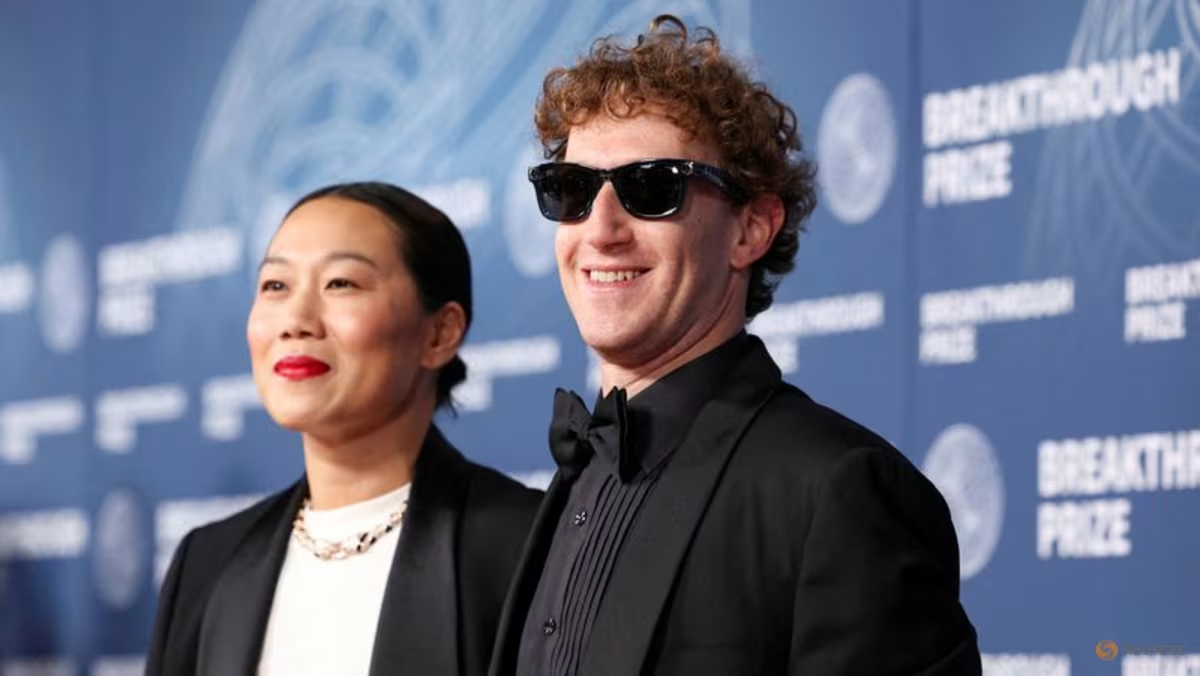
在此之前,Biohub已于4月份向该项目投入了5亿美元。Biohub是Meta首席执行官马克·扎克伯格及其妻子普莉希拉·陈博士共同发起的慈善投资机构。
The commitments follow the $500 million that Biohub — a philanthropic venture of Meta CEO Mark Zuckerberg and his wife, Dr. Priscilla Chan — put into the project in April.
这些投资将资助“虚拟生物学倡议”,该倡议旨在测量细胞在远超以往科学家研究范围的各种条件下如何对变化做出反应,并利用这些数据构建预测模型,从而缩短目前长达数年的药物开发周期。
The investments fund the Virtual Biology Initiative, which aims to measure how cells respond to changes across far more conditions than scientists have so far studied, and use that data to build predictive models that could compress drug development timelines that currently take years.
陈在接受采访时表示:“到目前为止,生物学一直只是一门基于巧妙发现的科学。我们一直将其视为一项社区资产,不属于某一个特定群体,这样它就能随着时间的推移不断发展。”Biohub科学负责人亚历克斯·里夫斯表示,这些数据集最终将向公众发布,但资助这些数据集的公司将获得优先使用权。
"Biology has been just sort of a clever discovery-based science until this point," Chan said in an interview. "We have always held this as a community asset, not just for one group, so that it can build upon itself over time.”The datasets will eventually be released publicly, but companies that fund them get a head start, according to Biohub's head of science Alex Rives.
里夫斯说:“对于商业资助者,我们会设立禁运期,在此期间相关团队可以使用这些数据,之后这些数据将作为公开的科学资源供大家使用。”
"With commercial funders we have embargo periods where there's a period of time where the groups can work on the data, and then it becomes available as a public scientific resource," Rives said.
这种合作模式正是Biohub将私人资金引入其所谓的开放科学项目的方式。里夫斯表示,与之并行进行的政府资助项目将不会受到此类限制,Biohub计划接下来接洽各大制药公司和慈善机构。
The arrangement is how Biohub is drawing private money into a project it describes as open science. Rives said the government-funded work running in parallel will carry no such restrictions, and that Biohub plans to approach pharmaceutical companies and philanthropies next.
里夫斯表示,目前的细胞数据集规模已达数亿个细胞,而一个准确的预测模型则需要数十亿,甚至最终达到数万亿个细胞。Biohub 的目标就是填补这一差距。
Current cell datasets run to hundreds of millions of cells, Rives said, while an accurate predictive model will require billions and eventually trillions. Biohub's goal is to close that gap.
“我们需要捕捉生物学的语言,需要捕捉细胞的语言。而目前这样的语言并不存在,”他说。
"We need to capture the language of biology, we need to capture the language of the cell. And that doesn't exist today," he said.
这些数据将来自多种技术,包括能够绘制完整组织内部分子活动图谱的空间转录组学技术,以及记录细胞对环境变化反应方式的筛选实验。其中大部分数据此前从未以协调一致的方式生成过。
The data will come from techniques including spatial transcriptomics, which maps molecular activity inside intact tissue, and screens that record how cells respond to changes in environment. Much of it has never been generated in a coordinated way.
里夫斯表示,这项工作通常需要数十年时间,但合作伙伴希望将其压缩到五年内完成,首个数据集将在大约一年后准备就绪。他预计,准确的预测模型将在五年内实现。
Rives said the work would normally take decades and that the partners aim to compress it into five years, with a first dataset ready in about a year. He expects accurate predictive models within five years.
其他人工智能实验室也在推进类似计划。Anthropic 通过设立湿实验室,进一步加大了在生物学领域的投入;而 OpenAI 基金会则启动了一项超过 1.25 亿美元的资助计划,用于支持人工智能研究所需的生物和医学数据集。
Other AI labs are pursuing similar initiatives. Anthropic doubled down on its biology efforts with a wet lab, while the OpenAI Foundation started a more than $125 million grant program to fund biological and medical datasets for AI research.