受语调影响……这些描述很难与西方的种族主义观念完全对应。插图:Diana Ejaita/The Guardian关于这份简讯,你可能不知道的一点是,它在很大程度上是由幕后的交流塑造的。“长波”(The Long Wave)团队及其在《卫报》的更广泛大家庭本身就是一个微型的海外移民群体——一个一直在进行对话的群体。通常在我们的会议期间,当有人提到他们以为是自己特定背景独有的怪癖时,却发现几乎所有人都有同感。
Tone-dependent … the descriptors are unlikely to map neatly onto Western notions of racism. Illustration: Diana Ejaita/The Guardian ne thing you might not know about this newsletter is how much it is shaped by behind-the-scenes chat. The Long Wave team, and its broader family at the Guardian, is a mini-diaspora in and of itself – one that is constantly in conversation. Often, during our meetings, someone will mention what was assumed to be a quirk of their specific background, only to discover that it is replicated almost entirely across the board.
本周,我们讨论了这样一个事实:在我们的许多文化中,用来指代“黑色”的词汇远不止一个。文化深度……苏丹用来指代肤色的词汇扎根于特定的文化之中。
This week, we spoke about the fact that in many of our cultures, there is not just one word for “Black”. Cultural depth … the words denoting complexion in Sudan are grounded in a specific culture.
插图:Jonathan Knowles/Getty Images“绿色”、“红色”、“黄色”、“蓝色”、“小麦色”。这些是苏丹部分地区的许多部落用来描述肤色的一些词汇。这里没有“黑色”。我在向同事解释这些颜色所指代的含义时有些语无伦次——每一个类别都蕴含着如此深厚的文化底蕴。事实上,在某些情况下,它们甚至不是对肤色的描述,而是对五官、广泛的族裔背景甚至吸引力的描述。
Illustration: Jonathan Knowles/Getty Images“Green”, “red”, “yellow”, “blue”, “wheat”. These are some of the words many tribes in parts of Sudan use to describe complexion. There is no “Black”. I tripped over my words trying to explain to colleagues what these colours denoted – each category is infused with so much cultural depth. In fact, in some cases, they are not even descriptions of complexion, but of features, of broad ethnic background, and even of attractiveness.
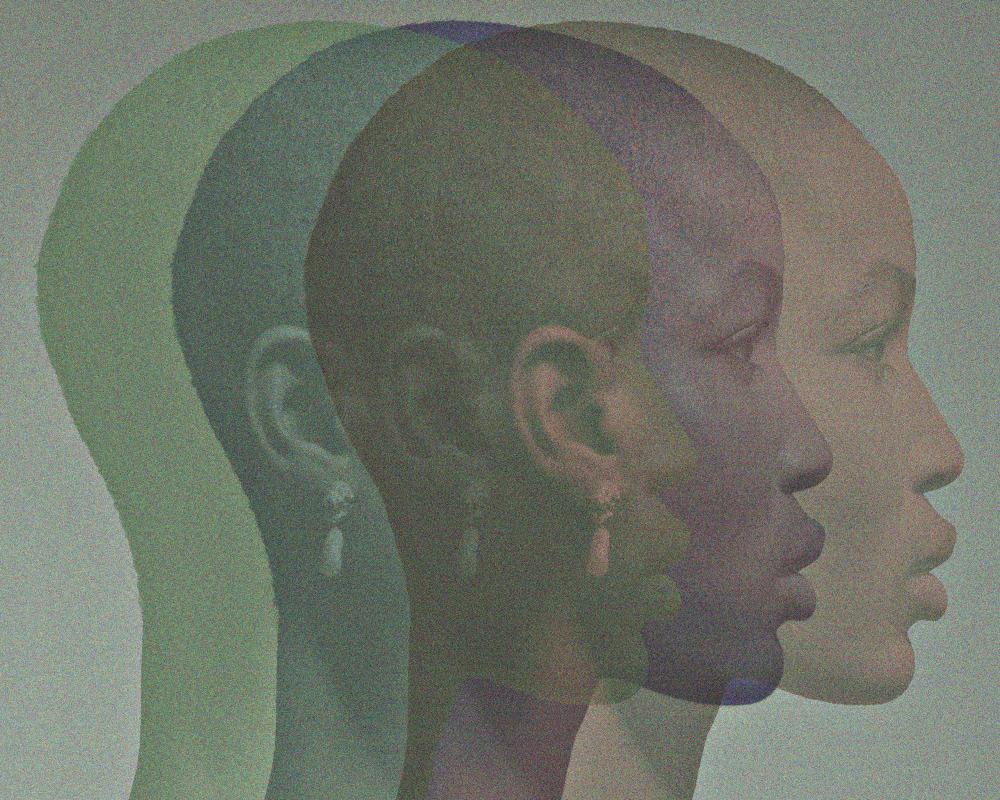
“绿色”意味着深色,但也暗示了一种颜色的均匀度、匀称的色调,因此几乎具有一种美观性。黄色较浅,带有未明言的美丽内涵。蓝色是最深的,有时带贬义,但有时只是一种描述。“小麦色”最有可能是一种赞美,这个色调既不会过分偏向浅色,也不会过分偏向深色。
“Green” means dark, but also implies a sort of uniformity of colour, an even hue, and therefore almost a comeliness. Yellow is lighter, and comes with an unstated connotation of beauty. Blue is the darkest, and is sometimes pejorative, but other times just a description. “Wheat” is the one most likely to be a compliment, a shade that does not diverge too sharply into light or dark.
但说实话,我在这里试图为这些颜色中的任何一种指定一个明确的定义,其实有些如履薄冰。它们的含义取决于语境和语调。它们也扎根于特定的文化之中——这种文化融合了阿拉伯和非洲的历史,并包含了复杂的偏见,而这些偏见无法与西方的种族主义观念完全对应。
But honestly, I am on slightly thin ice here in trying to assign a clear definition to any of these colours. Their meanings are dependent on context and tone. They are also grounded in a specific culture – one that merges Arab and African histories and encompasses complex prejudices that do not map neatly on to western notions of racism.
那些难以翻译的语言——简直就是细微差别的“巨兽”……像“熟透的芭蕉”这样的描述词,对外国人来说极难翻译。
Language that is hard to translate Behemoth of nuances … descriptors like ‘ripe plantain’ are notoriously hard to translate to outsiders.
《卫报》记者、《The Long Wave》的编辑摩根·奥福里补充道,加纳语中有大量用来描述肤色的词汇。
Morgan Ofori, Guardian reporter and subeditor for The Long Wave, chimed in with Ghana’s numerous words for Blackness.
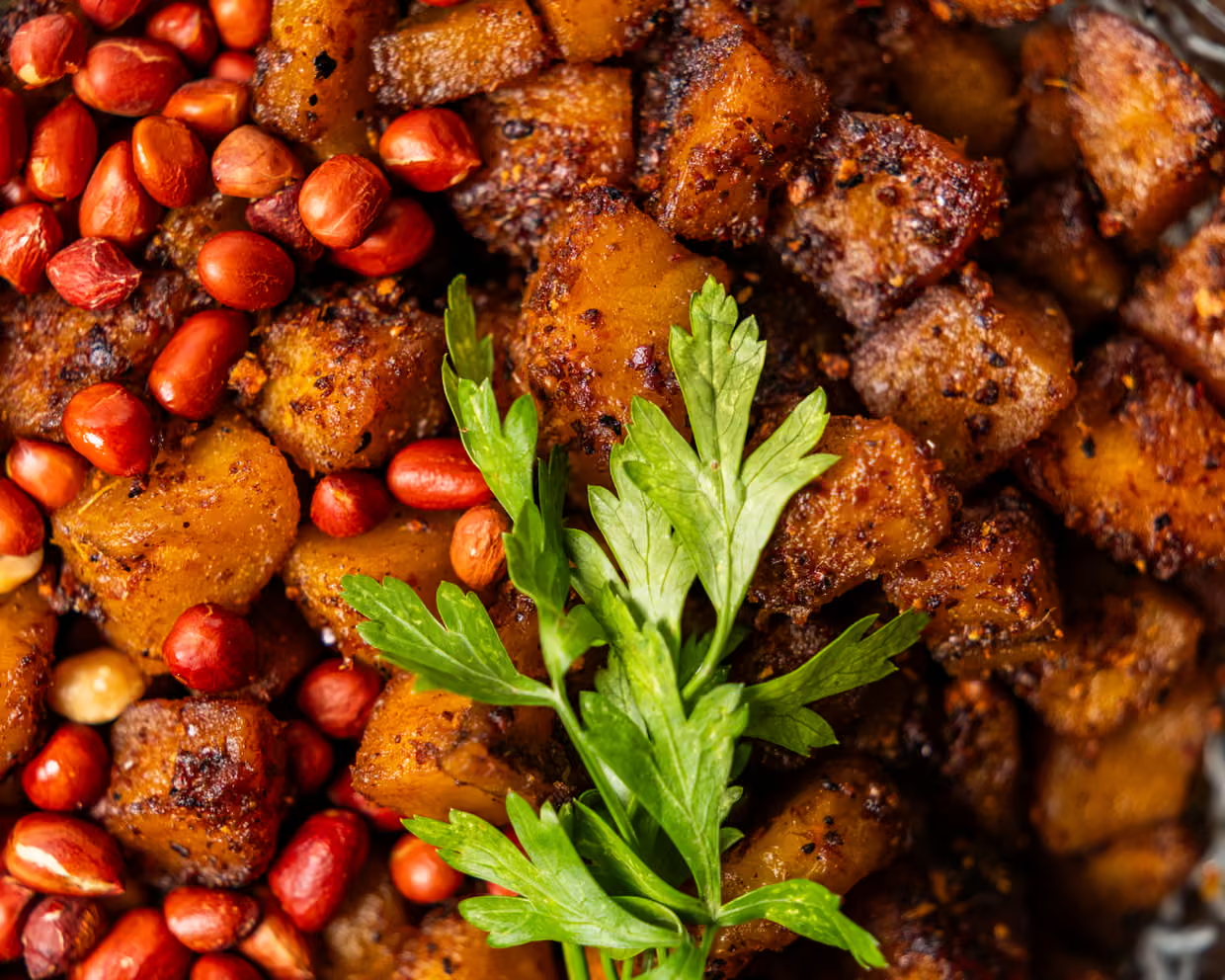
在埃维语中,“Ameyibɔ”或“Ameyibɔr”,若发音时加以强调则变成“Yibɔɔ”,用来形容那些“肤色偏深且美丽”的人。而在特维语中,肤色较浅的人(无论是否混血)则被称为“Kɔkɔɔ”,这个词直译为“红色”,也可指“熟透的芭蕉”,借此将这类人的肤色与这种红黄色淀粉类水果联系起来。在摩根看来,这些词汇大体上属于中性描述词;不过肤色较浅依然被视为一种阶层区分的标志。
Ameyibɔ or ameyibɔr but Yibɔɔ uttered with prolonged emphasis in the Ewe language, describes someone considered to be “beautifully darker-skinned”. Someone with a lighter complexion (whether or not of mixed heritage) is referred to as Kɔkɔɔ in Twi, which directly translates to “red” but also “ripe plantain”, connecting those individuals to the starchy fruit’s red-yellow hue. In Morgan’s opinion, these categories are by and large neutral descriptors; however, being of lighter skin is nonetheless seen as a class differentiator.
另一位同事桑杜斯·阿布迪指出,索马里语中也有类似的以颜色命名的词汇:“Maariin”用来描述深棕色皮肤,而“白色”则用来指代肤色较浅的人。
Another colleague Sundus Abdi points to similar descriptors of red and green in Somali, with maariin being used to describe deep brown skin, while white is used to refer to lighter skin.
与巴西丰富的肤色相关词汇相比,这些词汇实在算不了什么——巴西的肤色描述词汇堪称细微差别的“巨兽”。根据1976年的一项调查,巴西人用来描述自身肤色的色调及变体竟多达136种,其中包括“烧焦的黄色”“海蓝色”“蓟草色”,甚至还有“难以辨别的驴子色”——后者是一种带有幽默意味的说法,用来形容肤色难以界定的个体。这很可能与巴西在废除奴隶制后推行的“种族白化”政策有关,该政策也促成了如今该国人口高度混血的现状。
This handful of words is nothing compared to the racial vocabulary found in Brazil, a behemoth of nuances. There are, according to a 1976 survey a staggering 136 shades and variations in how Brazilians described their skin colour. They include “burnt yellow”, “sea blue”, “thistle” and “disappearing donkey” – a word used humorously to describe people whose colour is difficult to define. This is likely related to Brazil’s project of “racial whitening” or“Branqueamento” after abolition, contributing to the country’s heavily mixed present-day population.
尽管地理与历史背景各不相同,这些语言中的肤色描述词汇却有着有趣的相似之处——许多词汇都以颜色作为隐喻或近似表达。令我印象深刻的是,对于不了解相关语境与内涵的外国人而言,这些词汇实在难以翻译。另一个相似点在于:尽管这些描述有时带有种族含义,但它们与种族歧视性用语有着本质区别。在以白人为主的国家情况又如何呢?
Despite being separated by geography and history, there are curious similarities between these vocabularies – many of which use colours as metaphors or approximations. I’m also struck by how difficult it is to translate them to outsiders, who don’t understand the context or connotations. Another similarity appears to be that these descriptions are crucially distinct from racial slurs, despite sometimes having racial implications. What about in majority-white countries?
在帝国核心的对照下……被赋予种族属性可能会狭隘化黑人群体被感知的方式。
Defined against the imperial core … being racialised can narrow the way in which Blackness is perceived.
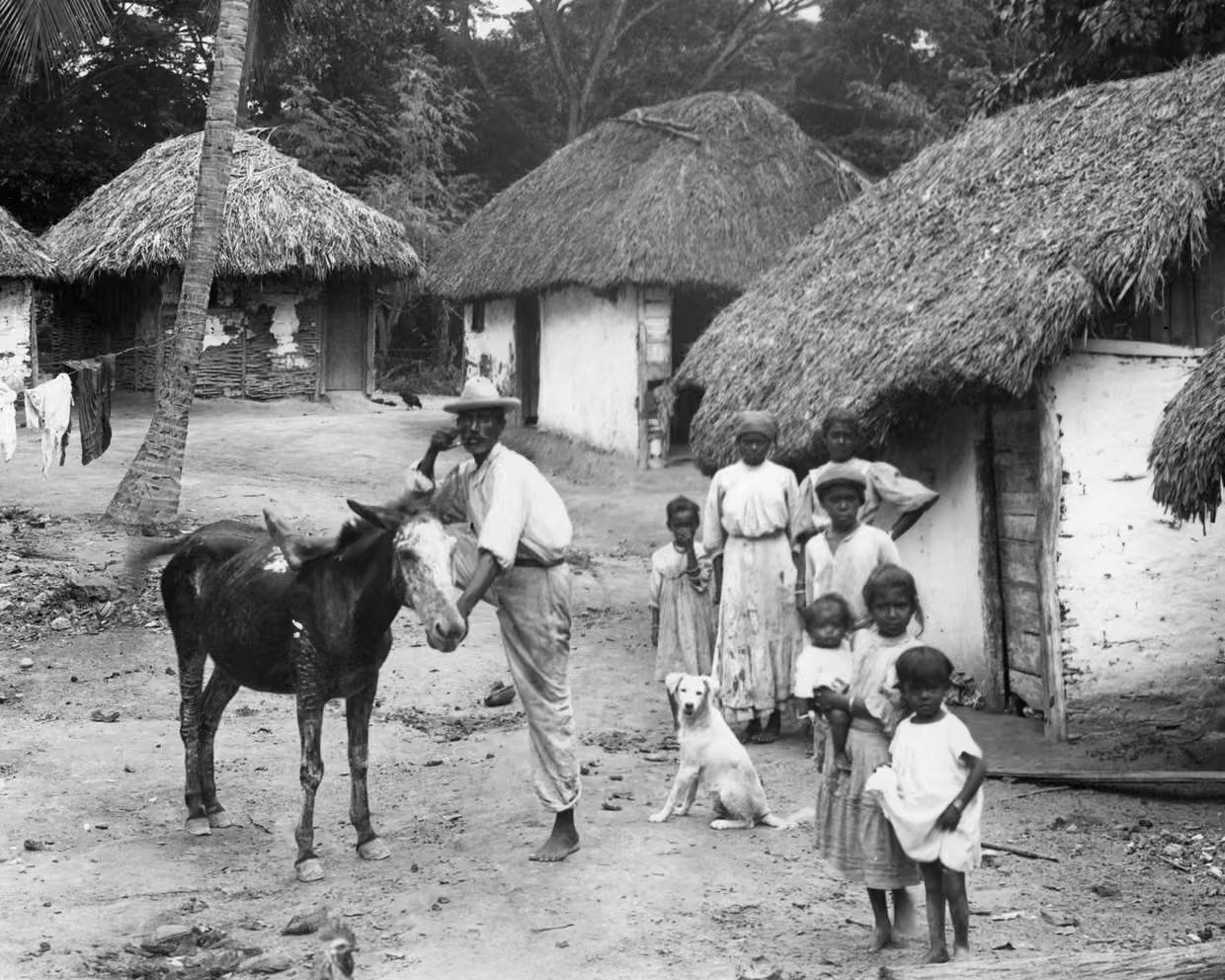
摄影:The Print Collector/Alamy 这种极其丰富的描述词汇在黑人作为少数族裔的语境下便消失了。例如在美国,由白人占多数的社会往往将肤色极浅的人也简单地归类为“黑人”。这种身份具有政治属性,是由奴隶制时期将“一滴血原则”作为种族分类手段的历史塑造而成的。
Photograph: The Print Collector/Alamy This vast array of descriptors vanishes in contexts where Black people are a racialised minority. In the US, for example, even very light-skinned people are often simply racialised as “Black” by a majority-white society. This identity is a political one, shaped by the use of the one-drop rule as a means of racial classification during slavery.
在全球范围内,人们对“黑色人种”的认知也逐渐形成了后殖民时代的身份认同——这种认同是相对于帝国主义统治者的标准来定义的。米卡·弗雷泽-卡罗尔(Micha Frazer-Carroll)是《The Long Wave》杂志的编辑兼撰稿人,她在90年代出生于英国,当时人们普遍使用“混血儿”这一术语来描述她的种族身份;但后来她意识到,英国白人其实只是将她简单地归类为“黑人”。她解释说:“这既与当地的社会环境有关,也受到了美国文化的影响以及‘一滴血即属于黑人’这一种族观念的制约。”
Globally, there is also a conception of Blackness that has come to shape a post-colonial identity, defined against the imperial core. Micha Frazer-Carroll, The Long Wave’s editor and assistant writer, grew up in the UK in the 90s with a clear sense of being “mixed race” (the predominant term of the era), but later realised that white British people simply identified her as Black. “This was partly to do with the local social context,” she tells me, “but I also think it was shaped by the cultural influence of the US and the ‘one drop rule’.”
然而,在她的加勒比海地区的家庭中,她的姐姐被称作“红皮肤的人”,而她自己则被称为“coolie”——这个词原本用来指代那些在奴隶制废除后移居牙买加的印度契约劳工;在某些国家和地区,这个词带有侮辱性,但在其他情况下则只是中性的描述词。米卡认为:“如今,这些词汇都蕴含着种族主义和殖民主义的历史痕迹,但它们也曾被人们轻描淡写地、甚至开玩笑地使用过。”
But in her Caribbean family, her sister was described as being “red skin”, and Micha herself as “coolie” – a word used to describe the Indian indentured labourers who settled in Jamaica after the abolition of slavery (in some countries and contexts, it is considered a slur in others, a neutral descriptor). “I now see both of these terms as being fraught with histories of racism and colonialism,” she says, “but they were also used light-heartedly and jokingly.”
对于黑人散居群体来说,“黑色人种”这一概念不仅是一种政治身份的象征(与争取平等和选举权的运动紧密相关),同时也代表着一种更为复杂、层次丰富的身份认同——这种认同有时甚至带有幽默或轻松的色彩。不过,这并不意味着我们应该美化这些词汇;因为许多这类称呼都与种族歧视的历史紧密相连。当种族冲突爆发时,这些分类和差异可能会被放大,甚至变得极其危险,颜色会成为区分朋友与敌人的简单标志。
For the Black diaspora, one’s Blackness as a political notion, grounded in campaigns for equality and enfranchisement, sits alongside a more layered and less fraught identity that is, as Micha says, at times almost playful. This is not to romanticise these descriptors – many of which cannot be separated from histories of colourism. These categorisations and differences can become sharpened and even turn deadly when civil conflict erupts along ethnic lines, and colour becomes a crude signifier of who is friend and who is foe.
“‘黑色人种’这一概念本身并不能完全代表现实……这些词汇其实源于人们的智慧和语言的创新。”
Describing Blackness on its own terms Not the entire reality … terms for Blackness originate from wit and innovations of language.
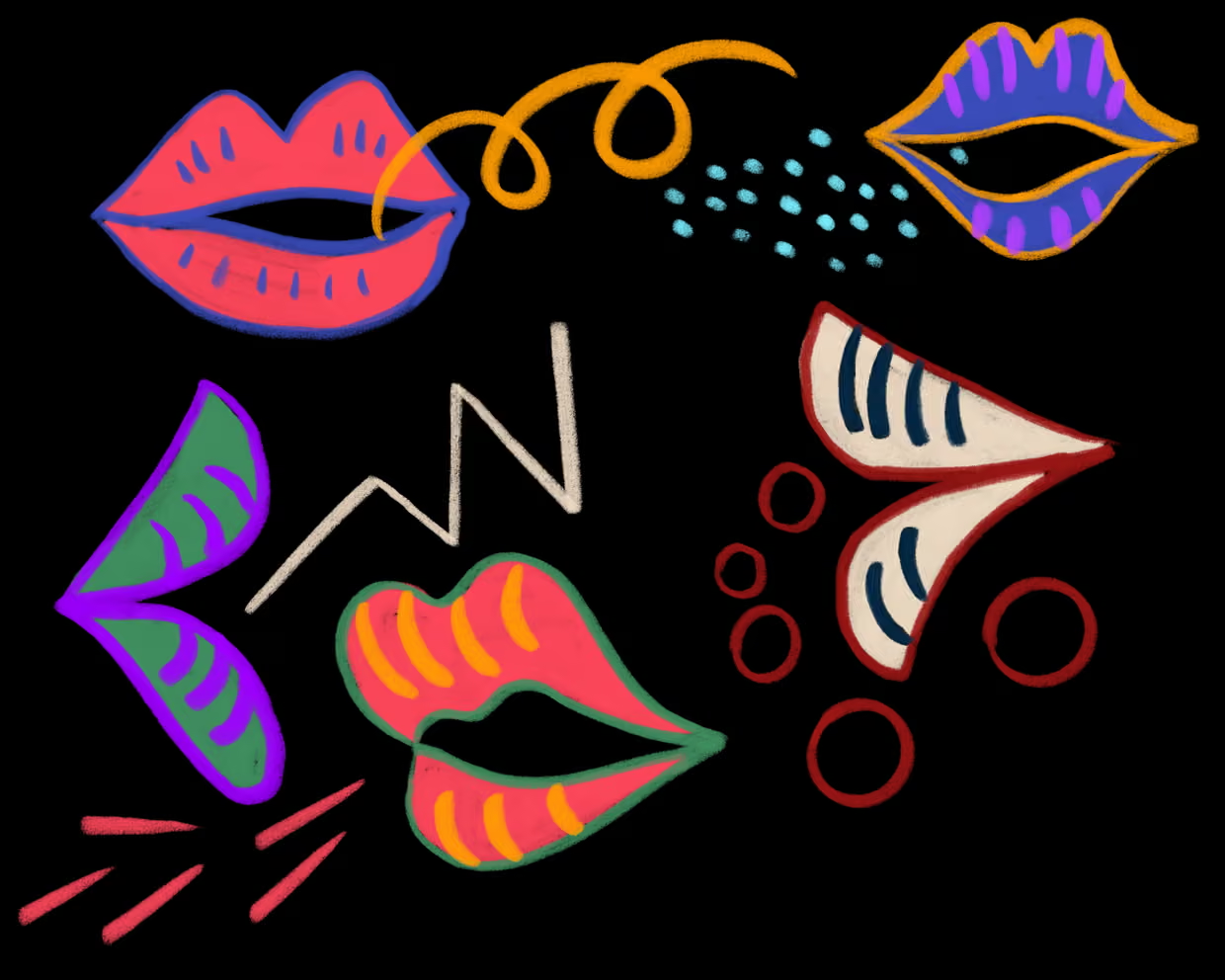
不过,无论好坏,这些肤色分类标准的一个显著特点就是:它们并非完全以“白人”作为绝对的政治中心来界定。那些关于“何为理想肤色”的标准是否受到殖民主义的影响呢?当然,只要看看世界各地广泛流行的美白霜和美白产品就知道了。但殖民主义只是促成这一多样化肤色分类体系的众多权力因素之一。阶级、移民、宗教信仰,以及阿拉伯和南亚文化在非洲与加勒比地区的影响,都在这些肤色分类中发挥了作用。
But what broadly distinguishes these colour charts, for better or for worse, is that they are not exclusively defined by whiteness as a hegemonic political centre. Have standards of what is desirable been shaped by colonialism? Sure, one only has to look at the ubiquity of skin lightening creams and potions across the world. But colonialism is only one feature of many power dynamics that created this large colour palette. Class, immigration, religion, Arab and South Asian influences across Africa and the Caribbean all play a part in these colour categorisations.
通过我们的交流可以发现,其中存在着重要的犹豫与复杂性:这些五花八门、充满幽默甚至诗意色彩的肤色描述,并不一定意味着这些国家就是包容多元的“彩虹国度”。相反,它们反映了黑人生活的真实面貌,而这种面貌却很少出现在全球黑人侨民群体的讨论中——那些讨论往往局限于压迫与抗争的语境。这或许正是欧美文化与政治霸权以及右翼势力复兴所带来的必然结果。
In our conversations, what emerges is an important hesitation and nuance: these differing, humorous and even poetic descriptions are not necessarily an indication of benign expansive rainbow nations. Rather, they are a reality of Black life that is rarely reflected in global Black diaspora discourse, which is often situated in the context of oppression and activism. This is perhaps the natural result of Euro-American cultural and political projection and right wing resurgence.
然而,这并非全部真相。我们仍有空间以黑人自身的视角去理解“黑人身份”。有时,这种身份与政治、经济、权力差异以及殖民主义遗留问题密切相关;但有时,它又根植于更为悠久的历史传统、机智幽默的表达方式、语言的创新,以及人们彼此交往时的共同体验。正如我们的对话所揭示的那样,这些体验跨越了地域与文化差异而普遍存在。
But this is not the entire reality there is more space to think of Blackness on its own terms. Sometimes, it is an identity that is political, economic, and related to power disparities, and legacies of colonialism. But at other times, it is something also rooted in longer histories, in wit, in innovations of language, and in universal experiences of relating to each other that, as our conversations revealed, exist across distance and difference.
若想每周三在邮箱中收到《The Long Wave》的完整版,请点击此处。你平时会使用哪些具有文化特色的词汇来描述自己的身份或肤色呢?这些词汇对你而言意味着什么?欢迎回复此邮件,或发送邮件至thelongwave@theguardian.com,你的回复或许会被刊登在未来的期刊中。
To receive the complete version of The Long Wave in your inbox every Wednesday, here Tap in What culturally-specific words do you use to describe your identity or complexion? What do they mean to you? Tell us by replying to this, or emailing us at thelongwave@theguardian.com and we may include your response in a future issue.
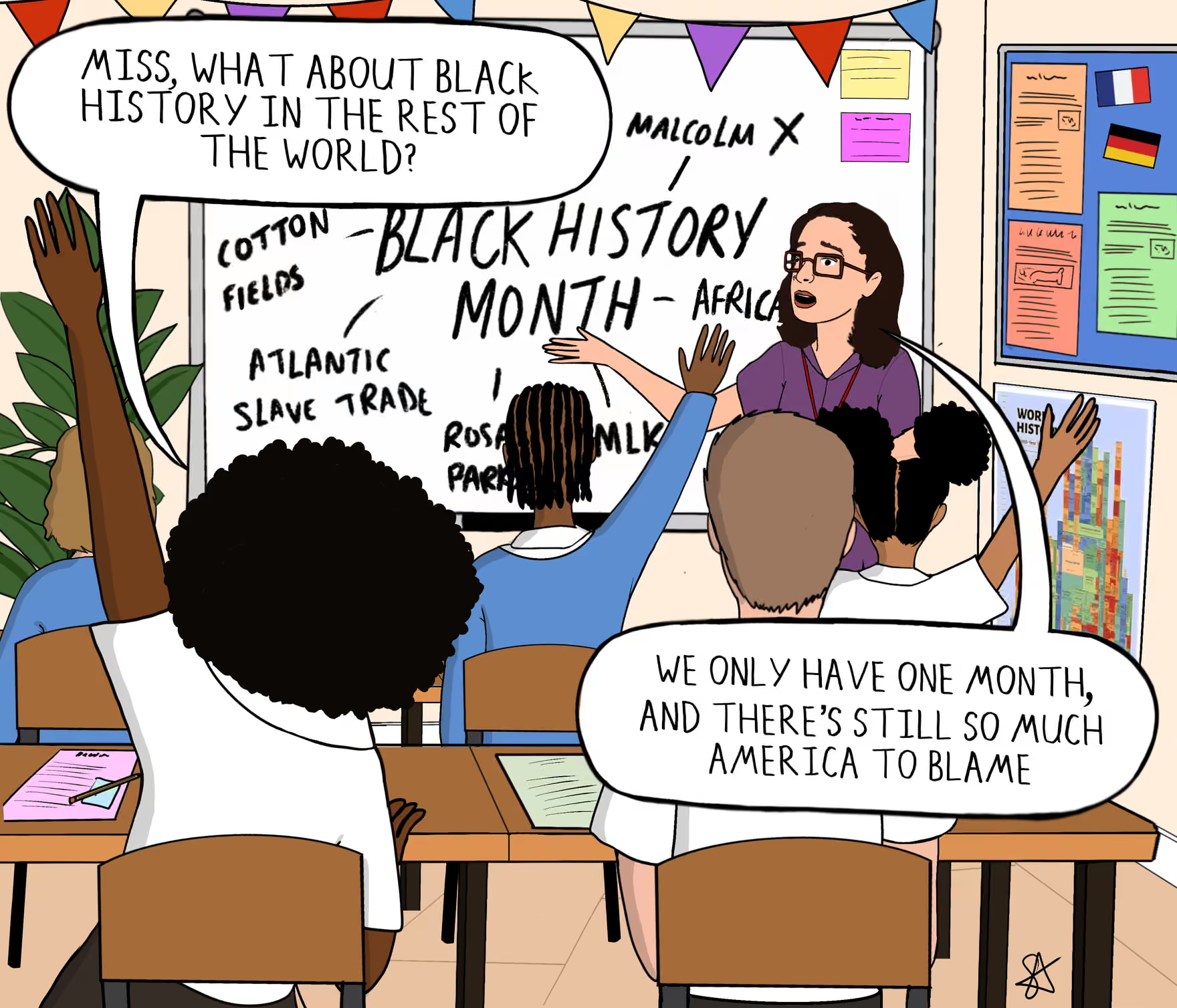
漫画 | 莎拉·阿基特林瓦绘制,主题:黑人历史月。画面描绘了一位教育工作者面对大量受美国影响的黑人历史资料时的困惑与挣扎。插图:Sarah Akinterinwa/《卫报》
Cartoon | Sarah Akinterinwa on Black History Month The classroom experience … an educator grapples with a deluge of US-influenced Black history material. Illustration: Sarah Akinterinwa/The Guardian