本周,《自然》杂志发表的多篇论文指出,全球首批两台可运行的核钟的初步结果显示,中国的这款时钟比维也纳的那款稳定约六倍。
Initial results from the world’s first two working nuclear clocks indicate that China’s timepiece is about six times as stable as the one in Vienna, according to papers published this week by the journal Nature.
这两台时钟是独立研发的,但无论是以北京清华大学为首的团队,还是维也纳技术大学(TU Wien)的研究人员,都采用了嵌入晶体中的钍-229原子核来计时。与原子钟依靠电子绕核旋转的规律不同,这种时钟依据的是原子核本身的稳定振动节奏。
The clocks were developed independently but both the Chinese team, led by Tsinghua University in Beijing, and the researchers at Vienna’s TU Wien used thorium-229 nuclei embedded in crystals to keep time by the steady rhythm of the atom’s core, rather than the electrons whirling around it, as in atomic clocks.
今年6月,《自然》杂志报道了这两个团队各自研发出这种革命性新设备时,欧洲团队的成员Thorsten Schumm表示:“现在我们迎来了一场激烈但友好的全球竞赛。”
When Nature reported in June that the two teams had separately developed the radical new devices, Thorsten Schumm, a member of the European team, said that “now we have a fierce but friendly global competition”.
根据最新发表的论文,北京的研究人员还证明,两颗分别生长的晶体能够保持同步计时——这表明这类时钟可以被可靠地复制。与此同时,维也纳团队则利用其时钟搜寻暗物质,但并未成功。
According to the latest papers, the Beijing scientists also showed that two crystals grown separately kept the same time – a sign such clocks could be reliably reproduced, they said. Meanwhile, the Vienna team used its clock to hunt for dark matter, without success.
清华大学团队的负责人丁实千告诉《南华早报》,将时钟的计时机制从电子转移到原子核具有重要意义,因为原子核比原子小得多,受外界杂散电场和磁场的影响也更小。他表示:“从长远来看,这或许能让核钟达到极高的精度。”
Ding Shiqian, who led the Tsinghua team, told the South China Morning Post that moving the clock’s tick from electrons to the nucleus mattered because the nucleus was much smaller than the atom and less disturbed by stray electric and magnetic fields. “In the long term, this could allow nuclear clocks to reach extremely high accuracy,” he said.
但他补充说,其意义并不仅仅在于制造出“更精确的时钟”。钍原子核对物理定律的反应方式与原子钟中的电子截然不同,因此比较这两种时钟或许能揭示自然界基本常数的微小变化,或探测到暗物质的痕迹。
But the significance went beyond simply building a “better clock”, he added. The thorium nucleus reacted to the laws of physics very differently from the electrons in atomic clocks, so comparing the two kinds of clocks could reveal tiny shifts in nature’s constants or traces of dark matter.
丁实千还表示,这些时钟也可能具有实际用途。目前最顶尖的原子钟虽然精度极高,但它们仍然是结构复杂的实验室设备。
The clocks could also have practical uses, Ding said. Today’s best atomic clocks are extraordinarily precise, but they remain complex laboratory systems.
“固态核钟有望实现更紧凑、更坚固且更易于操作。如果这一目标得以实现,它就能将光钟级别的精度从专业实验室中推广出来,并使其在现实世界中得到更广泛的应用,”他说。
“A solid-state nuclear clock could potentially be made much more compact, robust and easier to operate. If that becomes possible, it could bring optical-clock-level precision out of specialised laboratories and allow such precision to be deployed much more broadly in the real world,” he said.
他的团队还发现,两个分别制作的晶体能够产生相同的“滴答”频率,两者的一致性达到了约每10万亿分之一三的部分。这一频率也与科罗拉多大学博尔德分校和美国国家标准与技术研究院共同运营的研究机构JILA中,物理学家Jun Ye团队此前使用不同晶体和不同设备测得的结果一致。
His team also found that two crystals made separately gave the same tick, agreeing to within about three parts per 10 trillion. The tick also matched earlier measurements by physicist Jun Ye’s group at JILA, a research institute run by the University of Colorado Boulder and the US National Institute of Standards and Technology, which used different crystals and different equipment.
这表明该时钟的“滴答”频率“并非仅仅是某个特定晶体的特性,而是可以在独立制备的样本和实验室中复现”,Ding说道。他称这是将核钟从实验室演示转变为可靠标准的重要一步。
That showed the clock’s tick “is not simply a property of one particular crystal, but can be reproduced across independently prepared samples and laboratories”, Ding said. He called it “an important step” towards turning the nuclear clock from a laboratory demonstration into a reliable standard.
从长远来看,这或许能让核钟达到极高的精度。——Ding Shiqian,清华大学。尽管这项研究标志着一代更精确、更坚固、更紧凑的时间测量设备的诞生,但目前这两种核钟的稳定性仍不及最顶尖的原子钟——后者通过追踪电子在两个能级之间跃迁来计时。
In the long term, this could allow nuclear clocks to reach extremely high accuracyDing Shiqian, Tsinghua University While the work heralds a new generation of more precise, robust and compact timekeepers, for now neither nuclear clock is as stable as the best atomic clocks, which keep time by tracking electrons as they jump back and forth between two energy levels.
七十多年来,原子钟一直是世界上最为精确的时间测量工具,支撑着从卫星导航到秒的官方定义等方方面面。
For more than seven decades, atomic clocks have been the world’s most precise timekeepers, underpinning everything from satellite navigation to the official definition of the second.
2003年,德国物理学家Ekkehard Peik和Christian Tamm提出了一种以原子核为核心的时钟方案,因为原子核极其微小且结合紧密,因此不易受到可能干扰原子钟的杂散电场和磁场的影响。
In 2003, Germany-based physicists Ekkehard Peik and Christian Tamm proposed a clock built around the atom’s nucleus instead, as it was so tiny and tightly bound that it would be less disturbed by stray electric and magnetic fields that can throw off atomic clocks.
然而,大多数原子核要完成这样的跃迁,所需的能量远超现有任何激光器所能提供的水平。而金属钍的一种稀有放射性同位素——钍-229——却是个例外:只需一束紫外光的轻微推动,就能使其原子核发生状态切换。
However, most nuclei need far more energy to make such jumps than any existing laser is capable of triggering. Thorium-229, a rare radioactive form of the metal, is the exception: its nucleus can be switched with a nudge of ultraviolet light.
这一奇特现象源于原子核内部结合力近乎完美的平衡,也使得钍-229对自然界基本力的微小变化极为敏感。
That quirk – which comes from a near-perfect balance between the forces holding the nucleus together – also makes thorium-229 extremely sensitive to tiny shifts in the basic forces of nature.
这一特性让物理学家们充满希望:核钟或许能帮助寻找暗物质,并最终检验物理常数是否真的恒定不变。
This characteristic makes physicists hopeful that nuclear clocks could help in the hunt for dark matter and eventually test whether the constants of physics are truly constant.
要确定钍跃迁的确切能量,科学家们花费了多年时间,直到2024年才首次成功用激光器触发这一过程。
It took many years to pin down the exact energy of the thorium jump, with scientists first managing to trigger it with lasers only in 2024.
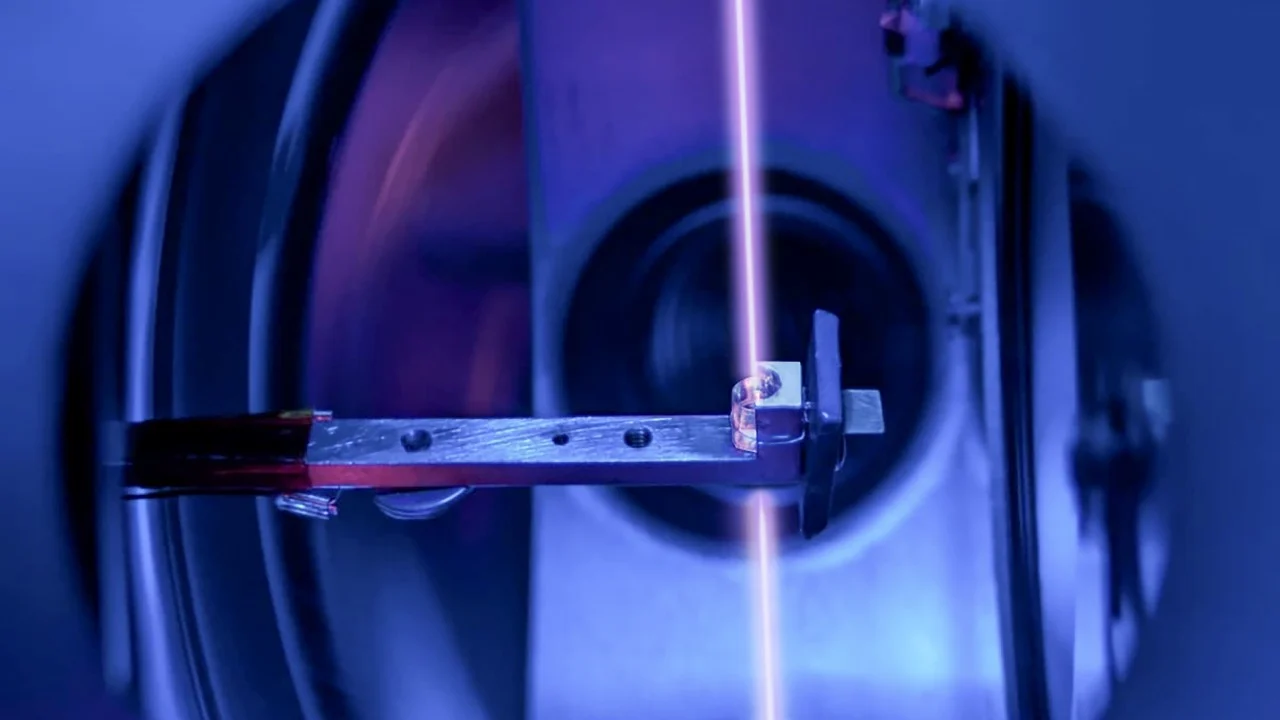
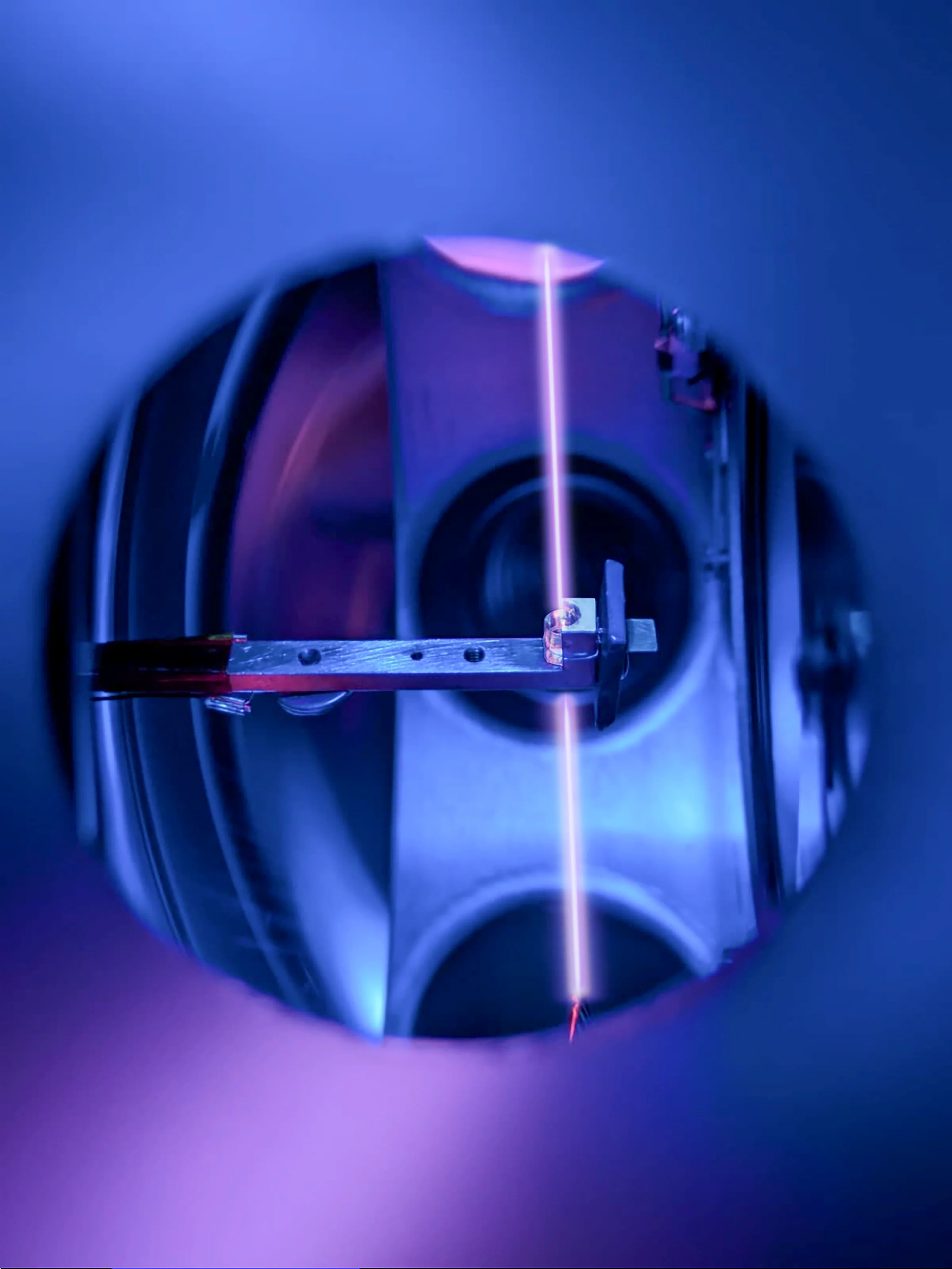
在最新的研究中,两个团队都将紫外激光穿过掺有钍-229的微小晶体,并不断调整激光频率,直到原子核吸收的光最多。此时所对应的频率便成为时钟的“滴答”声。
For the latest studies, both teams shone ultraviolet laser light through a tiny crystal laced with thorium-229 and tuned the laser until the nuclei soaked up the most light. That point became the clock’s “tick”.
中国团队通过让激光束穿过加热至600摄氏度(1112华氏度)的镉蒸气来产生紫外光——这一温度甚至高于木火披萨烤炉的温度。
The Chinese team made its ultraviolet light by firing laser beams through cadmium vapour heated to 600 degrees Celsius (1,112 Fahrenheit) – hotter than a wood-fired pizza oven.
根据论文描述,清华大学的科研人员利用这束强光照射一块比米粒还小、却包含约一万亿个钍原子核的晶体。
The Tsinghua researchers used this bright beam to light up a crystal that was smaller than a grain of rice yet packed with about a million billion thorium nuclei, according to the paper.
维也纳团队的晶体中则含有约200倍于此数量的钍原子核,其“滴答”声通过10公里(6.2英里)的光纤与城市另一端的原子钟进行比对。
The Vienna team’s crystal held about 200 times as many thorium nuclei, and its ticks were checked against an atomic clock across the city through 10km (6.2 miles) of optical fibre.
然而,维也纳的研究人员发现,“滴答”声会因激光穿过晶体的不同位置而略有差异,导致时钟每天开启时都会显示略微不同的时间。
But the researchers in Vienna found the tick varied slightly depending on which part of the crystal the laser passed through, so that the clock kept a slightly different time each day it was switched on.
两个团队都表示,未来的研究仍面临诸多挑战。据清华大学团队称,钍-229极其稀有,几乎已没有多余的空间可用于探索不同晶体制造方法。
Both teams said the road ahead would have its hurdles. According to the Tsinghua team, thorium-229 is so scarce there is almost no room left to experiment with how the crystals are made.
更优质的晶体——含有均匀分布的钍且内部缺陷更少——将有助于晶体的每个部分保持同步计时,并提升“滴答”声的清晰度,维也纳团队写道。
Better crystals – with the thorium spevenly and with fewer internal flaws – would help every part of the crystal keep the same time and sharpen the tick, the Vienna team wrote.
研究人员写道,结合更强大的激光器,此类改进最终可能使核钟在性能上能够与当今最精密的原子钟相媲美,甚至更胜一筹。
Together with more powerful lasers, such improvements could eventually make nuclear clocks competitive with – or even better than – today’s best atomic clocks, the researchers wrote.