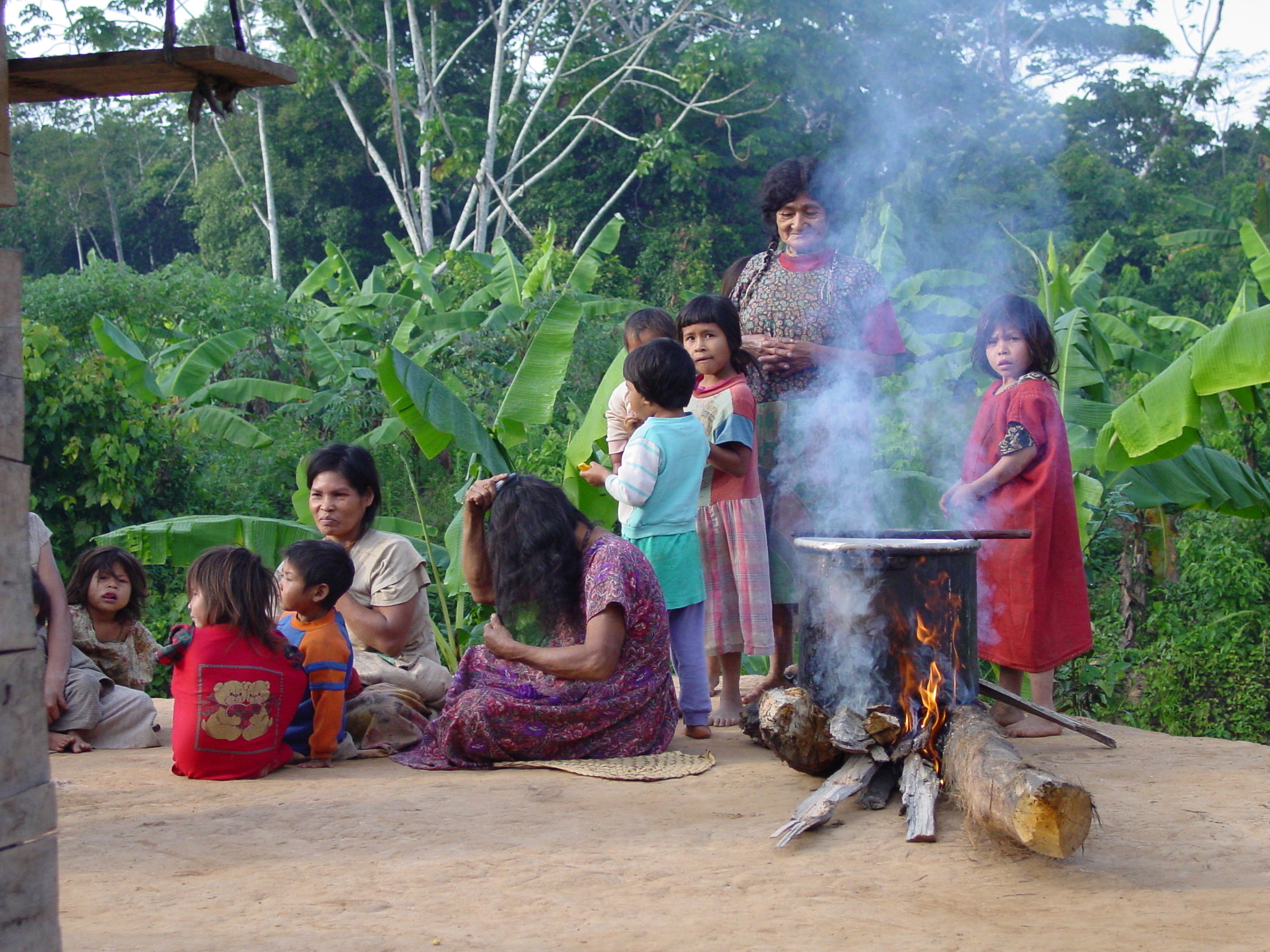
哈扎人是狩猎采集者,数千年来一直在坦桑尼亚北部游荡。《镜头》——健康新闻:我们体内的微生物如何从敌人变成所谓的超级治愈者。玻利维亚亚马逊地区的原住民齐马内人从事采集、捕鱼和狩猎,他们与哈扎人相隔约七千英里。
The Hadza people are hunter-gatherers who have roamed northern Tanzania for thousands of years.
这两个被海洋分隔的农村社区,表面上似乎鲜有共同点。但一项新研究表明,在肠道细菌方面,它们有着惊人的相似之处。
Shots - Health News How The Microbes Inside Us Went From Enemies To Purported Superhealers The indigenous Tsimane people forage, fish and hunt in the Bolivian Amazon, some 7,000 miles away.
古代冰人胃中藏有与我们相似的微生物。欲了解我们变化世界中生活的故事,请订阅全球健康通讯。
These two rural communities, separated by an ocean, may appear to have little in common. But a new study shows that they share remarkable similarities when it comes to the bacteria in their guts.
专家称,《期刊》上发表的新论文表明,这种微生物亲缘关系可能早在人类迁徙将这些群体的祖先分开之前就已形成。
Stomach Of Ancient Iceman Held Microbes Like Ours For stories of life in our changing world, here to the global health newsletter.
这项研究依赖于两个群体的粪便样本,结果显示,哈扎人和齐马内人的微生物组与城市居民,甚至是附近居住的城市居民,有着显著差异。
Experts say the new paper in the journal suggests this microbial kinship may have taken shape long ago, before human migration split these groups' ancestors apart.
《盐》“培养”:探索食物如何帮助我们体内的微生物茁壮成长。研究结果表明,某些肠道细菌菌株可能长期与人类共存,或许对双方都有利。一些科学家认为,这一观点引发了关于现代生活方式导致这些微生物流失所带来的影响的疑问。
The study, which relied on stool samples from both groups, also showed that both the Hadza and Tsimane microbiomes were markedly different from city folk, even those living nearby.
斯坦福大学微生物学与免疫学教授、该研究的资深作者贾斯汀·松嫩伯格表示:“如果我们在很长一段时间内被非常相似的微生物所占据,这表明我们的人类基因组可能已经习惯了特定的一组微生物和功能。当你开始失去肠道生物多样性时,你的生物学可能需要做出重大调整和适应。”
The Salt 'Cultured': A Look At How Foods Can Help The Microbes Inside Us Thrive The findings suggest that some strains of gut bacteria have long coexisted with humans, possibly to their mutual benefit. It's an idea that some scientists say raises questions about the impacts of losing those microbes to modern lifestyles.
科学:那可不是香水!古代瓶子中装的是粪便,可能用于医疗。未参与该论文的其他研究人员表示,这一假设很有趣,但尚未得到证实——而且,这些微生物之所以往往不出现在城市居民的肠道中,或许是有原因的。
"If we were inhabited by very similar microbes over a long period of time, it suggests that our human genomes may have come to expect a certain set of microbes and functions," says Justin Sonnenburg, a professor of microbiology and immunology at Stanford University and the study's senior author. "When you start to lose biodiversity in your gut, there may be big issues for your human biology to adjust to and accommodate." Science That ain't perfume! Ancient bottle contained feces, likely used for medicine Other researchers not affiliated with the paper say the hypothesis is intriguing, but not yet proven — and that perhaps there's a reason these microbes tend not to appear in city dwellers' guts.
“另一种可能性是,工业化微生物群的结构实际上已经适应了工业化生活方式,”普林斯顿大学进化生物学副教授安德鲁·莫勒(Andrew Moeller)表示。“从健康角度来看,工业化人类失去了大量祖先微生物类群(群)是好事还是坏事?我们其实并不清楚。”《Goats and Soda》:一个冷冻方案,旨在保护有益微生物免受灾难影响。他表示,记录哪些微生物被保留、哪些已经消失,是弄清这一问题的重要一步。
"Another alternative is that the industrialized microbiome profile may actually be adapted to an industrialized lifestyle," says Andrew Moeller an associate professor of evolutionary biology at Princeton University. "From a health perspective, is it good or deleterious that industrialized humans have lost a lot of ancestral microbial taxa [groups]? We actually don't know." Goats and Soda A Frozen Idea To Save Helpful Germs From Disasters Documenting what's been kept and lost is a step towards figuring that out, he says.
微生物曾搭乘迁徙人类的“便车”。森农伯格(Sonnenburg)此前曾对比过哈扎族(Hadza)与工业化人群的微生物群。他与合作伙伴希望将这两个社群进行比较。“他们所过的生活方式与我们祖先的生活方式更为相似,因此也更适合那些在人类进化过程中历经多代传承下来的微生物,”森农伯格说。
Microbes hitchhiked on migrating humans Sonnenburg has previously contrasted the microbiomes of the Hadza with those of industrialized people. He and his colleagues wanted to compare these two communities with one another. "They're living a lifestyle that's much more similar to the lifestyle our ancestors lived, and so therefore is more hospitable to microbes that were handed down through many generations over the course of human evolution," Sonnenburg says.
《Living Better》:关于肠道微生物群及其健康维护的8个要点。尽管如此,两者之间的显著重叠仍“令人震惊”,他表示。通过将“蒂马内健康与生活史项目”(Tsimane Health and Life History Project)收集的数十名个体粪便样本中的遗传物质,与哈扎族社群此前的分析结果进行比较,森农伯格及其团队发现,他们的肠道中约有1200种相同的细菌——重叠率接近90%。
Living Better 8 things to know about the gut microbiome and keeping yours healthy Still, the major overlap was "startling," he says. In comparing the genetic material in stool samples from dozens of individuals collected by the Tsimane Health and Life History Project with previous analysis from the Hadza community, Sonnenburg and his colleagues found they had around 1,200 of the same bacterial species living in their guts — a near-90% overlap.
在典型的肠道微生物群中,数百到数千种微生物相互互动——主要是细菌,此外还有一些真菌和病毒。“这些微生物帮助我们消化肠道中的食物,并分泌被吸收进入血液的分子,”森农伯格说。“而我们的血液当然会流遍全身。”《人类微生物组:肠道与荣耀》。他补充道,肠道细菌还可能影响情绪、行为以及身体对感染的反应,从而作用于生物体和健康的基本层面。
In a typical gut microbiome, hundreds to thousands of species interact with each other — mostly bacteria, along with some fungi and viruses. "The microbes are helping us digest foods in our gut, secreting molecules that get absorbed into the bloodstream," Sonnenburg says. "And our blood, of course, circulates throughout our bodies." The Human Microbiome: Guts And Glory The gut bacteria can influence moods, behavior, and the body's response to infections, affecting fundamental parts of biology and health, he adds.
微生物组是动态的——这意味着它们也可能迅速变化,具体取决于我们摄入的食物和服用的药物。
Microbiomes are dynamic — which means they can also change quickly, depending on what foods we eat and what medicines we take.
肠道细菌可能引导着我们大脑的运作,因此,索嫩伯格指出,哈扎人和齐马内人——这两个居住相距极远、饮食中蔬菜、鱼类和肉类各不相同的孤立社区——拥有高度相似的肠道细菌,这一点令人惊叹。
Gut Bacteria Might Guide The Workings Of Our Minds So it's remarkable that the Hadza and the Tsimane — isolated communities living very far apart, eating different vegetables, fish and meats — have gut bacteria that are much the same, Sonnenburg says.
他和他的同事们认为,哈扎人和齐马内人共享的微生物谱系可追溯至他们在非洲的共同祖先。当时,部分人类离开非洲大陆,穿越欧亚大陆,经过一座曾连接俄罗斯与阿拉斯加的大陆桥,最终定居在玻利维亚亚马逊地区。后来,随着海平面上升,这座大陆桥消失了。
He and his colleagues think Hadza and Tsimane peoples' shared microbial profile goes back to their common ancestors in Africa, before some of those humans left the continent passed through Eurasia and crossed a land-bridge that once connected Russia with Alaska, and eventually settled in the Bolivian Amazon. Later, as sea levels rose, the land bridge disappeared.
斯坦福大学的理论生物物理学家、该研究的共同作者本·古德表示:“大陆桥消失后,我们清楚地意识到,他们很难通过传统的人类接触方式交换肠道细菌。”
"Once the land bridge went away, we had a clear picture that it was going to be very hard for them to exchange gut bacteria through traditional human contact means," says Ben Good a theoretical biophysicist at Stanford and a study co-author.
利用基于细菌变化速率的定年技术,他们确定,平均而言,这些微生物菌株可能在约17000年前拥有一个共同祖先,其中一些菌株的历史更为久远。索嫩伯格说:“这与这样一种观点相符:南美洲、非洲以及可能世界其他地区的这些人群,并非仅仅从环境中获取与其生活方式相匹配的微生物,而是通过世代相传的方式传递微生物。”
Using dating techniques based on the rates at which bacteria change, they determined that on average, the microbial strains likely shared a common ancestor about 17,000 years ago — with some dating much further back. "That is consistent with the idea that these populations in South America, Africa and probably in other parts of the world are not just acquiring microbes from their environment that match their lifestyle, so much as transmitting microbes over generations," Sonnenburg says.
其他研究人员也同意,这一发现支持了以下观点:肠道微生物组的大部分内容随人类一起迁徙,并且很可能与人类共同演化。
Other researchers agree that the findings support the concept that large swaths of the gut microbiome migrated with humans — and likely evolved with them, too.
“如果细菌和人类在漫长的世代中拥有共同的历史,那么自然选择的机会就会更多,”亚利桑那州立大学的助理教授、未参与该研究的微生物组研究者铃木泰一(Taichi Suzuki)表示。“我们基本上会预期,这些[共同进化的]肠道微生物与人类自身基因组之间,会存在更多潜在的依赖关系。”微生物组如何形成?婴儿出生时微生物组是一片空白,但会立即开始获得肠道细菌。
"If the bacteria and the humans had a shared history for many, many generations, there are more opportunities for selection," says Taichi Suzuki an assistant professor at Arizona State University not affiliated with this paper, who conducts microbiome research. "We would expect more potential dependencies between [the co-evolved] gut microbes and our own genome, basically." How the microbiome develops Babies are born with a blank slate microbiome, and start acquiring gut bacteria right away.
“我们最初从母亲的阴道和皮肤获得微生物,”亚利桑那州立大学的铃木说道,“随着我们逐渐成长,微生物主要来自家庭中的其他成员以及周围社区。”
"We first get our microbes from our mother's vaginal canal, mother's skin," says Suzuki at Arizona State, "Then as we develop, we get microbes mostly from other individuals in the household and the community."
普林斯顿大学的莫勒(Moeller)表示,这种人际传播是通过粪口途径实现的——即吸入空气中或尘埃中的微小粪便颗粒,而这一过程对于传递人类特有的微生物具有重要作用。“或许能让你感觉没那么恶心的是,这些微生物其实非常微小,”他说,“它们的长度仅为一微米或更小,原则上,只需一个细胞就能建立一个新的种群。”
This human-to-human transmission occurs through the fecal-oral route — ingesting microscopic particles of poo in the air and dust — and serves the important function of passing along microbes that are specific to humans, says Moeller at Princeton. "Something that might make that less disgusting is realizing how tiny these things are," he says, "They're a micron or less in length, and in principle, you just need one cell to found a new population."
莫勒还指出,肠道也会通过摄入食物、土壤和水,获得环境中普遍存在的一般性微生物。例如大肠杆菌(E. coli)——这种细菌广泛存在于多种环境中,并在人类及许多动物的体内繁衍生息。
The gut also picks up generalist microbes that exist in the environment by ingesting food, soil and water, Moeller says. For instance, E. coli— a bacteria that's found in many places, and thrives in the bodies of humans and many animals.
一些研究人员推测,与人类共同进化的微生物可能有助于保护人类健康,或者至少减少其危害。例如,一项案例研究发现,非洲裔人群感染非洲某株细菌后出现严重疾病的风险远低于其他族裔,这可能是因为他们的基因组与这种细菌共同演化而来,而其他族裔则容易因此患上致命的胃癌。铃木表示,这一案例表明,肠道微生物与人类基因组之间不匹配可能带来的潜在危害。
Some researchers hypothesize that the microbes that have co-evolved with humans may help protect human health — or at least do less harm. For instance, in a case study, those with African ancestry have been found to have a far lower risk of getting seriously ill from an African strain of , presumably because their genomes developed alongside the bacteria, compared with those of other ancestries who are susceptible to developing a deadly stomach cancer. It's an example that shows the potential harms of a mismatch between gut microbes and the human genome, Suzuki says.
根据该论文,哈扎族和奇马内族共有的肠道微生物中,约有60%在过着现代工业化生活的人群肠道中极为罕见或完全不存在。斯坦福大学的合著者森农伯格表示:“我肠道中的微生物,极不可能是在代代相传中从我的曾曾祖父母那里继承下来的。它们更可能是我当前生活方式以及我与当地人群互动所形成的产物。”他认为,失去这些祖先遗留的微生物可能正在损害人类健康。
Around 60% of the gut microbes the Hadza and Tsimane people share are rare or absent from the guts of people who live modern, industrialized lives, according to the paper. "The microbes that inhabit my gut are very unlikely to be the microbes that were handed down through the generations from my great great grandparents," Sonnenburg, the Stanford co-author, says. "They are much more likely to be a product of my current lifestyle and the people that I've interacted with locally." He thinks losing these ancestral microbes may be harming human health.
尽管要证明因果关系十分困难,但森农伯格指出:“大量证据都指向同一个方向——我们的现代微生物群已经发生了改变,这些改变可能正在引发炎症,对我们健康不利,并导致炎症性疾病。”
While proving causation is tricky, "a lot of the arrows are pointing in the same direction, that our modern microbiome has changed in ways that may be propagating inflammation, may be unhealthy for us and leading to inflammatory diseases," Sonnenburg says.
要证实或推翻这一理论,还需要大量的科学研究。普林斯顿大学的莫勒表示:“在诸如‘我们究竟与哪些微生物共同进化?’‘我们失去了哪些有益且值得重新获得的微生物?’等进化问题上,这一领域的研究仍处于早期阶段。”
Much scientific work will be needed to prove or disprove the theory. "With regards to the evolutionary questions like, which of [these] microbes have we co-evolved with? Which ones have we lost that would be beneficial to regain? It's still early days for that line of questioning," Moeller at Princeton says.
不过,他补充说,确定哪些肠道细菌长期与人类共存,有助于推动该领域的研究向前发展。
Still, he adds, determining which gut bacteria have been with humans for a long time helps move the field forward.