来,美国各地区的区域性银行一直为大宗商品行业的客户提供贷款,但后来却发现这些客户将利润丰厚的套期保值业务转交给了华尔街的大银行。如今,这些区域性银行希望能在这一蓬勃发展的业务领域分得一杯羹。
For years, regional US banks lent money to commodities clients, only to watch them take their lucrative hedging activity to Wall Street. Now the regionals want to grab more of a booming business.
至少有三家中型区域性银行——德克萨斯资本银行、OZK银行以及Flagstar银行——要么新设立了大宗商品套期保值业务部门,要么推出了相关新产品,要么计划在今年进一步拓展相关业务。
At least three mid-sized regional banks — Texas Capital Bancshares Inc., Bank OZK and Flagstar Bank NA — have either added commodities hedging desks, launched new products or are planning expansions this year.
这一趋势的起因是全球疫情和乌克兰战争引发的市场动荡;而今年中东冲突导致的供应链混乱与价格剧烈波动,更是大幅提升了市场对风险管理服务的需求。此前,这类服务市场一直由全国性大银行主导。
The trend began with market shocks unleashed by the global pandemic and the Ukraine war, but supply turmoil and price swings triggered by this year’s Middle East conflict have ramped up demand for risk-management services, the market for which has typically been dominated by the national banks.
“鉴于近期市场波动剧烈,我们迫切希望尽快推出相关服务,”Flagstar银行的资本市场部门负责人肖恩·莱克在接受采访时说道。
“Given the recent volatility in the marketplace, we’re keen to get something in place as soon as possible,” Sean Ryker, head of capital markets at Flagstar, said in an interview.
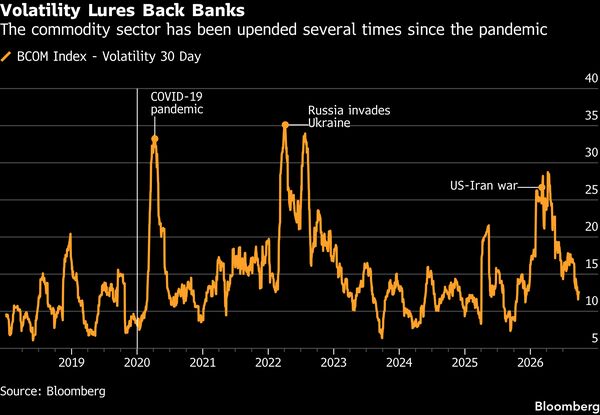
彭博现货指数追踪25种能源及大宗商品的价格走势。受伊朗战争影响,原油价格一度突破每桶100美元,燃料、电力及金属价格也出现大幅波动,这使得该指数今年出现了自2000年以来的第三次剧烈波动高峰。
The Bloomberg Spot Index, which tracks 25 energy and commodity products, has this year seen a third major spike of volatility since 2000 as the Iran war sent crude soaring above $100 a barrel, while fuel, power and metals prices also saw major swings.
市场波动加剧意味着交易商、生产商及采购商对套期保值服务的需求显著提升——这类服务通过衍生品工具来规避价格不利变动带来的风险。与此同时,整个银行业对大宗商品业务的关注度也在回升;规模达到一定水平的区域性银行也纷纷寻求业务多元化发展。
Soaring volatility means that traders, producers and buyers have greater appetite for hedging, in which derivatives are used to protect against adverse price moves. There’s also been a wider return to commodities across the banking industry, while regional banks that have reached a certain scale are looking to diversify.
德克萨斯资本银行于今年4月设立了大宗商品套期保值业务部门;OZK银行则在9月初完成了首笔相关交易。据业内消息人士透露,Flagstar银行也计划在今年年底前推出相关服务。其他多家区域性银行同样在不断完善自身的大宗商品业务体系。
Texas Capital Bancshares opened its commodity hedging desk in April, while Bank OZK’s executed its first trade in early September. Flagstar Bank NA aims to launch an offering by year-end. Other regional banks are also building out their offerings, industry sources said.
一直以来,区域性银行都会向大宗商品企业提供贷款,但它们缺乏运营衍生品交易业务所需的基础设施与专业人才。如果客户希望对冲油价风险,区域性银行会先提供贷款,随后客户则需借助外部交易对手——通常是大型投资银行或贸易公司——来完成相关交易。
The regionals have traditionally lent money to commodity firms, but they lacked the infrastructure or staff to run a derivatives desk. If a client wanted to hedge oil prices, the regional bank might foot the loan and then the client would tap an outside counterparty — typically a giant investment bank or trading house — to handle the transaction.
通过提供套期保值服务,这些区域性银行能够转型为综合性金融服务机构,同时增加自身营收。
By offering hedging, the regionals can become more of a full-service provider, while boosting their own revenues.
“由贷款方提供这种对双方都有利的服务是顺理成章的,”在休斯敦负责OZK大宗商品套期保值业务的史蒂夫·西诺斯说道。
“It’s natural for the lender to offer a mutually beneficial service,” said Steve Sinos, who leads OZK’s commodities hedging desk from Houston.
对银行而言,套期保值业务往往比传统贷款业务利润率更高,尤其是当银行充当做市商或促成复杂交易时。银行可通过赚取衍生品买卖价差来获取收益。不过,这也意味着银行需要承担更为复杂且资本密集型的风险,同时还需具备相应的专业能力。
Hedging can be a higher-margin business for banks than conventional lending, especially when they act as market-makers or put together complex deals. Revenue can come from pocketing the spread between the buy and sell price of derivatives. Still, it also means taking on more complex and capital-intensive risks, and requires specialist expertise.
据金融服务分析机构Coalition Greenwich的固定收益、外汇及大宗商品业务负责人安加德·查特瓦尔介绍,过去五年里,全球各大顶尖银行的衍生品及相关风险管理业务为其大宗商品交易部门贡献了超过60%的营收。
Derivatives and related risk management activities have generated more than 60% of revenues for commodity trading desks at the leading global banks over the past 5 years, according to Angad Chhatwal, head of fixed income, currencies and commodities at financial services analytics provider Coalition Greenwich.
据知情人士透露,至少有一家区域性银行因大宗商品业务能力不足而错失了多笔贷款业务,这促使该行着手完善相关业务。该人士还表示,当前动荡的市场环境也加速了该行推出套期保值产品的进程。
At least one regional bank lost several lending deals due to insufficient commodities capabilities, according to one of the people familiar, prompting a build-out. The current volatile market climate also expedited efforts to launch a hedging product, the person said.
这一趋势也反映出银行业在经历2008年金融危机后因监管收紧而多年淡出大宗商品领域之后,正重新回归该行业的动向。德意志银行早在十多年前便基本退出了大宗商品行业,如今正着手重建其能源交易业务。
The trend is also the latest manifestation of the banking industry’s push back into commodities after a years-long retreat spurred by the post-2008 regulatory crackdown. Deutsche Bank AG is rebuilding its energy trading business more than a decade after it largely exited the commodities sector.
大宗商品业务的活跃能为地区性银行提供除放贷之外的另一盈利渠道。随着行业整合不断深入,规模更大且竞争力更强的竞争对手不断涌现,使得单纯依靠放贷已难以维持竞争优势,因此中型银行也迫切希望实现差异化发展。
Greater commodities activity can give regional banks another way to make money beyond lending. Mid-sized banks are also eager to differentiate themselves, as ongoing consolidation is creating larger, more competitive rivals and make it harder to compete on lending alone.
管理咨询公司奥纬咨询指出,近年来,地区性银行所使用的专注于大宗商品领域的风险管理软件,其相关营收保持了两位数的增长势头。该公司还称,部分专注于石油和天然气行业的软件供应商的营收增长率甚至超过了20%。
There’s been low double-digit revenue growth in recent years for commodities-focused risk management software utilized by regional banks, according to management consultancy Oliver Wyman. Some vendors focused on oil and gas have seen growth top 20%, the firm said.
虽然地区性银行会对大型银行构成一定竞争压力,但它们同样可以充当交易对手方。举例而言,一家地区性银行可能为长期客户提供套期保值服务,但仍需将部分风险敞口转嫁给规模更大的交易商。此外,大宗商品生产商也可将套期保值业务分散至多家银行来执行。
While regionals present some competition for larger banks, they can also serve as counterparties. For example, a regional bank may offer hedging to a long-term client, but the bank still needs to place some of that exposure with a larger dealer. A producer can also spread their hedging program across different banks.
“从某个层面来看,这些机构彼此之间为争夺客户而展开竞争,”奥纬咨询美洲区企业与机构银行业务负责人皮特·克拉克说道,“但从另一个层面来看,它们又能相互分担风险。”
“On one level, these different entities compete with each other for client business,” said Pete Clarke, Oliver Wyman’s head of corporate and institutional banking in the Americas. “On another level, they lay-off risk to each other.”