近几周,美国制造的燃料和原油运往国内急需地区的货量有所下降。此前,白宫缩减了对长期航运要求的豁免范围,这不仅增加了油价进一步上涨的风险,也让石油交易商感到沮丧。
By Will Kubzansky and Jennifer A. Dlouhy Cargoes of American-made fuel and crude to parts of the country that badly need them have dropped in recent weeks after the White House pared back a waiver of longstanding shipping requirements, raising the risk of even higher pump prices while frustrating oil traders.
争议的核心是已有百年历史的《琼斯法案》,该法案要求美国国内港口之间的运输必须使用美国制造、悬挂美国国旗并由美国船员操作的船只。伊朗战争引发的石油供应短缺促使白宫于3月发布了一项广泛的临时豁免,允许外国船只运输国内能源物资,以遏制不断上涨的油价。
At issue is the century-old Jones Act that requires shipments between domestic ports occur on US-built, flagged and manned vessels. An oil supply crunch ushered in by the Iran war prompted the White House in March to issue a sweeping temporary waiver, allowing foreign vessels to transport domestic energy shipments in an effort to cap rising prices.
然而,在8月中旬,由于造船业利益集团及其在华盛顿的盟友施压,特朗普政府将豁免范围收紧,要求对每批货物进行个案审查。此举抑制了此前蓬勃发展的贸易活动,而该贸易曾为东西海岸港口供应美国墨西哥湾沿岸生产的燃料,以及原油和炼油用产品。随着纽约和洛杉矶等地区的燃料供应日益紧张,油价上涨的威胁也在加剧——与此同时,交易商们则对这一曾经繁荣的运输路线所面临的新限制表示不满。
But in mid-August, after pressure from shipbuilding interests and their Washington allies, the Trump administration narrowed the exemption to require case-by-case reviews of shipments. That’s curbed a roaring trade that was supplying East and West coast ports with fuel produced on the US Gulf Coast, as well as crude oil and products used in refining. As fuel supplies in areas such as New York and Los Angeles draw even tighter, the threat of higher pump prices is growing — while traders are bemoaning new constraints on a once-booming route.
多位熟悉该流程的石油行业人士称,当前版本的豁免正在限制可执行的航行次数,使其在促进燃料、原油及其他能源货物运输方面的作用大幅减弱。
The current iteration of the waiver is limiting the number of voyages that can occur, multiple people in the oil industry familiar with the process said, making it a significantly less useful tool to facilitate the movement of fuel, crude oil and other energy cargoes.
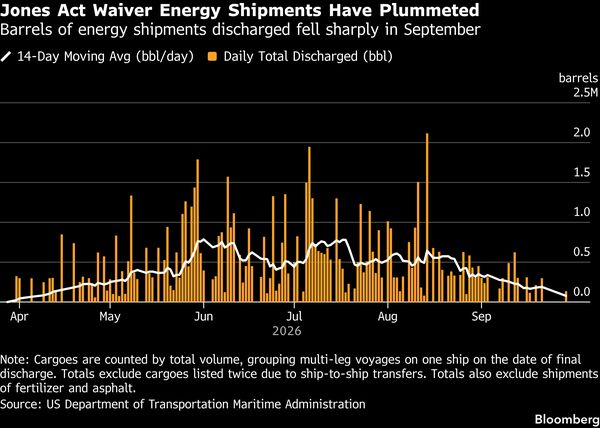
根据美国交通部海事管理局的数据,从3月中旬到8月中旬,在《琼斯法案》全面豁免期间,悬挂外国国旗的船只共执行了超过280次运输能源物资至国内港口的航行。
Foreign-flagged vessels made over 280 voyages carrying energy supplies to domestic ports under the blanket Jones Act exemptions from mid-March to mid-August, according to data from the US Department of Transportation’s Maritime Administration.
而自8月17日修订后的豁免生效以来,悬挂外国国旗的船只仅运输了9批能源货物,MARAD的数据显示。
Since August 17, when the revised waiver went into effect, just nine energy cargoes have been transported on foreign-flagged ships, MARAD data shows.
特朗普政府曾宣称,交通流量的显著下降是一项必要的成本节约措施,也是在中东冲突期间稳定能源市场的关键工具。如今,石油公司正向白宫施压,要求正式再次放宽豁免政策——或至少确保个案审查不会不必要地阻碍货物运输——同时警告称,原本旨在帮助美国能源供应留在美国市场的策略已不再奏效。
It’s a marked decline in traffic that the Trump administration had touted as an essential cost-savings measure and a key tool for stabilizing energy markets amid the Middle East conflict. Now, oil companies are pressuring the White House to formally relax the waiver again — or at least ensure case-by-case reviews don’t unnecessarily thwart cargoes — as they warn a strategy meant to help keep American energy supplies in American markets is no longer working.
“我们已经进入了豁免政策的延长阶段,足以开始从中推断出一些趋势,”凯托研究所赫伯特·A·斯蒂费尔贸易政策研究中心的副主管科林·格拉博表示。“目前看来,这些趋势显示运输量正在下降。”美国海上运输署(MARAD)的数据可能低估了实际的运输量。彭博政府分析显示,截至9月,自3月发布豁免政策以来,至少有12艘船只未经通知MARAD就运输了货物。
“We’re sufficiently into this extension of the waiver that we can start to infer some trends,” said Colin Grabow, associate director at the Cato Institute’s Herbert A. Stiefel Center for Trade Policy Studies. “So far they seem to indicate a drop-off.”The MARAD data may understate the volume of movements. A Bloomberg Government analysis showed that as of September, at least a dozen vessels had transported cargo without informing MARAD since the waiver was issued in March.
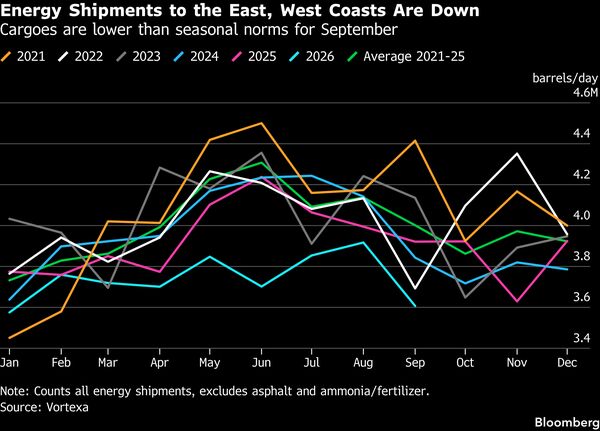
白宫发言人泰勒·罗杰斯表示:“琼斯法案的豁免政策已使更多供应——包括至关重要的能源产品、工业材料和农业必需品——能够更快地抵达美国港口。政府发布这些豁免政策,旨在为美国及全球经济提供确定性和稳定性,同时为我们的海运行业提供保障与支持。”根据Vortexa汇总的每周数据,自8月中旬以来,从美国墨西哥湾沿岸向东海岸和西海岸运输的能源周量下降了每天超过50万桶,实际上已回到战前水平。即使考虑到外国进口,今年9月西海岸燃料和石油的到港量仍是2020年以来同期最低水平。
“The Jones Act waivers have allowed significantly more supply—including vital energy products, industrial materials, and agricultural necessities—to reach US ports faster,” said White House spokeswoman Taylor Rogers. “The Administration has issued the waivers to provide certainty and stability for the US and global economies, while also providing safeguards and support for our maritime industry.”Weekly energy shipments from the US Gulf Coast to the East and West coasts have fallen by over 500,000 barrels a day since mid-August, effectively back to pre-war levels, according to weekly totals compiled by Vortexa. Even accounting for foreign imports, this September marked the fewest arrivals of fuel and oil to the West Coast seasonally since 2020.
外国旗籍船只通常比符合琼斯法案的船只更容易获得,且使用成本更低。长期以来,石油和天然气公司受限于管道运输以及数量有限的美国制造船队,因此对最初的豁免政策表示欢迎。
Foreign-flagged vessels are typically more readily available — and cheaper to use — than Jones Act compliant vessels. Oil and gas companies, long-constrained to pipeline shipments and a limited fleet of US-built vessels, cheered the initial waiver.
然而,这些广泛的豁免也引发了该国造船业的强烈反对,因为该行业将这项法律视为保护美国海上实力的屏障。
But the sweeping exemptions also drew fierce blowback from the country’s shipbuilding industry, which sees the law as a bulwark protecting American maritime might.
现行的《琼斯法案》豁免要求经过多步骤的事前审批流程。货主不能只是在运输前和运输后通知美国海运管理局(MARAD),而必须首先申请使用悬挂外国国旗的船只运输货物。
The current Jones Act exemption requires a multi-step pre-clearance process. Instead of simply notifying MARAD ahead of a shipment and after, shippers must first request permission to move cargo on a foreign-flagged vessel.
随后,MARAD会在24小时内对所有拥有符合《琼斯法案》要求的船只的船东进行核查,以确保该运输任务无法使用美国建造的船只完成。之后,国防部会审查核查结果并作出决定。
MARAD then surveys all shipowners with Jones Act-compliant vessels over 24 hours to ensure that the movement couldn’t occur on a US-built vessel. After that, the Department of Defense reviews the results and issues a decision.
多位知情人士称,这一事前审批流程本身既缓慢又繁琐,而频繁的否决也导致一些公司放弃了申请审批。核查结果常常显示,虽然存在可用的船只,但它们并不适合特定的运输需求——例如,可能发现船只过小,需要多次航行,而这超出了公司的可用时间窗口。
The pre-clearance process itself is slow and unwieldy, multiple people familiar said, and frequent denials have led some companies to abandon pursuing approvals. Frequently, the surveys indicate that ships are available that aren’t feasible for a given transport — including, for instance, turning up vessels that are too small and would require multiple voyages, outside companies’ available windows.
代表美国航运和造船利益的行业协会——美国海事联盟(AMP)认为,受限的运输案例证明,出于国家安全需要而必须采用此类航行的情况非常罕见,而这正是豁免申请的一项要求。
In the view of the American Maritime Partnership, an industry group representing US shipping and shipbuilding interests, the curtailed transits prove there’s few cases where voyages are necessary for national security, a waiver requirement.
AMP主席詹妮弗·卡彭特表示:“无论是此前还是自8月份这项逐案审批流程启动以来,美国公司都已向寻求豁免的客户提供了船只。然而,这些客户仍然将豁免流程视为替代正常商业实践的选择。”如今,当前豁免即将于11月15日到期,该国造船业与石油行业之间再次展开激烈博弈。
“American companies have offered vessels to customers seeking waivers, both before the case-by-case process and since it began in August,” said Jennifer Carpenter, president of the AMP. “Yet those customers continue looking to the waiver process as an alternative to normal commercial practice.”Now, with the current waiver set to expire on November 15, a fight is once again unfolding between the country’s shipbuilding and oil industries.
多位人士称,石油和炼油公司已向白宫游说,要求彻底改革豁免制度——随着政府一度考虑禁止美国柴油出口,这一努力也获得了更多支持。
Oil and refining companies have lobbied the White House to overhaul the waiver — an effort that picked up steam as the administration briefly mulled banning US diesel exports — some of the people said.
但白宫也听到了海事利益相关方的声音,他们希望朝相反方向推进。
But the White House is also hearing from maritime interests that want to move in the opposite direction.
“美国船东继续因持续的豁免而受到损害,并且失去了合同,因为托运人选择尝试获取豁免,要么用外国船只替换美国船只,要么将其作为压低运价的商业大棒,”卡彭特说。
“American vessel owners continue to be harmed by the ongoing waiver and have lost contracts as shippers opt to try their luck at securing waivers, either to replace American vessels with foreign ones or as a commercial cudgel to drive lower rates,” Carpenter said.