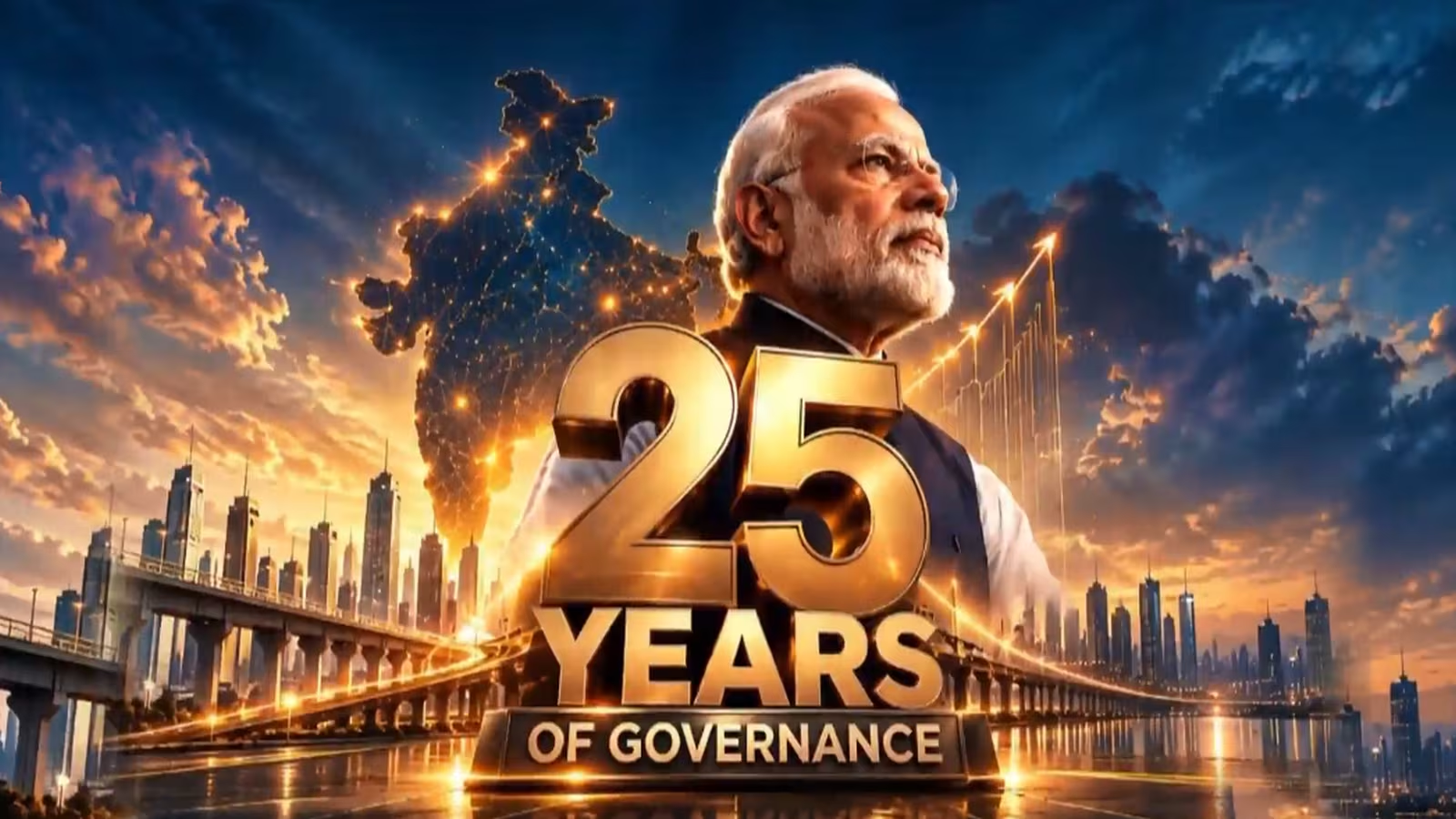
自2014年以来,印度的经济发展呈现出基础设施建设、数字支付普及以及公共投资大幅增长的态势。不过,前首席经济顾问K·苏布拉马尼安指出,下一阶段印度需要在制造业、要素市场、融资体系以及人力资本领域推行更深层次的改革。
India's economic journey since 2014 has been marked by a sharp expansion in infrastructure, digital payments and public investment. But the next phase will require deeper reforms in manufacturing, factor markets, financing and human capital, according to former Chief Economic Adviser K Subramanian.
在印度总理纳伦德拉·莫迪执政满25周年之际,苏布拉马尼安接受CNBC-TV18采访时说道,对政府表现的评估不应仅着眼于个别计划或项目,更应考察其提供公共产品以及应对经济危机的能力。“各项统计数据已说明一切,”苏布拉马尼安说道,他列举了2014年以来高速公路、铁路电气化、机场数量以及数字支付领域的显著增长情况。
Speaking to CNBC-TV18 as Prime Minister Narendra Modi completed 25 years as head of government, Subramanian said the government's performance should be assessed not only through individual schemes or projects, but also through its ability to provide public goods and respond to economic crises." The statistics speak for themselves," Subramanian said, pointing to the expansion in highways, railway electrification, airports and digital payments since 2014.
基础设施建设一直是衡量政府施政成效的重要指标。苏布拉马尼安指出,基础设施是反映经济变化最直观的指标之一。据他引用的数据,1947年至2014年间,印度修建的高速公路总里程约为9万至9.1万公里;此后这一数字又增长了60%以上,目前总里程已接近15万公里。
Infrastructure has been a major measure of government deliverySubramanian pointed to infrastructure as one of the clearest indicators of what has changed in the economy. He said India had constructed about 90,000-91,000 kilometres of highways between 1947 and 2014. Since then, the network has increased by more than 60% to nearly 1.5 lakh kilometres, according to the figures he cited.
铁路电气化进程同样进展迅速。2014年后的12年间,印度电气化铁路网络里程从约2万公里增至约7万公里。数字支付领域亦是如此:2014年之前印度并无统一的统一支付接口系统,如今每月的支付交易量已接近250亿笔。此外,机场数量也从2014年的约19个增加至如今的164个。
Railway electrification has also expanded sharply. The electrified railway network increased from about 20,000 kilometres to around 70,000 kilometres during the 12-year period after 2014, he said. Digital payments provide another example. UPI did not exist before 2014, while India now records close to 25 billion transactions a month, according to Subramanian. The number of airports, he said, has also increased from about 19 in 2014 to 164.
苏布拉马尼安强调,基础设施属于公共产品,提供基础设施正是政府的核心职责所在。“这些正是政府理应履行的职责。”
Subramanian's broader point is that infrastructure is a public good and providing it is a central responsibility of government." These are aspects of what a government is supposed to do.
“政府本应提供公共产品,”他说。危机管理也是对政府能力的一次考验。苏布拉马尼安认为,应对重大经济冲击的能力是衡量政府表现的重要指标。他对比了印度应对全球金融危机、新冠疫情以及乌克兰战争引发的经济动荡时的举措。据苏布拉马尼安介绍,在应对全球金融危机期间,印度出现了长达18个月的两位数通胀率,经常账户赤字超过GDP的5%,多项宏观经济指标也出现恶化,印度甚至被归入“脆弱五国”之列。
A government is actually supposed to be providing public goods," he said. Crisis management is another test of governmentSubramanian also sees the handling of major economic shocks as an important measure of government performance. He compared India's response to the global financial crisis with its response to the COVID-19 crisis and the economic disruption following the Ukraine war. According to Subramanian, the earlier crisis was accompanied by double-digit inflation for 18 months, a current account deficit of more than 5% and a deterioration in several macroeconomic indicators.
而相比之下,在新冠疫情及乌克兰战争之后,发达经济体的通胀率则达到了其平均水平的2至4倍;印度的通胀率却仍低于平均水平,宏观经济基本面也保持稳健。在苏布拉马尼安看来,这一对比充分说明政府的作用并不仅限于基础设施建设;在维持宏观经济稳定的同时妥善应对危机,同样是政府履职的重要内容。他指出,提供公共产品与应对危机这两方面恰恰体现了政府服务能力的提升。
He said India had become part of the "fragile five".He contrasted this with the period after COVID-19 and the Ukraine war, when advanced economies experienced inflation at around two to four times their average levels. India, he said, had inflation below its average while retaining strong macroeconomic fundamentals. For Subramanian, the comparison shows how the government's role extends beyond infrastructure. Managing a crisis while maintaining macroeconomic stability is another part of government delivery. He said these two aspects — providing public goods and managing crises — illustrate how government delivery has improved.
接下来的挑战是新一轮改革。苏布拉马尼安认为,当前的工作重点应转向有助于印度实现“2047年发达印度”愿景的各项改革。他提出,下一阶段需推进制造业、要素市场、行政体制及司法领域的改革,同时采取措施提升营商便利度与融资便利度。其中,他特别强调营商便利度与融资便利度的重要性。制造业领域则需通过改革来降低企业在土地、劳动力、资本、电力及物流等方面的成本。
The next challenge is a new round of reformsThe focus now, according to Subramanian, needs to shift towards reforms that can help India realise its Viksit Bharat 2047 ambition. He said the next phase should include reforms in manufacturing, factor markets, the bureaucracy and the judiciary, along with measures to improve the ease of doing business and ease of financing. Of these, he highlighted ease of doing business and ease of financing as particularly important. Manufacturing will need reforms that reduce the costs faced by companies across land, labour, capital, power and logistics.
扩大制造企业的规模同样至关重要,因为规模扩大有助于降低平均成本。然而,监管措施本身却可能阻碍企业实现这一规模。“制约企业规模扩大的关键因素之一就是监管本身,”苏布拉马尼安说道。他将这些变革视为要素市场所需的第二代改革举措的一部分。为何制造业仅靠投资还不够苏布拉马尼安关于制造业的论述并不仅限于单纯扩大生产规模。
Increasing the scale of manufacturing firms is also important because larger scale can help reduce average costs. But regulation can itself prevent companies from reaching that scale." One of the key inhibitors to scale is regulation itself," Subramanian said. He described these changes as part of the second generation of reforms needed in factor markets. Why manufacturing needs more than investmentSubramanian's argument on manufacturing goes beyond simply increasing production.
企业在土地、劳动力、资本、能源和物流方面所面临的各种成本,都会影响其竞争力和扩张能力。因此,要素市场改革对于更广泛的制造业发展而言至关重要。他关注营商便利度和融资便利度,也反映了同样的关切:企业需要一个能够高效运营、获取融资并实现扩张的环境。苏布拉马尼亚姆表示,他在其著作《印度2047》中详细讨论了这些改革,包括与制造业、要素市场、官僚体系、司法系统以及改善营商便利度和融资流程相关的改革。
The costs faced by companies across land, labour, capital, power and logistics affect their ability to compete and expand. That makes factor-market reform important to the broader manufacturing push. His focus on ease of doing business and ease of financing also reflects the same concern: companies need an environment in which they can operate, access finance and expand efficiently. Subramanian said he has discussed these reforms in detail in his book India@100, including reforms relating to manufacturing, factor markets, the bureaucracy, the judiciary and the processes needed to improve the ease of doing business and financing.
随着人工智能的发展,人力资本变得愈发重要。制造业和企业的改革并非唯一优先事项。苏布拉马尼亚姆还强调了人力资本的重要性,尤其是在人工智能日益关键的情况下。他表示,随着人工智能的到来,人力资本的质量将变得愈发重要,这使其成为另一个需要政策关注的领域。这也为改革议程增添了更长期的维度:在改善企业环境的同时,确保经济在技术变革中具备必要的人力资本。
Human capital becomes more important with AIManufacturing and business reforms are not the only priorities. Subramanian also highlighted human capital, particularly as artificial intelligence becomes more important. He said the quality of human capital will become increasingly important with the arrival of AI, making it another area that needs policy attention. This adds a longer-term dimension to the reform agenda: improving the environment for businesses while also ensuring that the economy has the human capital needed as technology changes.
改革同样需要政治层面的沟通。在苏布拉马尼亚姆看来,在民主国家推行改革,仅仅制定清晰的政策议程是不够的。他指出,政治上需要满足两个条件:政治领导人必须思想清晰、信念坚定,并且能够向民众解释改革的必要性。他表示,莫迪已经展现了这两点,尤其是在用通俗易懂的语言传达改革必要性方面。他认为,这种沟通至关重要,因为如果民众不理解改革的必要性,改革就很难推进。
Reform also requires political communicationFor Subramanian, implementing reforms in a democracy requires more than having a clear policy agenda. He identified two political requirements: clarity of thought and conviction among political leaders, and the ability to explain to people why a reform is necessary. He said Modi had demonstrated both, particularly in communicating the need for reforms in simple terms. That communication, he argued, matters because reforms can be difficult to undertake unless people understand why they are needed.
因此,苏布拉马尼亚姆对下一阶段的核心信息非常明确:在推进基础设施和公共产品建设之后,必须实施更深层次的改革,使企业能够实现规模扩张、提高效率、获得融资,同时加强人力资本建设。改革的成功他说,如果印度想要实现他所预见的经济发展潜力,接下来的阶段将至关重要。“如果总理不推行这些改革措施,我认为印度或许无法发挥出其应有的发展潜力,”他补充道。
Subramanian's central message for the next phase is therefore clear: the infrastructure and public-goods push needs to be followed by deeper reforms that allow businesses to achieve scale, improve efficiency and access financing, while strengthening human capital. The success of that next phase, he said, will be important if India is to realise the economic potential he sees ahead." If basically the Prime Minister doesn't do these reforms, I think we may not be able to achieve the kind of potential that India has," he said.