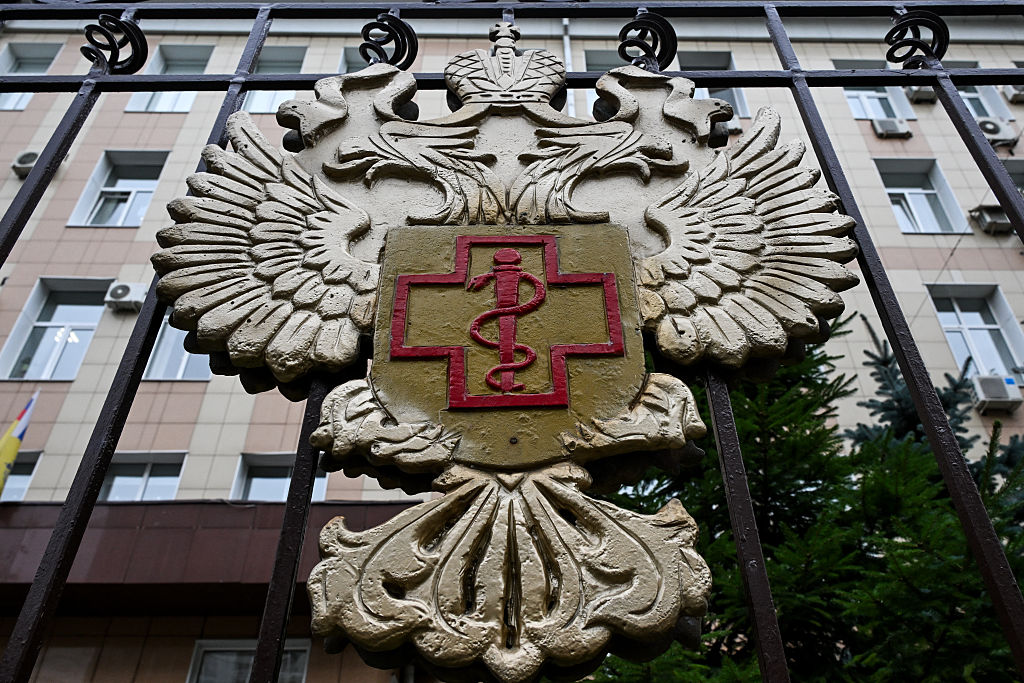
西伯利亚一家鼠疫研究机构的实验室工作人员上周因患上肺炎而死亡。此后,当地有报道称她打碎了一只装有鼠疫菌的试管,这一说法引发了人们对她如何染病的猜测。俄罗斯当局否认了这一说法,并向世界卫生组织(WHO)表示,她的检测样本以及其密切接触者样本中均未发现鼠疫。
A laboratory worker in a plague research institute in Siberia died last week after developing pneumonia. Since then, local reports suggesting that she broke a test tube containing plague bacteria have fueled speculation about how she became ill. Russian authorities disputed that account and told the World Health Organization (WHO) that plague had not been detected in her tests nor in those of her close contacts.
与此同时,据报道,俄罗斯当局已对多达200人实施了隔离。公共卫生专家认为,对于一起孤立的肺炎病例而言,这种反应并不寻常。周二晚间,在媒体报道出现第二例病因不明的肺炎病例后,世卫组织向俄罗斯要求提供更多相关信息。
At the same time, Russian authorities have reportedly quarantined as many as 200 people, which public-health experts say would be an unusual response to an isolated case of pneumonia. On Tuesday evening, the WHO asked Russia for more information following media reports of a second case of pneumonia of unknown cause.
从事公共卫生政策和传染病研究的研究人员一直担忧地关注着这一迅速演变且信息不透明的情况。以下是他们感到担忧的原因。
Researchers who work in public-health policy and infectious diseases have been watching this rapidly evolving and opaque situation with concern. Here’s what worries them.
这看起来不像是一起普通的实验室事故。布朗大学公共卫生学院的流行病中心主任詹妮弗·努佐(Jennifer Nuzzo)表示,事件的发展过程与“因接触已知细菌导致实验室工作人员患病”这一解释并不完全吻合。在研究鼠疫杆菌(Yersinia pestis)的实验室中,已经制定了应对意外暴露的规程。穿戴个人防护装备以及在通风橱内操作可以提供一定程度的保护。
This doesn’t look like the average lab accident The pattern of events doesn’t fit neatly with the explanation that a lab accident with a known bacterium sickened the worker, says Jennifer Nuzzo, director of the Pandemic Center at the Brown University School of Public Health. In labs that study Yersinia pestis, the bacterium that causes plague, protocols are in place to deal with accidental exposure. Wearing personal protective equipment and working under a fume hood provides some protection.
但如果有人发现自己已经暴露,通常会服用抗生素,而抗生素对自然存在的鼠疫细菌具有有效治疗作用。“你不会有事,通常不会死亡,”努佐说。“实验室暴露事件‘虽然令人遗憾,但有时确实会发生’。”然而,这与俄罗斯当局的大规模反应似乎并不一致。她提到有报道称,多达200人正在接受观察,当地医院也已被关闭,并表示:“这种反应的规模和严重程度也值得进一步关注。”
But if someone finds they’ve been exposed, they would take antibiotics, which is an effective treatment for naturally occurring plaque bacteria. “You’d be fine. You don't die, typically,” says Nuzzo. A lab exposure “would be a regrettable accident that sometimes occurs.”That seems out of sync with the substantial response on the part of Russian authorities. “The magnitude and severity of that response is also worth looking at,” she says, referring to reports that up to 200 people are under observation and that local hospitals have been closed.
“当然,这或许只是官僚主义的惯性反应。但如果我能确切知道她接受了哪些检测,以及检测结果为何呈阴性,我就会对目前的情况更有信心。”努佐继续说道,到此时,“他们应该已经获得了完整的基因序列”——也就是说,导致实验室工作人员死亡的病原体应该已经被确认。
“Now, that could just be bureaucratic reflexes. But I would feel more confident in what was going on if I knew specifically what she was tested for and what came back negative.”By this time, Nuzzo continues, “they should have a full sequence”—meaning the pathogen that killed the lab worker should be identified.
关于这一事件,目前仍有许多未知之处。一些专家认为,有必要考虑是否可能涉及人工改造的病原体,而非自然存在的病原体。在乔·拜登总统任期内负责白宫新冠应对工作的阿希什·K·贾(Ashish K. Jha)博士于10月4日在X平台上写道,“有意计划中的意外释放”是他长期担忧的一种可能性。俄罗斯在病原体生物工程领域有着悠久的历史。苏联解体后,该国的相关项目虽已正式关闭,但目前的具体情况仍不明朗。
Much is unknown about the situation, and some experts have said it’s worth considering the possibility that an engineered pathogen, rather than a naturally occurring one, could be involved. Dr. Ashish K. Jha, who coordinated the White House’s COVID response under President Joe Biden, wrote on X on Oct. 4 that “an accidental release from a deliberate program” was a scenario he had long worried about. Russia has a long history of bioengineering pathogens. After the fall of the Soviet Union, that nation’s programs were officially shuttered, but the current situation is unclear.
“你难免会担心,这件事背后可能还有我们表面看不到的东西,”Jha告诉《时代》杂志。“根据我与[特朗普]政府中朋友们的交流,我可以肯定地说,他们对此一直非常担忧……[但]他们并没有获得太多信息和数据。”“我接下来说的话听起来可能极其天真,但我还是想说:我希望俄罗斯方面能非常坦诚和透明地说明这个实验室里到底发生了什么,但我们也完全可以想象,他们未必会这么做,”Jha说道。
“You can't help but worry that there is something more here than meets the eye,” Jha tells TIME. “What I will say from my conversations with friends in the [Trump] Administration is that they've been very worried about this…[But] they're not getting a lot of information and data.” ”I'm going to say something that's going to sound incredibly naive, but I'll say it: What I hope is that the Russians will be very forthcoming and transparent about what was going on in this lab, but one can imagine that they may not be,” Jha says.
“如果这是鼠疫,那就可以松一口气,因为我们知道如何应对鼠疫,”Nuzzo说。“我们已经有明确的解决方案……真正令人担忧的是,这可能不是鼠疫,而是其他某种我们尚无有效应对办法的疾病。”我们是否已经为新型病原体的爆发做好了准备?
“If it's plague, breathe a sigh of relief, because we know what to do about plague,” says Nuzzo. “We have a clear solution…The worry is it's not that, it is something different, something for which we don't have easy solutions.”Are we prepared for an outbreak of a new pathogen?
不,努佐和贾都同意这一点。努佐表示,与新冠疫情之前相比,我们现在所处的情况更糟。“我们在2019年和2020年初所拥有的那些防护措施,如今已经减少,而且我们现在比当时更加脆弱。”努佐指出,这主要是因为监测力度减弱,国家之间的信息流动也减少了。“正因如此,各国需要资助并维持海外科学合作,因为这样他们就能了解相关机构、了解其动机,也了解哪些情况属于正常。这也是为什么我们需要一个强大、有能力且值得信赖的世卫组织,因为有时它正是开展对话、揭示信息问题的最佳机构。”
No, Nuzzo and Jha agree. We are in a worse situation now compared to pre-COVID times, Nuzzo says. “The protections we had in 2019, early 2020–there are now fewer of them, and we are more vulnerable now than we were then,” Nuzzo says, pointing to reduced monitoring and less information flow between countries. “This is why countries need to fund and maintain overseas scientific engagements, because then they know the actors, they know their motivations, they know what's normal. It's also why you want to have a strong, capable, and relied-upon WHO, because sometimes they're the best entity to have the conversations to surface the information.”
贾也指出了监测方面的不足:“我们最大的弱点是,自己国家几乎没有任何生物检测系统。”如果西伯利亚有人被感染,然后登上飞机飞往纽约市,“我们将一无所知。我们只需要建立一个更完善的全球监测系统。”贾与拜登政府白宫的一位同事尼基·罗马尼克共同创办了一家公益公司,致力于构建一个监测系统,该系统会利用搜索和社交媒体信息、医院的临床数据以及污水测序技术。
Jha also flags the lack of monitoring: “The biggest weakness we have is we have almost no biodetection system in our own country.”If someone in Siberia was infected, got on a plane, and flew to New York City, “we would not know. We just need a much better global monitoring system on this.”Jha and a colleague from the Biden White House, Nikki Romanik, have started a public benefit corporation to build a monitoring system that draws on search and social media information, clinical information from hospitals, and wastewater sequencing.
传统的污水监测通常只针对特定病原体,例如呼吸道合胞病毒(RSV)或新冠病毒(COVID-19)。“我们的策略是反其道而行之:对污水中的所有物质进行测序,然后寻找任何不属于正常范围的东西。这就是我们的检测方式。”他说道。这个名为“BioRadar”的系统目前正在达拉斯进行测试。
Wastewater monitoring typically looks for hand-picked pathogens, such as RSV or COVID-19. “Our strategy is you flip it, you sequence everything in the wastewater and you look for anything that doesn't belong. That's how we would detect it,” he says. The system, called BioRadar, is currently being tested in Dallas.
贾表示,导致这名实验室工作人员死亡的病原体——如果最终被证实是某种新型病原体——不太可能像新冠病毒那样有效传播。不过,“当我在白宫负责为未来疫情暴发做准备时,我主导建立的许多能力,如今已被美国卫生与公众服务部部长罗伯特·F·肯尼迪废除。大量资源被撤回和取消。我们曾组建过一个名为‘下一代计划’的呼吸道病毒疫苗项目,但该项目已被叫停。由于肯尼迪部长的政策,我们已不再为mRNA疫苗平台提供资金。我们远没有达到应有的准备水平。”但如果最终发现这根本不是什么大事呢?
It’s unlikely that the pathogen that caused the lab worker’s death—if it does turn out to be something new—would spread as effectively as COVID did, says Jha. Still, “a lot of the capabilities that I spearheaded building when I was at the White House for preparation for future outbreaks have been dismantled by U.S. Health and Human Services Secretary Robert F. Kennedy. A lot of stuff has been pulled back and taken away. We had put together a whole respiratory virus vaccine program called Project Next Gen that was taken down. We don't have mRNA vaccine platform funding anymore because of Secretary Kennedy. We are not nearly as ready as we need to be.”What if it turns out to be nothing?
努佐表示,最终仍有可能“这一切不过是巧合和过度反应而已”。“到那时,人们可能会说:‘你们把所有人都搞得草木皆兵。’但我要说的是,我们根本无从知晓。这或许根本不是什么大事。不过,当火灾警报响起时,即使最终什么都没发生,你也不会因此生气,反而会庆幸一切平安。”她指出,归根结底,未来或许确实存在真正的威胁,而关键在于做好准备。
There is still the possibility that in the end, “this whole thing could be just a lot of coincidence and overreaction,” says Nuzzo. “And then people are going to be like, ‘You got us all whipped up about this thing.’ I am here to say, we have no idea. This could be nothing. But when your fire alarm goes off, you don't get mad at it for going off when nothing happened. You're glad nothing happened.”Ultimately, there could be real threats in our future, and the key is to be prepared, she says.
贾认为,这一事件是美国民众的警钟。“要继续保持关注,这一点非常重要。其次,要敦促我们的政治领导人采取更积极主动的措施。因为事实是,你并不希望在疫情暴发之后才开始担忧。你应该在事前就保持警惕,并建立必要的体系,确保我们为下一次疫情做好准备。”他说道。
Jha views the situation as a wake-up call to Americans. “Continue to pay attention, because that is important. Secondly, push our political leaders to get much more proactive. Because the truth is, you don't want to get concerned after the outbreak has happened. You want to be concerned before, and build the systems you need to make sure that we are ready for the next one,” he says.
“我不想危言耸听,但仅看看过去六个月里发生的事情就足以令人警惕。邮轮上爆发了汉坦病毒疫情,而且我们从[人工智能公司]Anthropic那里了解到,越来越多的人开始利用人工智能模型来制造生物武器,”Jha说道。“过去五年里,全球范围内高风险实验室的数量激增。因此,即使这次事件最终被证明并不那么严重,我仍然非常担心我们会看到越来越多类似的事件——而其中某一件事,将会造成严重后果。”
“Without sounding like an alarmist, look at what has happened in the last six months alone. There was the hantavirus outbreak on the cruise ship, and we're hearing from [AI company] Anthropic about all these people who are starting to use AI models to build biological weapons,” Jha says. “There's been this massive proliferation of high-risk labs around the world in the last five years, and so even if this one incident turns out to be not that big a deal, I am very worried we're going to see more and more things like this—and one of them will be a big deal.”