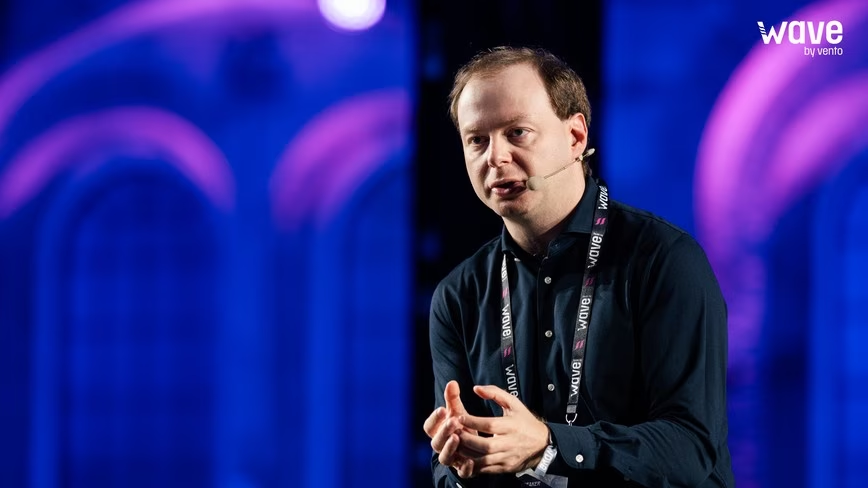
Miro联合创始人兼首席执行官安德烈·胡西德(Andrey Khusid)表示,将人工智能引入现有团队和流程无法完全发挥其生产力优势。他指出,企业需要从零开始重新设计工作方式。他是于周三在都灵举行的Wave by Vento大会上发表上述言论的。
Miro co-founder and chief executive Andrey Khusid says adding AI to existing teams and processes will not deliver its full productivity gains. Companies need to redesign how work happens from the ground up, he said. He spoke at Wave by Vento in Turin on Wednesday.
胡西德说:“面临的一大挑战在于,不是将人工智能叠加在现有团队或运营系统之上,而是实际上要从第一性原理出发来设计工作流程,然后再让人类参与进来,在这一工作流程之上增加价值。”
“One of the big challenges is how not to put AI on top of the existing teams or operational systems, but actually, from first principles, design the workflow and then only add humans to add value on top of that workflow,” Khusid said.
该场会议的主题为“人工智能时代的共同思考”。《回声报》科技、媒体和初创企业版块负责人查理·佩罗(Charlie Perreau)主持了该场会议。
The session was titled “Thinking Together in the Age of AI”. Charlie Perreau, who heads the tech, media and startups section at Les Echos, moderated it.
胡西德此次亮相意大利的一个月前,总部位于米兰的Bending Spoons同意以13.55亿美元收购Miro。在获得相关批准的前提下,Bending Spoons预计该交易将于第四季度完成。据Bending Spoons透露,Miro的年度经常性收入约为6亿美元。2022年1月,Miro在筹集4亿美元资金时的估值为175亿美元。胡西德表示,他目前还不能谈论此事。他说,很高兴来到意大利,“这或许是Miro的新家”。
Khusid’s appearance in Italy came a month after Milan-based Bending Spoons agreed to buy Miro for $1.355bn. Bending Spoons expects the deal to close in the fourth quarter, subject to approvals. Miro has about $600m in annual recurring revenue, according to Bending Spoons. It was valued at $17.5bn in January 2022, when it raised $400m. Khusid said he could not talk about it yet. He was happy to be in Italy, “maybe a new home for Miro”, he said.
为什么个人收益无法累加 胡西德说,如今大多数人每天都在使用Claude或ChatGPT等人工智能工具。而最难的部分在于改变整个公司的运营方式。
Why personal gains do not add up Most people now use AI tools such as Claude or ChatGPT every day, Khusid said. The hard part is changing how whole companies operate.
他表示,公司的运转依赖于复杂的工作流程,工作在不同的人之间流转。每个人都掌握着语境的不同部分,而这些语境很少集中在一个地方。首要的工作是将这些语境汇聚起来,以便团队能够在此基础上开展工作。
Companies run on complex workflows, he said, in which work passes from one person to the next. Each person holds a different piece of the context, and it is rarely in one place. The first job is to bring that context together, so teams can work from it.
他指出,将人工智能分散到现有的运营模式中,将无法带来人们所期望的收益。在某些领域,Miro设立了并行团队,利用人工智能开展相同的工作。团队围绕这些AI工作构建了流程,然后将其推广至公司的其他部门。
Spreading AI across an existing operating model will not give the gains people expect, he said. In some areas, Miro set up parallel teams that did the same work with AI. It built the process around them, then scaled it to the rest of the company.
更多声音,更多噪音 胡西德表示,人工智能为性格更内向的人提供了一种更好的方式来分享他们的想法。他们可以迅速将提示词转化为其他人能够看到的雏形。
More voices, more noise AI gives quieter people a better way to share their ideas, Khusid said. They can quickly turn a prompt into a prototype that others can see.
但他表示,这也催生了更多内容。他说,如果每个人都把AI生成的内容一股脑地扔给团队,就会让团队不堪重负,拖慢所有人的进度。今年6月,《哈佛商业评论》曾警告企业注意AI引发的“工作垃圾”问题。Khusid给出的答案是问责制:每个人都必须对自己贡献的每一项内容负责。
But it also creates far more content, he said. If everyone throws AI output at their team, he said, it overwhelms the team and slows everyone down. In June, the Harvard Business Review warned about AI ‘workslop’ in companies. Khusid’s answer is accountability: each person has to own every piece of what they bring.
Khusid表示,传统组织是以人为核心、按层级构建的,知识掌握在个人手中。而在新型公司中,一个中央智能系统几乎了解所有发生的事情。人们通过访问这个系统来快速做出决策和行动。
Intelligence at the centre Organisations were built around people and hierarchy, with knowledge held by individuals, Khusid said. In new companies, a central intelligence knows almost everything that happens. People tap into it to decide and move fast.
他说,传统企业必须重建自身的智能基础设施,并重新思考需要哪些岗位。以这种方式构建的初创公司行动更快、决策更优,这给其他所有企业带来了紧迫感。今年7月,英国数据显示,企业采用AI的比例已经翻了三倍,尽管大多数企业仍然只是轻度使用。
Established companies have to rebuild their own intelligence infrastructure and rethink which roles they need, he said. Startups built this way move faster and decide better, which creates urgency for everyone else. In July, UK figures showed businesses had tripled their AI adoption, though most still used it only lightly.
Khusid表示,Miro公司成立已有15年,其大部分代码早已在AI的协助下编写完成,而且公司还整合了不同系统,让AI能更好地理解上下文。他说,近期模型方面几乎没有出现颠覆性的变化,未来三年它们能做什么已经相当清晰。因此,Miro选择围绕这些已知能力进行构建,而不是追逐每一次新版本发布。
Miro is 15 years old. Much of its code is already written with AI help, Khusid said, and the company has merged systems to give AI better context. He said there has been little disruptive change in models lately. It is already clear what they can do over the next three years. So Miro builds around that rather than chasing every release.
他说,人类和AI智能体在初创公司以及大型企业中早已并肩工作,但人类依然保持着问责责任。Miro正在构建一个人类与智能体在同一个画布上协作的系统。他预计,在三年内,Miro将更多地依赖语音和对话,而视觉化决策将成为团队决策的主要方式。
Humans and AI agents already work side by side in startups and large companies, he said, but people stay accountable. Miro is building a system where people and agents work on the same canvas. Within three years, he expects Miro to rely more on voice and conversation, with visual decision-making as the main way teams decide.
Khusid表示,Miro成立于2011年,但直到2016年才开始获得真正的关注。他对创业者的建议是:专注于自己热爱的事物,并倾听自己的直觉。
Khusid said Miro started in 2011 but only saw meaningful traction in 2016. His advice to founders is to work on something they love and to listen to their own intuition.