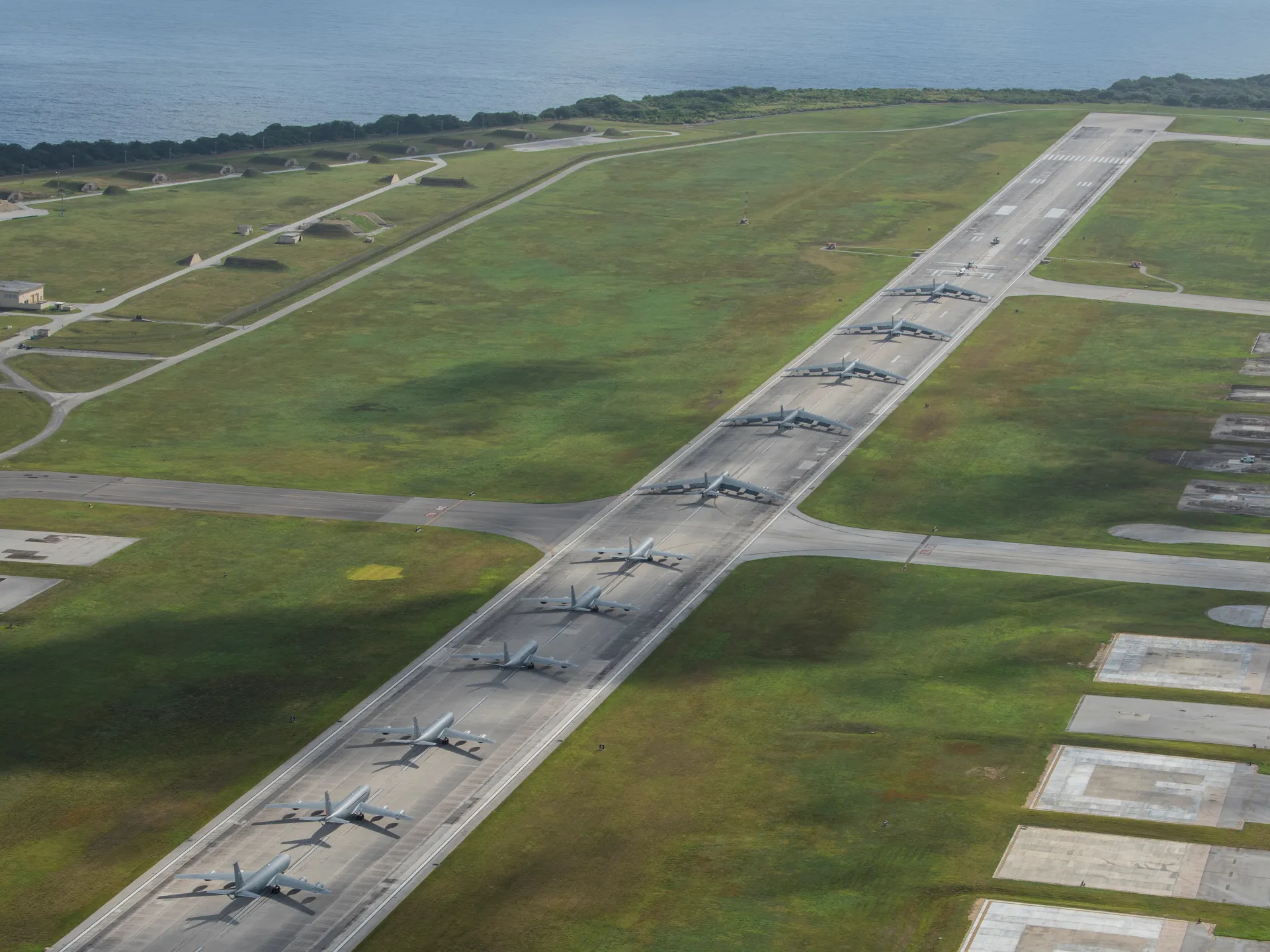
美国最高法院已开始审理一起可能决定美国空军能否继续在关岛一处海滩引爆未爆炸弹的案件。
The United States Supreme Court has begun hearing arguments in a case that could determine whether the US air force can continue to use a beach in Guam to detonate unexploded ordnance.
周三的听证会源于关岛环保组织“Prutehi Guahan”提出的一项诉讼。该组织主张,长期在塔拉格海滩处理军火可能破坏当地生态系统、损害重要的文化和历史遗址,并威胁到该岛的水资源。
Wednesday’s hearing stems from a challenge by a Guam conservation group, Prutehi Guahan, which argues that the longstanding use of Tarague Beach to dispose of munitions may harm the ecosystem, damage an important cultural and historical site, and threaten the island’s water resources.
此案之所以受到关注,是因为它引发了更广泛的问题:美国领土居民的权利。这些居民无法在总统选举中投票,且在美国立法机构中的代表权也十分有限。
The case has gained attention for raising broader questions over the rights of residents of US territories, who cannot vote in presidential elections and have limited representation in the US legislature.
关岛于1898年美西战争结束后成为美国领土。它也是西太平洋地区重要的美军枢纽,设有安德森空军基地和关岛海军基地。该岛人口估计约为17万。以下是关于此案需要了解的情况:争议焦点是什么?
Guam became a US territory in 1898, in the wake of the Spanish-American Civil War. It has also served as a key US military hub in the western Pacific, hosting both Andersen Air Force Base and US Naval Base Guam. The island has an estimated population of about 170,000. Here’s what to know about the case: What’s being challenged?
最高法院审理的此案核心问题是:美国空军在申请新许可以继续在塔拉格海滩处理和销毁危险军火(包括炸弹、地雷和导弹)之前,是否遵循了适当的环境保护程序。
The case before the Supreme Court hinges on whether the US air force followed proper environmental procedures before applying for a new permit to continue to dispose of and destroy hazardous munitions – including bombs, landmines and missiles – at Tarague Beach.
自1982年以来,美国空军一直在该海滩进行引爆作业,并于2021年申请了延续许可。关岛环境保护局既未“拒绝也未批准”该许可,引爆作业也因此持续进行。
The air force has used the beach for the detonations since 1982 and applied for a permit to continue in 2021. Guam’s Environmental Protection Agency did not “deny or approve” the permit, and detonations have continued.
“Prutehi Guahan”组织诉讼的核心,是质疑美国空军是否遵守了法律。
At the centre of Prutehi Guahan’s challenge is whether the air force followed the law.
在申请许可时,美国空军遵循了1976年《资源保护与回收法》。该法案要求美国各州及领土的环境监管机构对危险废物的处理进行监管。
In applying for the permit, the air force adhered to the 1976 Resource Conservation and Recovery Act, which requires environmental regulators in US states and territories to regulate hazardous waste disposal.
Prutehi Guahan还坚持认为,空军必须遵守1969年的《国家环境政策法》,该法案要求联邦机构在做出重大决策前,必须开展环境影响评估,包括听取社区意见。关岛面临什么威胁?
Prutehi Guahan has also maintained that the air force must adhere to the National Environmental Policy Act of 1969, which requires federal agencies to conduct environmental impact assessments, including receiving community input, before undertaking major decisions. What is the threat to Guam?
在法庭文件中,Prutehi Guahan(在查莫罗语中意为“保护关岛”)表示,空军的弹药销毁场位于“祖先的土地上,这片土地在第二次世界大战后被军方从当地家庭手中夺走”。
In court filings, Prutehi Guahan, which means Protect Guam in the Chamorro language, said the air force disposal range is located “on ancestral land that the military seized from local families after World War II”.
文件还指出,这片海滩“毗邻具有重要文化意义的捕鱼地点——当地家庭依赖这些地点维持生计——并且这里还有采集传统药物的地点”。Prutehi Guahan指出,该地区是该岛上历史最悠久的居住区之一,考古证据可追溯至公元前2千年。
It added the beach is “adjacent to culturally significant fishing locations – upon which local families depend for sustenance – and contains sites for collecting traditional medicines”. The area is one of the oldest occupied sites in the region, with archaeological evidence dating back to the 2nd millennium BC, Prutehi Guahan noted.
Prutehi Guahan还表示,引爆点位于“一个为岛上超过80%人口提供饮用水的含水层之上”。
Prutehi Guahan also said the detonation site sits “above an aquifer that provides drinking water to over 80% of the island’s population”.
法庭文件详细说明了相关研究结果,这些研究指出,弹药销毁和引爆可能导致弹片进入周边海洋和珊瑚礁,同时释放有毒化学物质。空军有何回应?
The court filing detailed studies that found munition disposal and detonation can send fragments into the surrounding ocean and reef, while releasing toxic chemicals. What has the air force said?
政府律师坚称,空军已遵循《资源保护和回收法》下的环境审查程序,并主张该程序“取代”了《国家环境政策法》下的任何要求。
Government lawyers have maintained that the air force followed environmental review procedures under the Resource Conservation and Recovery Act, arguing the process “displaces” any requirements under the National Environmental Policy Act.
他们还进一步辩称,由于关岛环境保护局尚未对2021年的许可证做出最终决定,Prutehi Guahan提出的挑战为时过早。
They have further argued that, because the Environmental Protection Agency in Guam has not issued a final determination on the 2021 permit, the challenge from Prutehi Guahan was premature.
2022年1月Prutehi Guahan提出挑战后,一名美国地区法官最初站在了空军一边,并驳回了此案。但随后,美国第九巡回上诉法院——该国最大的联邦法院——裁定此案可以继续审理。此后,空军向美国最高法院提起了上诉。此案为何重要?
A US district judge initially sided with the air force and threw out the case after Prutehi Guahan filed its challenge in January 2022. The US Court of Appeals’ Ninth Circuit, the country’s largest federal court, later determined the case could move forward. The air force then appealed to the US Supreme Court. Why is the case significant?
普鲁特希·瓜汉强调了公众意见的重要性,而根据《国家环境政策法》,公众意见是环境评估的必要组成部分。
Prutehi Guahan has underscored the significance of public feedback, which is required as part of environmental assessments under the National Environmental Policy Act.
在提交的文件中,该组织指出,美国政府过去在涉及关岛的事务上曾未经居民意见便作出决定,并留下了长期的环境破坏问题。其中包括两处被指定为严重污染的“超级基金”清理地点,这些污染与海军和空军倾倒危险废物的行为有关。
In its filing, it pointed to a history of US government decisions about Guam made without input from residents, as well as a legacy of environmental damage. That includes two designated heavily polluted Superfund cleanup sites linked to navy and air force hazardous waste dumping.
文件中写道:“军方近一个世纪前作出的决定造成了至今仍需要大规模且耗资巨大的清理工作。而近期军方作出的决定,则进一步加剧了关岛已经承受的环境损害。”
“Decisions the military made nearly a century ago caused damage that still requires extensive and expensive cleanup,” the filing said. “And military decisions made more recently compound the damage Guam already bears”.
为报道美国最高法院动态的SCOTUSblog撰稿的“民主权利”组织联合创始人尼尔·韦尔和阿迪·马丁内斯·罗曼表示,此案凸显了美国领土居民与联邦政府之间“失衡的政治关系”。
Writing for the SCOTUSblog which covers the US Supreme Court, Right to Democracy co-founders Neil Weare and Adi Martinez Roman said the case underscores the “unbalanced political relationship” between residents of US territories and the federal government.
他们写道:“关岛人民几乎无权或无法影响那些影响其生活的联邦决策——这使得通过《国家环境政策法》(NEPA)等联邦法律开展社区磋商变得尤为重要。”
“The people of Guam have little power or agency to influence federal decisions that impact their lives – which makes community consultation through federal laws like NEPA [National Environmental Policy Act] all the more important,” they wrote.