美联储于周三表示,美国与日本在7月下旬联合干预以支撑日元的行动是美国财政部的举措,美联储自身的资金并未参与其中。
The Federal Reserve said on Wednesday that the US participation with Japan in intervening to support the Japanese yen in late July was a Treasury Department move, and that its own funds weren’t involved.
联邦公开市场委员会(FOMC)9月会议纪要显示,纽约联邦储备银行“纯粹作为美国财政部的财政代理人”,动用了财政部的资金进行了干预。会议纪要显示,美联储被称为“系统公开市场账户”(SOMA)的投资组合并未参与其中,该组合包含了央行持有的美国政府债务和其他证券。
The Federal Reserve Bank of New York, “acting purely as fiscal agent for the US Treasury,” intervened using Treasury funds, minutes of the Federal Open Market Committee’s September meeting showed. The Fed’s so-called System Open Market Account portfolio, which contains the central bank’s holdings of US government debt and other securities, wasn’t involved, the minutes showed.
会议纪要并未透露这些操作的具体时间和规模。美国财政部长斯科特·贝森特(Scott Bessent)上个月表示,美国在这次行动中仅部署了“名义上”的资金,并称此举符合美国的利益。
The minutes didn’t reveal the exact timing or volume of the operations. Treasury Secretary Scott Bessent last month said the US only deployed a “nominal” amount in the operation, and said it was in American interests.
鉴于日元走软推高了进口价格和居民生活成本,日元的疲软已成为日本决策者日益棘手的问题。与此同时,总统唐纳德·特朗普批评日元疲软,并认为这赋予了日本制造商不公平的贸易优势。
The yen’s weakness has become a growing issue for Japanese policymakers, given its role in driving up import prices and household living costs. President Donald Trump, meanwhile, has criticized the weak yen and argued that it gives Japanese manufacturers an unfair trade advantage.
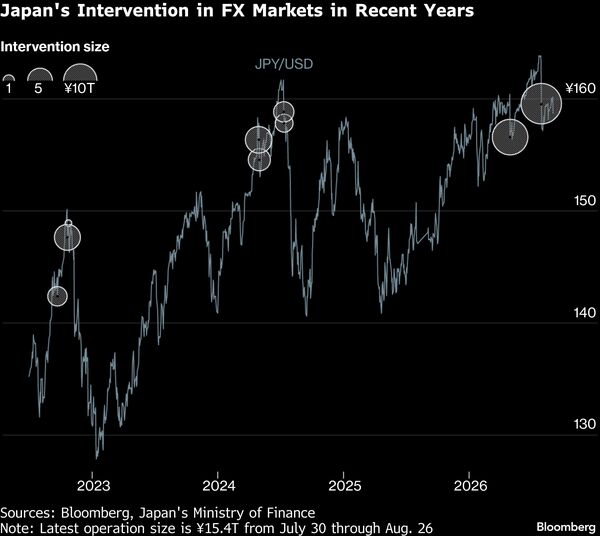
7月下旬的行动是近三十年来东京与华盛顿首次联合干预以支撑日元。此前,日元兑美元汇率跌至20世纪80年代以来的最低水平,官员们随后采取了这一步骤。
The late-July action marked the first Tokyo-Washington joint intervention to support the yen in nearly three decades. Officials took the step after the currency tumbled to its lowest level against the dollar since the 1980s.
根据日本财务省的数据,在截至8月26日的一个月里,这个亚洲国家斥资创纪录的15.4万亿日元(合975亿美元)用于干预汇市。财务大臣片山皋月(Satsuki Katayama)和贝森特均已表示,如有必要,他们愿意再次进行干预。
The Asian nation spent a record ¥15.4 trillion ($97.5 billion) on intervention in the month through Aug. 26, according to Finance Ministry data. Finance Minister Satsuki Katayama and Bessent have both signaled a willingness to intervene again if necessary.
不过,干预措施可能无法持久扭转日元的贬值趋势。策略师警告称,如果人们认为日本央行难以跟上美联储的紧缩步伐,日元可能会重新跌向160日元兑1美元的水平;同时,在首相高市早苗(Sanae Takaichi)扩张性支出计划下,外界对日本财政前景的担忧也对该货币构成了压力。周三,日元兑美元汇率基本持平,报157.95。
Still, interventions may not produce a lasting reversal on the yen’s weakening trend. Strategists warn the yen could move back toward 160 per dollar if the Bank of Japan is seen struggling to keep pace with the Fed’s pace of tightening, while concerns over Japan’s fiscal outlook under Prime Minister Sanae Takaichi’s expansionary spending plans also weigh on the currency. The yen was little changed on Wednesday at 157.95 against the US currency.