Stellantis NV在该地区的业务负责人称,巴西从中国进口部分组装车辆的数量不断上升,最终可能会使这个南美国家的汽车产业数千个就业岗位面临风险。
Brazil’s rising imports of vehicles partially assembled in China could eventually put thousands of auto-industry jobs at risk in the South American country, the head of Stellantis NV’s business in the region said.
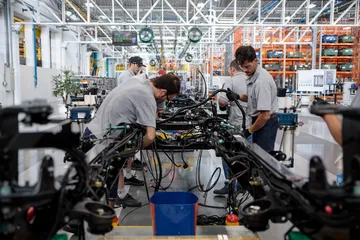
比亚迪(BYD Co.)和长城汽车(Great Wall Motor Co.)等中国汽车制造商通过进口“散件组装套件”(knock-down kits)在巴西市场逐渐获得影响力。这一行业术语指的是在某一国家部分组装后,运往另一国家进行最终组装和销售的汽车。与从头开始制造汽车的传统生产线相比,这些车辆在目的地国家完成组装所需的劳动力要少得多。
Chinese automakers such as BYD Co. and Great Wall Motor Co. have gained traction in the Brazilian market with imports of knock-down kits, industry parlance for autos partially built in one country that are shipped to another nation for final assembly and sale. Those vehicles require a fraction of the labor to be completed in destination countries compared to traditional assembly lines that build cars from scratch.
Stellantis南美区总裁Herlander Zola周二在圣保罗对记者表示,如果该公司采用散件组装策略,其位于南美的约3.5万名员工中,只需保留10%即可。
Stellantis would need only 10% of its roughly 35,000 workers in South America if the automaker were to adopt a knock-down kit strategy, Herlander Zola, Stellantis’ president for South America, told reporters Tuesday in São Paulo.
Zola说:“如果这种模式真的开始转向,更倾向于进口部分组装的车辆,那么处于风险中的正是这一环节的业务链条。”
“If this model really starts shifting” to favor imports of partially built vehicles, “that is the part of the business chain that is at risk,” Zola said.
根据Zola的说法,截至2026年前九个月,中国汽车品牌在巴西新车销售中的占比约为17%,仅9月份就达到了25%。这一比例从去年全年的约9%迅速提升。“没有人能预测到这种加速发展。”Zola表示。
Chinese auto brands accounted for about 17% of new-car sales in Brazil through the first nine months of 2026, including a 25% share in September alone, according to Zola. That’s a rapid gain from roughly 9% for all of last year. “No one could have predicted this kind of acceleration,” Zola said.
中国的比亚迪、吉利汽车控股有限公司(Geely Automobile Holdings Ltd.)等企业已在巴西开展业务,其中一些公司还计划在当地建厂生产。例如,比亚迪计划在今年年底,于巴伊亚州原福特汽车公司工厂的旧址上新建的工厂中开始生产部分车型。
China’s BYD, Geely Automobile Holdings Ltd. and others do business in the country, with some promising local production. BYD, for example, plans to begin making some of its models by the end of this year at the plant it is building on the site of the former Ford Motor Co. facility in Bahia state.
Zola表示,为了保持竞争力,Stellantis必要时也可以自行进口散件组装车辆,这或许可以通过其与Leapmotor和东风汽车等中国车企的合作来实现。
Zola said Stellantis could import knock-down vehicles itself if needed to be competitive, potentially by tapping its partnerships with Chinese automakers Leapmotor and Dongfeng.
他说:“鉴于巴西、阿根廷及其他市场预期的发展,我们拥有完全开放的选择空间,可以灵活调整,以应对最适宜且最具竞争力的方案。”
“We have a completely open range of options to adapt to whatever is most suitable and competitive, given the developments expected in Brazil, Argentina, and other markets,” he said.
中国车企的全球扩张已在汽车生产国引发了争论:是否应采取措施保护本土制造商。
The global expansion of Chinese automakers has sparked debate in auto-producing nations about whether steps should be taken to protect domestic manufacturers.
巴西总统竞选反对派候选人弗拉维奥·博索纳罗在竞选期间尚未提出详细的汽车产业政策。在该国大选第一轮投票中,他以微弱优势领先现任总统路易斯·伊纳西奥·卢拉·达席尔瓦,第二轮选举定于10月25日举行。
Opposition candidate to Brazil’s presidency Flávio Bolsonaro has not laid out a detailed auto-industry policy during his campaign. He held a narrow lead over incumbent President Luiz Inácio Lula da Silva during the first round of the country’s elections, with a runoff scheduled for Oct. 25.
2024年,卢拉实施了一项绿色出行与创新计划,其中包括对投资脱碳和新技术生产的企业提出可持续性要求并提供税收激励。
In 2024, Lula implemented a green mobility and innovation program which included sustainability requirements and tax incentives for companies that invest in decarbonization and the production of new technologies.
佐拉表示,巴西政府对进口电动汽车征收的35%关税,并不足以确保汽车制造商投资本土生产。他还指出,缺乏强制要求从本土供应商处采购的规则,可能导致巴西的汽车供应链在与进口商的竞争中处于不利地位。
The Brazilian government’s 35% tariff on imported electric vehicles is not enough to ensure that carmakers invest in domestic auto production, Zola said. He also said a lack of rules mandating purchases from domestic suppliers risks putting Brazil’s automotive supply chain at a disadvantage against importers.
“哪家中国品牌真正利用了巴西的工业基础、供应商网络和汽车供应链?”他说道,“截至目前,这里设立的任何一家中国公司都没有做到,包括那些已经启动生产的企业。”佐拉认为,巴西政府应明确界定一个支持本土产业的工业模式,这或许包括设置新的进口壁垒以及为本地制造提供激励措施。
“Which Chinese brand utilizes Brazil’s industrial base, supplier network and automotive supply chain?” he said. “As of today, none of the Chinese companies established here do, including those that have already started production.”Zola said that the Brazilian government should define a clear industrial model to support domestic industry, potentially involving new import barriers and incentives for local manufacturing.
“无论新政府是右翼还是左翼,一旦政策走向更加清晰,整个汽车供应链都将需要适应随之而来的可预测性。”他说道。
“The automotive supply chain as a whole will need to adapt to the predictability that will soon emerge once there is greater clarity regarding the incoming government, regardless of whether it is right-wing or left-wing,” he said.