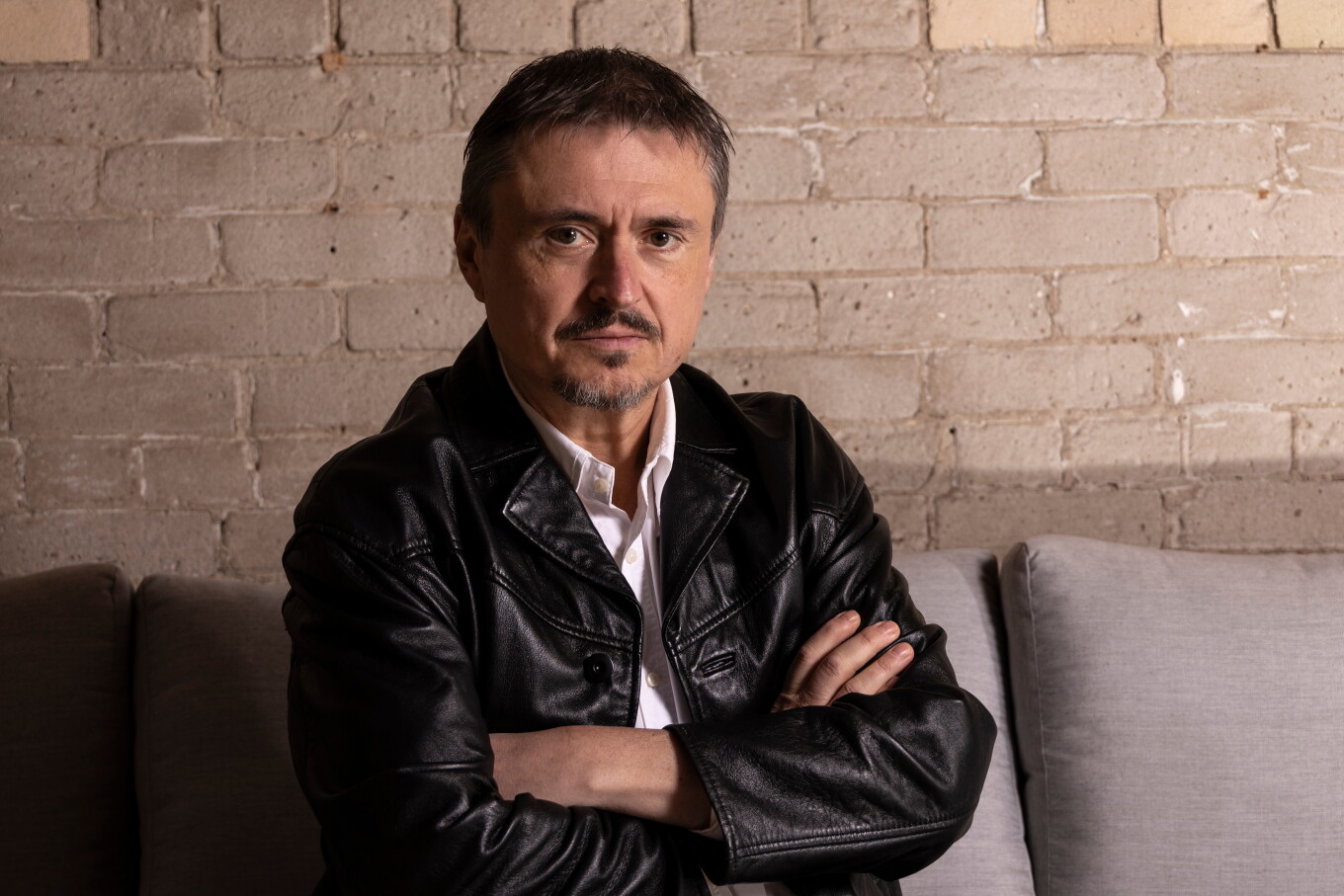
克里斯蒂安·蒙吉的最新电影由塞巴斯蒂安·斯坦和雷娜特·莱因斯韦主演,讲述一对从罗马尼亚移民到挪威的基督教夫妇和他们的五个孩子。
Cristian Mungiu’s latest film stars Sebastian Stan and Renate Reinsve as a Christian couple with five children who have immigrated from Romania to Norway.
杰克·科伊尔,多伦多讯——克里斯蒂安·蒙吉上一部电影的片名——在罗马尼亚语中意为“MRI”——恰如其分地隐喻了蒙吉在电影创作中所追求的目标。
JAKE COYLE TORONTO — The title of Cristian Mungiu’s previous film,— MRI in Romanian — is an apt metaphor for what Mungiu aims to do in his movies.
自2008年其具有里程碑意义的堕胎题材影片《四月三周两天》以来,这位罗马尼亚电影导演一直将他的严谨写实的影片 loosely 基于真实事件,借此探索塑造我们世界的更广泛社会力量。毫无疑问,这并非最容易的电影创作方式。
Since his seminal 2008 abortion drama “4 Months, 3 Weeks, 2 Days,” the Romanian filmmaker has loosely based his rigorously realistic films on real events, using them to explore the larger social forces shaping our world. It is not, anyone would grant, the easiest way to go about making movies.
例如,《R.M.N.》就取材于2020年发生的一起事件:当时,斯里兰卡移民在罗马尼亚一个乡村的面包店工作期间遭到骚扰。影片捕捉到了传统、移民与排外情绪之间常见的全球性冲突。电影甚至通过一个长达17分钟、一气呵成的长镜头,重现了你可以在YouTube上找到的镇议会会议场景。
“R.M.N.,” for instance, was based on a 2020 incident when Sri Lankan immigrant bakery workers were harassed in a rural Romanian village. It captured a familiar global clash involving tradition, migrants and xenophobia. The film even recreated, in one unbroken 17-minute take, a town hall meeting you can find on YouTube.
“我不喜欢写那些试图从抽象理念出发虚构故事的电影剧本,”蒙吉说,“我的努力在于理解身边正在发生的一切。”蒙吉的最新作品《峡湾》,则取材于2015年挪威发生的一起真实事件。
“I don’t like writing screenplays in which I try to invent a story starting from ideas,” Mungiu says. “My effort is to understand the things happening next to me.”Mungiu’s latest, “Fjord,”draws from a real 2015 episode in Norway.
塞巴斯蒂安·斯坦和雷娜特·莱因斯韦饰演一对从罗马尼亚移民到挪威的基督教夫妇和他们的五个孩子。他们受到一个进步乡村社区的热烈欢迎,但他们的传统与宗教信仰却逐渐受到审视,最终他们的孩子被国家机构带走。
Sebastian Stan Renate Reinsve star as a Christian couple with five children who have immigrated from Romania to Norway. They are warmly welcomed by a progressive rural community, but their traditional and religious ways are increasingly scrutinized until their children are seized by the state.
这部影片由Neon公司负责院线发行,将于周五上映,并已获得广泛赞誉。今年五月,影片荣获金棕榈奖,这是蒙吉第二次获得戛纳电影节的最高荣誉。此后,罗马尼亚已选定《峡湾》作为其奥斯卡最佳国际影片奖的参选影片。
The film, which Neon opens in theaters Friday, has been widely celebrated. In May, it won the Palme d’Or Mungiu’s second time winning the Cannes Film Festival’s top honor. Romania has since selected “Fjord” as its Oscar entry for best international feature.
但《峡湾》也有一处不同寻常之处:它是一部罕见的艺术电影,敢于向以左倾为主的观众提出令人不适的问题。蒙吉乌本人政治上持自由主义立场,但《峡湾》却戏剧化地呈现了一种进步主义式的封闭与伪善,他认为这种态度可与极右翼的特质相提并论。
But “Fjord” is also something unusual. It’s the rare art house movie to pose uncomfortable questions for largely left-leaning audiences. Mungiu is himself politically liberal, but “Fjord” dramatizes a progressive brand of closed-mindedness and sanctimony that, he feels, rivals traits of the far right.
“极左翼的行为如出一辙,”蒙吉乌在最近一次采访中一边喝咖啡一边说。“他们坚信自己掌握了真理。这样做只会把社会分裂到如今的程度。我们不再生活在一个统一的社会里,而是生活在一个个气泡中,同一条河流的不同岸边。”
“The extreme left behaves the same,” Mungiu said over coffee in a recent interview. “They are certain that they hold the truth. The only thing you do is divide the society to the level of division that exists today. We don’t live in society. We live in bubbles, on different shores of the same river.”
“这正是这部电影大胆做到的,”他补充道。“它直言不讳,说出了我们所有人都心领神会却不敢大声表达的话。”
“This is what this film does, boldly,” he adds. “It speaks out and says things that we all feel but don’t dare say aloud.”
《峡湾》作为一部社会题材影片,并未对已有共识的群体说教。与蒙吉乌此前的作品一样,影片采用了客观、看似中立的视角。然而,随着这个家庭的案件在挪威司法系统中推进,蒙吉乌似乎开始质疑:这个自由的斯堪的纳维亚社会,究竟是在惩罚格奥尔基乌一家所谓的打孩子行为,还是在审视他们原教旨主义的基督教实践?
Making a social drama that doesn’t preach to the choir“Fjord,” as in previous Mungiu films, is shot with an objective, seemingly neutral perspective. But as the family’s case proceeds through the Norwegian legal system, Mungiu seems to question whether the liberal Scandinavian society is punishing the Gheorghiu family for the alleged slap of a child or scrutinizing their fundamentalist Christian practices.
蒙吉乌希望这部在罗马尼亚以外首次拍摄的电影能触动人们的神经。
Mungiu hoped his film, his first set outside of Romania, would touch a nerve.
“当然。这正是我们的目标,”他说。“但效果比我们预期的还要好。”不过,《峡湾》引发的关注也带来了蒙吉乌所说的对其意图的误解。有些人甚至将其贴上“MAGA电影”的标签,而蒙吉乌和主演们都对此表示反对。在蒙吉乌看来,电影艺术必须拥有超越对既有共识群体说教的空间。
“Absolutely. This is what we aimed for,” he says. “But it’s better than we expected.”Still, the attention for “Fjord” has also brought what Mungiu calls some misinterpretation of his intensions. Some have even labeled it “a MAGA movie,” a description that Mungiu and his stars have pushed back on. For Mungiu, there has to be room in cinema that goes beyond preaching to the choir.
“这并不意味着,哪怕只是一秒钟,我都鼓励保守的世界观,”蒙吉乌说,“但如今人们认为,如果你作为电影人,没有用你的精力去直接拍摄一部反对这种观点的电影,那就是一种大罪。如今人们制作的大多数电影,要么支持某种观点,要么反对某种观点。这些电影并没有引发对话。除了这个圈子里的人之外,根本不会有人看。这部电影只是向他们确认,他们已经站在正确的一边,而其他人则有罪。”
“It doesn’t mean, not even for a second, that I encourage the conservative view of the world,” Mungiu says. “But nowadays it’s considered that if you don’t use your energy as a filmmaker to make a film directly against that, it’s a big sin. Most of the films that people produce today are for or against something. These films don’t create a dialogue. Nobody else will watch them but people in this bubble. The film confirms to them they are already on the good side of things. The others are guilty.”
这种两极分化远比挪威的情况要严重得多。在电影节上放映《峡湾》时,蒙吉乌强调,这个故事其实可以发生在任何自由社会中。他认为,左翼理想在整个欧洲和美国所经历的同样演变,正是加剧政治两极分化的因素之一。
A polarization that goes much further than Norway While playing “Fjord” at film festivals, Mungiu has stressed that this story could been set in any liberal society. He believes the same evolution of leftist ideals throughout Europe and in the United States is part of what’s fueling political polarization.
“请多展现一些理解,”蒙吉乌对进步派人士说道,“试着少一些教条。人们通常习惯给他人贴上标签,但你们却假装自己更聪明。我对你们抱有更高的期望。”
“Show a little bit more understanding,” says Mungiu, addressing progressives. “Try to be less dogmatic. The general habit is to label people. But you pretend to be smarter. I have more expectations from you.”
“这有点危险,”他补充道,并暗指罗马尼亚20世纪的历史,“我来自一个共产主义时代,在那个时代,总有人自认为比你更清楚什么对你才是好的。”
“This is a bit dangerous,” he adds, alluding to Romania’s 20th century history. “I come from a Communist past where somebody else knew better than you what is good for you.”
《峡湾》引发的广泛关注让这位58岁的电影导演感到些许不安。他清楚,这种关注部分源于他主演演员的粉丝以及棕榈奖——但他指出,这两者都无法真正体现一部电影的价值。他承认,被严重低估的《R.M.N.》比《峡湾》更配得上奖项。
The heightened attention around “Fjord” makes the 58-year-old filmmaker a little uneasy. He knows it’s partly because of the fans of his stars and the Palme award — neither of which, he notes, signifies much about a movie’s worth. The criminally underseen “R.M.N.,” he acknowledges, was more deserving of awards than “Fjord.”
但蒙吉乌也认为,这部电影传递着一个重要甚至紧迫的信息。当《峡湾》赢得棕榈奖时,蒙吉乌在获奖感言中表示,社会已经变得“极端化”——社会被彻底撕裂,一方评判另一方,而双方再也无法沟通。他称自己的电影是“对任何形式极端主义的承诺”。
But Mungiu also feels the movie carries with it a vital, even urgent message. When “Fjord” won the Palme, Mungiu said in his acceptance speech that society had become “radicalized” — split down the middle, with one side judging other and neither communicating any longer. He called his film “a pledge against any type of fundamentalism.”
“如果我们继续这样下去,将会非常危险,”他说,“我们在美国已经看到,这两派群体之间随时可能发生巨大的冲突,就像一场物理上的对抗。我们必须在还来得及的时候采取行动。”
“It’s very dangerous if we continue like this,” he says. “We have seen in the U.S. that we are seconds away from having this huge clash, like a physical clash between these two groups. We need to do something while we still have time.”