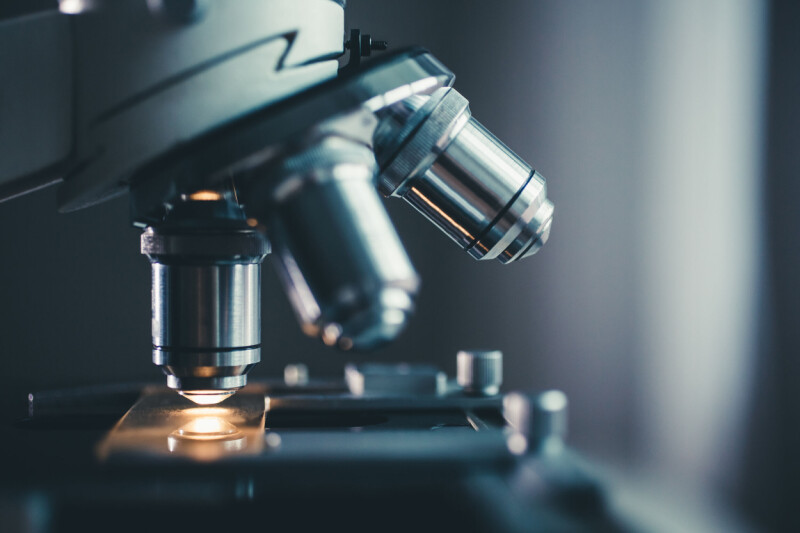
阿贡国家实验室的研究人员将一款智能体AI平台接入了一台X射线纳米探针光束线,由此构建出一个能够更近距离观察研究人员指定关注区域的新系统。本周,阿贡实验室报告了这款智能体显微镜实验运行的成功。该设备最初测试的能力是定位集成电路中两个区域之间的界面,而研究人员仅需用自然语言告诉显微镜他们希望它确定什么,设备便完成了任务。
Researchers at Argonne National Laboratory have plugged an agentic AI platform into an X-ray nanoprobe beamline, creating a system that can get a closer look at areas researchers ask it to focus on. Argonne reported the success of an experimental run of the agentic microscope this week, with the device initially tested on its ability to locate the interface between two regions on an integrated circuit device, and all by just telling the microscope what they wanted it to determine using natural language.
“微电子只是用来展示这项技术的一个例子,”阿贡实验室的计算科学家马修·切鲁卡拉(Mathew Cherukara)在谈到该项目时表示。“真正的成就是开发出一款下一代AI增强型显微镜,它能为众多科学领域带来益处。”
“Microelectronics was simply the example used to showcase the technology,” Argonne computational scientist Mathew Cherukara said of the project. “The real achievement is developing a next‑generation, AI‑enhanced microscope that can benefit many scientific fields.”
这款显微镜本身是阿贡实验室26-ID硬X射线纳米探针光束线的一部分,该光束线利用高度聚焦的X射线束对目标样本进行纳米级成像和测量。这类设备被认为是AI在科学领域应用的重要范例,因为它们会产生海量数据,而由于采用了名为“ptychography”(ptychography)的技术,人类研究人员需要花费大量时间才能完成数据梳理。
The microscope itself is part of Argonne’s 26-ID hard X-ray nanoprobe beamline, which uses a tightly focused X-ray beam to perform nanoscale imaging and measurements of target samples. Such devices are considered a prime use case for scientific applications of AI because they produce a massive amount of data that can take human researchers considerable time to comb through thanks to their use of a technique known as ptychography.
这种方法通过收集X射线与样本相互作用时产生的多个衍射图样来成像,而现代X射线实验仅需数小时的光束时间,就能生成数百万张图像。传统的ptychography重建和分析过程可能需要数小时甚至数天,而阿贡实验室表示,其AI系统能够在数据到达时实时重建图像。
The method collects multiple diffraction patterns as X-rays interact with a sample, with modern X-ray experiments capable of generating millions of images in just a few hours of beam time. Conventional ptychographic reconstruction and analysis can take hours or days, whereas Argonne says its AI system can reconstruct images in real time as the data arrives.
阿贡实验室的X射线纳米探针光束线正是特朗普政府计划通过其“创世纪任务”(Genesis Mission)利用AI加以提升的科研设施之一。
Argonne’s X-ray nanoprobe beamline is the sort of scientific facility the Trump administration is looking to boost with AI through its Genesis Mission.
由特朗普总统于2025年11月发起、由能源部主导的“创世纪”计划旨在探索将人工智能应用于科学研究的方法,其中包括阿贡实验室与劳伦斯·伯克利国家实验室合作开展的“协同中子与光子科学-智能”(SYNAPS-I)项目,后者正是该项目的牵头单位。布鲁克黑文国家实验室、SLAC国家加速器实验室和橡树岭国家实验室也参与了该项目。
Launched by President Trump in November 2025 and led by the Department of Energy, Genesis aims to find ways to use AI in scientific research, including the Synergistic Neutron and Photon Science - Intelligence (SYNAPS-I) project that Argonne is undertaking in partnership with Lawrence Berkeley National Laboratory, which is leading the effort. Brookhaven National Laboratory, SLAC National Accelerator Laboratory, and Oak Ridge National Laboratory are also participating in the project.
将智能体型人工智能整合到阿贡实验室的X射线显微镜中,实际上是该项目的第二阶段;第一阶段的目标仅仅是验证上文提到的可能性,即人工智能能否缩短ptychographic图像的处理时间。正如该实验室在4月份所报告的那样,第一阶段取得了成功,而第二阶段引入的自然语言智能体型人工智能似乎同样取得了成效。Cherukara在谈到项目目前的进展时表示:“SYNAPS-I的这些进展共同为自动驾驶显微镜、闭环实验以及自动化缺陷检测工具奠定了基础,这些技术有望加速从半导体制造到先进材料以及国家用户设施等多个领域的科学发现。”
The inclusion of agentic AI in the Argonne X-ray microscope is actually the second phase of the project; the first was simply to see if, as mentioned above, AI could be used to reduce ptychographic image processing time. That was a success, as the lab reported in April, and phase two’s addition of natural language agentic AI appears to have been a win as well. “Combined, these SYNAPS-I advances lay the groundwork for self-driving microscopes, closed-loop experimentation and automated defect-detection tools that promise to accelerate discovery across fields ranging from semiconductor manufacturing to advanced materials and national user facilities,” Cherukara said of the project’s work thus far.
除了新设备能够更快地处理数据外,第二阶段引入的对话式人工智能还让研究人员可以直接要求显微镜检查感兴趣区域,而无需自己琢磨如何调整光束方向。该人工智能不仅能处理数据收集与处理,还能自行分析结果并标记出其他值得关注的区域,进而自主展开进一步研究。阿贡实验室的科学家Tao Zhou在一段实验室拍摄的视频中表示,这款更“健谈”的新版显微镜,或许能让那些本可以从X射线纳米探针光束线研究中受益,却不知如何操作其实验室中这类复杂仪器的研究人员,也能参与先进的科学研究。
In addition to the speed at which the new machine can process data, the conversational AI added in phase two gives researchers the ability to just ask the microscope to examine an area of interest rather than having to figure out how to aim the beam themselves. The AI can not only handle data collection and processing, but also analyze the results itself and flag additional areas of interest, which it can then further investigate on its own. Tao Zhou, a scientist at Argonne, said in a video from the lab that the new, chattier version of the microscope could open up advanced scientific research to researchers who could benefit from X-ray nanoprobe beamline science but don’t know how to operate a complicated instrument like the one at his lab.
“这对许多用户来说可能会带来革命性的变化,”周说。“这种交互式聊天界面能让他们进行科学研究、获取优质数据,而无需花费太多时间去了解光束线组件。”“这将帮助我们吸引大量新用户,”周补充道。“只要别忘了别提到吐司就行。®”
“This can be a game changer for a lot of users,” Zhou said. “This kind of interactive chat interface allows them to do their scientific research, get excellent data, without having to spend too much time to learn about the beamline components.”“This will help us attract a lot of new users,” Zhou added. Just be sure not to mention toast. ®