雅克·福洛鲁 今日凌晨4:00发布(巴黎) 独家报道 竞争对手政府派系之间的暴力冲突进一步加剧了影响近七百万索马里人的粮食危机。逃离干旱和饥饿的难民继续涌入有人道主义组织驻扎的营地,因为伊斯兰武装组织“青年党”已禁止他们进入某些地区。
Jacques Follorou Published today at 4:00 am (Paris) rs only Feature Violent clashes between rival government factions further worsen the food crisis affecting nearly seven million Somalians. Fleeing drought and hunger, refugees continue to pour into camps where humanitarian organizations have a presence, as the Islamist group Al-Shabaab has banned them from certain areas.
布拉哈巴小镇建在索马里西南部广阔平原上为数不多的山丘之一周围,让人想起这个国家在灾难方面可与《圣经》中的埃及相媲美。要到达距离首都摩加迪沙180公里的布拉哈巴,唯一的方式是乘坐联合国飞机,因为道路被索马里本土武装组织“青年党”封锁,该组织控制着该国30%的领土。目前,布拉哈巴仍是联邦政府管辖下的一个飞地,但威胁迫在眉睫,武装分子距离仅15公里。
The small town of Burakhaba, built around one of the few hills in the vast plain of southwestern Somalia, is a reminder that this country rivals biblical Egypt when it comes to plagues. The only way to reach Burakhaba, which lies 180 kilometers from the capital, Mogadishu, is by United Nations planes, as the road is blocked by Al-Shabab, the Somalia-based militant group that controls 30% of the country's territory. For now, Burakhaba remains an enclave under the authority of the federal government, but the threat is close as militants are just 15 kilometers away.
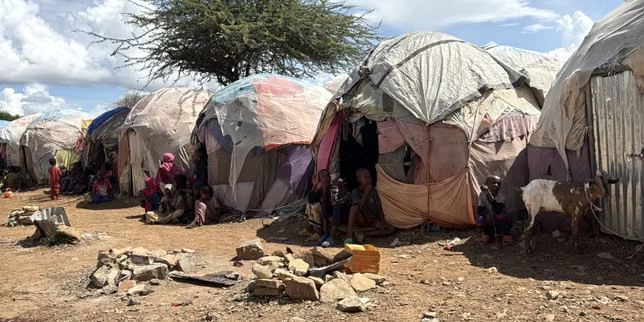
小镇周围也是营地,数百个家庭挤在用布和绳子搭建的简易圆顶帐篷下。这些逃离干旱和饥饿的境内流离失所者前来寻求人道主义组织的帮助。
The town is also surrounded by camps, where hundreds of families crowd together under makeshift round tents made of cloth and rope. Fleeing drought and hunger, these internally displaced people have come to seek help from humanitarian organizations.
萨巴林·菲德尔,25岁,五个孩子的母亲,坐在巴洛难民营中心自家茅屋前,呆呆地望着虚空。她在夏天来临前抵达这里,与母亲及其他亲戚团聚,他们比她更早离开了25公里外的比约莱村。“我们决定来这里是因为失去了收成和牲畜,”她说。“但这里孩子们没有教育,没有厕所,没有电。一到晚上我们离开营地,就有被强奸的风险,而隔壁的戈洛利难民营却有四个厕所和一所小学校——只因为他们属于一个占主导地位的氏族。”
Sitting in front of her hut in the heart of Ballow camp, Sabarin Fidle, 25 years old and mother of five, stared blankly into space. She arrived before the summer and reunited with her mother and other relatives who left their village of Biyooley, 25 kilometers away, before she did. "We decided to come after we lost our harvest and our livestock," she said. "But here, there is no education for the children, no toilets, no electricity. As soon as we leave our camp at night, we risk being raped, while in the Golooly camp, just next door, they have four toilets and a small school – all because they belong to a dominant clan."
这些流离失所的人口按氏族聚居,这提醒着我们,这种结构在多大程度上依然主导着索马里社会,该国自1990年代以来一直没有一个有效的国家。
These displaced populations group themselves by clan, a reminder of how much that structure continues to dominate Somalian society, which has been without a viable state since the 1990s.
无论发生什么,她说她不会返回村庄,那里位于青年党控制的区域。“这里我们一天只有一顿饭,只要我们能得到一块地,就不会再有问题了,”她说,并补充道,如果非政府组织和联合国机构没有被伊斯兰武装分子禁止,她本可以留在比约莱。“他们说食物麻袋里装有间谍摄像头或能泄露他们GPS位置的装置。他们担心渗透。”
Whatever happens, she said she would not return to her village, which is located in an area controlled by Al-Shabab. "Here, we have one meal a day, and as soon as we can get a piece of land, there will be no more problems," she said, adding that she could have stayed in Biyooley if NGOs and UN agencies had not been banned by Islamist militias. "They say that the food sacks contain spy cameras or devices that can give away their GPS positions. They are afraid of infiltrations."