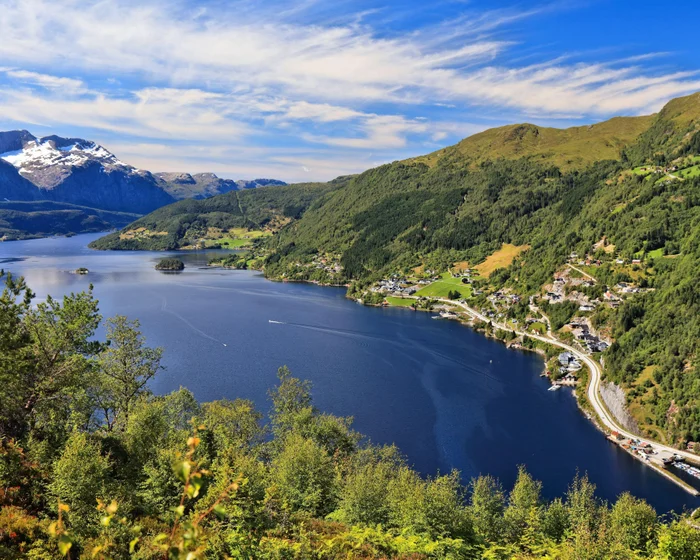
2026年6月17日挪威股市收盘不久,来自西海岸小镇韦夫林(Vevring)的数十名当地居民聚集在学校里的一台笔记本电脑旁。四周摆着孩子们的画作,窗外是福尔代峡湾(Førde fjord)的景色,他们静静等待着来自奥斯陆的消息。挪威最高法院作出了不利于政府的裁决:法院称,将采矿废料直接排入上游两英里处的峡湾的许可是非法的。
Shortly after the Norwegian stock market closed on 17 June 2026, a few dozen local people from the small west coast town of Vevring crowded around a laptop in a school. Surrounded by childrens drawings and windows looking out over Førde fjord, they listened as news arrived from Oslo. Norways supreme court had ruled against its government: a permit to release mining waste directly into the fjord two miles upstream was illegal, the court said.
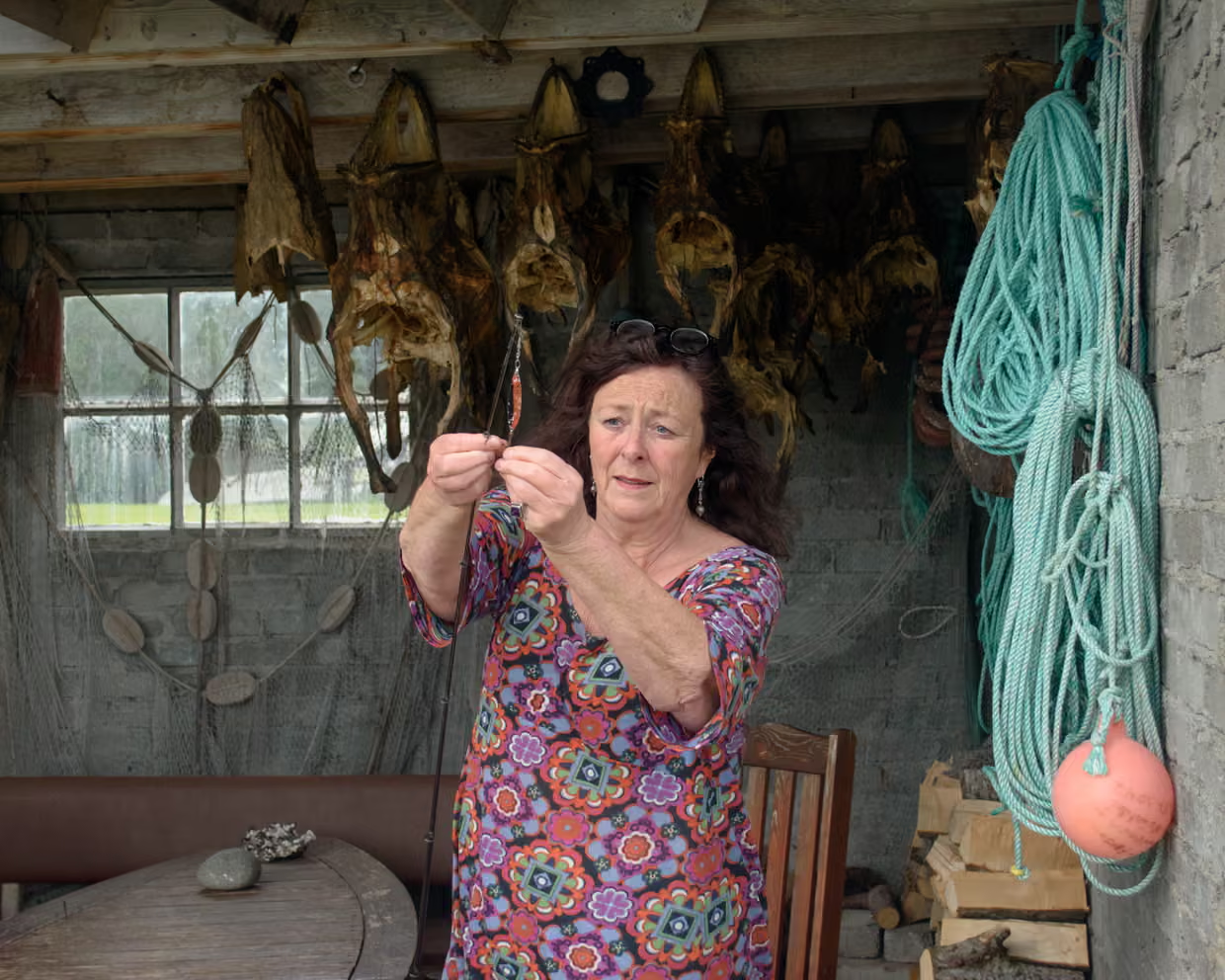
这一刻标志着长达17年的斗争终于结束,这也是挪威有记忆以来最旷日持久的环境战役之一。在奥斯陆,(地球之友挪威组织)的项目负责人英格维尔德·冯·阿斯梅维克(Ingvild Fonn Asmervik)将自己感受到的喜悦比作喜得贵子。而对于安妮-莉内·廷内斯·福尔松(Anne-Line Thingnes Førsund)来说,这种感受更像是一种如释重负。她住在韦夫林峡湾沿岸,是当地渔民家族的第三代传人,也是该慈善组织地方分部的志愿者。她说,这感觉就像一座大山从肩上卸了下来。
The moment marked the end of a 17-year fight, one of Norways most protracted environmental battles in living memory. In Oslo, Ingvild Fonn Asmervik, the project leader for (Friends of the Earth Norway), compared the joy she felt to giving birth to her child. For Anne-Line Thingnes Førsund, a third-generation fisher living on the banks of the fjord in Vevring and a volunteer for the charitys local branch, it was more of a relief. Like a mountain lifting off her shoulders, she said.
然而,这种喜悦并未持续太久。就在福尔松和其他人庆祝之时,一名政府律师出现在一档电视辩论节目中,公布了新的临时许可计划,允许该矿山在此期间继续将废料直接排入峡湾。四天后,该矿山提交了新的许可申请,并于9月底获得了挪威气候与环境部的批准。
These feelings of elation were short-lived. While Førsund and others celebrated, a government lawyer appeared on a television debate show to set out plans for a new temporary permit, and to allow the mine to continue to release waste directly into the fjord in the meantime. Four days later, the mine applied for fresh permission, and in late September, it was granted by Norway`s climate and environment ministry.
“当我们得知污染还将继续时,感觉就像有人从我们脚下抽走了地毯,”福尔松说,“我们回复了每一封信,参与了每一次意见征询,只要有机会就提出抗议。我们已经被击倒过太多次了,而这次本可能成为改变的机会。”尽管政府坚称自己的行为合法,但批评者认为,这种倾倒行为威胁要污染挪威最纯净的峡湾之一。另一些人则担心,这一决定预示着为了争夺关键矿物资源,挪威峡湾将面临新一轮的排污许可。
“When we heard the pollution would continue, it was like they snatched the carpet from under us,” says Førsund. “We have answered every letter, commented on every consultation, complained whenever we could. We have been knocked down so many times and this could have been the opportunity for change.”While the government insists that it is acting lawfully, critics say the dumping threatens to foul one of Norways most pristine fjords. Others worry that the decision heralds a new wave of permits to pollute Norways fjords in the race to secure critical minerals.
“这不仅仅是关于峡湾、我们以及我们生活的问题,”弗尔松德说,“这关乎原则。当一个政府不尊重最高法院时,你实际上是在改变整个制度本身。”这一举措正值挪威受污染水域问题受到更广泛关注之际。一份近期报告显示,挪威的鱼类养殖场每年向峡湾和其他沿海水域排放的养分污染,相当于数千万人的原始污水。
“This is not only about the fjord and us and our lives,” says Førsund. “This is about principles. When you have a government that doesnt respect the supreme court youre changing the system itself.”The move comes just as a wider spotlight is being shone on the issue of polluted waters in Norway. A recent report showed that Norwegian fish farms are filling fjords and other coastal waters with nutrient pollution equivalent to the raw sewage of tens of millions of people each year.
与此同时,该国的大西洋鲑种群数量已降至历史最低水平——今年季初,挪威约450条鲑鱼河流中有155条被禁止捕捞。
Meanwhile, populations of Atlantic salmon are at a historic low in the country – 155 of Norway`s 450 or so salmon rivers were closed to fishing at the start of the season this year.
海底尾矿沉积(STD)——被挪威批评者通俗地称为“峡湾倾倒”——是指通过水下数百米的管道,将破碎的岩石和化学废料泵入海中的过程。尽管这一方法被提议作为陆地处理废料的替代方案,但挪威政府自己的海洋研究所(IMR)警告称,STD会释放有毒废料的细小颗粒,这些颗粒可能在小海洋生物体内积累,并破坏整个生态系统。
Submarine tailings deposition (STD) – known colloquially by Norwegian critics as “fjord dumping” – is the process of pumping crushed rocks and chemical waste into the sea through pipelines hundreds of metres underwater. Proposed as an alternative to disposing of waste on land, the Norwegian government`s own Institute of Marine Research (IMR) warns that STD releases fine particles of toxic waste that can accumulate in smaller sea life and disrupt ecosystems at large.
北美、澳大利亚、俄罗斯、巴西、中国以及欧洲大部分地区均已禁止STD。目前仍允许这种做法的国家仅有巴布亚新几内亚、印度尼西亚和土耳其。
STD is outlawed in all of North America, Australia, Russia, Brazil, China and most of Europe. The few countries that still permit the practice include Papua New Guinea, Indonesia and Turkey.
位于弗尔德峡湾、靠近韦夫林的恩格贝钛矿,最初由北欧矿业公司于2006年提出开发计划,不到10年后,政府便批准了将废料排入峡湾的许可。作为回应,“地球之友”挪威分会发起了多起法律诉讼,案件逐级上诉至国家最高司法机构,并最终于2026年春季进入为期一周的最高法院听证程序。与此同时,该矿山已于2024年底投入运营并开始排放废料。
The Engebø titanium mine, on Førde fjord near Vevring, was first proposed by Nordic Mining in 2006 and the government awarded a permit to release waste into the fjord less than 10 years later. In response, Friends of the Earth Norway launched legal challenges that worked their way up the country`s legal system, arriving at a week-long supreme court hearing in spring 2026. Meanwhile, the mine came online and began releasing waste late in 2024.
Nordic Mining 的融资方包括日本岩谷产业公司(Iwatani Corporation),以及摩根士丹利(Morgan Stanley)、瑞士银行集团(UBS)和高盛(Goldman Sachs)等国际银行在英国设立的分支机构。其他银行,包括标准渣打银行(Standard Chartered)和花旗集团(Citigroup),则明确禁止为使用 STD 的项目提供融资。
Nordic Mining is financed by investors including Japan`s Iwatani Corporation and the British offices of the international banks Morgan Stanley, UBS and Goldman Sachs. Other banks, including Standard Chartered and Citigroup, explicitly ban financing projects using STD.
Nordic Mining 并未回应《卫报》(The Guardian)多次提出的评论请求,但在最高法院作出裁决后不久,该公司在社交媒体上表示,在挪威官员的鼓励下,将继续按照原有方式处理废弃物。
Nordic Mining did not respond to repeated requests for comment from the Guardian, but said in a social media post shortly after the supreme court decision that it would continue with how it disposed of waste, with the encouragement of Norwegian officials.
Nordic Mining 表示:“有人声称我们的运营不合法,必须关闭,我们的工作必须停止。但事实并非如此。”该公司还补充说,将继续“以负责任的态度行动,尊重峡湾、山脉以及我们周围的当地社区”。
“It has been said that our operation is illegal, that we have to close, that our work must stop. That is not the situation,” Nordic Mining said, adding that it was continuing “with the ambition to act responsibly, with respect for the fjords and mountains, and for the local community around us”.
围绕许可证的法律纠纷主要集中在欧盟的《水框架指令》(WFD)上,该指令适用于作为欧洲经济区成员国的挪威。根据《水框架指令》,只有在存在“压倒性的公共利益”时,工业活动才被允许污染水体。
Legal wrangling over the permit came to focus on the EU`s water framework directive (WFD), which applies to Norway as a member of the European Economic Area. The WFD allows industrial activities to pollute water bodies only when there is an “overriding public interest”.
最高法院裁定,许可证最初获批时所依据的理由并不充分。然而,政府方面则主张,自 2020 年欧盟将钛列入“关键矿物”清单以来,这些理由已经变得更加充分。
The supreme court ruled that the reasons given when the permit was first awarded were not strong enough. However, the government argues they have grown stronger since the EU added titanium to its list of “critical minerals” in 2020.
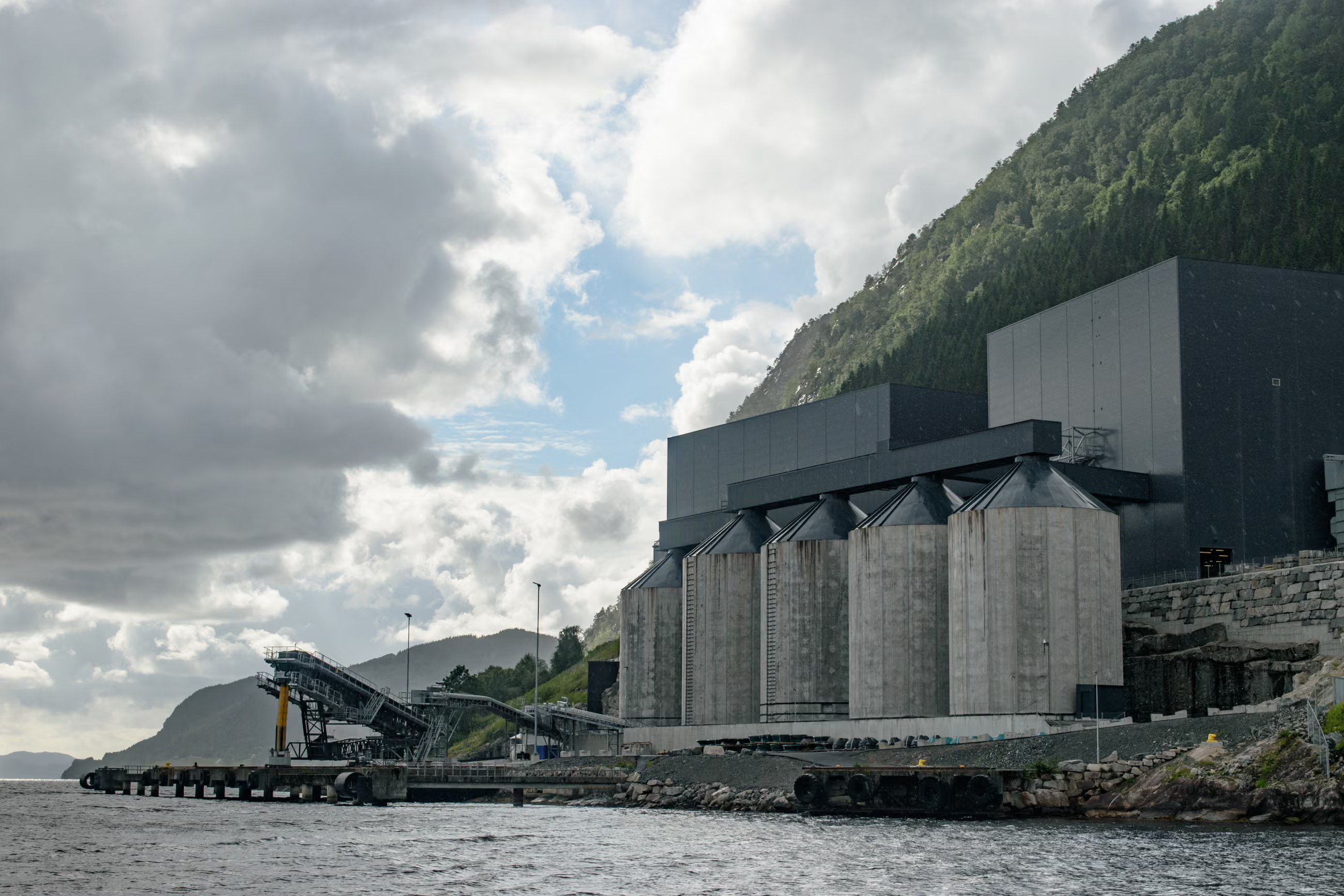
一位政府发言人表示:“挪威政府认为 Engebø 项目对挪威和欧洲都具有重大意义,因为 Engebø 山脉拥有世界上已知最大的锐钛矿(一种含钛矿物)矿床之一。在欧洲范围内,挪威和乌克兰是唯一拥有此类重要资源的国家。”但法律学者对这一逻辑提出了质疑。挪威内陆大学(University of Inland Norway)行政与宪法法副教授 Tarjei Ellingsen Røsvoll 指出:“这种说法是错误的。许可证要么存在,要么不存在,而最高法院的裁决非常明确:该许可证是非法的。”
“The Norwegian government considers the Engebø project to be of significant importance for Norway and Europe,” a ministry spokesperson said, because “the Engebø mountain contains one of the worlds largest known deposits of rutile, a titanium-bearing mineral. Within Europe, Norway and Ukraine are the only countries with significant resources of this kind.”Legal scholars have questioned this logic. “Thats wrong. A permit exists or it doesn`t, and the supreme court decision is quite clear: the permit is illegal,” says Tarjei Ellingsen Røsvoll, associate professor of administrative and constitutional law at the University of Inland Norway.
“政府竟然公然允许一家公司非法将大量物质倾倒入峡湾。这前所未有;此举损害了公众信任,也破坏了宪法和行政法的基本框架。他们应当为这一无效且非法的决定承担道德和法律上的责任。”在北欧矿业等待新的三年许可证期间,该公司仍继续向弗尔德峡湾倾倒废物。挪威负责处理白领犯罪和环境犯罪的中央机构 Økokrim 目前正考虑是否应对这一倾倒行为展开非法性调查。
“The government is then openly allowing a company to dump a bunch of stuff in a fjord illegally. That is unprecedented; it damages trust and undermines a fundamental structure of constitutional and administrative law. They should take responsibility for having made an invalid and illegal decision, morally and legally.”While Nordic Mining awaited its new three-year permit, it continued to dispose of waste into Førde fjord. Økokrim, Norway`s central office for white collar and environmental crime, is now considering whether to investigate the dumping for illegality.
尽管目前对 STD 对海洋生态系统影响的研究尚不全面,但科学家们已将如今某些峡湾中存在的重金属污染与几十年前的 STD 联系起来。
While there have been few comprehensive studies of the impact of STD on marine ecosystems, scientists have linked heavy metal pollution now present in some fjords to STD decades earlier.
IMR 的研究教授 Terje van der Meeren 表示,当废物被研磨成细小颗粒时,其影响尤为严重。他与该研究所共同撰写了针对恩格布矿场申请的回应文件,并在最高法院的听证会上作证。
The impact is particularly damaging when the waste is milled into small pieces, according to Terje van der Meeren, a research professor at the IMR, who co-authored the institute`s response to the Engebø mine application and testified during the supreme court hearings.
“这就像面粉一样,”Van der Meeren 说,并补充道,恩格布的废物中含有一种会分解成神经毒素二硫化碳的化学物质。“我们担心这些细颗粒物会扩散到整个峡湾。那些在这个峡湾产卵的鱼类会怎么样?我们并不清楚。”2016 年,Van der Meeren 与其他 IMR 研究人员前往该国最北端哈默费斯特的北极雷帕峡湾。20 世纪 70 年代,当地一家铜矿曾在此倾倒废物长达六年。
“Its like flour,” says Van der Meeren, adding that waste from Engebø includes a chemical that degrades into carbon disulphide, a neurotoxin. “Our concern is that this fine dust will pass into the rest of the fjord. What will happen with the [fish] spawning in this fjord? We dont know.”In 2016, Van der Meeren and other IMR researchers travelled to the Arctic Repparfjord, in Hammerfest in the far north of the country, where a copper mine dumped waste for six years in the 1970s.
根据今年发表的研究,几十年后,他们发现该地区的鳕鱼肌肉中铅、砷和铬的含量高于附近水域的同类鱼类。其他挪威研究也发现,浮游生物、螃蟹和鱼卵中存在历史性的 STD 污染。
Decades later, they found haddock with higher levels of lead, arsenic and chromium in their muscles than those in nearby waters, according to research published this year. Other Norwegian studies have found historic STD contamination in plankton, crabs and fish eggs.
回到韦夫林,弗尔松和其他活动人士如今正在为一项临时废物许可证展开新一轮的法律斗争——不过,在做出新决定之前,倾倒活动很可能会继续下去。
Back in Vevring, Førsund and other campaigners are now preparing for a fresh legal battle over the temporary waste permit – though dumping is likely to continue for as long as it takes for a new decision to be reached.
她带着怀旧之情回顾最初反对该矿场的抗议活动。在一张十多年前拍摄的照片中,抗议者们聚集在峡湾岸边共进餐食;弗尔松的女儿当时还只是个孩子,如今已成为一名建筑师。“当时参与抗议的许多人现在已经去世了,”她说。
She looks back on the first protests against the mine with nostalgia. In one photograph, taken more than a decade ago, protesters gathered for a meal on the banks of the fjord; Førsund`s daughter, now an architect, was only a child. “So many of these people are dead now,” she says.
“峡湾比我们更伟大。数千年来,它为我们提供了食物、收入、意义、音乐、鱼和鸟。如今,它又赋予了我们继续斗争的力量。”
“The fjord is bigger than us. It has given us food and income and meaning and music and fish and birds for thousands of years. Now it gives us the energy to keep fighting.”