新加坡:陆路交通管理局(LTA)提议将汽车A类和B类拥车证(COE)合并为单一类别,并引入与汽车公开市场价值挂钩的附加费和回扣机制。
SINGAPORE: The Land Transport Authority (LTA) has proposed merging categories A and B Certificates of Entitlement (COEs) for cars into a single category, and to introduce surcharges and rebates pegged to a car’s open market value.
根据拟议的费用与回扣制度,高端汽车与大众市场汽车之间的最高价差将为3万新元(2.3万美元)。
Under the proposed fee-and-rebate system, the maximum price difference between a higher-end car and a mass-market car would be S$30,000 (US$23,000).
这意味着,目前支付A类拥车证溢价的高端电动汽车(EV)买家,由于A类溢价传统上低于B类,可能会因此支付更多费用。
This means that buyers of higher-end electric vehicles (EVs) who currently pay Category A premiums, which have traditionally been lower than in Category B, could pay more as a result.
该提案的公众咨询于周四(10月8日)下午5点开始,将于11月2日晚上11点59分结束。陆路交通管理局将于2027年上半年公布其调查结果和建议。
A public consultation for the proposal opened at 5pm on Thursday (Oct 8) and will end at 11.59pm on Nov 2. LTA will share its findings and recommendations by the first half of 2027.
A类和B类传统上根据发动机排量和功率,将汽车市场划分为较小、动力较弱的车型和较大、动力较强的车型。
Categories A and B have traditionally segmented the market for cars into smaller, less powerful models and larger, more powerful ones, based on engine capacity and power.
陆路交通管理局在新闻稿中表示:“然而,车辆技术的进步,特别是电动汽车的出现,使得这些标准的有效性降低,制造商越来越能够调整车辆规格,使其符合现有的A类门槛。”
“However, advances in vehicle technology, particularly with the advent of EVs, have made these criteria less effective, with manufacturers increasingly able to adjust vehicle specifications to fit within existing Category A thresholds,” LTA said in a media release.
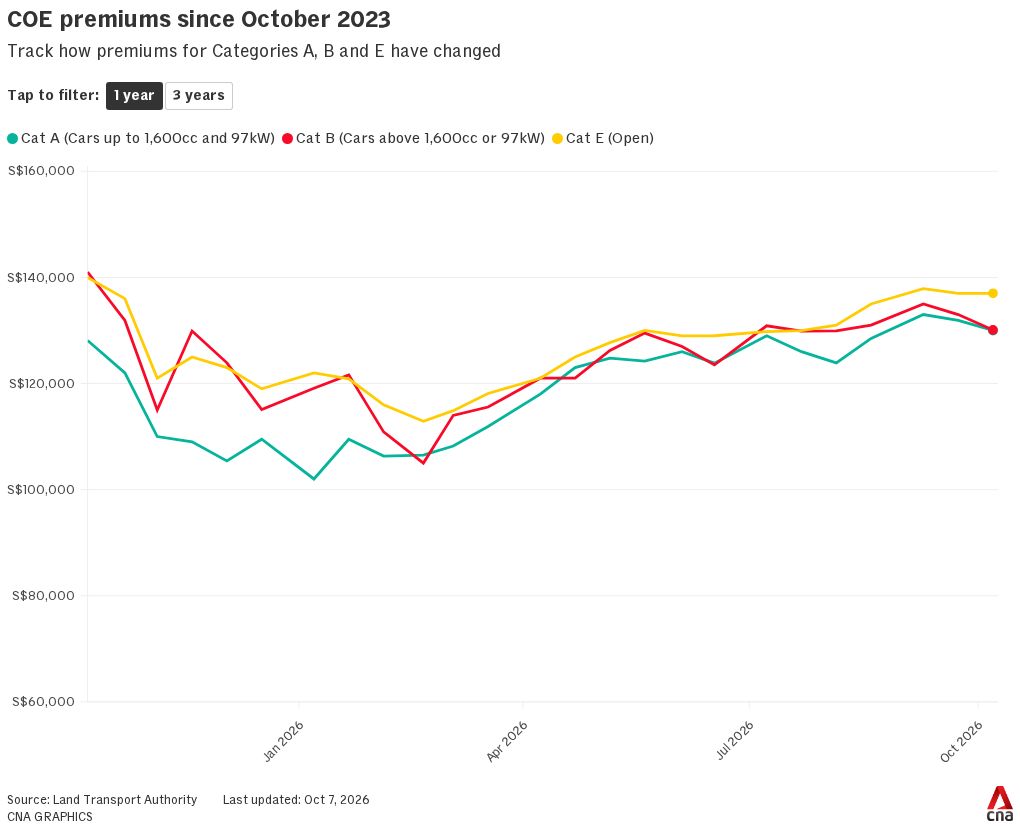
这加剧了A类市场的竞争,并缩小了其与B类的价差。今年2月至6月间,A类溢价有三次超过B类溢价。
This has increased competition in Category A and narrowed its price gap with Category B. Category A premiums exceeded Category B premiums three times between February and June this year.
在周三的最新竞标中,A类溢价收于130,001新元,B类收于S$“此次公众咨询旨在就如何在拥车证制度中更有效地区分大众市场汽车与高端汽车征求公众意见,同时允许拥车证价格继续由市场力量决定,”陆路交通管理局表示。
In the latest bidding exercise on Wednesday, Category A premiums closed at S$ 130,001 and Category B at S$“The objective of the public consultation is to seek views on how to more effectively distinguish between mass-market and higher-end cars in the COE system, while allowing COE prices to continue to be determined by market forces,” said LTA.
此前,交通部长黄循财在3月的预算辩论中表示,他已要求陆路交通管理局审查这一问题。
It comes after Transport Minister Jeffrey Siow said at the ministry’s Budget debate in March that he had asked LTA to review the issue.
该机构就COE制度的建议征询了超过200名公众人士、学者及汽车产业代表的意见。COE制度负责分配车辆配额,以控制新加坡的交通拥堵。
The agency engaged more than 200 members of the public, academics and automotive industry representatives on their suggestions for the COE system, which allocates vehicle quotas to control traffic congestion in Singapore.
陆路交通管理局(LTA)首席运营官林智坚表示:“随着汽车技术和市场不断发展,重新审视现有汽车分类是否仍符合当前需求已刻不容缓。通过此次咨询,我们邀请公众分享对拟议变更及其相关权衡的看法。”
"As vehicle technology and the vehicle market continue to evolve, it is timely to review whether the current categorisation of cars remains fit-for-purpose. Through this consultation, we invite the public to share their views on the proposed changes and trade-offs involved," said LTA chief operating officer Lim Zhijian.
运作方式:两类车辆合并后,每辆车的COE价格将根据该车型在公开市场的中位价值,视情况通过折扣或附加费进行调整。
HOW IT WOULD WORK After the merger of the two categories, each car's COE price would be adjusted by a rebate or surcharge if necessary, based on the median open market value of the car model.
公开市场价值是指新加坡海关评估的、进口至新加坡的车辆成本,其中包括购买价格、运费、保险以及车辆进口相关的其他所有销售与交付费用。目前,这一价值被用于计算车辆的额外注册费。
The open market value is the cost of a vehicle imported into Singapore as assessed by Singapore Customs, taking into account the purchase price, freight, insurance and all other sale and delivery charges for importing the car. This value is currently used to calculate a car’s Additional Registration Fee.
公开市场的中位价值将基于同一车型在过去特定时期(例如过去一年)的注册数据。该中位值所处的百分位区间,将决定车辆适用哪一档费用或折扣。
The median open market value would be based on past registrations of the same model over a set period, such as the past year. The percentile into which that median falls would then determine which fee or rebate band applies to the car.
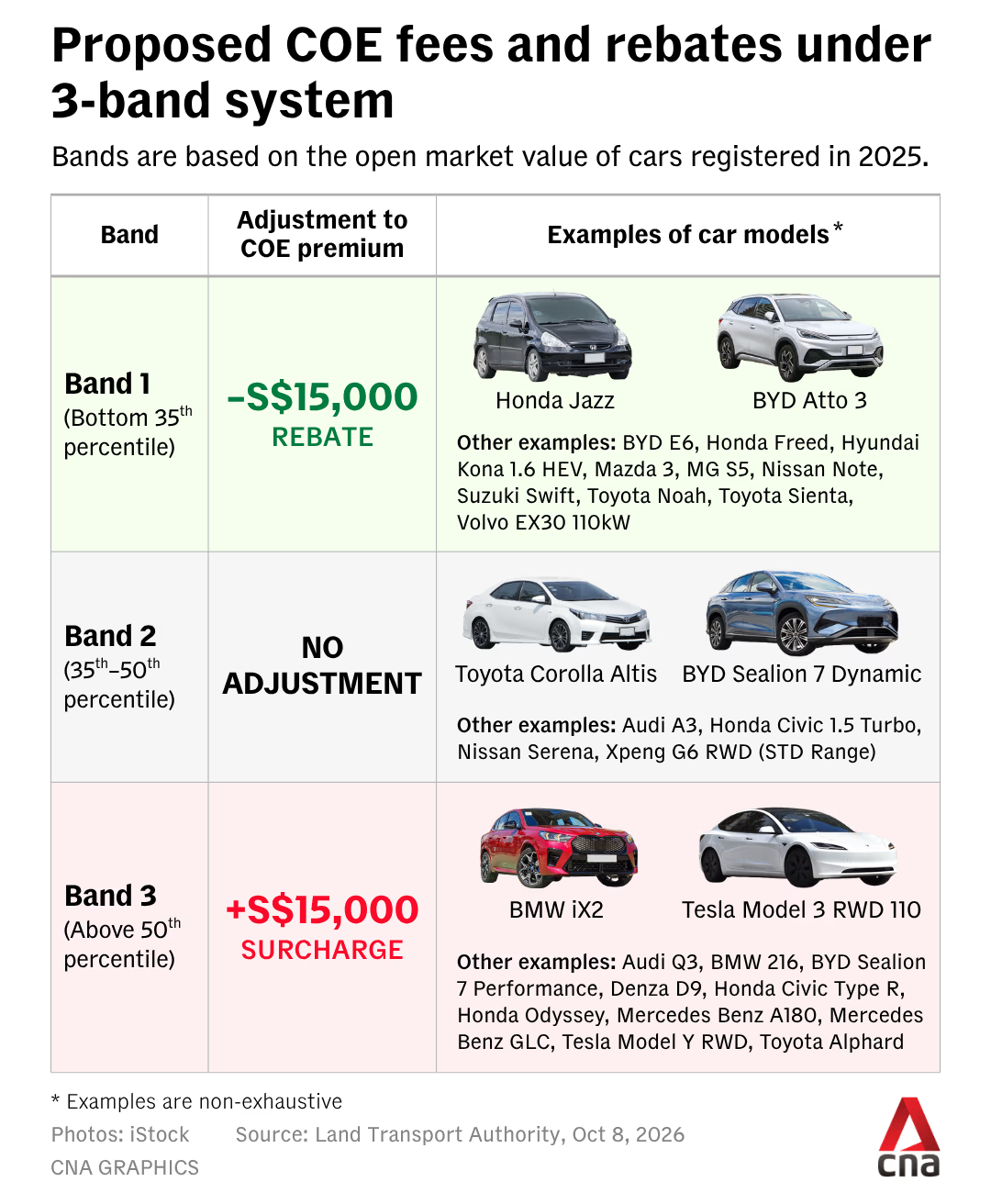
咨询文件提出了两种可能的结构。三档结构将包括1.5万新元的折扣档、无调整的中间档以及1.5万新元的附加费档。
The consultation paper outlines two possible structures. A three-band structure would have a S$15,000 rebate band, a middle band with no adjustment and a S$15,000 surcharge band.
LTA表示,这种结构虽然管理起来更简单,但相邻档位之间的调整幅度会更大。
This would be simpler to administer but adjustments between adjacent bands would be larger, LTA said.
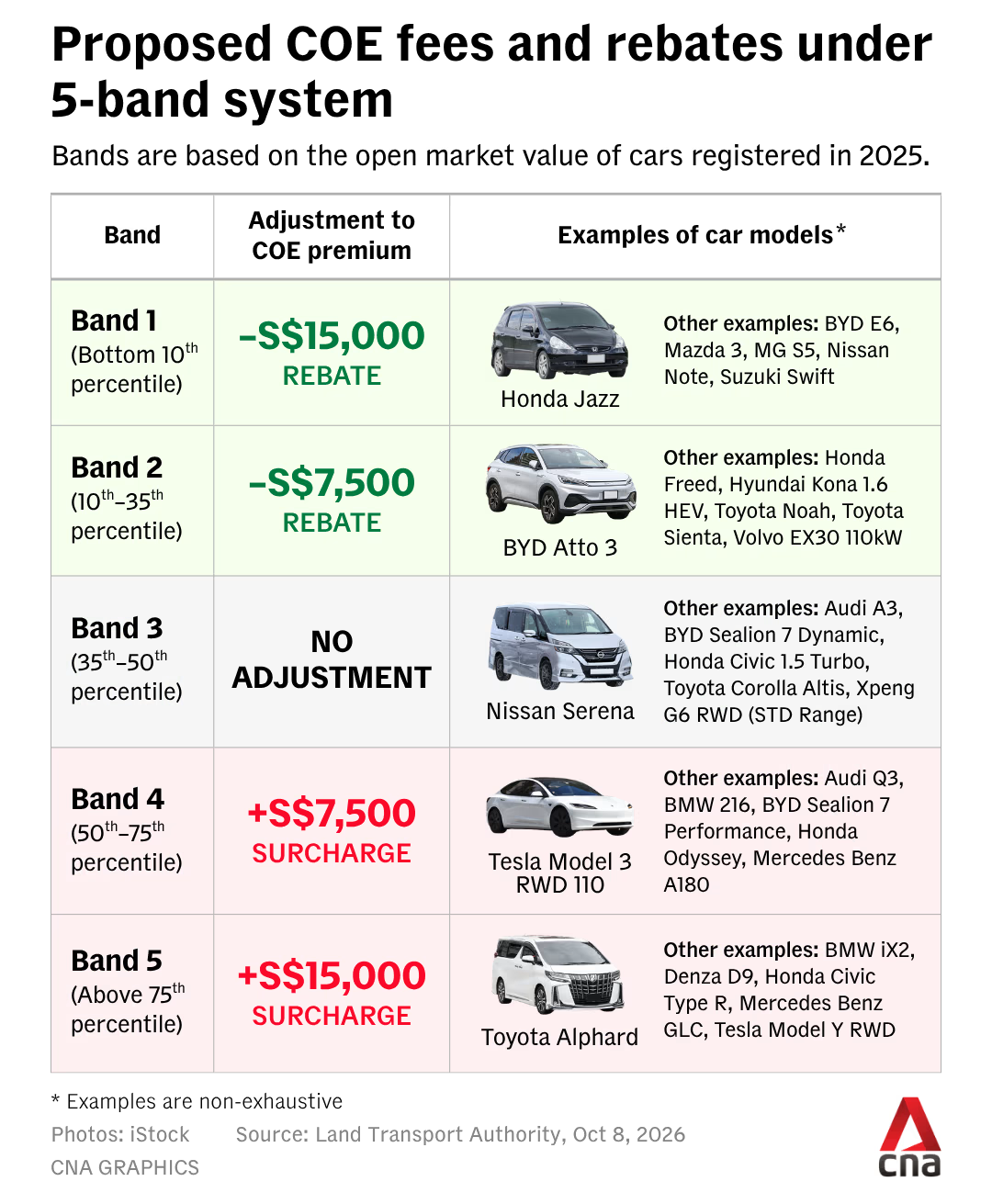
五档结构则会将车型更细致地划分为1.5万新元或7500新元的折扣档、无调整的中间档,以及7500新元或1.5万新元的附加费档。
A five-band structure would more finely differentiate car models into S$15,000 or S$7,500 rebate bands, a middle band with no adjustment, and S$7,500 or S$15,000 surcharge bands.
LTA指出,这种结构能减少相邻档位中相似车辆之间的待遇差异,但也会使管理更为复杂。
This would reduce the difference in treatment between comparable cars in adjacent bands, but make administration more complex, LTA said.
陆路交通管理局表示,将每年审查并发布各车型的价格区间,以便买家在做出购买决定前了解相关信息。汽车零售商可以对价格区间的划分提出申诉。
LTA said it would review and publish the band for each car model annually to keep buyers informed before they decide on their purchases. Car retailers would be able to appeal a band assignment.
陆路交通管理局还就配额与回扣制度是否应适用于拥车证续期征求了公众意见。
LTA also sought views on whether the fee-and-rebate system should apply to COE renewals.
在媒体简报会上,当被问及回扣和附加费金额如何确定时,陆路交通管理局向记者表示,这涉及对大众市场车型与高端车型之间何种价差才具有实际意义的判断。
Asked at a media briefing how the rebate and surcharge amounts were set, LTA told reporters that this involved a judgment of what would be a meaningful price difference between mass-market and higher-end cars.
该机构指出,根据历史数据,尽管近年来两者价格差距有所缩小,但A类与B类拥车证价格的一般差额约为2万至3万新元。
Based on historical data, the general difference between Category A and B prices has been about S$20,000 to S$30,000, notwithstanding the convergence in recent years, said the agency.
若该制度适用于2025年新增的52,678辆汽车,大约一半的车辆将获得回扣或维持不变,而另一半则需缴纳附加费。
Had the system applied to the 52,678 cars newlyed in 2025, about half would have received a rebate or no change, while the other half would have faced a surcharge.
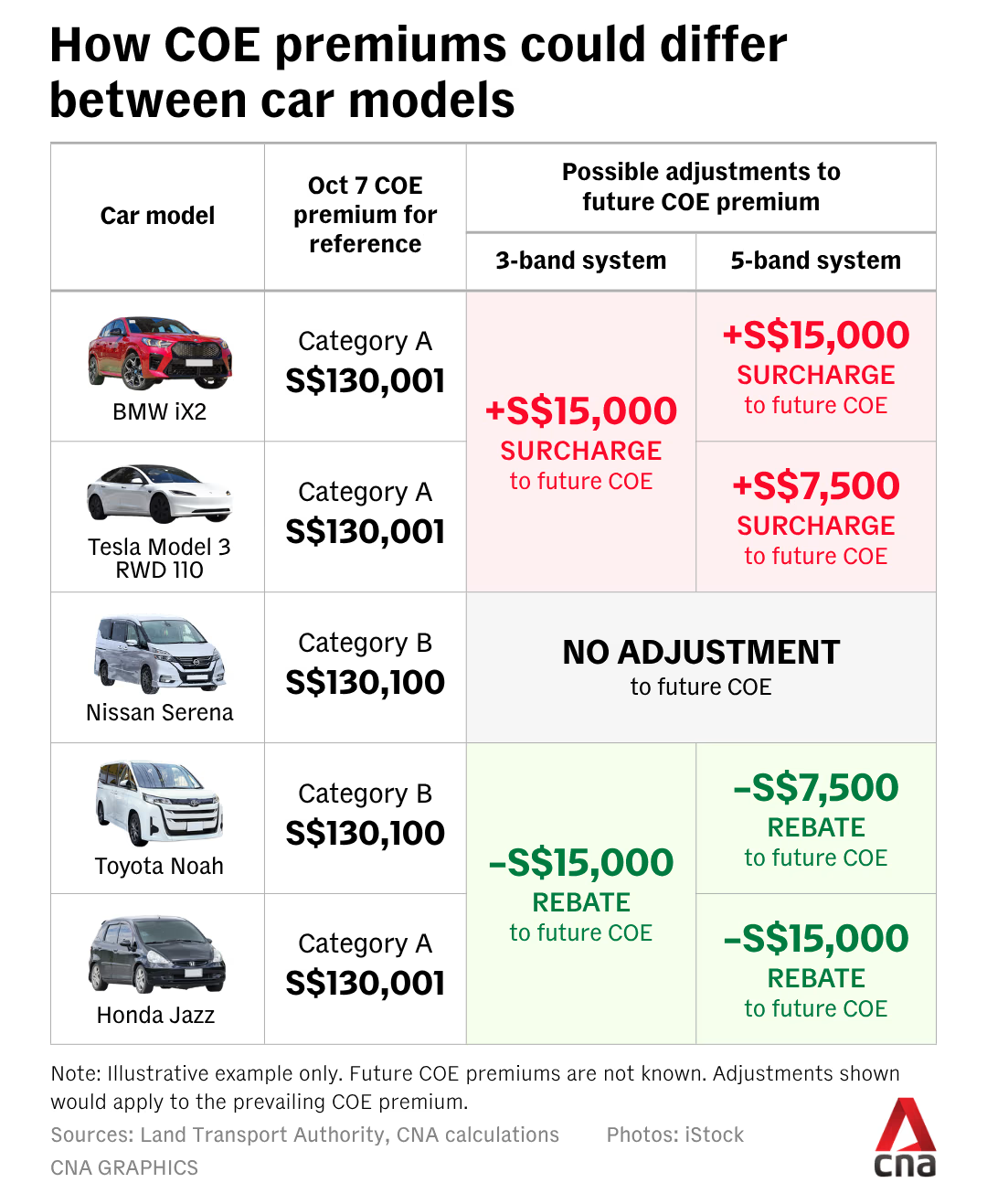
在确定适当的回扣和附加费金额时,一个可能的参考点是A类与B类之间的历史价格差距。这反映了在现行制度下,这两组车型的买家历史上愿意支付的拥车证溢价差异。E类拥车证将如何处理?
In considering the appropriate rebate and surcharge amounts, one possible reference point is the historical price gaps between Category A and Category B. This provides an indication of the difference in COE premiums that buyers of the two groups of cars have historically been willing to pay under the existing system. WHAT HAPPENS TO CATEGORY E?
陆路交通管理局还就若汽车仅保留单一类别,开放类别拥车证(即E类拥车证)是否以及应如何调整征求了意见。
LTA also sought views on whether and how open category COEs – Category E – should change if cars only have one category.
E类拥车证可用于除摩托车以外的任何车辆。其供应量来自汽车A类和B类注销量的10%,以及货车和巴士C类注销量的10%。
Category E COEs can be used to any vehicle except motorcycles. Their supply comes from 10 per cent of deregistrations from categories A and B for cars, and Category C for goods vehicles and buses.
该类别旨在适应不同类型车辆需求的变化。由于这些拥车证可以转让,急需车辆而不愿等待下一次投标的买家也会寻求购买此类拥车证。
The category is meant to accommodate changes in demand for different vehicle types. As these COEs are transferable, they are also sought by buyers who urgently need to a vehicle without waiting for the next bidding exercise.
陆路交通管理局表示,投标人通常使用开放拥车证来注册溢价最高的类别中的车辆。近年来,这主要是B类汽车。
Bidders typically use open COEs to vehicles in the category with the highest premium. In recent years, this has been mostly Category B cars, said LTA.
若A类与B类合并,车辆配额将从三个类别——两个针对私家车、一个针对货车和巴士——调整为两个类别——一个针对私家车、一个针对货车和巴士。
If categories A and B are merged, the open category would change froming vehicles in three categories – two for cars and one for goods vehicles and buses – toing vehicles in two categories – one for cars and one for goods vehicles and buses.
陆路交通管理局表示,E类配额将继续主要供私家车使用,这意味着货车和巴士的配额将“相应减少”。
Category E would continue to be used mainly for cars, “at the expense” of goods vehicles and buses, said LTA.
陆路交通管理局指出,焦点小组讨论中的一项建议是取消E类配额以简化制度,但该局强调,此举将对急需购车的买家产生不利影响。
LTA said one suggestion from focus group discussions was to scrap Category E to simplify the system, but it pointed out that this would adversely impact buyers who urgently need a car.
该局表示,另一种替代方案是仅保留E类配额供私家车使用,这样既能保障此类买家的选择,又不会影响C类配额的供应。
An alternative is to keep Category E for cars only, which would preserve those buyers' options without affecting Category C supply, it said.
基于需求的配额及其他建议 陆路交通管理局还回应了焦点小组中提出的关于配额制度的其他建议。其中一项建议是,为有年幼子女的家庭在购车方面提供更多支持。国会中也曾提出类似呼吁。
NEEDS-BASED COE AND OTHER SUGGESTIONS LTA also addressed other suggestions about the COE system raised in focus groups. One suggestion was to give families with young children more support with car ownership. Similar calls have been made in parliament.
陆路交通管理局表示,关键问题在于如何在支持家庭需求的同时,维持一个“基于市场、公平且透明”的配额制度。
LTA said the key question was how to support families’ needs while preserving a COE system that is “market-based, equitable, and transparent”.
该局指出,根据家庭状况分配配额需要判断哪些需求应获得更高优先级。例如,若为有年幼子女的家庭增加配额,则照护者和多代同堂家庭的配额将相应减少。
Allocating COEs by household circumstances requires judgment about whose needs should receive greater priority, said the agency. For example, more COEs for families with young children would mean fewer COEs for caregivers and multi-generational households.
陆路交通管理局还指出,家庭状况会随时间变化,这使得在配额有效期内公平管理此类制度变得困难。
Household circumstances also change over time, making it difficult to administer such a system fairly over the lifespan of a COE, said LTA.
该局正着手制定一项交通补贴的细节,以帮助拥有三名或以上新加坡籍子女的多子女家庭抵消交通费用,无论其使用出租车还是公共交通。
The agency is instead working out the details of a transport grant to help offset the transport costs of large families with three or more Singaporean children, whether by taxi or public transport.
陆路交通管理局还回应了针对拥有多于一辆汽车者征收附加费的建议,该建议类似于住宅物业的额外买家印花税。
LTA also addressed the suggestion of imposing a surcharge on those who own more than one car, similar to the Additional Buyer’s Stamp Duty for residential properties.
报告指出,多车家庭并非COE需求的主要推动力,征收附加费也不太可能对价格产生显著影响,且难以公平实施。
It said multiple-car owners are not a key driver of COE demand, and a surcharge would be unlikely to significantly affect prices and difficult to administer fairly.
去年,约有6.6万个拥有多辆汽车的家庭,占汽车拥有家庭的13%,低于2012年的8.7万个家庭(占19%)。
Last year, about 66,000, or 13 per cent, of car-owning households had more than one car, down from 87,000, or 19 per cent, in 2012.
焦点小组的参与者还建议为私人租赁车设立单独的COE类别。但陆路交通管理局(LTA)表示,这将需要从A类和B类中调整配额。
Focus group participants also suggested creating a separate COE category for private-hire cars. But this would require quota to be taken from categories A and B, LTA said.
COE数量过少可能会减少私人租赁车的供应,并推高租赁费和车费;而数量过多则可能减少私人买家的可用配额,导致COE价格上涨。
Too few COEs could cut the supply of private-hire cars and raise rental rates and fares, while too many could shrink the pool for private buyers and push up COE prices.
私人租赁车既用于网约车服务,也用于个人出行,因此设立单独类别还需要额外监管,以确保车辆仅用于其预定用途。另一项建议是禁止汽车经销商代表客户竞拍COE。
Private-hire cars are used for both ride-hail services and personal journeys, so a separate category would also need additional regulation to keep vehicles to their intended use. Another suggestion was to ban motor dealers from bidding for COEs on behalf of their customers.
LTA表示,与其限制谁可以竞拍,不如通过允许个人竞拍者在线提交首次报价,并审查报价及修改报价的相关费用,来鼓励个人参与竞拍。
Rather than restricting who can bid, LTA said it was looking to encourage individual bidders by allowing them to make their initial bid online and reviewing the fees for making and revising bids.
该机构还表示,正在研究如何让汽车经销商公布不含COE的裸车价格,以提高个人买家的价格透明度,使他们能够比较价格,并使用自己的COE直接购车。
The authority said it was also looking at ways to get motor dealers to publish unbundled car prices without COE to improve price transparency for individual buyers, who could compare prices and buy cars directly with their own COEs.
一些参与者建议将COE价格的设定方式改为“按出价付费”制度。
Some participants suggested changing the way the COE price is set to a pay-as-you-bid system.
目前,COE的成交价格设定为最高未成功报价加上新加坡元1元,且同一类别内所有成功竞拍者均需支付相同价格。
The COE clearing price is currently set at the highest unsuccessful bid plus S$1, and all successful bidders in the category pay the same price.
在“按出价付费”制度下,每位成功竞拍者将支付自己实际出价的价格。参与者认为,这可能会促使人们出价更为谨慎,从而降低COE价格。
In a pay-as-you-bid system, each successful bidder would pay the amount they actually bid. Participants believed this may encourage more conservative bids and lower COE prices.
LTA指出,COE竞拍属于公开拍卖,因此竞拍者可以观察当前价格,并在竞拍过程中调整自己的出价。
LTA pointed out that COE bidding is an open auction, so bidders can observe the prevailing price and revise their bids during the exercise.
“即使竞标者按其出价支付,理性的竞标者也会始终将出价略高于当前价格。这与现行制度并无不同。”报告指出。
“Even if bidders were to pay what they bid, a rational bidder would always bid marginally above the prevailing price. This would be no different from the current system,” it said.
大多数出价已集中在清算价格附近。2025年,约四分之三成功的A类和B类出价与清算价格的偏差在5%以内。在所有出价(包括未成功的出价)中,约三分之二的出价与清算价格的偏差在5%以内。
Most bids already cluster around the clearing price. About three in four successful Category A and B bids in 2025 were within 5 per cent of it. Among all bids, including unsuccessful ones, about two in three were within 5 per cent above or below it.