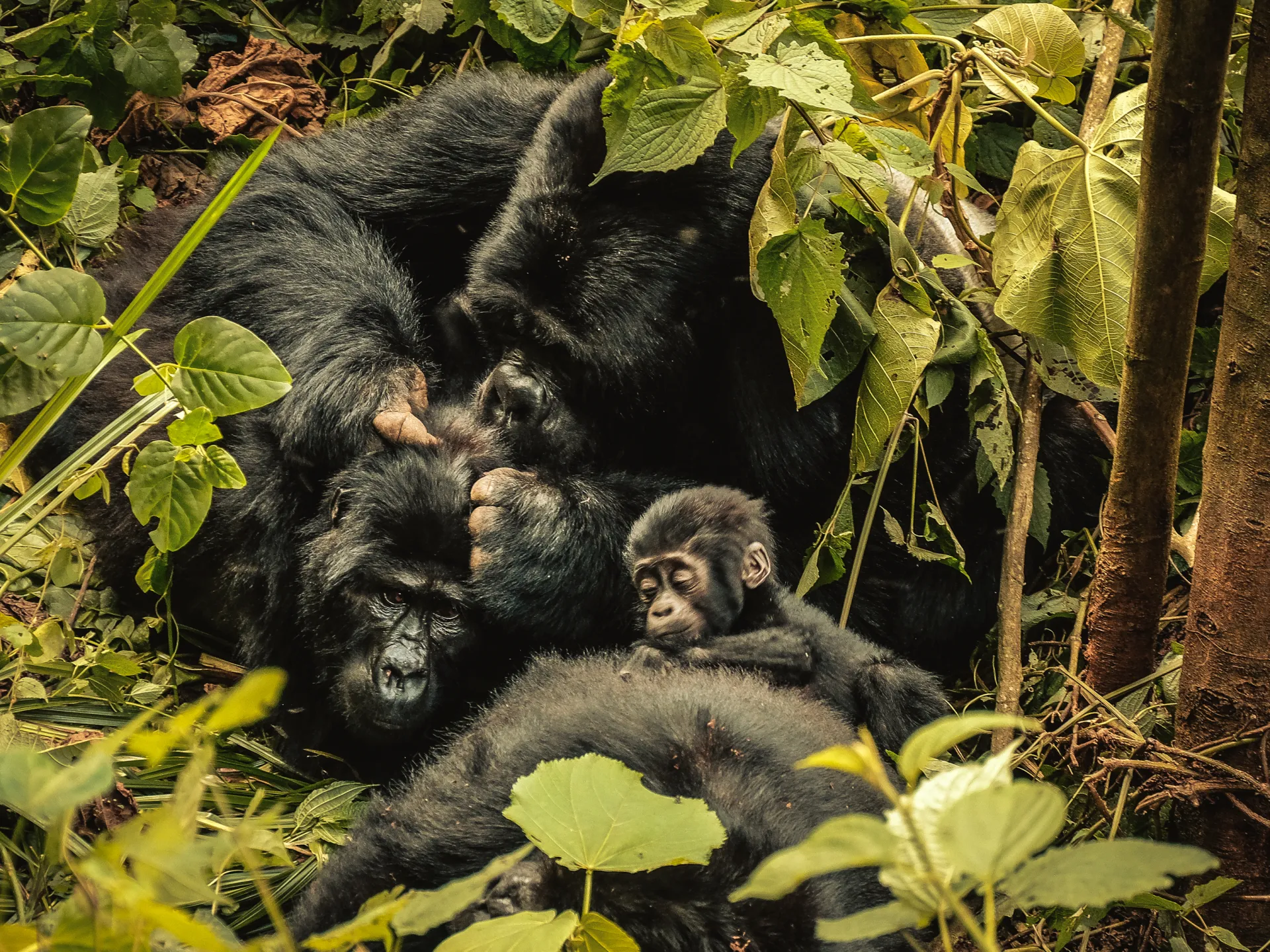
在乌干达布温迪不可渗透国家公园茂密的森林树冠之下,一群大猩猩正被一组游客悄悄观察着,每位游客都支付了800美元以获得这一体验的特权。
Beneath the dense forest canopy of Uganda’s Bwindi Impenetrable National Park, a troop of gorillas is being quietly observed by a group of tourists who have each paid $800 for the privilege of the experience.
在公园周边的村庄里,依托大猩猩的存在,一种蓬勃发展的经济已经形成,从向游客出售木雕,到为每年多达四万名游客提供住宿。
In villages around the park, a thriving economy has grown off the back of the gorillas’ presence here, from the sale of wood carvings to visitors and the provision of accommodation for up to 40,000 tourists a year.
在这片横跨东非大裂谷边缘并与刚果民主共和国接壤的国家公园里,有许多为护林员和导游提供的本地就业岗位。
In the national park, which sprawls along the edge of the Rift Valley and the border with the Democratic Republic of the Congo (DRC), there are many local jobs for rangers and guides.
但在更深的森林腹地,更多的大猩猩远离人类接触,通过觅食、筑巢和传播种子等日常活动,悄然改善着周围的自然环境。而且,至关重要的是,它们正在增加自身的种群数量。
But deeper into the forest, more mountain gorillas live away from human contact, quietly enhancing the natural world around them through their daily routines of foraging, nest building and dispersing seeds. And, crucially, by increasing their own populations.
在20世纪80年代,山地大猩猩正迅速走向灭绝。如今,在乌干达、卢旺达和刚果民主共和国,已有超过1100只山地大猩猩生活在繁荣的种群中。
In the 1980s, the mountain gorilla was on the fast track to extinction. Now, there are more than 1,100 living in thriving populations in Uganda, Rwanda and the DRC.
这是一个保护成功的典范,其影响超越了物种本身,延伸至它们所栖息的生态系统,以及与之共存的人类社区。
Theirs is a story of conservation success that spills beyond the species themselves, into the nature they live in, and the human communities they exist alongside.
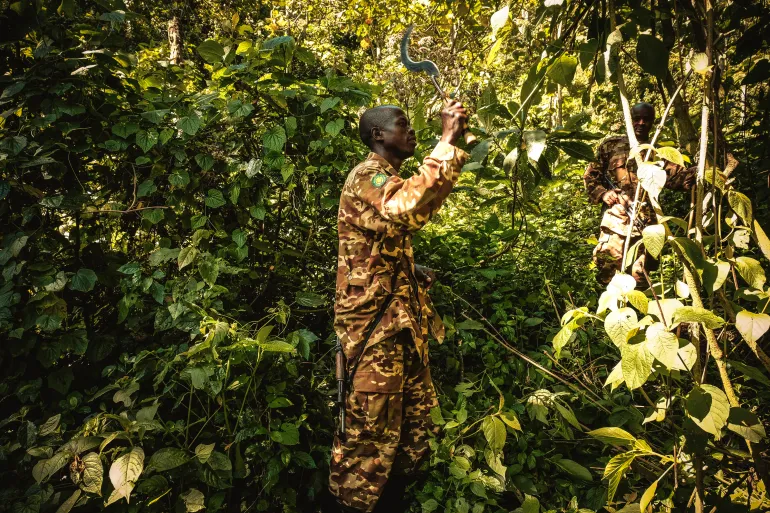
“山地大猩猩的故事向我们表明,保护工作是有效的,”黛安·福西大猩猩基金会的塔拉·斯托因斯基告诉半岛电视台。“这是一个非常重要的例子,展示了实现这一目标所需的努力——数十年的持续保护行动,包括直接保护、基于科学的管理,以及对社区的有意义支持和参与。” 2018年9月,一名护林员在乌干达西南部山区的布温迪不可渗透国家公园工作。
“The mountain gorilla story shows us that conservation can work,” Tara Stoinski of the Dian Fossey Gorilla Fund tells Al Jazeera. “It’s a really important example of the effort that’s needed to make that happen – decades of sustained conservation action that includes direct protection, science-informed management and meaningful community support and involvement.”A ranger works at Bwindi Impenetrable National Park in the mountains of southwest Uganda in September 2018.
该公园是全世界现存山地大猩猩的主要栖息地之一,它们以公园内的根茎、树叶和果实为食。当科学与政策达成一致时,这对于一个饱受危机困扰的自然世界来说,是一个令人振奋的消息。
The park is home to many of the world’s remaining mountain gorillas, who feed on roots, leaves and fruit from the park When science and policy align This is welcome news for a natural world beset by crisis.
根据世界自然基金会(WWF)今年发布的《地球生命力报告》,在过去52年里,受监测的野生动物种群平均规模下降了73%。在全球范围内,由于过度开发、气候变化、污染和入侵物种的影响,栖息地遭到破坏和丧失。
According to this year’s Living Planet Report by the World Wide Fund for Nature (WWF), over the past 52 years, there has been a 73 percent decline in the average size of monitored wildlife populations. Across the world, habitats have been degraded and lost as overexploitation, climate change, pollution and invasive species take their toll.
但报告也指出,绿海龟、蓝鳍金枪鱼、老虎和南部非洲象的种群数量出现了重要恢复。“长期以来,自然的价值一直被低估,”协助撰写该报告的伦敦动物学会首席保护官安德鲁·特里表示。“但这些下降并非不可避免,改变是可能的。自然能够恢复,而这些故事正是这一点的有力证明。”世界自然基金会表示,这些保护工作的成功表明,国际合作伙伴关系能够推动实际成果。
But the report also highlights important recoveries in populations of green turtles, bluefin tuna, tigers and Southern African elephants. “For too long nature has been undervalued,” says Andrew Terry, chief conservation officer at the Zoological Society of London, who helped produce the report. “But these declines are not inevitable and change is possible. Nature can recover, and these stories are a powerful reminder of this.”The WWF says these conservation successes demonstrate how international partnerships drive results.
包括印度、不丹、尼泊尔、老挝和中国在内的老虎分布国通过政府间承诺,帮助全球野生老虎数量在2010年至2025年间增加了70%以上。
Intergovernmental commitments from tiger range countries, including India, Bhutan, Nepal, Laos and China, helped increase global wild tiger numbers by more than 70 percent between 2010 and 2025.
2025年,绿海龟成为首个从“濒危”降级为“无危”的海洋龟类,这一变化被载入国际自然保护联盟红色名录。这一成果反映了50年来对该物种的研究、对产卵雌龟和卵的积极保护、减少渔具使用的措施以及持续不断的社区参与。
In 2025, the green sea turtle became the first marine turtle ever to be downlisted from “endangered” to “least concern” on the International Union for the Conservation of Nature Red List. That reflected 50 years of species research, active protection of nesting females and eggs, measures to reduce fishing gear and sustained community engagement.
布兰登·戈德利教授是埃克塞特大学和阿联酋沙迦海洋研究中心的首席保护科学家,他职业生涯的大部分时间都致力于研究和保护海龟。“保护工作的成功案例至关重要,因为它们表明种群数量下降并非不可避免,”他向半岛电视台表示。
Professor Brendon Godley is a leading conservation scientist at the University of Exeter and the Sharjah Marine Research Centre in the United Arab Emirates and has spent much of his career dedicated to researching and protecting sea turtles. “Conservation success stories are hugely important because they demonstrate that declines are not inevitable,” he tells Al Jazeera.
“绿海龟等物种的种群恢复情况表明,当科学、政策、执法措施以及公众支持形成合力时,物种数量便有可能回升,有时甚至出现显著增长。不过,这绝不能成为我们掉以轻心的理由。”这些保护领域的胜利,其实不过是我们在对抗自然环境恶化的漫长斗争中取得的“小胜利”罢了。世界自然基金会发布的《地球生命力报告》指出,目前导致自然环境遭到破坏的三大核心体系分别是:全球粮食体系——为种植农作物而大量开垦土地,成为栖息地丧失的首要原因;能源体系——化石燃料的燃烧引发了气候变化;金融体系——为各类有害活动提供资金支持,比如大规模基础设施建设及采矿项目。
“The recovery of species such as green turtles shows that when science, policy, enforcement and public support align, populations can rebound, sometimes remarkably so. However, they are not grounds for complacency.”Small battles – where hope comes from Indeed, these conservation triumphs are small battles won in an ongoing war against the degradation of nature. The WWF’s Living Planet Report highlights the three systems that are primarily driving the destruction of nature: the global food system, which is the leading cause of habitat loss as areas are cleared to grow crops; the energy system, which fuels climate change through burning fossil fuels; and the finance system, which bankrolls harmful activities, for example, large-scale infrastructure or mining projects.
世界自然基金会总干事柯丝汀·舒伊特表示,这些产业与体系亟需转型。“变革已然在推进之中,”她对半岛电视台说道,“虽然尚未在各地全面展开,规模也尚未达到预期水平,但足以证明改变是可行的。”某个物种的回归往往能产生深远影响。2010年时,大西洋蓝鳍金枪鱼的种群数量减少了80%,该物种也被列为濒危物种;它们几乎从历史上的栖息区域消失,包括英国海域。而如今,它们的数量正以数代人乃至有史以来都未曾出现过的规模重新回归。
Kirsten Schuijt, director general of WWF, says these industries and systems need to be transformed. “Progress is already under way,” she tells Al Jazeera. “Not everywhere, and not yet at the scale required, but enough to demonstrate that change is possible.”The return of a species can have a powerful effect. In 2010, Atlantic bluefin tuna populations had declined by 80 percent and the species was listed as endangered. They had disappeared from much of their historical range, including UK waters. Yet today they are returning in numbers not witnessed in generations, perhaps ever.
“这个故事之所以格外动人,是因为恢复过程清晰可见,”埃克塞特大学的研究员汤姆·霍顿说道。“沿海社区、渔民和海洋使用者过去从未在英国水域见过蓝鳍金枪鱼,如今却经常与它们相遇。这使保护工作从一个抽象概念变成了触手可及的现实。”这些成功案例为其他应对物种衰退的保护项目带来了启发,例如保护地球上体型最大的灵长类动物——极度濒危的格雷氏大猩猩。
“What makes this story particularly powerful is that the recovery is visible,” says Tom Horton, research fellow at the University of Exeter. “Coastal communities, fishers and sea-users who had never seen a bluefin tuna in British waters are now encountering them regularly. It transforms conservation from an abstract concept into something tangible.”These successes serve as inspiration for other conservation projects in the fight against species decline, like that of the largest primate on Earth, the critically endangered Grauer’s Gorilla.
它们的栖息地位于刚果民主共和国广袤而偏远的森林中,生活在一个充满动荡和栖息地丧失的环境中。据估计,其数量已下降60%,如今仅剩6800只。
Its home range lies within the vast remote forests of the DRC, living in a landscape beset by instability and habitat loss. Its numbers have dropped by an estimated 60 percent to just 6,800 today.
刚果民主共和国戴安·福西基金会国家主任乌尔班·恩戈博博解释说,恢复当地大猩猩数量是一项巨大挑战,但机遇同样巨大。
Urbain Ngobobo, country director for the Dian Fossey Fund in the DRC, explains that the challenge of restoring numbers there is significant but so is the opportunity.
“我们帮助社区保护的每一片森林,”他说,“我们成功监测的每一只大猩猩,以及每一位成长为保护领域领袖的刚果年轻人,都代表着进步。
“Every forest we help communities protect,” he says, “every gorilla we are able to monitor and every young Congolese person who develops the skills to become a conservation leader, represents progress.
“希望正源于此——并非源于对未来一帆风顺的假设,而是源于我们深知,今天的行动能够改变明天的可能性。”
“That is where hope comes from – not from assuming the future will be easy, but from knowing that our actions today can change what is possible tomorrow.”