胡安·卡洛斯·迪亚斯·韦莱斯在威斯康星大学麦迪逊分校的威斯康星冰立方粒子天体物理中心工作。而这位新晋诺贝尔奖得主正是他的上司。
Juan Carlos Díaz Vélez works at the Wisconsin IceCube Particle Astrophysics Center at the University of Wisconsin–Madison. The new Nobel laureate is his boss.
“当我走进WIPAC的办公室时,所有人都面带笑容,互相道贺,”迪亚斯·韦莱斯说道,“我们聚集在会议室里,观看当时正在意大利参加会议的弗朗西斯·哈尔岑的新闻发布会。我们会等他回来再一起庆祝,在此期间也会继续开展中微子研究——这项工作永远做不完。”他们的工作就是利用埋藏在巨大冰块中的探测器来捕捉这种难以捉摸的粒子。
“When I arrived at the WIPAC offices, everyone was smiling and congratulating one another,” Díaz Vélez says. “We gathered in the conference room to watch the press conference with Francis Halzen, who was in Italy at the time attending a conference. We’ll wait for his return to celebrate, and in the meantime, we’ll keep working on the neutrino study, because this work never ends.”That work is detecting an elusive particle using detectors inside a big block of ice.
“中微子是参与原子核内部反应的亚原子粒子,”迪亚斯·韦莱斯解释道,“它们由地球上的放射性现象产生——甚至西瓜和香蕉中因含有钾-40也会产生中微子,我们人体自身也会产生这类粒子。”不过我们根本察觉不到它们的存在。这些粒子很难与物质发生相互作用。正如其名称所示,中微子不带任何电荷,因此能在不受磁场影响的情况下沿直线在太空中穿行,它们源源不断地穿过整个地球,却几乎不与任何原子发生反应。
“Neutrinos are subatomic particles that participate in reactions within the nuclei of atoms,” Díaz Vélez explains. “They are produced by radioactivity on Earth—and even in watermelons and bananas, due to their potassium-40 content—as well as in our own bodies.”Not that any of us notice. These particles do not interact easily with matter. As their name suggests, neutrinos have no electric charge, so they can travel through space in a straight line without being affected by magnetic fields, and they constantly pass through the entire Earth without interacting with a single atom.
“太阳发出的中微子数量极其庞大,每秒钟就有10亿个中微子穿过人类拇指的指甲,”迪亚斯·韦莱斯补充道。
“Neutrinos from the sun are so abundant that 1 billion of them pass through the nail of a thumb every second,” Díaz Vélez says.

哈尔岑团队研究的中微子并非我们日常生活中经常接触到、只是自己并未察觉的那种普通中微子。他们感兴趣的是那些来自深空的高能中微子。这些宇宙粒子可能源自超新星遗迹甚至黑洞。这些天体产生的强大磁场能够将质子等粒子加速至极高的能量水平。
The neutrinos studied by Halzen’s team are not the run-of-the-mill particles we’re encountering constantly—if unknowingly. They are interested in very high-energy neutrinos that come from deep space. These cosmic particles may originate from supernova remnants or even black holes. The intense magnetic fields of such phenomena can accelerate particles like protons to very high energies.
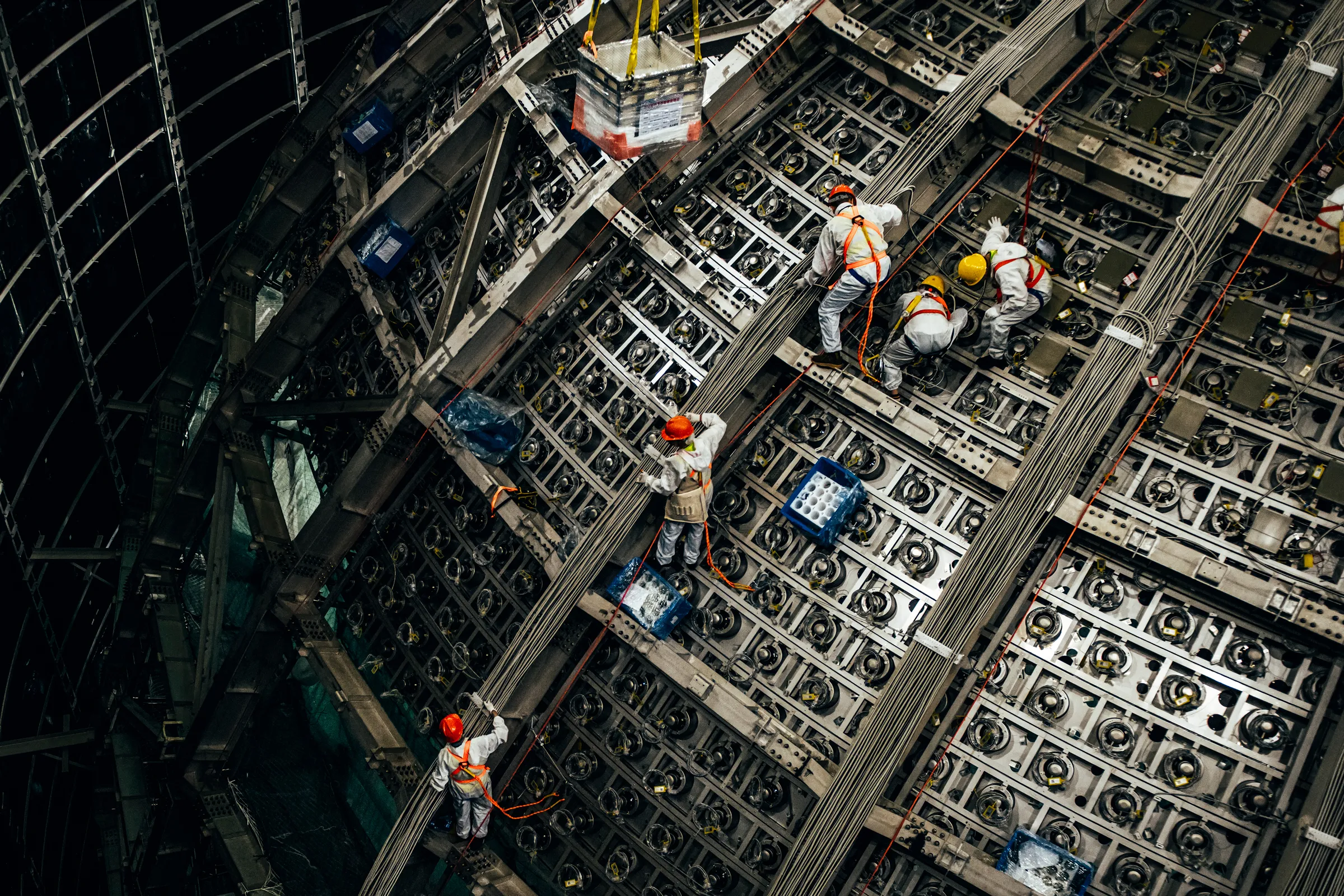
“当这些粒子与星际介质(由气体和等离子体组成)碰撞时,会产生伽马射线和中微子,”迪亚斯·贝莱兹说。“这就是为什么中微子是高能宇宙线源头的完美信使。我们探测到的最高能量中微子源来自活动星系核,其中包含超大质量黑洞。”迪亚斯·贝莱兹所在的团队在位于地理南极的设施——冰立方中微子天文台探测到了此类中微子——与那位著名说唱歌手无关。该天文台包含一个由5160个光学传感器组成的阵列,深埋地下,覆盖1立方公里的冰层。
“When these particles collide with the interstellar medium—which consists of gas and plasma—they produce gamma rays and neutrinos,” Díaz Vélez says. “That is why neutrinos are perfect messengers from high-energy cosmic-ray sources. The highest-energy neutrino sources we have detected come from active galactic nuclei, which contain supermassive black holes.”And the team Díaz Vélez is part of has detected such neutrinos at a facility located at the geographic South Pole known as the IceCube Neutrino Observatory—no relation to the famous rapper. The observatory contains an array of 5,160 optical sensors buried deep underground, covering 1 cubic kilometer of ice.
“南极冰盖在1.5公里深度处非常透明,因此传感器能够探测到由μ子产生的光,μ子是中微子与冰原子罕见相互作用产生的亚原子粒子,”迪亚斯·贝莱兹说,他也曾参与2010年冰立方天文台的建设。天文台于次年投入运行。
“The South Pole ice sheet is very transparent at a depth of 1.5 kilometers, so the sensors can detect the light produced by subatomic particles called muons, which are generated as a result of rare interactions between neutrinos and ice atoms,” says Díaz Vélez, who also participated in the construction of IceCube in 2010. The observatory began operations the following year.
该项目的首个重大发现是探测到来自太阳系外天体物理源的中微子。最著名的源之一是TXS 0506+056,它是与其他天文台合作定位的,这些天文台收集了各种伽马射线、光学和射电信号。TXS 0506+056是一个高能耀变体,即一个围绕超大质量黑洞旋转、看起来极其明亮的星系。研究人员寻找具有类似特征的其他天体,并确认这类源头能够产生高能中微子。最近,他们已能将银河系观测为中微子的弥漫源。
The project’s first major discovery was the detection of neutrinos from astrophysical sources outside our solar system. One of the most notable sources was TXS 0506+056, located in collaboration with other observatories that collected various gamma-ray, optical, and radio signals. TXS 0506+056 is a high-energy blazar, a galaxy that appears extremely bright and revolves around a supermassive black hole. The researchers looked for other objects with similar characteristics and confirmed that this class of sources is capable of producing high-energy neutrinos. More recently, they have been able to observe the Milky Way as a diffuse source of neutrinos.
除了天文学领域,冰立方项目还在帮助我们深入理解这些粒子的本质与行为方面做出了重要贡献。目前已知的中微子共有三种类型,去年的诺贝尔物理学奖得主们发现,这些粒子在传播过程中能够从一种类型转变为另一种类型。冰立方项目使得对这一现象的测量精度不断提高。
In addition to astronomy, IceCube has made significant contributions to our understanding of the nature and behavior of these particles. For example, there are three known types of neutrinos, and last year’s Nobel laureates in physics discovered that these particles can transform from one type to another as they travel. IceCube has enabled increasingly precise measurements of this phenomenon.
“另一个研究方向就是宇宙射线,这也是我主要研究的领域,”迪亚兹·韦莱斯说道,“我们发现宇宙射线并非均匀地从各个方向射来,而是集中来自某些特定方向,这一发现有助于我们了解银河系中宇宙射线源的分布情况。”
“Another area of research is cosmic rays, which is what I focus on,” says Díaz Vélez. “We have discovered that they do not come uniformly from all directions but rather from preferred directions, and this tells us about the distribution of their sources in the galaxy.”
宇宙射线由质子及更重元素的原子核组成,它们占据了该项目采集数据中的很大比例。“探测到一颗中微子就如同大海捞针,”这位研究员解释道,“每当冰立方探测到一颗中微子时,同时还会探测到超过一百万个由宇宙射线产生的μ子。”
Cosmic rays consist of protons and nuclei of heavier atoms, and they constitute a very high portion of the project’s data. “Detecting a neutrino is like looking for a needle in a haystack,” the researcher says. “For every neutrino IceCube detects, more than a million muons produced by cosmic rays are detected.”
迪亚兹·韦莱斯担任冰立方项目的产品协调员,负责实验数据的处理以及模拟实验的开展。“我们每两毫秒就要计算出探测到的粒子的入射方向、能量及其类型,”他说道,“此外还需以相近的频率模拟宇宙射线与中微子的行为。这两项任务都需要借助分布于全球的高性能计算网络,这些网络共包含约1万个中央处理器核心与1000个图形处理器。”
Díaz Vélez serves as the product coordinator for the IceCube collaboration, overseeing the processing of experimental data and the production of simulations. “This involves calculating the direction of arrival, the energy, and the type of particle detected every two milliseconds,” he says. “We also need to simulate cosmic rays and neutrinos at comparable rates. Both tasks require high-performance computing networks distributed around the world, totaling approximately 10,000 CPU cores and 1,000 GPUs.”
这位研究员还指出,虽然冰立方项目的总部设在威斯康星州,但其实际运作地点位于南极洲;该项目实际上是一个由14个国家的58家机构、共计450名研究人员共同参与的国际合作项目。参与工作的人员中不乏硕士与博士研究生;尽管此次获奖名单上仅有一位科学家的名字,但实际上背后还有数十位同事的共同努力。
The researcher notes that while the IceCube project is based in Antarctica and headquartered in Wisconsin, it’s an international collaboration of 450 people at 58 institutions across 14 countries. Many of those involved in the work are masters and doctoral students, and although the award bears only one scientist’s name, behind that name lies the work of dozens of colleagues.
“值得一提的是,方济各是一位杰出的人物和领袖,同时也是个非常友善且慷慨的人,”迪亚斯·韦莱斯说道。“总体而言,我们把他视作同事而非上司。事实上,若非他的热情与奉献精神,这次实验根本不可能取得成功。” 本文最初发表于《WIRED》西班牙语版,此处为西班牙语原文的翻译。
“It’s worth mentioning that Francis is a great figure and a leader but also a very friendly and generous person,” says Díaz Vélez. “In general, we see him more as a colleague than as a boss. In fact, if it weren’t for his passion and dedication, this experiment would never have been successful.”This story originally appeared in WIRED en Español and has been translated from Spanish.