
30岁的哈塔卜,如今的生活几乎完全围绕着这些检查站展开——或许比约旦河西岸任何一位巴勒斯坦人都更甚。但他也改变了当地社区应对这些检查站的方式:近35万人关注他的交通电报(Telegram)群组,填补了主流导航应用因无法服务巴勒斯坦用户而留下的空白。当地广播电台依据他的路况通报来制作每小时的交通路况节目。约旦河西岸企业使用的路线规划系统以及一款新的本地应用程序,都将他的数据整合进了自己的系统中。
At 30, Hattab’s life now revolves around these checkpoints—perhaps more than any other Palestinian in the occupied West Bank. But he has also transformed his community’s approach to them: Nearly 350,000 people follow his traffic Telegram group, which has closed a gap left open by major navigation apps that fail Palestinian users. Local radio stations build their hourly road segments off his dispatches. A routing system used by West Bank companies and a new local app pull his data into their own.
这一切始于2019年。当时,哈塔卜白天在拉马拉的一家报社担任数字设计师。当白班结束后,他便开始另一份工作——担任该报的送报司机。这意味着大多数夜晚,他都必须驾车穿梭于整个约旦河西岸。将最新报纸装入车中后,他会一路向北,途经纳布卢斯和杰宁等城市,最终在黎明时分抵达图勒卡尔姆的家中。他发现自己不得不躲避以色列军队的突袭、绕行必须避开的定居点,而最令他头疼的,则是那些变幻莫测的检查站——它们可能导致数小时的延误,且武装的以色列士兵随时可能对他或他的车辆进行搜查。
It began in 2019. Hattab was working during the day as a digital designer at a newspaper in Ramallah. When one shift ended, he started another, this time as the paper’s delivery driver. That meant that most nights, Hattab had to drive all around the West Bank. After loading the fresh editions into his car, he would drive north, looping through the cities of Nablus and Jenin, eventually reaching his home in Tulkarm by dawn. He found himself dodging Israeli military raids, settlements he had to route around and, most of all, unpredictable checkpoints, which could cause hours-long delays and where armed Israeli soldiers could search him or his car.
数十年来,以色列限制或禁止巴勒斯坦车辆通行约旦河西岸的许多主要干道,而以色列车辆则可自由通行。谷歌地图等主流导航应用对此毫无考量。它们并未标注如今将这片土地割裂成碎片状的942个检查站、关卡及其他路障,而是默认采用其算法认为最快的路线,其中许多路线穿过定居点及以色列控制区。遵循这些导航指引的巴勒斯坦司机,面临着被捕、罚款甚至被枪击的风险。
For decades, Israel has restricted or barred Palestinian vehicles from many of the main arteries through the West Bank, while Israeli vehicles pass freely. Popular navigation apps like Google Maps don't account for any of it. They do not mark the 942 checkpoints, gates, and other barriers that now fragment the territory, and they default to what their algorithms deem the fastest routes, many of which run through settlements and areas under Israeli control. A Palestinian driver who follows their directions risks being arrested, fined, or shot.
夜复一夜地穿行于这些充满不确定性的道路上,哈塔布逐渐感到身心俱疲。他清楚,自己并非唯一如此的人。“人们害怕离开自己的省份,”他说。而恐惧的核心,正是信息的缺失。于是,他开始思考如何填补这一空白——不仅为了自己,也为了约旦河西岸的每一位巴勒斯坦人。
Navigating these uncertain roads, night after night, wore on Hattab. He knew he wasn't the only one. “People were scared to leave their governorates,” he says. At the core of that fear was an information void. So he began devising a way to fill it, for himself and every other Palestinian in the West Bank.
七年前,哈塔布创建了一个名为“路况”的Telegram群组。他的设想是,人们可以互相分享检查站附近的动态信息——提醒彼此注意延误或封闭,以及定居者或军队的出现和暴力行为。哈塔布将群组链接发布在当地新闻群里,然后静静等待。起初,加入的人寥寥无几;但到了2022年,随着检查站数量激增、延误愈发严重,用户数量迅速暴增。
Seven years ago, Hattab launched a Telegram group called “Road Conditions.”The idea was that people would share information with each other about movements at checkpoints—warn each other about delays or closures, about settler or military presence and violence. Hattab posted the link in local news groups, and waited. They came in a trickle, at first, and then, as checkpoints began to multiply in 2022 and delays got worse, they came in a flood.
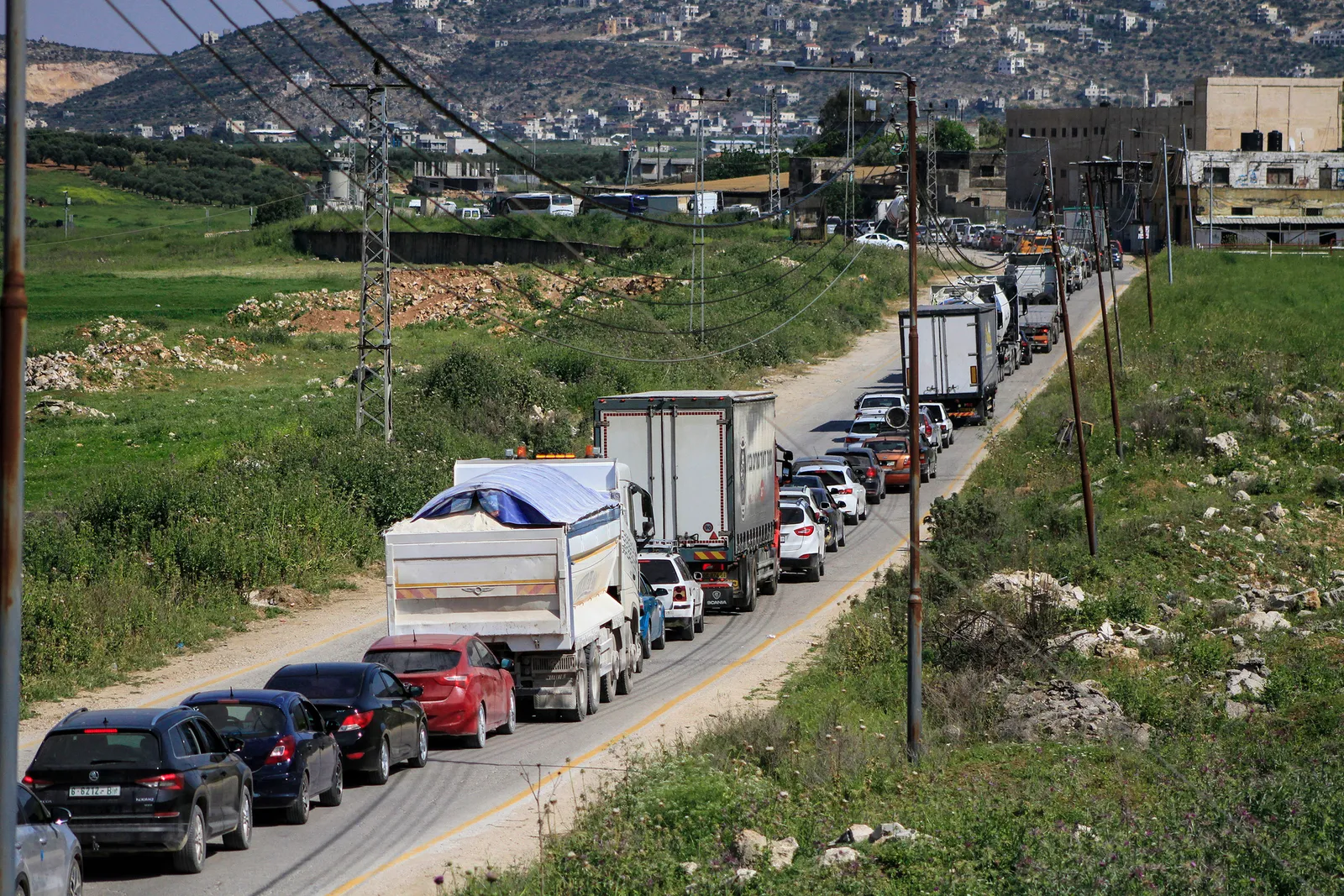
随着“路况”群组成员越来越多,哈塔布的压力也与日俱增。每当检查站封锁主要城市时,用户数量便会飙升,有时一次就增加数千人。数十名通勤者会同时询问同一个检查站的情况,而答案也会立刻蜂拥而至:“畅通”“开放”“关闭”——这三种状态可能在同一小时内同时存在。“十分钟就很长了,”哈塔布说,“情况瞬息万变。”
As more people joined Road Conditions, the pressure on Hattab mounted. When checkpoints locked down major cities, the number of users could spike, sometimes by thousands at a time. Dozens of commuters would ask about the same checkpoint, and answers would pour in at once. “Clear,” “open,” “closed.”All three could be true within the same hour. "Ten minutes is a long time," Hattab says. "Things change instantly."
每天,成千上万条问题都会涌向他。“起初,”他说,“我几乎没怎么睡过觉。”创建“路况”群组时,哈塔布的里程表显示为7万公里;四年后,这片东西两端相距不过130公里的土地上,他的里程表已飙升至27.4万公里——相当于绕地球五圈多,却从未离开过约旦河西岸。
The questions landed on him, thousands of messages a day. “In the beginning,” he says, “I barely slept.”When Hattab started Road Conditions, his odometer read 70,000 kilometers. Within four years it read 274,000, inside a territory barely 130 kilometers from tip to tip. It is the equivalent of driving around the Earth more than five times, without ever leaving the West Bank.
最初,这个工具只是供人们互相帮助、了解被占领的约旦河西岸路况的众包平台,后来逐渐发展成为一项不可或缺的实用服务。为确保“路况信息”平台的可靠性,哈塔布在2019年创建该群组后不久便关闭了公开聊天功能,并邀请最活跃的参与者担任版主。如今,有十几名志愿者负责维护该平台的信息更新。来自约旦河西岸各地的司机们会向他们发送路况报告,通常还会附上照片或视频。版主们则会通过询问当地知情人士、核对其他本地信息源,甚至亲自驾车上路来验证这些信息的准确性。
What began as a crowdsourced tool for people to help each other navigate the occupied West Bank was becoming an essential utility. To keep Road Conditions reliable, soon after launching the group in 2019, Hattab closed the public chat and asked the most active contributors to become moderators. More than a dozen volunteers now run the feed. Drivers from every corner of the West Bank send them reports, usually with a photo or video. Moderators check these updates by asking others on the ground, cross-checking other local pages, or driving the roads themselves.
随着“路况信息”平台的影响力不断扩大,用户们开始询问那些哈塔布从未到过的城市的道路情况。任何信息在发布前都必须经过他或版主们的核实。在发布某检查站关闭的消息前,他们必须确认该检查站的具体位置、该向谁核实信息,以及司机们可以改走哪些替代路线。于是,在接下来的六个月里,哈塔布利用休息日驾车四处奔波,漫无目的地行驶。
As Road Conditions grew, users asked about roads in cities Hattab had never been to. Nothing goes out until he or the moderators have checked it. Before posting a checkpoint is closed, they need to know where it is, whom to ask to verify the update, and what route a driver can take instead. So for six months, Hattab spent his days off driving with no destination.
“我会坐进车里,然后迷路,不管最后到了哪里,就这样。”他说道。他沿途向当地人询问每一个检查站及绕行道路的名称,直到最终将所有替代路线牢记于心。
"I'd get in the car, get lost, wherever I ended up, I ended up," he says. He stopped to ask locals for the name of every checkpoint and bypass road until he held the whole map of alternative routes in his head.
2023年10月7日之后,原本就已危险的局面演变成了一场危机。我们在9月与“巴勒斯坦报道实验室”“阿拉伯调查记者组织”以及“灯塔报告”合作发布的一项调查发现,自那时起,检查站的延误时间已增加了50%以上。我们的分析显示,西岸地区的普通通勤者如今每年平均要浪费约77小时,绕道而行以避开检查站。过去只需10分钟车程即可抵达的城镇,如今因一道道关卡和其他障碍而相互隔绝,原本短途的行程变成了耗时数小时的漫长旅程。
After October 7, 2023, a situation that was already dangerous became a crisis. An investigation we published in September, in partnership with the Palestine Reporting Lab, Arab Reporters for Investigative Journalism, and Lighthouse Reports, found that checkpoint delays have increased by more than 50 percent since then. Our analysis found that the average commuter in the West Bank now loses about 77 hours every year taking roundabout routes to avoid checkpoints. Towns that were once quick, 10-minute drives apart have been severed by gates and other obstacles that turn those trips into hour-long voyages.
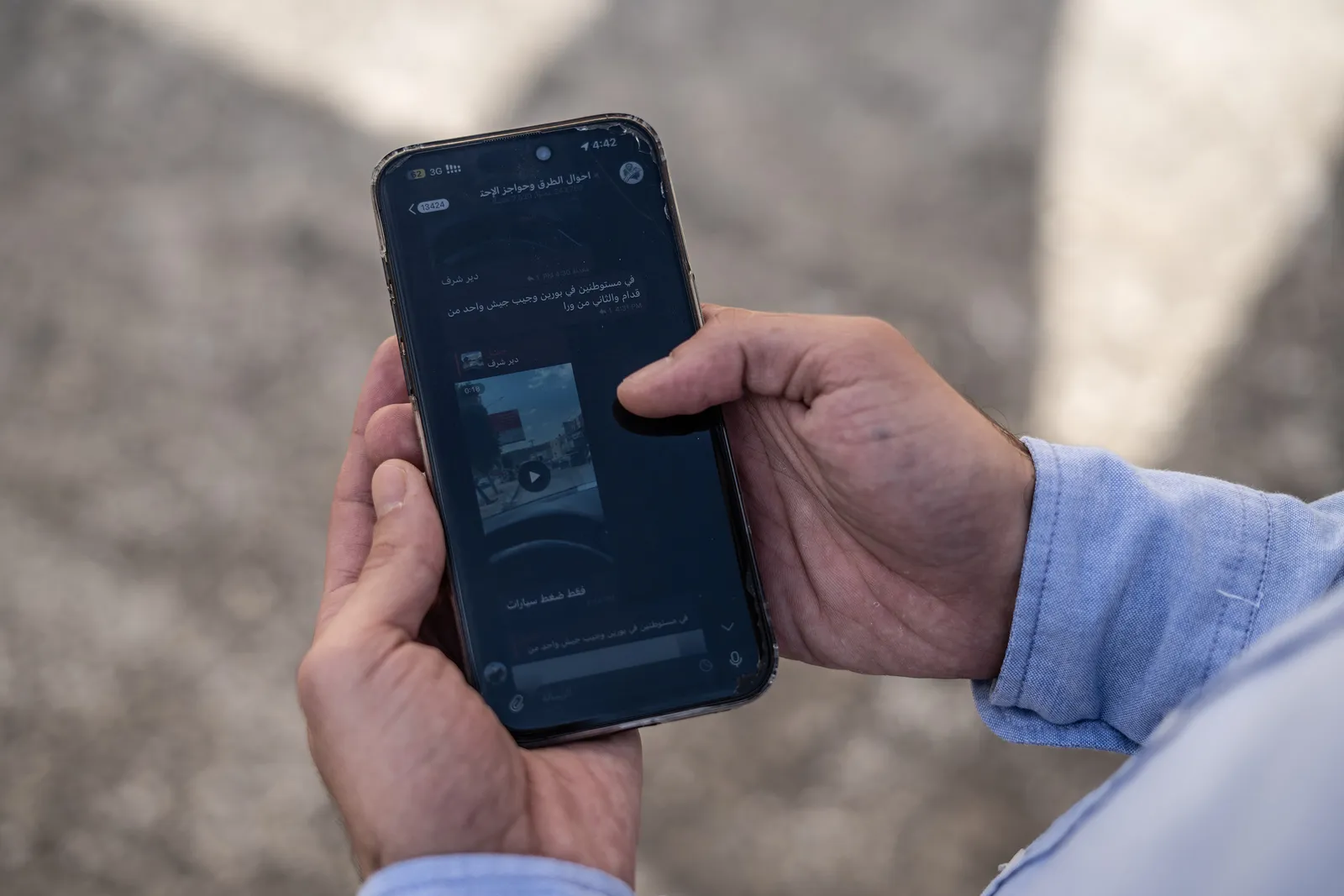
为了得出这一分析结果,我们试图寻找有关检查站延误时间以及开放与关闭时间的数据。然而,官方并未公布相关数据。因此,我们的报道团队转而研究哈塔布建立的Telegram群组,通过抓取“路况”发布的更新信息,构建了一个全面记录检查站运作方式的数据库。
To arrive at our analysis, we went searching for data about checkpoint delays, about when they are open and closed. No official data exists. So our reporting team looked to the Telegram group that Hattab built, scraping the updates that originated from Road Conditions to produce a comprehensive database of the way checkpoints work.
2023年10月不久之后,哈塔布在凌晨2点驾车回家时,被靠近卡尔基利亚市的一个检查站的士兵拦下,并没收了他的手机。这名士兵浏览了哈塔布在该群组中收到的约2万张关于检查站周边交通状况的照片。“你拍了一个军事设施!”士兵说道,随后走到一旁,通过无线电与一名军官交谈。士兵回来后,命令哈塔布删除所有照片。“我当时很天真,开始照做删除,”哈塔布说。他删除了数千张照片后,那名士兵才再次走过来,让他离开。“我确保不拍摄军用吉普车,也不拍摄单个士兵,”哈塔布说。
Not long after October 2023, Hattab was driving home at 2 in the morning when a soldier at a checkpoint near the city of Qalqilya stopped him and took his phone. The soldier scrolled through some 20,000 photos Hattab had received on the group of traffic around checkpoints. “You photographed a military site!” the soldier said, then stepped aside to speak with an officer on his radio. The soldier came back and ordered Hattab to delete everything. “I started deleting, in all naivety,” Hattab says. He had erased thousands of photos before the soldier walked back over and told him to go. “I make sure not to show the military jeeps, not to show one soldier,” Hattab says.
哈塔布辞去了报社的工作,去一家建筑设备公司当销售代表,因为这份工作能让他每天跑不同的路线。“我的目的不是搞销售,”他说,“是为了路况。”以色列定居者居住在近150个官方定居点以及自2023年以来在约旦河西岸新建的185个“前哨”中——根据国际法,这些均属非法——近年来,他们已成为日常威胁。2025年3月,在纳布卢斯附近60号公路的伊扎尔路口,哈塔布目睹一名定居者强行截停他前方一辆咖啡豆运输车,下车在路中央殴打司机。
Hattab quit the newspaper and took a job as a sales representative for a construction equipment company because it would put him on a different road every day. “My point is not sales,” he said. “It's Road Conditions.”Israeli settlers, living in the nearly 150 official settlements and an additional 185 new “outposts” established in the West Bank since 2023—all of which are illegal under international law—have in recent years become a daily threat. In March 2025, at the Yitzhar junction on Route 60, near Nablus, Hattab watched a settler cut off a coffee bean delivery truck directly ahead of him, get out, and beat the driver in the middle of the road.
“他一边尖叫咒骂,一边持械殴打司机,抓住他、拳打脚踢、再次抓住他,”哈塔布回忆道。哈塔布将这一情况发布到了群组里。那一年,“反殖民与隔离墙委员会”记录了近5443起定居者袭击事件。2026年前八个月,该委员会记录了约4766起。
“He was screaming and cursing, armed, beating the driver, grabbing him, punching him, grabbing him again,” he says. Hattab posted the update to the group. That year, the Colonization and Wall Resistance Commission documented nearly 5,443 settler attacks. In the first eight months of 2026, it recorded about 4,766.
2025年1月的一个清晨4点,有消息称以色列军队出现在通往图勒凯尔姆城外的道路上。到了上午7点,没人知道他们是否还在那里,也没人想亲自去探个究竟。
At 4 o’clock one January morning in 2025, news was circulating about Israeli troops on the road out of the city of Tulkarm. By 7, no one knew if they were still there, and no one wanted to be the one to find out.
那天早上,哈塔布要从图勒凯尔姆的家中前往拉马拉。他发动汽车,驶上了大家都在打听的那条路,缓缓前行,注视着前方路况。
Hattab was heading from his home in Tulkarm to Ramallah that morning. He started the car. He turned onto the road that people had been asking about and drove slowly, watching the road ahead.
道路畅通无阻。他将这一信息发到了群组里。“托真主的福,这次挺顺利,”他说。
The path was clear. He posted it to the group. “By the grace of God, it was easy this time,” he says.
哈塔布自认对路况的了解恐怕无人能及。当一个主要路口封闭时,他能预判整个走廊随之而来的连锁封锁,“像多米诺骨牌一样,”他说。“想象一下蚂蚁,你用一根牙签在地上就能改变它们的路径。”在没有机构支持、还要抚养两个年幼孩子的情况下,哈塔布有时会怀疑自己能否坚持下去:“你本该给家人最好的生活,不该为了一个Telegram群组放弃稳定的收入。”但对他来说,这早已超越了单纯的收入问题。
Hattab knows the roads better, he would wager, than almost anyone now. When a major junction closes, he can predict the closures that follow across a whole corridor, “like dominoes,” he says. “Think of ants. You set their path with a toothpick on the ground.”With no institutional support and two young children, Hattab sometimes doubts if he can keep going: “You’re supposed to give your family the best life, not give up stable income for a Telegram group.”To him, it's already more than that.
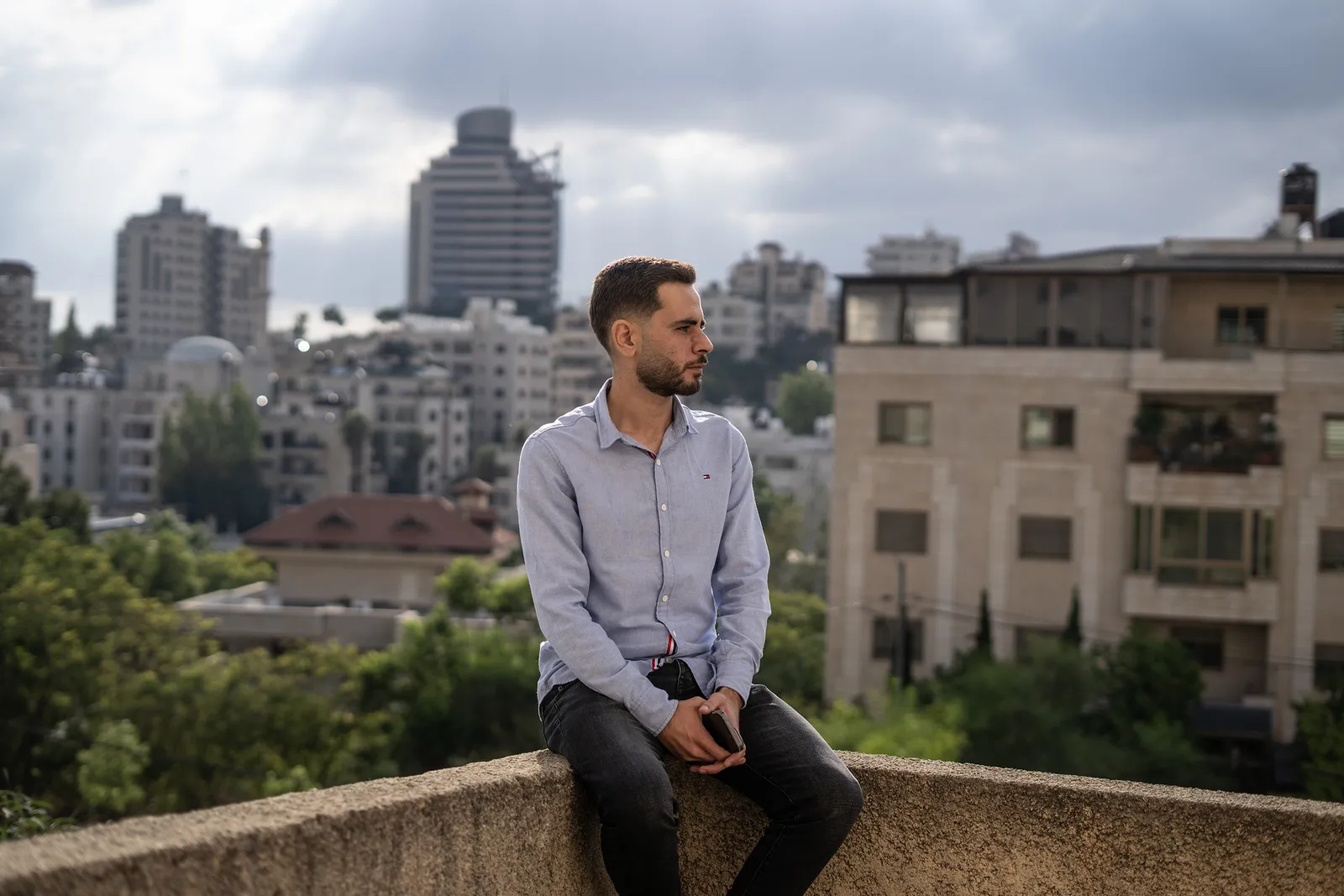
其他创新者也加入了这场竞争,推出新的应用程序和群组帮助司机应对交通状况。例如,2025年,计算机工程师穆萨布·努伊拉特和艾哈迈德·加里布推出了"A Ween Rayeh"(意为"你要去哪里?")。这是一个巴勒斯坦应用程序,汇总数据以生成实时交通热力图。据努伊拉特统计,这是约旦河西岸第七次尝试构建功能性导航系统。和几乎所有其他尝试一样,"A Ween Rayeh"依赖哈塔布的数据来更新地图。
Other innovators have stepped into the fray, launching new apps and groups to help drivers manage traffic. In 2025, for instance, computer engineers Musab Nuirat and Ahmed Gharib launched A Ween Rayeh (Where Are You Heading?). It’s a Palestinian application that aggregates data to produce a real-time heat map of traffic. It was, by Nuirat’s count, the seventh local attempt to build a functional navigation system in the West Bank. And like nearly all the other efforts, A Ween Rayeh relied on Hattab’s data to update its map.
哈塔布清楚自己构建的系统变得多么重要。所以他坚持了下来。哈塔布知道运营规模应该扩大10倍。他也知道应该能给版主们报酬。但作为一名志愿者,他无法支付报酬。“我除了道谢别无他物,”他说。
Hattab knows how important what he’s built has become. So he continues. Hattab knows the operation should be 10 times the size. And he knows he should be able to compensate the moderators. But as a volunteer himself, he has no way to pay them. “I can't give them more than a thank you,” he says.
哈塔布视此为责任。“你知道出租车司机车上载着乘客的性命,必须小心驾驶吧?道理是一样的。”错误难免,无人能实时核实每条更新。“归根结底,”他说,“我们不都是在自担风险地生活在这片土地上吗?”
Hattab considers it his duty. “You know how a taxi driver has souls with him in the car, and he has to drive carefully? Same principle.”Mistakes happen, no one can verify every update in real time. “In the end,” he says, “aren't we living in this country at our own risk?”