务催收企业Kruk SA正致力于加快进军美国和英国市场的步伐,以期在欧洲大陆以外找到新的增长动力。
Polish debt collector Kruk SA is working to accelerate expansion into the US and UK as it looks for a new engine of growth beyond continental Europe.
首席执行官皮奥特·克鲁帕在采访中表示,Kruk正在考虑在这两个市场直接收购债务资产包,同时也会伺机收购那些盈利能力较强的竞争对手。作为公司创始人,克鲁帕持有8.7%的股份,是公司最大的股东之一。
Kruk is considering both direct purchases of debt portfolios and opportunistic acquisitions of profitable competitors in the two markets, Chief Executive Officer Piotr Krupa said in an interview. The founder owns a 8.7% stake in the company, making him one of its largest shareholders.
过去20年间,Kruk的业务从波兰逐步拓展至罗马尼亚、意大利、西班牙,最近又进入了法国市场。目前,按市值及预计可收回债务规模计算,它是欧洲最大的上市债务催收企业。由于专注于无担保消费贷款业务,该公司的杠杆率一直维持在较低水平,但近年来其在债务资产包的收购速度却有所放缓。
Over the past two decades, Kruk has expanded from Poland into Romania, Italy, Spain and, most recently, France. It is Europe’s largest listed debt collector by market value and estimated remaining recoveries. Its focus on unsecured consumer loans has helped keep leverage relatively low, but the firm has struggled to maintain the pace of portfolio purchases seen in previous years.
在截至2029年的战略规划中,Kruk将现有的欧洲市场视为有机增长的核心区域,同时将英国和美国视为潜在的长期增长机会。克鲁帕坦言,市场环境正在发生变化:如今欧洲的放贷机构更倾向于及早出售出现问题的消费贷款资产,这使得相关资产包的质量有所提升,但初始收购成本也随之上涨。
Kruk’s strategy through 2029 identified existing European markets as the core of organic growth and presented the UK and US as potential longer-term opportunities. Krupa admits the market is changing. European lenders are selling troubled consumer loans earlier, which makes portfolios higher quality, but also more expensive upfront.
在此背景下,Kruk正同步对英国和美国市场展开调研,预计在未来几个季度内便会完成首笔资产包投资。
Against that backdrop, Kruk is studying the UK and US simultaneously and could make its first portfolio investment within the next several quarters.
“我们不会等到战略规划期限结束才行动,”他说道,“我们正在密切关注这些市场,并与多家已进驻当地但缺乏足够资金收购资产包的企业展开洽谈。”此举实际上也标志着Kruk在欧洲大陆扩张计划的终结——该计划曾遭遇诸多挫折:西班牙的司法程序延误迫使公司计提资产减值并暂时放缓收购步伐;此外,Kruk还退出了捷克和斯洛伐克等规模较小的市场,或缩减了在这些地区的业务规模。
“We won’t wait until the end of our strategy horizon,” he said. “We are looking very closely at these markets and talking to a number of companies that are already there but don’t have sufficient capital to buy portfolios.”The move would effectively close Kruk’s continental European expansion chapter, which has been marked with setbacks. Court delays in Spain forced writedowns and a temporary pullback in purchases, while the company has exited or scaled back in smaller markets, including the Czech Republic and Slovakia.
克鲁帕指出,Kruk的商业模式在那些能够借助技术及数据手段处理数百万笔消费债务案件的大型市场中最为奏效。
Krupa said that Kruk’s model works best in large markets where technology and data can be deployed across millions of consumer-debt cases.
“目前,我们可以认为欧洲市场的扩张阶段已经完成了,”他说。“我们不想将资源过度分散到较小的国家。”波兰企业正越来越多地走向海外,包括德国和法国,这反映出波兰经济——欧盟第六大经济体——已成长为一个价值1万亿美元的地区性经济强国。
“For now, we would consider the European phase of our expansion complete,” he said. “We don’t want to spread ourselves too thin across smaller countries.”Polish firms are increasingly expanding abroad, including in Germany and France, reflecting how the country’s economy, the European Union’s sixth-largest, has grown into a $1 trillion regional powerhouse.
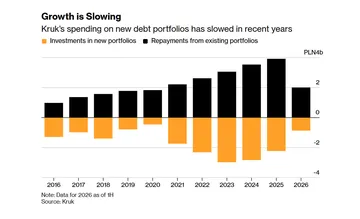
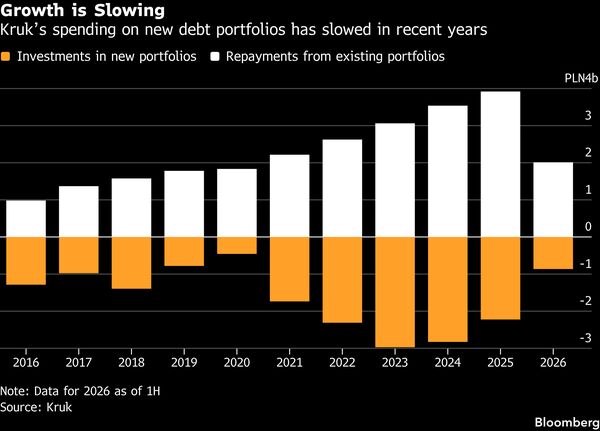
近年来,Kruk每年通常会向新投资组合投入约20亿至30亿兹罗提(合5.12亿至7.68亿美元),而从现有债务中收回的款项已增至每年近40亿兹罗提。
In recent years, Kruk has typically invested about 2 billion ($512 million) to 3 billion zloty annually in new portfolios, while recoveries from existing debt have risen to almost 4 billion zloty a year.
Krupa表示,如果将英国市场纳入,年投资额可能提升至30亿至40亿兹罗提;而一旦在美国市场成熟运营,这一数字最终可能高达100亿兹罗提。
Krupa said adding the UK could lift annual investment to 3 billion to 4 billion zloty, while a mature US operation could eventually take it to as much as 10 billion zloty.
Krupa表示,公司最初可以通过收购不良无担保投资组合并借助当地服务公司来测试英国或美国市场,之后再建立自己的运营体系。他也对收购其他债务催收公司持开放态度,包括在美国进行更大规模的收购,只要其经济模型合理。
Krupa said the company could initially test the UK or US by buying sour unsecured portfolios and using local service firms before building its own operations. He is also open to acquisitions of other debt collectors, including a larger US deal if the economics make sense.
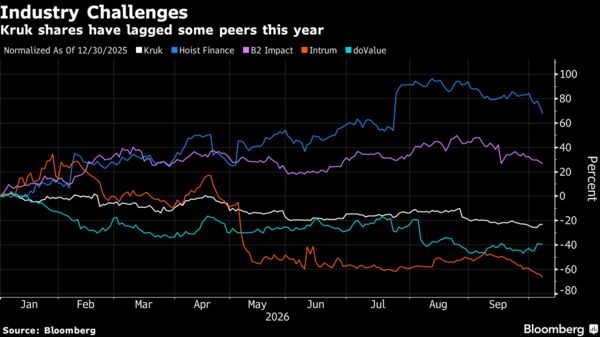
对未来的增长担忧,加上一些欧洲同行报告的资金短缺问题,已导致Kruk的股价今年下跌了25%,使其成为华沙WIG20指数中表现最差的股票。
Concerns about future growth, compounded by capital shortfalls reported by some European peers, have pushed Kruk shares 25% lower this year, making it the worst-performing stock in Warsaw’s WIG20 benchmark.
“或许在过去几个季度,我们购买的投资组合数量低于市场预期,这也引发了一些投资者的担忧,”他说。“但我们不会停下脚步。”耐心一直是Krupa向投资者传达的信息之一。作为一名耐力运动爱好者,他曾完成17场马拉松和7场铁人三项比赛,他将建设Kruk的过程比作长跑。
“Maybe the last quarters, when we bought fewer portfolios than the market expected, also caused some concern among investors,” he said. “But we are not stopping.”Patience has long been part of Krupa’s message to investors. An endurance-sports enthusiast who has completed 17 marathons and seven Ironman triathlons, he likens his approach to building Kruk to long-distance running.
这位首席执行官表示,尽管竞争对手,包括Hoist Finance AB和PRA Group Inc.,有时可能会领先一步,但公司的目标始终是持续前进。
Competitors, including Hoist Finance AB and PRA Group Inc. may move ahead at times, but the goal is to keep progressing, according to the CEO.
Kruk最初是一家法律出版公司,后来在波兰加入欧盟前不久,因一位客户请求协助催收逾期款项,转而开始购买违约债务。近期,Krupa与妻子在弗罗茨瓦夫建立了一家艺术基金会和画廊,这座城市位于波兰西南部,也是他事业发展的起点。
Kruk began as a legal publisher, later shifting into default debt purchases shortly before Poland joined the EU after a client asked for help with collecting overdue payments. More recently, Krupa and his wife have built an art foundation and gallery in Wroclaw, the southwestern Polish city where he built the business.
Krupa认为,增长放缓并不必然意味着股东回报会下降。该公司每年收入接近10亿兹罗提,目前将约35%至40%的利润进行分配。
Krupa argues that slower growth doesn’t necessarily mean weaker returns for shareholders. The firm earns close to 1 billion zloty annually and currently distributes about 35% to 40% of profit.
“存在两种可能性,”他说,“要么我们继续快速成长,并维持目前的派息水平;要么我们增长放缓,成为一家在未来几年能够分配更高比例利润的公司。”
“There are two scenarios,” he said. “Either we continue to grow quickly and maintain the current level of payouts, or we grow more slowly and become a company that, over the coming years, can distribute a significantly larger share of its profits.”