上周,唐纳德·特朗普总统大张旗鼓地宣布,“美国有史以来最大的钢铁厂”将落户爱荷华州李县,并补充称,Mesabi Metallics 在这一关键的中期选举摇摆州投资 150 亿美元,证明了他“强有力的 50% 关税”正在发挥作用。他说对了:这一宣布确实是美国钢铁政策的切实成果——但与总统所言相反,这并非好事。
With great fanfare, President Donald Trump announced last week that “the largest steel plant ever built in the United States” would be coming to Lee County, Iowa, adding that Mesabi Metallics’ $15 billion investment in a pivotal midterm swing state proved his “powerful 50% tariffs” were working. He’s right: The announcement is a tangible result of American steel policy — but, contrary to what the president said, that’s a good thing.
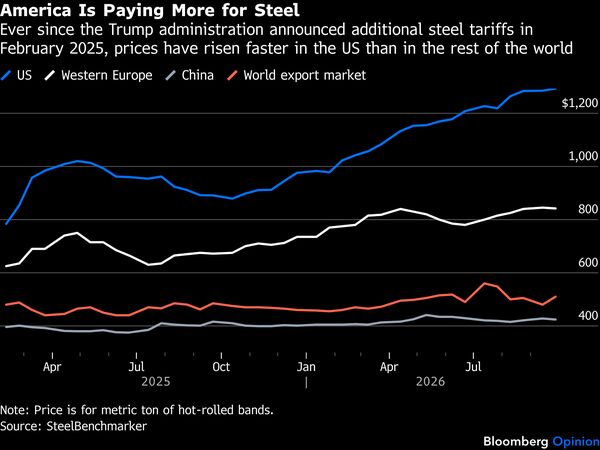
首先来看项目的真实价格标签。得益于关税和其他贸易限制,美国钢铁价格位居世界最高之列:据 SteelBenchmarker 数据,一公吨热轧钢在美国售价 1293 美元——创下 2022 年 4 月以来的新高,远超西欧(842 美元)、世界出口市场(510 美元)或中国(424 美元)的价格。
Start with the project’s real price tag. Thanks to tariffs and other trade restrictions, US steel prices are among the highest in the world: According to SteelBenchmarker, a metric ton of hot-rolled steel cost $1,293 here — the highest since April 2022 and far exceeding prices paid in Western Europe ($842), on the world export market ($510) or in China ($424).
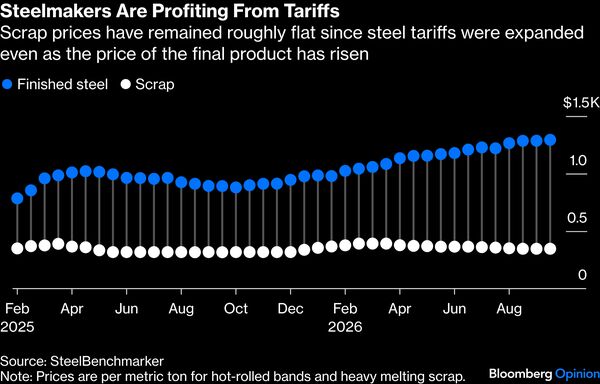
自特朗普于 2025 年 2 月开始扩大所谓的“第 232 条款”关税以来,钢铁投入品(废钢)价格大体持平,这一价差意味着保护主义帮助 Nucor 等美国钢企赚得盆满钵满,而其他美国制造商为这一基本投入品支付的价格却远高于其海外竞争对手。
With steel input (scrap) prices roughly flat since Trump began expanding so-called Section 232 tariffs in February 2025, the differential means protectionism has helped US steelmakers such as Nucor make fat profits while other US manufacturers pay far more for the essential input than their competitors abroad.
鉴于美国耗钢行业的数量远超炼钢企业,研究反复表明,无论是特朗普 2018 年征收的钢铁关税,还是小布什 2002 年征收的关税,都导致美国制造业产出和就业净减少——后者的影响甚至在关税取消多年后仍持续存在。考虑到消费者成本、钢企收益和无谓损失,2018 年关税的年度账单约为每个所谓“挽救”的钢铁岗位 65 万美元。
Because steel-consuming industries greatly outnumber steelmakers in the US, studies have repeatedly shown that steel tariffs, whether imposed by Trump in 2018 or George W. Bush in 2002, caused a net reduction in US manufacturing output and employment — effects that, in the latter case, persisted for years after the levies were lifted. Considering consumer costs, gains for steelmakers and deadweight losses, the annual bill for the 2018 tariffs was roughly $650,000 for each steel job supposedly saved.
对特朗普近期关税的研究极可能显示更大的损失。与此同时,爱荷华州民众可以在阿马纳的惠而浦冰箱厂亲眼目睹其效应,钢铁关税导致该厂大幅削减岗位和产量。或者他们可以去询问标志性拖拉机制造商约翰迪尔,后者的关税账单已超过 10 亿美元。
Research on Trump’s more recent tariffs will likely show even larger losses. In the meantime, Iowans can see the effects firsthand at Whirlpool’s refrigerator plant in Amana, where steel tariffs have contributed to major cuts in jobs and production. Or they can talk to someone at iconic tractor-maker John Deere, whose tariff bill exceeds $1 billion.
惠尔浦(Whirlpool)的经历揭示了其他并未体现在盈利报表中的关税成本。该公司并未反对特朗普对钢铁征收的关税,反而游说将这些关税扩大到家用电器——这是美国钢铁关税“级联”影响到数百种其他产品的众多案例之一。这也反映了特朗普关税政策所引发的贸易相关游说活动的历史性增长,以及长期与美国钢铁行业相关的裙带关系;该行业是美国受保护程度最高、政治联系最紧密的行业之一。
Whirlpool’s experience points to other tariff costs that don’t show up on an earnings statement. Rather than oppose Trump’s steel levies, the company lobbied to have them extended to appliances — one of many instances of US steel tariffs “cascading” downstream to hundreds of other products. It’s also an example of the historic increase in trade-related lobbying that accompanied Trump’s tariffs, as well as the cronyism long associated with the US steel industry, one of the most protected and politically connected industries in America. (Indeed, even after all the tariffs, Big Steel is today demanding more import protection, this time in the form of additional downstream tariffs or even quotas.)
(事实上,即便在所有关税实施之后,大型钢铁企业如今仍在要求更多进口保护,这次是以额外的下游关税甚至配额形式出现。)但这一切又为了什么?这些关税所依据的国家安全理由从未真正严肃过。2018年初,时任国防部长詹姆斯·马蒂斯曾警告商务部不要实施全球性关税,因为军队所需的国内钢铁产量仅占3%,而大部分进口钢铁都来自亲密盟友。
And for what? The tariffs’ national security rationale was never serious. In early 2018, then-Defense Secretary James Mattis cautioned the Commerce Department against global tariffs because the military needed just 3% of domestic steel production, and most imports came from close allies.
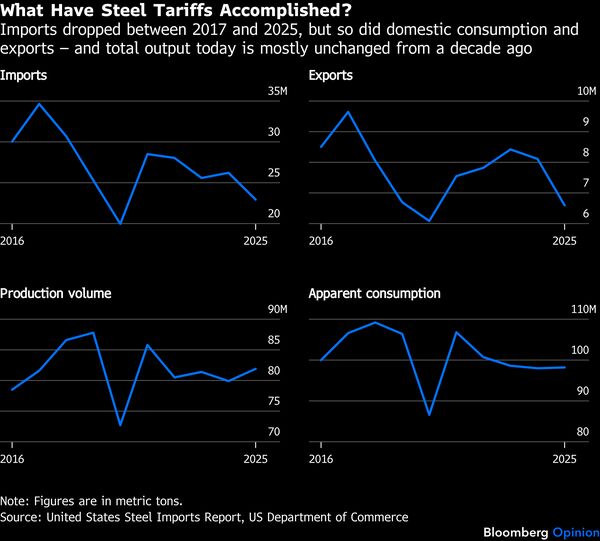
此外,这些关税也并未带来保护主义者所承诺的钢铁产业繁荣。根据官方数据,2017年至2025年间,美国钢铁进口量大幅下降,但国内消费和出口也同样萎缩。因此,去年美国钢铁总产量仅比关税实施前略高一点。
Nor have tariffs delivered the thriving steel industry that protectionists promised. According to official data, steel imports declined substantially between 2017 and 2025, but so did domestic consumption and exports. As a result, total US steel output last year was only a hair above where it was before the tariffs began.
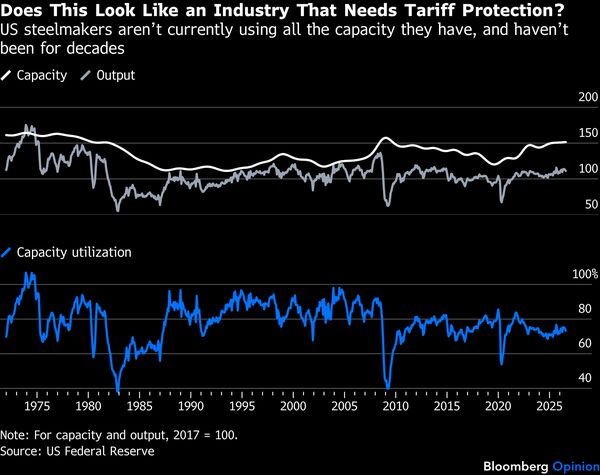
与此同时,美国联邦储备银行的数据显示,国内钢铁企业的产能利用率不仅低于加征关税前的水平,也低于历史平均水平。这是因为该行业扩大了产能,但产量并未相应增长——这正是政策干预所致,而非行业因不公平贸易而空心化的明证。(讽刺的是,钢铁产能过剩恰恰是特朗普关税最初旨在遏制的问题之一。)这便引出了爱荷华州这个项目本身,它看起来更像一则警示故事,而非值得庆祝的典范。
Federal Reserve data, meanwhile, show that domestic iron and steel firms’ capacity utilization was below both pre-tariff levels and the historic average. That’s because the industry boosted capacity without a comparable gain in output — a telltale sign of policy-induced , not an industry hollowed out by unfair trade. (Ironically, steel overcapacity was one of the things Trump’s tariffs were originally supposed to stop.) That brings us to the Iowa project itself, which looks more like a cautionary tale than a celebratory one.
最显而易见的问题是:这座工厂是否真能如承诺般在2030年投产,还是只是美国众多大型政治化投资项目中又一个未能兑现的典型案例?据当地媒体报道,目前既没有建筑工地,也没有在李县购买土地,更没有发放任何许可证,与州经济发展官员也尚未达成协议,甚至连资金都尚未到位。这家由印度人拥有的Mesabi公司,是2016年进入第11章破产程序的Essar Steel Minnesota的继任企业。
Most obviously, there’s the question of whether the plant will open in 2030 as promised or is just the latest in a long line of big, politicized US investment projects falling short. Per local reports, there’s no construction site, no land purchased in Lee County, no permits issued, no agreement with state economic development officials and no financing. The Indian-owned Mesabi is the corporate successor to Essar Steel Minnesota, which entered Chapter 11 in 2016.
无论是Mesabi还是其印度母公司,都从未在美国建造并运营过钢铁厂。因此,人们持怀疑态度是有充分理由的。
Neither Mesabi nor its Indian parent has ever built and run a US steel mill. Skepticism is warranted.
此外,即便这座工厂最终真的建成,也值得质疑它是否应当存在。上周五,爱荷华州议员召开为期一天的特别会议,批准向Mesabi提供近14亿美元的补贴——相当于未来工厂每个永久性岗位约77.7万美元的补贴。暂且不论,在选举前一个月向一个关键摇摆选区紧急发放这笔资金所引发的种种质疑——州共和党人称之为该州历史上最大规模的“企业赠予”和“政治勒索”——这些补贴本身也表明,即便有全球性的关税壁垒和居高不高的钢铁价格,仍不足以使该项目具备财务可行性。
Even if the plant does eventually materialize, moreover, there’s the question of whether it should. Last Friday, Iowa legislators held a one-day special session to award Mesabi almost $1.4 billion in subsidies — about $777,000 per permanent job at the future plant. Leaving aside the red flags attached to an emergency handout to a swing district in a must-win state a month before an election — a handout that state Republicans called the largest corporate giveaway in state history and “political extortion” — the subsidies indicate that not even a global tariff wall and sky-high steel prices are enough to make the project financially viable.
梅萨比工厂还可能加剧美国钢铁行业长期存在的产能过剩问题,以及其对关税保护的依赖。该项目最初的年产量为750万吨,将占美国当前总产量的9%以上,而计划中的产量提升还将增加250万吨。当前的市场动态——很大程度上由新一代人工智能基础设施的建设所驱动——或许能够支撑如此大规模的生产扩张,但数据中心的钢铁需求预计将在几年内下降,而爱荷华州工厂也恰在此时计划投入运营。
The Mesabi plant also could exacerbate the US industry’s long-term overcapacity problem — and its dependence on tariff protection. The project’s initial 7.5 million metric tons of annual output would constitute more than 9% of the US total today, and promised increases would add 2.5 million more. Current market dynamics — fueled in large part by the generational AI buildout — might support such a large expansion, but steel demand from data centers is expected to wane in a few years, just as the Iowa plant is supposed to come online.
关闭老旧的钢铁厂或许可以缓解这种产能过剩的风险,但正如白宫最近试图重振美国钢铁公司老旧的格兰特城工厂所显示的那样,政治因素往往阻碍了行业整合。这也解释了为何许多投资者在爱荷华州项目宣布后,立即抛售了竞争对手纽柯钢铁和钢铁动力公司的股票。
Closing older steel factories could alleviate this overcapacity risk, but — as the White House’s recent attempt to reinvigorate US Steel’s antiquated Granite City plant shows — politics often prevents rationalization. This explains why many investors sold their shares of rival steelmakers Nucor and Steel Dynamics right after the Iowa announcement.
因此,爱荷华州钢铁项目的全貌如下:美国制造商至少还要再支付五年全球最高的钢铁价格,美国对下游产品的关税将持续扩大,还将有14亿美元的国家补贴,以及毫无羞耻的政治迎合和权钱交易——而这一切,只为换取一座要到2030年才能生产出第一炉钢的工厂,届时正值数据中心浪潮即将来袭。
So, this is the Iowa steel project in full: at least five more years of US manufacturers paying the world's highest steel prices, ever-expanding US tariffs on downstream goods, $1.4 billion in state subsidies, and shameless political pandering and cronyism — all in exchange for a plant that pour its first steel in 2030, just as the data-center wave is set to break.
特朗普和其他关税支持者认为,梅萨比项目的宣布正是他们所推崇政策带来的结果,这一点他们说得没错。而这恰恰是问题的核心。
Trump and other tariff fans are right that the Mesabi announcement is what their favored policy produces. And that’s very much the problem.