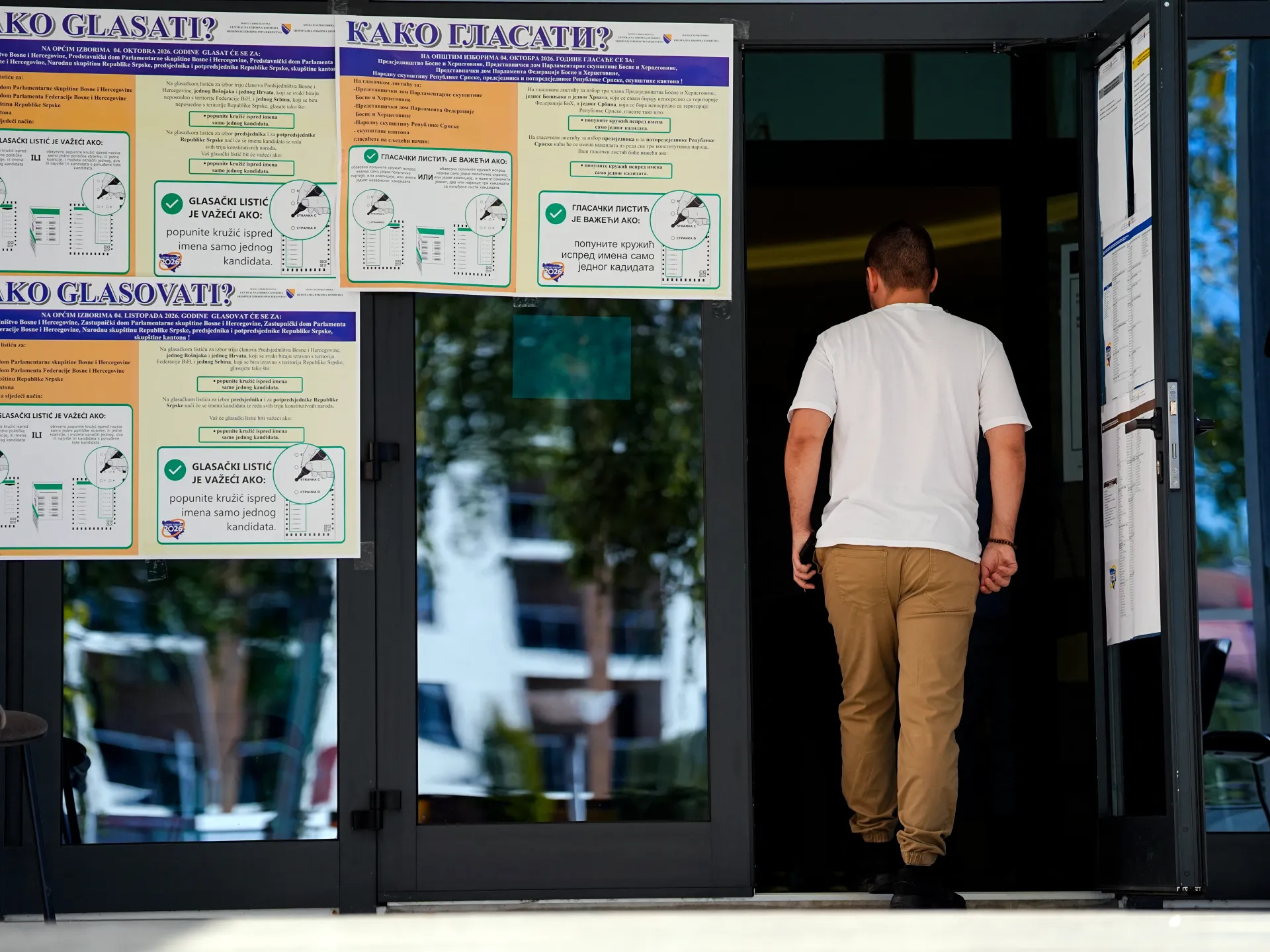
波斯尼亚和黑塞哥维那于10月4日举行的最新一次大选,重演了过去三十年大多数选举中屡见不鲜的模式。主要按族群划分、许多人会毫不夸张地称之为民族主义政党的决定性胜利,并不令人意外。因此,很难不同意那些分析人士和专家的观点:这个国家已经倒退了三十年,而且正面临一个更加黯淡的未来。
The latest general elections in Bosnia and Herzegovina, held on October 4, repeated a pattern familiar from most electoral contests over the past three decades. The decisive victory of parties organised largely along ethnic lines – which many would rightly describe as nationalist – came as no surprise. It is therefore difficult to disagree with analysts and experts who say the country has been set back 30 years and faces an even grimmer future.
过去两年可以说是战后时期最严重的危机,而周日选举的结果也几乎没有带来未来几年局势好转的希望。民族主义、分裂以及对国家主权和领土完整公然侵犯的阴影,进一步印证了一个日益普遍的观点:一场“以和平手段延续的战争”正在上演——也就是说,尽管武装冲突在三十年前已经结束,但敌对行动、战略目标以及权力斗争,仍通过政治、经济、外交和信息渠道持续存在。
The last two years have seen arguably the greatest crisis of the post-war period, and the results of Sunday’s elections offer little hope for improvement in the coming years. The spectre of nationalism, division and overt assaults on the country’s sovereignty and territorial integrity reinforces the increasingly common notion that a “continuation of the war by peaceful means” is under way – meaning that while armed conflict ceased three decades ago, hostilities, objectives and the struggle for power persist through political, economic, diplomatic and information channels.
人民院仍掌握在反波斯尼亚势力手中。波斯尼亚极其复杂的选举制度——一个国家、两个实体、布列克区、三个主要民族、10个州以及144个城市和市政单位——或许应该被法学院校作为研究如何构建一个功能失调国家的绝佳案例。而更难解释的——悲观主义者甚至会称其为不可能——则是向未来的法律工作者、社会学家和政治学家说明选举后政府是如何组建的:从州议会,到各实体机构,再到国家机构,包括波斯尼亚和黑塞哥维那议会大会中几乎无所不能的人民院——而后者本身几乎也难以解释。
House of Peoples still in the hands of anti-Bosnian forces The extremely complicated Bosnian electoral system – one state, two entities, Brcko District, three constituent peoples, 10 cantons and 144 cities and municipalities – should perhaps be studied in law schools as an excellent example of how to create a dysfunctional state. The only thing more difficult – pessimists would say impossible – is explaining to future lawyers, sociologists and political scientists how governments are formed after an election – from cantonal assemblies, through entity institutions to state institutions, including the omnipotent House of Peoples of the Parliamentary Assembly of Bosnia and Herzegovina – itself almost impossible to explain.
过去两年,这个人民院一直是阻碍该国加入欧盟和北约的主要工具。来自波斯尼亚和黑塞哥维那克罗地亚民主共同体(HDZ BiH)以及独立社会民主党联盟(SNSD)——过去二十年来在塞尔维亚共和国占据主导地位的政党——的代表们屡次联手阻挠议会工作:当议程不符合他们意愿时,他们便离开会议、破坏法定人数——而这种情况往往发生在一些最重要议题的表决期间。
This House of Peoples has been the main tool for blocking the country’s path towards the European Union and NATO over the past two years. Delegates from the Croatian Democratic Union of Bosnia and Herzegovina (HDZ BiH) and the Alliance of Independent Social Democrats (SNSD) – the dominant party in Republika Srpska for the past two decades – have repeatedly worked in tandem to block the work of the chamber, leaving sessions and breaking quorum when the agenda did not suit them – often when some of the most important issues were being decided.
在周日的选举中,这两个政党再次在实体和国家两个层面获得了克罗地亚族和塞尔维亚族选民的大量支持;新政府组建时,人们将再次征求他们的意见,而他们也将再次在国家层面的人民院中各拥有至少三名代表。而且——合乎逻辑且意料之中——他们将决定哪些选项、规则和法律符合自身利益。这很容易被解读为“以和平手段延续战争”,或者更简单地说:在波斯尼亚和黑塞哥维那这个贫穷、人口持续减少且处境艰难的小国敲响欧盟“开放大门”之前,欧盟恐怕还要等待很久——而过去20年来,这一“开放大门”的承诺更多停留在口头上,而非实际行动中。
In Sunday’s elections, these two parties once again secured a significant share of the Croat and Serb vote at both the entity and state levels; they will once again be the ones whose input is sought when the new government is formed, and they will again hold at least three delegates each in the state-level House of Peoples. And – logically and predictably – they will dictate the options, rules and laws that suit their own interests. This can readily be interpreted as a “continuation of war by peaceful means”, or, more simply put: the EU will have a long wait before the small, impoverished, increasingly depopulated and beleaguered state known as Bosnia and Herzegovina knocks on its “open door” – an offer and promise made more in words than in deeds for the past 20 years – and steps inside.
支持波斯尼亚统一的各政党——彼此分歧不断且各自为政。在这种情况下,第三大政治阵营——即那些被视作支持波斯尼亚统一或代表波什尼亚克族的政党——又该何去何从呢?它们要如何将那些停留在口头上的爱国主义情怀以及对民众与国家的关切切实转化为实际行动呢?答案或许从一开始就很简单:它们做不到,过去20年左右的情况便是如此。
Pro-Bosnian parties – at odds and self-absorbed And what is the third constituent segment – pro-Bosnian or Bosniak, depending on one’s interpretation – to do in such circumstances? How can its parties translate what is largely verbal patriotism and concern for the people and the state into actual practice? The answer could well be quite simple from the outset: they cannot, much as has been the case for the past 20 years or so.
然而,这个国家在不久前曾经历过更为恶劣的处境:遭受侵略、种族清洗、战争罪行、种族灭绝,还有所谓国际社会中相当一部分成员的冷漠与漠不关心。但波斯尼亚和黑塞哥维那的人民绝不会就此放弃,也不会背弃这片拥有千年历史的家园。
Yet this country has endured far worse situations in the not-too-distant past – aggression, ethnic cleansing, war crimes, genocide, and the indifference and lack of empathy of a significant part of the so-called international community – and Bosnians and Herzegovinians are not about to simply give up and renounce their 1,000-year-old homeland.
支持波斯尼亚/波斯尼亚克族的政党——这类政党多达数十个——内部严重分裂,彼此矛盾且贪权逐利;许多政党的领导层——委婉地说——令人质疑,并与不光彩的行为和思想有关。如今,它们正面临一个关键转折点。如果它们继续奉行“只要我们过得好就行”的政策,那么无论是内部还是外部的敌人——而这样的敌人确实存在;与血腥的20世纪90年代相比,他们既未被击败,数量也并未减少——都不必出手就能导致我们的毁灭。
The pro-Bosnian/Bosniak parties – and there are dozens of them – are deeply divided, at odds with one another and power-hungry; many have – to put it mildly – questionable leadership and are associated with dishonourable deeds and ideas. They now stand at a critical juncture. If they persist with a policy of “as long as we are doing well”, then neither internal nor external enemies – and such enemies do exist; they have neither been defeated nor diminished in number compared with the bloody 1990s – will be needed to bring about our ruin.
“国家建设”导向的民主行动党似乎将再次掌权——这与其自身的专业水平、智慧或品质关系不大,而更多是源于意识形态光谱中三个政党的无能,这些政党显然将重返反对派阵营——无论如何,它至少有机会尝试解决自己主要造成的混乱。对于那些了解该党,并经历过(或者更确切地说,幸存于)它迄今为止所带来的一切——承诺很多,却交付甚少——的人来说,几乎没什么可乐观的;然而,它在波斯尼亚和黑塞哥维那联邦(FBiH)中获得了最多的选票,这种选举意愿必须得到尊重。
The “state-building” Party of Democratic Action appears set to return to power once again – owing more to the incompetence of three parties from across the ideological spectrum, which appear set to head back into opposition, than to its own expertise, wisdom or quality – and it has the opportunity, if nothing else, to at least try to fix the very mess it is primarily responsible for creating. For those who know the party and have lived through (or rather, survived) what it has delivered so far – promising much but delivering little – there is little room for optimism; yet, it won the largest share of the vote in the Federation of Bosnia and Herzegovina (FBiH), and that electoral will must be respected.
美国的实用主义与欧洲的困惑 在传统肮脏的选举前竞选活动的阴影下,投票站首次配备了现代化技术(对我们而言,电子选票扫描和投票结束仅数小时后公布选举结果就代表了进步的最高水平),而接下来还有数月的谈判、联盟构建和党内协议——换言之,就是利益交换——与此同时,贫困、疾病与绝望的人群、一个被毁的社会以及一个遭受重创的经济依然存在。
US pragmatism and European confusion In the shadow of the traditional dirty pre-election campaign, polling stations equipped for the first time with modern technologies (for us, electronic ballot scanning and election results announced just hours after the polls close represent the height of progress), and the months of negotiations, coalition-building and intraparty agreements – read: trading – that now lie ahead, there remain the poor, the sick and the hopeless, a ruined society and a devastated economy.
尽管邻国塞尔维亚和克罗地亚正在迅速武装自己,在战斗机、无人机、导弹和其他武器系统上投入数十亿美元,但波斯尼亚的军队规模却很小,仅有约1万名专业人员。这支军队名义上统一,实际上却分裂。警察系统,尤其是国家层面的警察,也几乎谈不上统一或团结。相反,边境警察和检察院仍被政治势力所控制,而这些势力的忠诚度似乎更倾向于邻国塞尔维亚和克罗地亚,而非波斯尼亚本身。
While neighbours Serbia and Croatia are rapidly arming themselves, spending billions of dollars on fighter jets, drones, missiles and other weapons systems, Bosnia has a small army of about 10,000 professional personnel, nominally unified but divided in practice. The police, especially at the state level, are hardly more unified or cohesive. On the contrary, the border police and the prosecutor’s office remain politically captured by forces whose loyalties appear to lie more with neighbouring Serbia and Croatia than with Bosnia itself.
与此同时,美国正逐渐退出其作为波斯尼亚保护者的非正式角色——尽管美国仍然支持《代顿和平协议》,并强调该国的主权和领土完整——但越来越倾向于优先考虑务实利益,尤其是经济利益。而欧盟则似乎对自己该怎么做都感到迷茫,更不用说如何面对小国波斯尼亚了。欧盟一方面期望新旧国内当局推行改革并遵守欧洲法律,另一方面又清楚这些改革短期内难以实现。
Meanwhile, the United States is gradually stepping back from its unwritten role as Bosnia’s protector – although it still stands by the Dayton Peace Agreement and emphasises the country’s sovereignty and territorial integrity – and increasingly favours pragmatic, particularly financial, interests. The EU, meanwhile, does not seem to know what to do with itself, let alone with little Bosnia. It expects reforms and European laws from the domestic authorities, both old and new, while knowing they are unlikely to arrive any time soon.
不过,其实也有应对之道:首先,欧盟可以要求成员国克罗地亚敦促其姐妹政党“波斯尼亚克罗地亚人民主党”(HDZ BiH)停止支持那些试图瓦解波斯尼亚国家的人,因为这些人恰恰拥有该国的公民身份和护照。
Yet there is a recipe for that too: to begin with, the EU could ask member state Croatia to tell its sister party, HDZ BiH, to stop supporting those seeking to dismantle the very state whose citizenship and passports they hold.
波斯尼亚是欧洲最贫穷的国家之一,同时也是有组织犯罪和腐败问题最严重的国家之一。没有人确切知道那里有多少人居住,因为2013年进行的最后一次人口普查结果仍存在争议。周日选举的官方投票率仅为40%多一点,这是基于340万选民名单计算得出的,但据估计,该国实际居住人口不足250万,这意味着当地居民的投票率可能要高得多。
The poorest and leading in organised crime and corruption Bosnia is one of the poorest European countries and among those worst affected by organised crime and corruption. No one knows how many people live there, because the last census, carried out in 2013, remains disputed. Official turnout in Sunday’s elections was just more than 40 percent, calculated against an electoral roll of 3.4 million voters, even though estimates suggest fewer than 2.5 million people actually live in the country, suggesting turnout among residents was considerably higher.
近年来,数十万人离开家园前往世界各地的富裕国家,其中许多人年轻且受过良好教育。他们只想过一种正常的生活,不再去纠结那个困扰该国数十年的痛苦问题:在一个根本性变化的世界中,随着支持者们日益减少,波斯尼亚能否“挺过”三个民族主义政党重新掌权的局面?
Hundreds of thousands of people, many of them young and educated, have left for prosperous countries around the world in recent years. They just want a normal life and no longer bother with the painful question that has preoccupied the country for decades: Can Bosnia “survive” the return to power of three nationalist parties at a time when they have fewer and fewer friends in a fundamentally changing world?