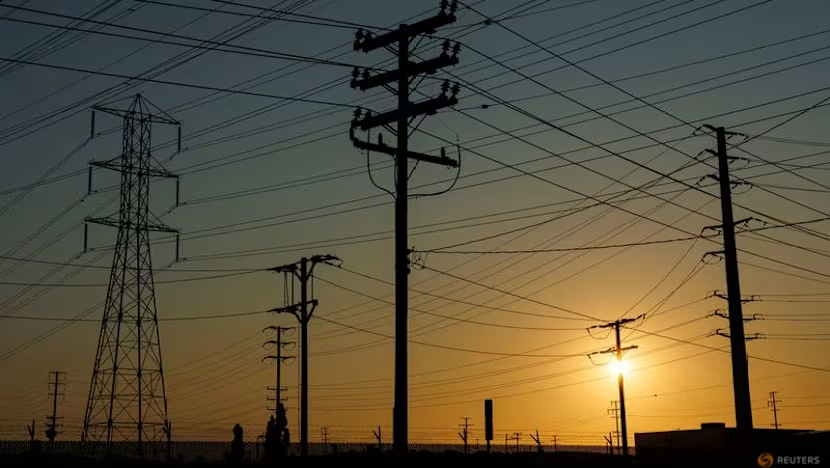
10月8日:随着人工智能需求激增,科技企业与公用事业公司正积极探索各种方法,以提升耗电量巨大的数据中心在用电时间与方式上的灵活性,从而缓解美国电网的压力。
Oct 8 : Technology companies and utilities are increasingly exploring ways to make power-hungry data centers more flexible in when and how they consume electricity, helping ease the strain on US power grids as AI-driven demand surges.
这种被称为“需求响应”的策略,是指数据中心在用电高峰或电网承压时期暂时减少用电量或调整用电模式。目前该策略正日益受到青睐,被视为减少大规模电网升级及新建发电设施所需巨额成本的有效途径。
The strategy, called "demand response", involves data centers temporarily reducing or shifting electricity use during periods of peak demand or grid stress, and is gaining traction as a way to reduce the need for costly grid upgrades and new power generation.
能源智库RMI的首席研究员劳伦·施维斯伯格指出:“目前,美国各州政府、联邦机构及市场运营方都在积极研究这一手段。”为何数据中心的灵活性如此重要?
It's a tool that states around the US, federal agencies and market operators are increasingly exploring, said Lauren Shwisberg, a principal at energy think tank RMI. WHY DOES DATA CENTER FLEXIBILITY MATTER?
据美国电力研究院统计,2024年美国数据中心的用电量预计在177至192太瓦时之间,而到2030年这一数值可能升至383至793太瓦时。
US data center electricity use could rise from about 177 to 192 terawatt-hours in 2024 to between 383 and 793 TWh by 2030, according to the Electric Power Research Institute.
该研究院的技术负责人阿林·凯伊介绍,接受调研的数据中心显示,视设施类型而定,其峰值用电量有望减少10%至30%;部分超大规模数据中心甚至能实现更高的降幅。
Meanwhile, data centers surveyed by the group reported peak power reduction potential of 10 per cent to 30 per cent, depending on facility type, with some hyperscalers going even higher, according to Arin Kaye, EPRI technical leader.
杜克大学尼古拉斯研究所的一项研究则估算,若能提升数据中心的用电灵活性,未来十年或可节省400亿至1500亿美元的资本投入。
A study by Duke University's Nicholas Institute estimated that greater flexibility from data centers could save between $40 billion and $150 billion in capital investments over the next decade.
此外,随着监管机构与电网运营商致力于为那些愿意在用电高峰时段减少用电的数据中心开辟快速并网通道,这种灵活性还有助于它们更快接入电网。目前进展如何?
It could also help data centers connect to the grid more quickly, as regulators and grid operators explore faster pathways for facilities willing to curb electricity use during periods of high demand. WHERE DO EFFORTS STAND?
目前,针对数据中心的“需求响应”策略大多仍处于试点项目或个别协议阶段。例如,OpenAI近期便达成协议:在电网承压时期,位于乔治亚州的计划装机容量达3.2吉瓦的数据中心将减少最高1吉瓦的用电量。
So far, the "demand response" strategy for data centers has mostly been deployed through pilot projects or one-off agreements. OpenAI, for example, recently agreed to cut the electricity it draws from the grid by up to 1 gigawatt from a planned 3.2-gigawatt facility in Georgia during periods of grid stress.
不过,这一举措正逐渐演变为一场更为广泛的行动。今年6月,联邦监管机构要求电网运营商考虑制定新规则,以便大型电力用户接入电网,其中包括为具备灵活性调节能力的设施开辟更快的接入通道。
This, however, is gradually evolving into a broader push. Federal regulators in June ordered grid operators to consider new rules for connecting large power users to the grid, including new pathways for facilities offering this flexibility to connect faster.
上个月,谷歌母公司Alphabet、英伟达以及Emerald AI共同发起了一项名为“人工智能能源管理联盟”的倡议,旨在推动“具备灵活性”的数据中心得以广泛部署。主要面临哪些挑战?
Last month, Alphabet's Google, NVIDIA and Emerald AI launched an initiative called the AI Energy Management Alliance, aimed at advancing the deployment of "flexible" data centers. WHAT ARE THE KEY CHALLENGES?
专家指出,要推广这一战略,供需双方均需做出调整。数据中心必须设法在不影响客户服务的前提下调节电力消耗;而公用事业企业与电网运营商则需制定相应的电价机制、市场激励措施以及更便捷的接入通道,以鼓励这种灵活性调节行为。
Experts say scaling up the strategy will require changes on both sides. Data centers need to figure out how to adjust power consumption without disrupting customers, while utilities and grid operators need to develop tariffs, market incentives and faster interconnection pathways that reward that flexibility.
“需求响应机制确实能显著缓解用电高峰带来的压力,但要在数百个新建设施中推广限电协议,则需要巨额资金投入以及协调一致的政策框架,”惠誉解决方案旗下BMI公司的分析师亚历山大·凯德尔说道。
"Demand response can materially soften peak impacts, but scaling curtailment agreements across hundreds of new facilities will demand significant capital expenditure and coordinated policy frameworks," said Alexander Kheder, analyst with BMI, a unit of Fitch Solutions.