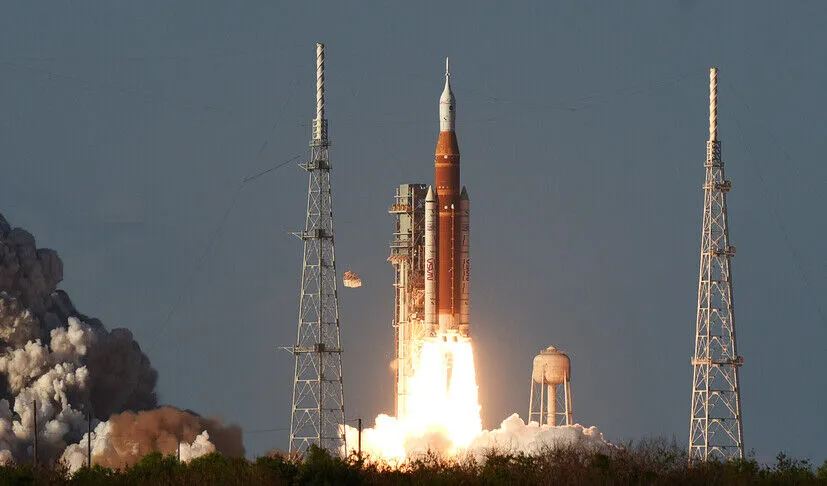
该航天器将在轨道上研究月球,测试自主导航能力并收集科学数据,之后将进行受控下降。“我们正在开发一种基于图像导航的系统,”任务项目经理向阿纳多卢通讯社解释说,“这将帮助航天器在月球周围自主导航。”土耳其正准备将其第一艘航天器送入地球轨道之外。这项任务不仅旨在研究月球,还将测试卫星技术是否能在深空中自主运行。
The spacecraft will study the Moon from orbit, test autonomous navigation and collect scientific data before a controlled descent 'We are developing an image-based navigation system' to help the spacecraft navigate autonomously around the Moon, the mission’s project manager explains to Anadolu Türkiye is preparing to send its first spacecraft beyond Earth orbit, a mission designed not only to study the Moon but also to test whether satellite technologies can operate autonomously in deep space. The spacecraft is targeted for launch in the second quarter of 2027, according to the mission’s project manager.
据任务项目经理称,该航天器计划于2027年第二季度发射。它将在进入距离月球表面约100公里(62英里)的圆形极轨道前,飞行大约两个月。预计它将在该轨道上运行至少三个月,根据任务表现,运行时间可能延长至1.5年。
It will travel for about two months before entering a circular polar orbit roughly 100 kilometers (62 miles) above the lunar surface. It is expected to operate there for at least three months, with the mission potentially extended to up to 1.5 years depending on performance.
土耳其科学技术研究委员会空间技术研究所(TUBITAK UZAY)的任务项目经理布拉克·亚勒奥卢在安塔利亚举行的国际宇航大会上对阿纳多卢通讯社表示:“我们将获取月球的重要图像,配备高分辨率摄像头,并收集科学数据。”
“We will obtain important images from the Moon, have high-resolution cameras and collect scientific data,” Burak Yaglioglu, project manager for the mission at the Scientific and Technological Research Council of Türkiye’s Space Technologies Research Institute (TUBITAK UZAY), told Anadolu at the International Astronautical Congress in Antalya.
该任务是土耳其月球研究计划的第一阶段,也是其国家空间计划中10个战略目标之一。其更广泛的目标是将土耳其的太空能力拓展至地球轨道之外,并为更宏大的月球任务积累所需的技术和经验。
The mission is the first phase of Türkiye’s Lunar Research Program, one of the 10 strategic targets of its National Space Program. Its broader purpose is to move the country’s space capabilities beyond Earth orbit and prepare the technology and experience needed for more ambitious lunar missions.
迈向地球轨道之外第一步 多年来,土耳其已研发并运行了多颗地球轨道卫星,包括IMECE地球观测卫星和TURKSAT 6A通信卫星。然而,在月球周围开展任务则是一项截然不同的挑战。
A first step beyond Earth Türkiye has developed and operated Earth-orbiting satellites for years, including the IMECE Earth-observation satellite and the TURKSAT 6A communications satellite. But working around the Moon is a substantially different challenge.
土耳其科学技术研究委员会(TUBITAK)表示,这艘月球航天器重量约为3.5吨,国产化率超过80%。其生产、组装和集成工作已于9月完成,目前该航天器已进入发射前的系统级环境测试阶段。
The lunar spacecraft, weighing about 3.5 tons, has a domestic content rate of more than 80%, according to TUBITAK. Production, assembly and integration were completed in September, and the spacecraft has now entered system-level environmental testing ahead of its launch.
该航天器采用了TUBITAK UZAY专为深空任务开发的TstarD-100平台。其65个任务关键部件中,有56个是利用国内技术制造的,而部分系统则采用了土耳其IMECE和TURKSAT 6A项目此前开发的技术。
The spacecraft uses the TstarD-100 platform developed by TUBITAK UZAY specifically for deep-space missions. Of its 65 mission-critical components, 56 were manufactured using domestic capabilities, while several systems draw on technology previously developed for Türkiye’s IMECE and TURKSAT 6A programs.
亚勒奥卢表示:“我们将首次进入除地球以外的天体轨道,并在那里开展作业。”
“For the first time, we will enter the orbit of a body other than Earth and conduct operations there,” Yaglioglu said.
他说,团队自行设计了航天器和任务架构,其软件也完全在国内开发。
He said the team designed the spacecraft and mission architecture itself and that its software is also being developed domestically.
他表示,此举的意义不仅在于抵达月球,更在于证明土耳其能够设计、运行并从深空航天器中获取科学数据。那么,它将在月球周围如何导航呢?该任务最具雄心的技术验证之一涉及自主导航。
The point, he said, is not simply to reach the Moon but to demonstrate that Türkiye can design, operate and extract scientific data from a spacecraft operating deep in space. How will it find its way around the Moon? One of the mission's more ambitious technology demonstrations involves autonomous navigation.
绕月运行的航天器无法像地球上的车辆那样依赖GPS。取而代之的是,土耳其正在开发一种基于图像的导航系统,该系统将利用月球表面易于识别的特征(包括陨石坑)来确定航天器的位置和方向。
A spacecraft orbiting the Moon cannot rely on GPS in the way a vehicle on Earth can. Instead, Türkiye is developing an image-based navigation system that will use recognizable features on the lunar surface, including craters, to determine the spacecraft’s position and orientation.
亚勒奥卢说:“我们正在开发一种基于图像的导航系统。该系统将通过观察月球表面的陨石坑来确定航天器的位置和方向,从而使航天器能够在月球轨道上执行自主操作。”这项能力对于未来需要减少依赖地球指令进行导航的任务而言,可能尤为重要。
“We are developing an image-based navigation system,” Yaglioglu said. “These will determine the position and orientation of our spacecraft by looking at craters on the lunar surface, so our spacecraft will be able to carry out autonomous operations in lunar orbit.”That capability could become particularly important for future missions in which a spacecraft needs to navigate with less reliance on commands from Earth.
该航天器还将搭载四台科学载荷。其中两台为土耳其自主研发,另外两台则是通过与瑞典及中国的科研团队合作共同开发的。这些仪器将用于研究太阳风与月球表面的相互作用、月球局部的磁场环境,以及水的形成过程等课题。
The spacecraft will also carry four scientific payloads. Two were developed domestically, while two were developed through international cooperation with researchers in Sweden and China. The instruments will study, among other things, the interaction between solar wind and the lunar surface, the Moon’s local magnetic environment and processes related to water formation.
该航天器的成像系统可生成分辨率高达0.7米的全色图像,同时还能进行大范围彩色成像及视频拍摄。完成科学任务后会发生什么?此次任务并不以实现软着陆为目标。
Its imaging system is designed to provide panchromatic images at resolutions of up to 0.7 meters, alongside wide-area RGB imaging and video. What happens after the science? The first mission is not designed to make a soft landing.
在按计划完成月球轨道上的科学观测后,预计将通过推进系统的可控操作,使航天器主动坠向月球表面。土耳其科学技术研究理事会将这一过程称为首次任务结束时的“硬着陆”。
After completing its planned scientific operations in lunar orbit, the spacecraft is expected to be deliberately sent toward the lunar surface through controlled maneuvers using its propulsion system. TUBITAK describes this as a hard landing at the end of the first mission.
此次任务将采用由土耳其DeltaV公司参与研发的国产混合推进系统来执行关键操作,包括提升航天器轨道以及实施最终的受控下降。这一区分具有重要意义,因为软着陆任务将在后续进行。
A hybrid propulsion system developed domestically with Turkish company DeltaV will be used for key maneuvers, including raising the spacecraft’s orbit and the final controlled descent. The distinction matters because the soft landing comes later.
土耳其的第二次探月任务计划以首次任务的经验为基础,尝试实现月球软着陆,随后释放月球车开展表面探测工作。亚格利奥卢指出,因此这两次任务被视作一个整体来规划。
Türkiye’s second lunar mission is planned to build on the first mission’s experience and attempt a controlled landing on the Moon, followed by the deployment of a rover for surface exploration. Yaglioglu said the two missions are therefore being considered together.
“第二次任务的重点是实现软着陆并将月球车送上月球表面,”他说道。他补充道,在执行首次任务的同时,团队也在为第二次任务做准备,其系统设计正是基于着陆及表面探测的需求而制定的。此次任务为何意义重大?对土耳其而言,此次探月计划旨在检验本国更为广泛的技术能力。
"The second mission involves a soft landing and taking a rover to the surface," he said. While working on the first mission, he added, the team has also been planning for the second, designing its systems around an architecture suited to landing and surface exploration. Why does the mission matter? For Türkiye, the lunar program is intended as a test of a much broader technological capability.
该国的国家空间计划于2021年公布,其目标涵盖从开发国产卫星技术到将航天器送往月球等多个方面。土耳其还于2024年执行了其首次载人航天任务,宇航员阿尔佩尔·盖泽拉夫奇(Alper Gezeravci)搭乘国际空间站。
The country’s National Space Program was unveiled in 2021 and includes goals ranging from developing domestic satellite technologies to sending a spacecraft to the Moon. Türkiye also carried out its first human spaceflight mission in 2024, when astronaut Alper Gezeravci traveled to the International Space Station.
此次月球任务迈出了关键一步:在远超地球轨道的环境中操作航天器。
The lunar mission takes the next step: operating a spacecraft in an environment far beyond Earth orbit.
亚勒奥卢(Yaglioglu)表示,该航天器的通信系统、电源系统、飞行计算机、软件及其他组件将积累业内所称的“飞行遗产”——即能够指导未来任务的运行经验。
Yaglioglu said the spacecraft’s communications, power systems, flight computers, software and other components will gain what the industry calls “flight heritage” -- operational experience that can inform future missions.
“这也为我们积累了重要经验,”他在谈及首艘航天器的研发以及第二次任务的准备工作时说道。
“This has also given us important experience,” he said, referring to the development of the first spacecraft and the preparations for the second mission.
对土耳其而言,这种经验最终可能和从月球收集到的科学数据一样重要。
For Türkiye, that experience may ultimately be as important as the scientific data gathered from the Moon.
目前,该航天器正在接受声学、振动、热真空和电磁兼容性测试,以模拟其在发射和太空环境中将面临的条件。如果测试和最终准备工作按计划进行,它将被运往美国肯尼迪航天中心,由SpaceX的运载火箭送入地球轨道。
The spacecraft is now undergoing acoustic, vibration, thermal-vacuum and electromagnetic-compatibility testing designed to simulate the conditions it will face during launch and in space. If testing and final preparations proceed as planned, it will be transported to the Kennedy Space Center in the US where a SpaceX launch vehicle will carry it into Earth orbit.
随后,该航天器将利用其DeltaV推进系统,开始向月球进发的旅程。
The spacecraft will then use its DeltaV propulsion system to begin its journey toward the Moon.
据工业和技术部长穆罕默德·法提赫·卡奇尔(Mehmet Fatih Kacir)称,土耳其的目标是成为第九个执行月球任务的国家。
Türkiye aims to become the ninth country to carry out a lunar mission, according to Industry and Technology Minister Mehmet Fatih Kacir.
正如亚勒奥卢所说,这一目标不仅仅是前往月球,更是要将此次任务中发展的技术、工程能力和科学实力,转化为土耳其下一代深空探索任务的基础。
As Yaglioglu put it, the objective is not simply to go to the Moon but to turn the technologies, engineering and scientific capabilities developed for the journey into a foundation for Türkiye’s next generation of deep-space missions.