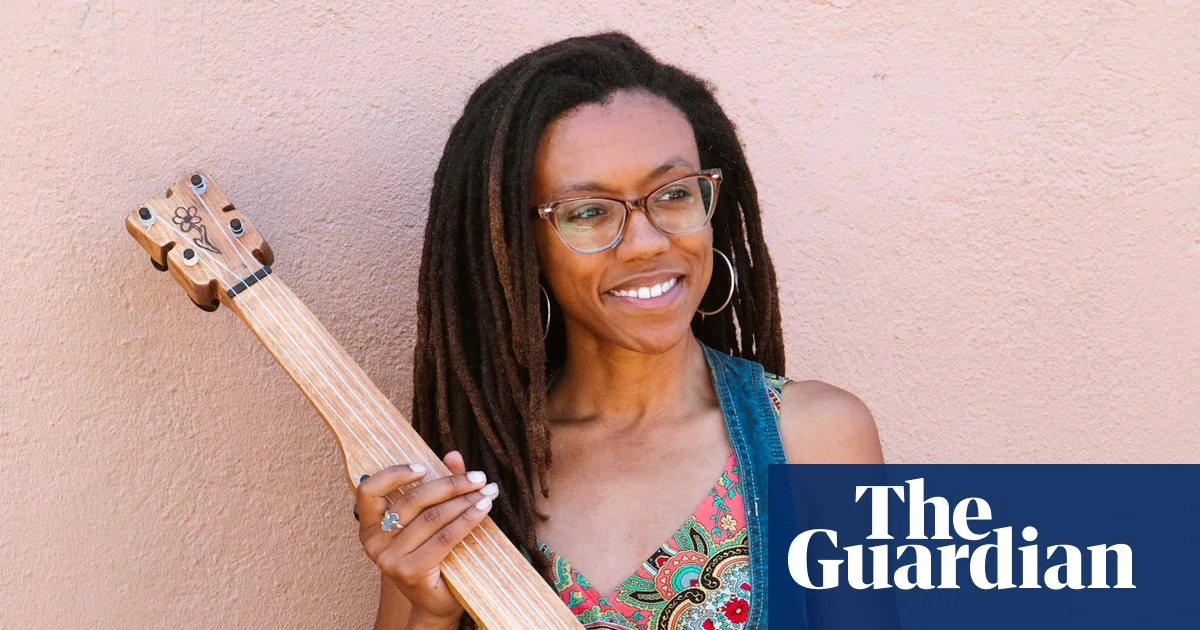
迪德拉·霍尔摄影:纳伊玛·纳祖阿里班卓琴起源于被奴役的非洲人,如今正被当代黑人音乐人重新发扬光大。2024年,碧昂丝在歌曲《Texas Hold ’Em》中融入了班卓琴元素,这一创新之举令众多乐迷与乐评人赞叹不已。这首歌曲以荣获格莱美奖的黑人班卓琴演奏家瑞安农·吉登斯的快速拨弦作为开篇,成功打破了人们将班卓琴与阿巴拉契亚蓝草音乐划等号的固有印象。不过鲜为人知的是,班卓琴其实深深植根于美国黑人文化之中。
Deidra Hall. Photograph: Naima Nazouari Originating with enslaved Africans, the banjo is now being reclaimed by Black musicians in contemporary music When Beyoncé incorporated the banjo in her song Texas Hold ’Em in 2024, fans and critics alike marveled at the innovative twist. The song opened with rapid string plucking by Grammy-winning Black banjo player Rhiannon Giddens and helped challenge the public image of an instrument commonly associated with Appalachian bluegrass. But it’s little known that the banjo is rooted in Black America.
班卓琴的起源可追溯至数个世纪前的大西洋彼岸。它的前身是西非地区的一种以葫芦为琴身的琉特类乐器,名为“阿孔廷”。几个世纪以来,美洲大陆上的自由或被奴役的非洲人一直演奏着这种乐器;直至哈莱姆文艺复兴时期,班卓琴才逐渐从主流黑人音乐中淡出。近几十年来,越来越多的美国黑人音乐人开始重新演奏班卓琴,努力重塑这种弦乐器的文化内涵。黑人班卓琴音乐的发展历程堪称典型的美国故事:它承载着跨大西洋奴隶贸易的历史、不同文化间的交融,以及人们对故土的深切怀念。
The instrument’s origins harken back several centuries and across the Atlantic Ocean. The banjo’s precursor is the akonting a gourd-bodied lute found in west Africa. Enslaved and free Africans in the Americas played the banjo for several centuries until the instrument largely disappeared from popular Black music during the Harlem Renaissance. But in recent decades, the banjo has seen a resurgence among Black American musicians who are reclaiming the narrative of the stringed instrument The story of Black banjo music is a quintessentially American one: a tale tied to transatlantic enslavement, cross-cultural influence and ancestral memories of home.
作为一名黑人音乐人,每当拨动班卓琴的琴弦时,迪德拉·霍尔总能深切感受到与历史的联结。这位居住在加利福尼亚州内华达城的民族音乐学家表示,班卓琴那独特的音色能带她进入一种超然的精神境界。“那种音色直击我的灵魂深处,对我来说它仿佛承载着千年的历史,”霍尔说道,“当我演奏时,感觉就像我的祖先正通过我发声。”
As a Black musician, Deidra Hall feels a deep connection to the past whenever she strikes the strings of her banjo. The Nevada City, California-based ethnomusicologist says the twangy sound transports her to a spiritual realm. “There is just something in it that strikes me in my soul, and it feels ancient to me,” Hall said. “It feels like my ancestors are speaking through me when I’m playing it.”
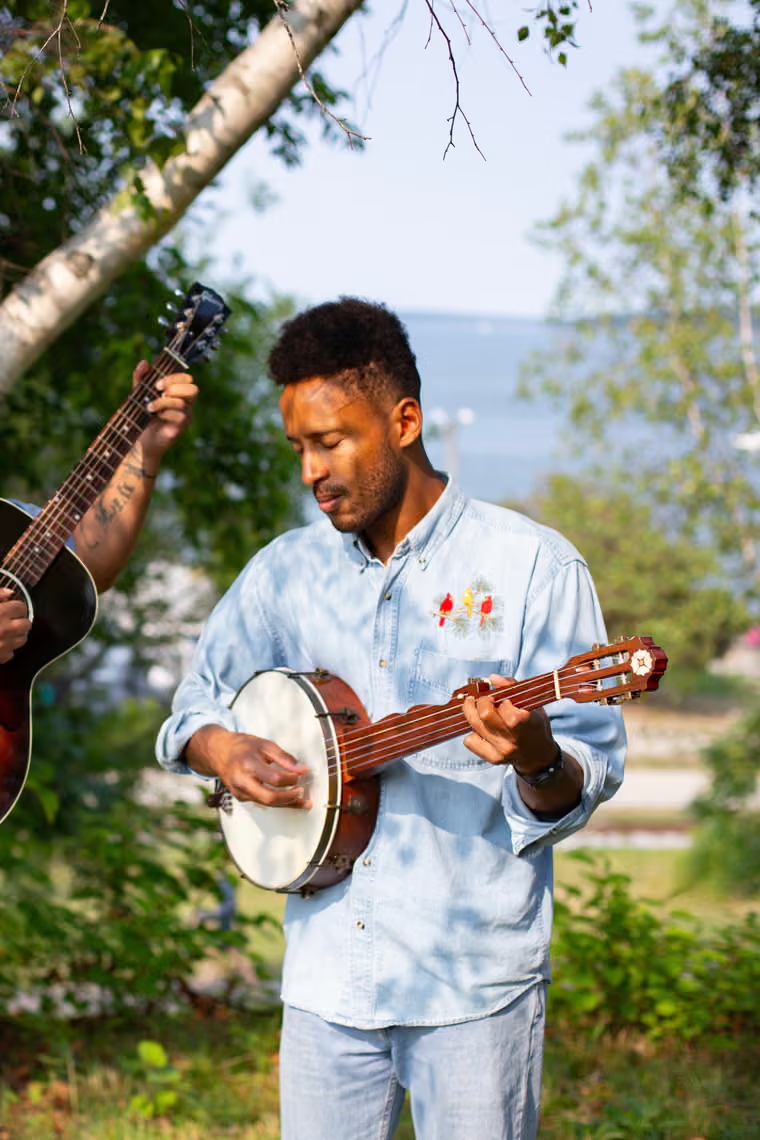
迈克尔·凯贝德斯摄影:凯蒂·戴/波特兰奥瓦申斯几个世纪前,西非的吟游诗人便通过弹奏弦乐器来传述故事。37岁的霍尔说道:“当我弹奏班卓琴时,便是在证明那种吟游诗人传统的延续。”
Michael Kebedes. Photograph: Katie Day/Portland Ovations West African griots of centuries past plucked stringed instruments to communicate stories, and 37-year-old Hall said: “When I play the banjo, it is proof of the survival of that griot tradition.”
黑人班卓琴复兴的转折点出现在2005年4月,当时在北卡罗来纳州布恩市的阿巴拉契亚州立大学举办了“黑人班卓琴大会”。在塞西·康威所著的《非洲班卓琴在阿巴拉契亚的回响》一书出版后,黑人班卓琴演奏家苏莱·格雷格·威尔逊与托尼·托马斯,以及阿巴拉契亚州立大学教授塞西·康威共同主持了这场为期三天的大会。
The turning point for the Black banjo renaissance began in April 2005, during the Black Banjo Gathering at Appalachian State University in Boone, North Carolina. Black banjo players Súle Greg Wilson and Tony Thomas, as well as Appalachian State University professor Cece Conway, hosted the three-day conference following the release of Conway’s book African Banjo Echoes in Appalachia Black banjo players and white allies from throughout the US gathered to discuss the origins of the banjo.
来自全美的黑人班卓琴演奏者及白人支持者齐聚一堂,共同探讨班卓琴的起源。大会结束后,威尔逊发起了一场即兴演奏会,众人纷纷拿出乐器参与。“我当时兴奋得手舞足蹈,试图演奏出斯莱与家族石乐队在伍德斯托克音乐节上的曲子,”69岁的威尔逊回忆道,“那真是一场真正的社群聚会,而不再只是单纯的学术展示。”
When it was over, Wilson initiated a jam session where people pulled out their instruments. “So I jumped around playing, trying to do Sly and the Family Stone at Woodstock,” said 69-year-old Wilson. “It was now a real community gathering and not a presentation.”
自那次大会至今二十余年,对班卓琴感兴趣的黑人演奏者数量激增。“那时以及之后的五六年里,我能叫出国内所有黑人班卓琴演奏者的名字,”威尔逊说,“如今却做不到了。这实在令人欣喜——我们播下的种子终于生根发芽。”作为亚利桑那州坦佩市的音乐家兼教育者,威尔逊如今还编写班卓琴教学手册,向年轻演奏者传授这种音乐形式源自非裔美国人的历史渊源。
More than two decades since the gathering, there has been an eruption of interest among Black banjo players. “Back then, and for the next five or six years, I could name every Black banjo player in the country,” Wilson said. “Now I can’t. That is amazing – the seed that we planted.”Wilson, a Tempe, Arizona-based musician and educator, now creates method books on how to play the banjo, and teaches younger banjo players about the Black American origins of the music.
多姆·弗莱蒙斯是一位来自芝加哥的格莱美奖得主音乐家。20岁出头时,他才开始学习演奏班卓琴,不久后便参加了“黑人班卓琴聚会”。正是在那次聚会上,他结识了吉登斯,几个月后两人又与贾斯汀·罗宾逊共同组建了“卡罗莱纳巧克力滴”乐队。这支乐队让全世界都开始关注黑人班卓琴传统,也激励了新一代音乐人。
Dom Flemons, a Chicago-based Grammy-winning musician, attended the Black Banjo Gathering in his early 20s when he’d only been playing the instrument for a few years. The gathering is where he met Giddens, with whom he would go on to form the group Carolina Chocolate Drops alongside Justin Robinson a few months later. The band brought global attention to the Black banjo tradition, inspiring a new generation of musicians.
44岁的弗莱蒙斯说道:“当时非常需要有黑人来传承这种传统音乐;那时距离上一次出现全由黑人组成的弦乐乐队,已经将近100年了。”随着乐队不断发展,弗莱蒙斯详细记录了其成长历程,还向北卡罗来纳大学教堂山分校的“南方民俗收藏馆”捐赠了2500件物品,包括照片、视频和音频资料。他希望借此确保:“与我所继承的那些年代久远的黑人文化影像资料相比,现在也有现代黑人音乐人继续传承这一弦乐文化。”
“There was such a need for Black representation of this old-time music,” 44-year-old Flemons said. “An all-Black string band hadn’t been seen for close to 100 years by that point.”As the group grew over the years, Flemons documented every step of the band’s development, and contributed a collection of 2,500 items including pictures, videos and audio recordings to the University of Chapel Hill’s Southern Folklife Collection Flemons wanted to ensure, he said, “that compared to what I inherited, which was just a bunch of very old pictures of Black culture from way, way back, that there was a modern exponent of Black string band culture”.
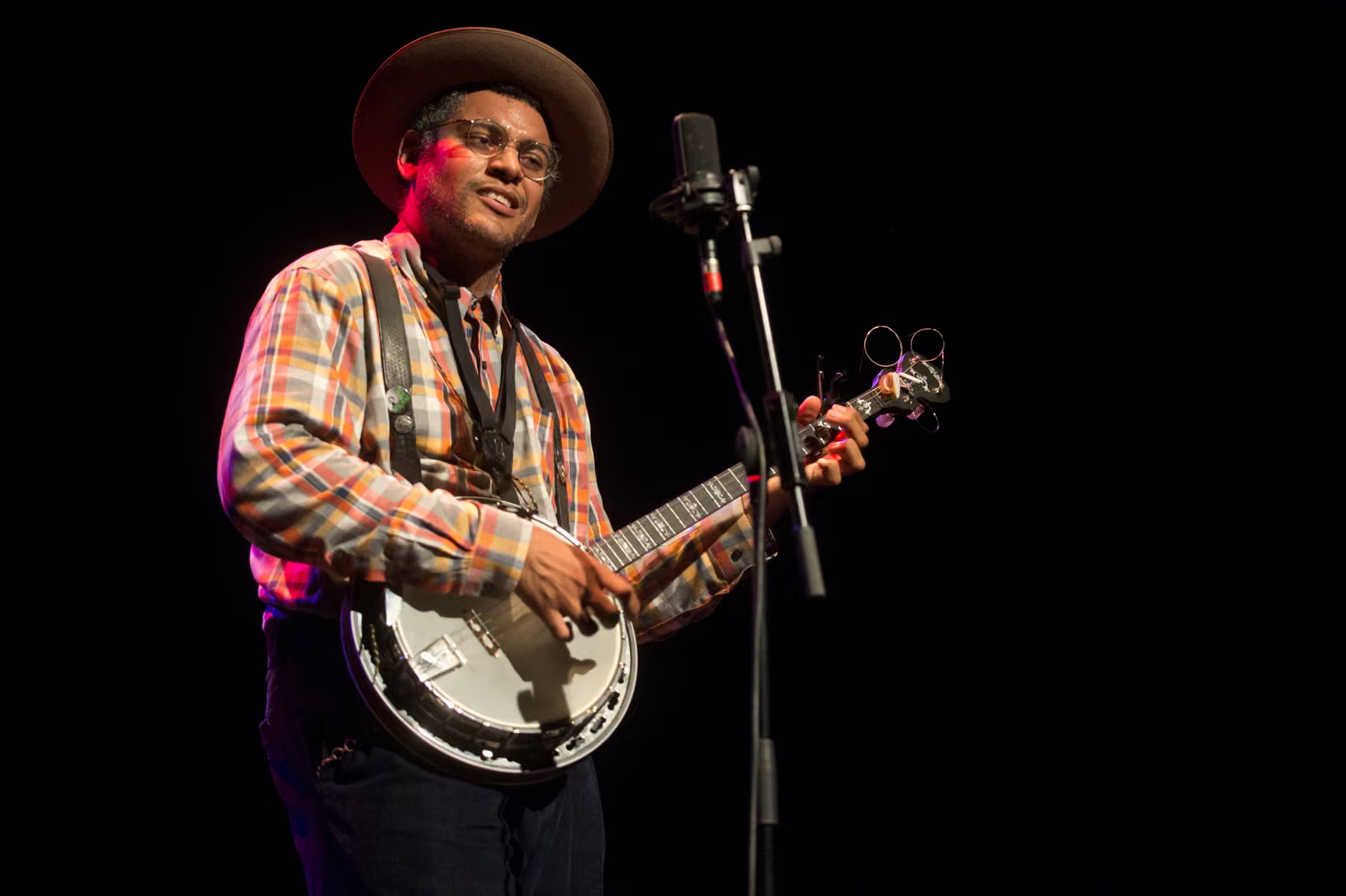
2017年3月17日,多姆·弗莱蒙斯在西班牙巴达洛纳的舞台上表演。摄影:Jordi Vidal/Redferns“卡罗莱纳巧克力滴”乐队彻底改变了汉娜·梅里对美国民间音乐起源的认知。2018年,这位来自加利福尼亚州奥克兰的音乐家创立了“黑人班卓琴复兴计划”——这是一个非营利性组织,旨在让班卓琴重新回到非洲裔人群手中。该组织接收捐赠的班卓琴,经修复后免费或低价提供给黑人音乐人;参与者还能学习乐器维修技术,甚至用葫芦和动物皮制作班卓琴。
Dom Flemons performs on stage in Badalona, Spain, on 17 March 2017. Photograph: Jordi Vidal/Redferns The Carolina Chocolate Drops transformed Hannah Mayree’s understanding of the origins of American folk music. In 2018, the Oakland, California-based musician started the Black Banjo Reclamation Project a non-profit with the aim of returning the banjo to the hands of people of African descent. The organization accepts donated banjos, repairs them and gives them to Black musicians for free or at a low cost. Participants also learn how to repair their instruments and build banjos out of gourds and animal skins.
此外,该计划还会通过线上及线下方式组织黑人班卓琴演奏者进行集体练习,活动地点遍布全美,包括旧金山湾区、洛杉矶、巴尔的摩、华盛顿特区以及纽约市。
The project also hosts group practice sessions for Black banjo players virtually and through in-person meetups around the nation, including in the San Francisco Bay Area, Los Angeles, Baltimore, the Washington DC area and New York City.
“我为我们感到骄傲,因为我们作为一个群体共同制作出了这些班卓琴,如今它们已陪伴在人们身边,成为他们家中、与家人共处的好伙伴,”37岁的梅里说道。“很多人还录制了自己弹奏班卓琴的迷你专辑。”梅里同名班卓琴音乐专辑将于10月10日正式发行。
“I’m proud of us because we’ve been able to create these instruments as a community and make it so that they now live with people, they live in their homes and they live with their families,” 37-year-old Mayree said. “People have recorded EPs of them playing their banjos.”Mayree’s self-titled album of banjo music will be released on 10 October.
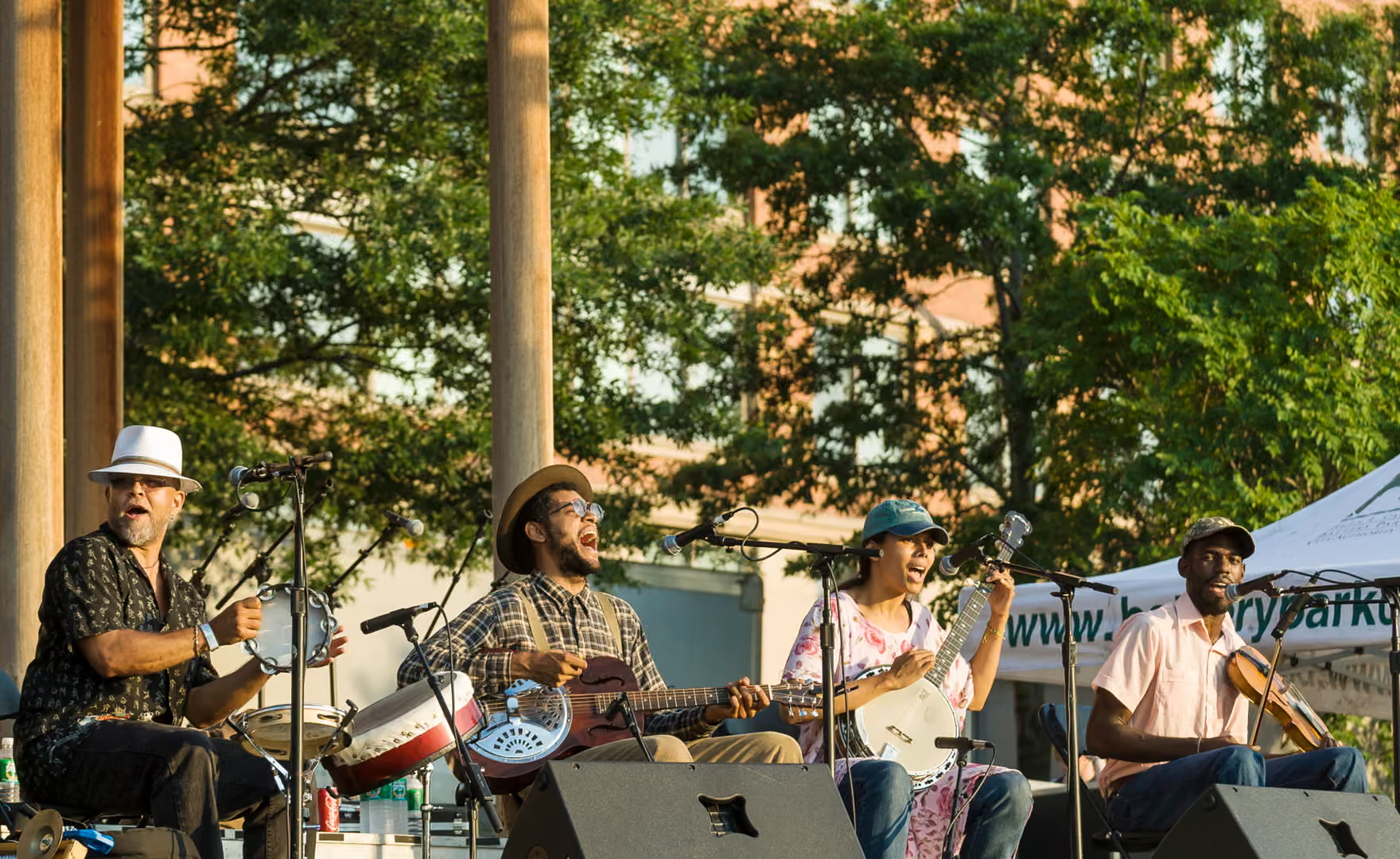
黑人班卓琴演奏者们彼此间形成了紧密的社群,经验丰富的艺术家们会为初出茅庐的音乐人提供指导与帮助。弗莱蒙斯和威尔逊也参与了这一项目,致力于培养新一代演奏者来传承这一传统。“我们正在培育出一批欣赏这种音乐的黑人听众,”梅里说,“这样演奏者在面对观众时,就能看到与自己相似的身影。”2007年7月25日,在纽约的洛克菲勒公园里,卡罗莱纳巧克力滴乐队进行了演出:从左至右依次为手持铃鼓的特邀乐手苏莱·格雷格·威尔逊、弹奏共鸣吉他的多姆·弗莱蒙斯、弹奏班卓琴的瑞安农·吉登斯以及拉小提琴的贾斯汀·罗宾逊。
Black banjo players have created a community among each other, where experienced artists offer advice and mentorship to up-and-coming musicians. Flemons and Wilson have worked with the project to teach a new generation of players to carry on the tradition. “We’re creating audiences and people who appreciate this music who are Black,” Mayree said, “so that the performers can see themselves when they look out at an audience.”The Carolina Chocolate Drops with, from left, guest Súle Greg Wilson on tambourine, Dom Flemons on resonator guitar, Rhiannon Giddens on banjo and Justin Robinson on fiddle in Rockefeller Park, New York, on 25 July 2007.
一场“班卓琴的逆向传承之旅” 近几十年来,美国黑人逐渐接纳了班卓琴,但这一乐器的历史却充满了创伤与坚韧。当年,被奴役的非洲人被掳至美洲后,被迫在贩奴船上唱歌、跳舞并弹奏类似班卓琴的乐器,以此鼓舞士气。这些被奴役者也把制作乐器的技艺带到了美洲——他们懂得如何用葫芦制作琴身,并配上扁平宽阔的琴颈。
A ‘reverse journey for the banjo’ While Black Americans have embraced the banjo in recent decades, the instrument’s past was marked by trauma and resilience. When enslaved Africans were captured and brought to the Americas, they were forced to sing, dance and play banjo-like instruments to inspire exercise onboard the slave ships. The enslaved people brought with them the technical knowledge to create instruments made of gourds with flat and broad necks.
17世纪时,加勒比地区的西非裔奴隶将西非鲁特琴的琴颈替换为指板并加装调音钉,从而创造了最早的班卓琴。18世纪时,这种乐器被传至北美。在美国,直到19世纪30年左右,班卓琴一直都由黑人音乐家独奏。
In the 1600s, enslaved west Africans in the Caribbean created the banjo by replacing the necks of west African lutes with fingerboards and installing tuning pegs. The instrument was then transported to North America in the 1700s. In the US, banjos were exclusively played by Black musicians until around the 1830s.
在接下来的十年里,班卓琴开始被广泛用于黑脸滑稽剧表演中。在这些演出中,白人乐手化着黑脸妆,模仿黑人的歌唱与舞蹈。这些表演者还会前往奴隶营地和黑人聚居区,学习如何演奏班卓琴曲目。19世纪期间,以乔尔·斯威尼为代表的黑脸滑稽剧演员大力推广了木制琴框的五弦班卓琴。
The next decade saw the appropriation of the banjo in minstrel shows, where white musicians wore blackface and mimicked Black song and dance. Minstrel performers would visit slave quarters and Black communities to learn how to play banjo tunes. The five-string banjo with wooden frames were popularized by minstrel players such as Joel Sweeney throughout the 1800s.
“在那个时代,如果你想成为一名受欢迎的流行乐手,就必然要参与黑脸滑稽剧表演,因此你很可能也会演奏班卓琴,”2023年开始学习演奏班卓琴的霍尔说道。“这让我深刻意识到:我们实际上是在塑造被奴役的非洲人的滑稽形象,甚至在奴隶制废除后,这种形象仍被用来描绘所有黑人。”黑人班卓琴复兴计划的创始人兼执行主任汉娜·梅里,于2026年4月在巴尔的摩传统音乐节上演奏班卓琴。
“If you were going to be a successful popular musician in that time period, you were going to be a minstrel, and so the odds are you’re going to play the banjo,” said Hall, who began playing the instrument in 2023. “It just really drove home the bit that you’re creating this caricature of enslaved Africans and even, post-slavery, of Black people in general.”Hannah Mayree, founder and executive director of the Black Banjo Reclamation Project, plays her banjo at the Baltimore Old Time music festival in April 2026.
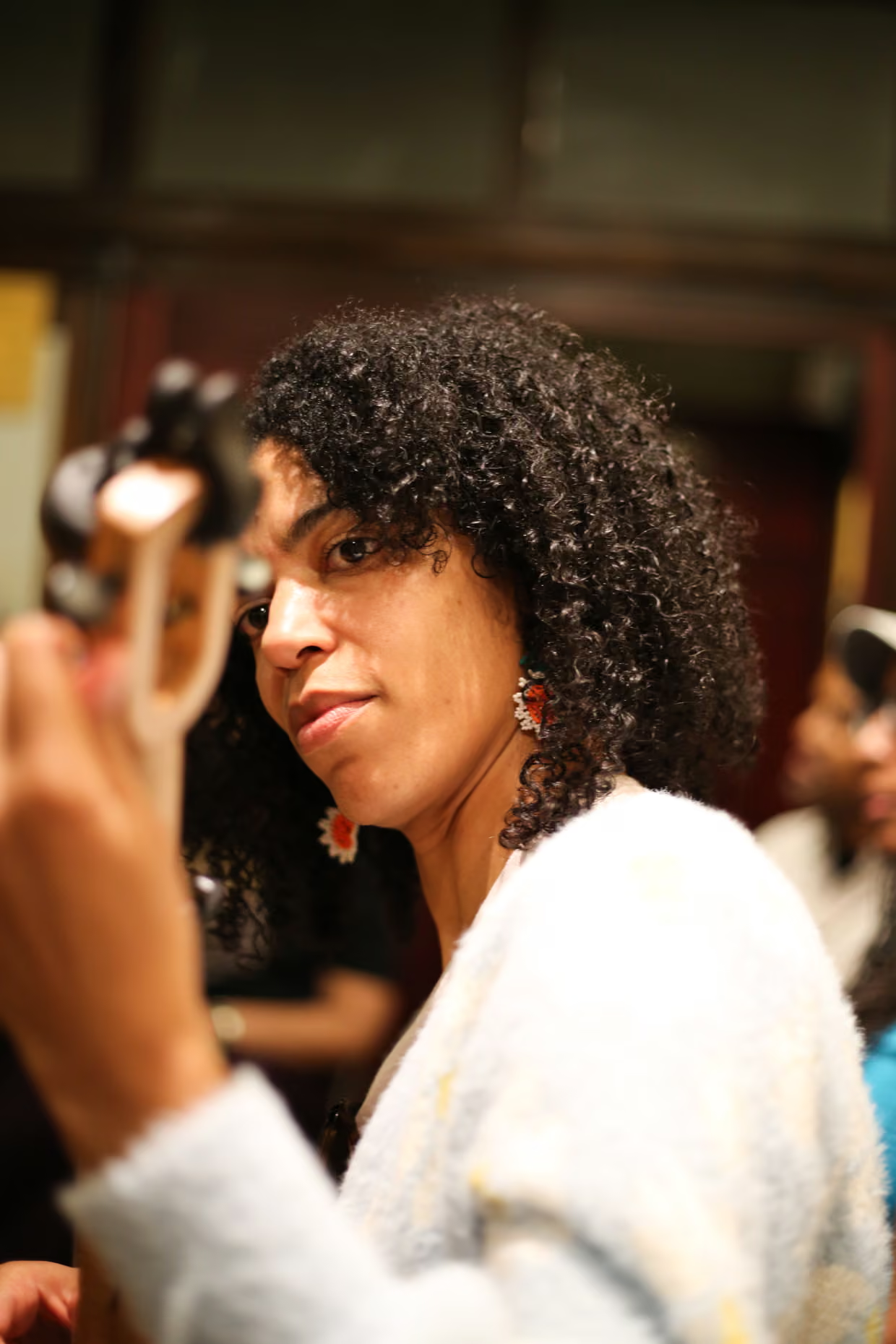
摄影:亚历克西斯·奥赫达-布朗南北战争之后,黑人班卓琴乐手将西非传统的双指拨弦技法与白人滑稽剧演员推广的扫弦技巧相融合。众多黑人滑稽剧团还走向世界巡回演出。20世纪初,黑人乐手将班卓琴与钢琴结合,创造了拉格泰姆音乐。到了20世纪20年代,中音班卓琴更成为爵士乐团的标配乐器。
Photograph: Alexis Ojeda-Brown Following the civil war, Black banjo players incorporated the style of west African two-finger picking with strumming techniques popularized by white minstrel performers. Black minstrel troupes toured throughout the world. In the early 1900s, Black musicians meshed banjo with piano to create ragtime music. By the 1920s, the tenor banjo underscored jazz orchestras.
在20世纪20年代至30年代初的哈莱姆文艺复兴时期,班卓琴逐渐脱离了黑人主流文化视野。当时,黑人艺术家们拒绝那些讲述奴役经历的故事,转而庆祝歌舞表演和爵士乐。“那个时期的黑人,大多数是出生于奴役状态的第二代或第三代人,他们真的试图摆脱‘黑人脸谱化表演’(minstrelsy)所塑造的形象,”霍尔说道。
The banjo fell out of the Black mainstream consciousness during the Harlem Renaissance era throughout the 1920s and early 1930s, when Black artists rejected enslavement narratives to celebrate cabarets and jazz instead. “The Black people of this time, most of them were around the second or third generation of people born out of bondage, and they were really trying to separate themselves from the image of minstrelsy,” Hall said.
“他们努力摆脱那些刻板描绘,而班卓琴与这种形象联系过于紧密——这正是许多非裔美国人停止演奏它,并主动试图抹去这段历史的原因。”在长期沉寂之后,像奥德尔·汤普森和艾塔·贝克这样的黑人班卓琴演奏家于20世纪60年代末至70年代重新开始为公众演出;然而,在接下来的几十年里,这种乐器在很大程度上仍与白人民间音乐联系在一起。
“They were really trying to get away from those caricatures, and the banjo was so closely related to that – it was why a lot of African Americans stopped playing it and actively sought to erase that part of our history.”After long hiatuses, Black banjo players such as Odell Thompson Etta Baker began performing for the public again in the late 1960s and 70s; however, the instrument largely remained associated with white folk music for several more decades.
如今,班卓琴将曾经被奴役的西非后裔与他们的祖先紧密相连,同时也唤醒了埃塞俄比亚裔美国班卓琴演奏家迈克尔·凯贝德的文化意识。作为缅因州美国公民自由联盟的政策主管,凯贝德于六年前新冠疫情暴发时开始学习弹奏班卓琴。今年早些时候,他与梅里一起在新英格兰地区举办了多场演出。在埃塞俄比亚长大的凯贝德表示,这把乐器让他更深切地感受到自己与美国黑人社群的联结;他还开始用班卓琴演奏埃塞俄比亚民间音乐。
Now the banjo connects the descendants of formerly enslaved west Africans to their ancestors, while also stirring a cultural awakening for Ethiopian American banjoist Michael Kebede. The policy director at the American Civil Liberties Union of Maine, Kebede began playing the banjo six years ago during the Covid-19 pandemic. He played several shows with Mayree throughout New England earlier this year. Raised in Ethiopia, Kebede said the instrument has helped him feel a deeper sense of connection with the Black American community; he’s also started playing Ethiopian folk music on his banjo.
“对班卓琴而言,这种‘逆向之旅’对我来说意义非凡,也极具凝聚力,”37岁的凯贝德说道,“班卓琴曾随被奴役的非洲人一同被带到美洲……每次我回到埃塞俄比亚,都会带着我的班卓琴。”
“That kind of reverse journey for the banjo feels profoundly connecting and meaningful to me,” 37-year-old Kebede said. “The banjo went to the Americas in the hands of enslaved people … and I bring my banjo back to Ethiopia every time I visit.”
霍尔指出,班卓琴是一种解放的象征。她最近在Substack平台上撰写了一篇相关文章。她表示,对于曾被奴役的西非人而言,班卓琴是反抗的象征;即便身处苦难之中,他们依然坚守自己的文化,继续追求快乐与音乐。
The banjo serves as a tool for liberation, according to Hall, who recently wrote an essay about it on Substack For enslaved west Africans, she said, the instrument served as a symbol of resistance; amid the hardship, they retained their culture and continued pursuing joy and music.
“能够重新拥有班卓琴,重新夺回曾被剥夺的那片文化空间,就是我们重拾祖先身份的方式,”霍尔说道,“也是让我们在世界舞台上重新占据属于我们的一席之地的途径。”
“Being able to reclaim the banjo and reclaim that space that was stolen from us is a way of reclaiming our ancestral identities,” Hall said, “and putting ourselves in this space on the world stage where we belong.”