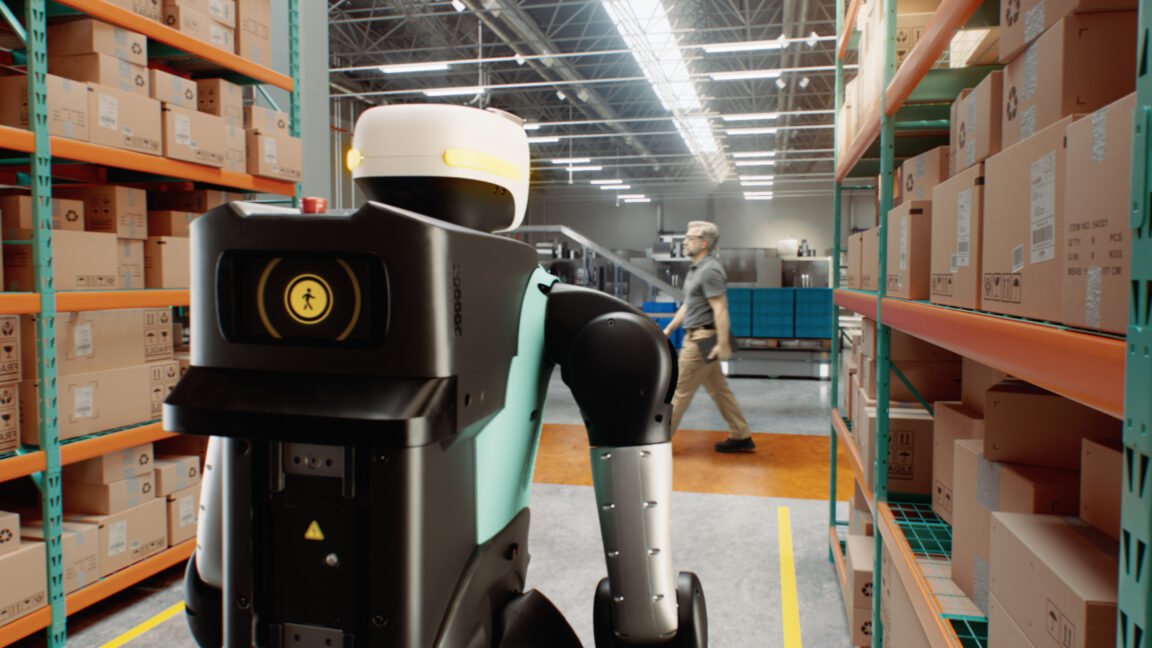
投资者对AI数据中心的乐观情绪可能推动了Nvidia的多万亿美元市值,但这家AI芯片制造商也投入数十亿美元于物理AI技术,如机器人和自动驾驶汽车。其中的一部分投资使Nvidia开发了一套完整的安全系统,企业可在此基础上构建,以降低机器伤害附近人员的风险。
Investors bullish on AI data centers may be fueling Nvidia’s multi-trillion-dollar market capitalization, but the AI chipmaker has also bet billions of dollars on physical AI technologies such as robotics and self-driving cars. Part of that gambit has involved Nvidia developing a full-stack safety system that companies can build upon to reduce the risk of their machines harming nearby people.
Nvidia的Halos系统于2025年推出,提供硬件和软件工具,帮助开发者在自动驾驶汽车和其他自主车辆中实施监管措施。随后,该公司于2026年6月将其安全架构扩展到更多物理AI技术,并宣布推出Nvidia Halos for Robotics,旨在实现仓库中自主移动机器人、工厂内行走的人形机器人,甚至外科机器人的安全部署。
Nvidia's Halos system launched in 2025 with hardware and software tools to help developers implement guardrails in self-driving cars and other autonomous vehicles. Then the company expanded its safety architecture to more physical AI technologies by announcing Nvidia Halos for Robotics in June 2026—with the goal of enabling safe deployments of autonomous mobile robots in warehouses, humanoid robots walking around inside a factory, or even surgical robots.
Nvidia机器人和边缘计算生态系统负责人Amit Goel告诉Ars:“现在AI模型越来越强大,机器人硬件也越来越先进,我们之前认为接下来会成为瓶颈的是安全问题。”“这就是为什么我们推出了Halos for Robotics,以释放这些系统的潜力。”
“Now the AI models are getting capable, the robot hardware is getting capable, and a thing we thought is going to be the next bottleneck is safety,” Amit Goel, head of robotics ecosystem and edge computing at Nvidia, told Ars. “So that's why we launched our Halos for Robotics to unlock the capability of these systems.”