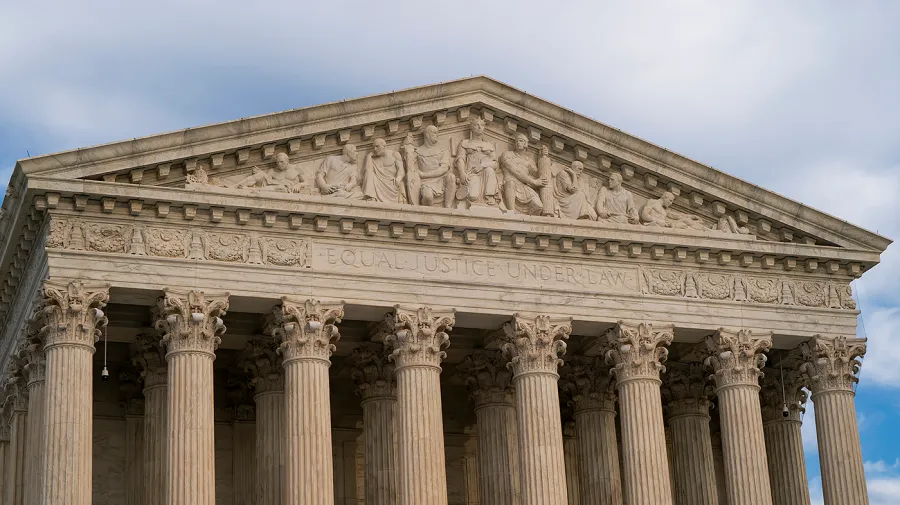
10月1日,最高法院批准了政府的请求,对第二巡回法院的一项裁决进行重新审查。该裁决认为,联邦法律中关于强制拘留的规定不适用于长期在美国非法居留的外国人。
On Oct. 1, the Supreme Court granted the government’s request for a review of a Second Circuit Court decision holding that the mandatory detention provision in federal law does not apply to aliens who have been living illegally in the U.S. long-term.
本案涉及的外国人名为里卡多·阿帕雷西多·巴博萨·达昆哈,是一名巴西公民。他20年前未经合法许可进入美国,并一直居住于此。美国法律规定:“如果负责审查的移民官员认定,寻求入境的外国人显然且毫无疑问地无权入境,则该外国人应在驱逐程序完成前被拘留。”
The alien involved in this case is Ricardo Aparecido Barbosa da Cunha, a Brazilian citizen who entered the U.S. 20 years ago without being lawfully admitted and has lived here ever since. U.S. law provides that “if the examining immigration officer determines that an alien seeking admission is not clearly and beyond a doubt entitled to be admitted, the alien shall be detained” pending removal proceedings.
但既然他已在美国居住20年,又怎能被视为入境申请人呢?《美国法典》中题为“将外国人视为入境申请人”的条款明确规定:“在美国境内、但尚未获得入境许可的外国人……在本章的适用范围内,应被视为入境申请人。”
But how can he be treated as an applicant for admission if he has been here for 20 years? The section of U.S. Code headlined “Aliens treated as applicants for admission” specifies that “An alien present in the United States who has not been admitted … shall be deemed for purposes of this chapter an applicant for admission.”
联邦法律将“入境”定义为“经移民官员检查并授权后,外国人合法进入美国”。然而,根据第二巡回法院的说法,巴博萨·达昆哈并非“入境申请人”,因为他实际上并未“寻求入境”。因此,法院表示,他的拘留应受另一项美国法律条款的约束,该条款允许根据裁量权以保释或附条件假释的方式释放。而且,该条款的措辞并未将这一权利限制在之前已获入境许可的外国人身上。
“Admission” is defined in federal law as “the lawful entry of the alien into the United States after inspection and authorization by an immigration officer.”However, according to the Second Circuit, Barbosa da Cunha is not “an applicant for admission” because he is not actually “seeking admission.”Therefore, the court says, his detention is governed instead by another provision of U.S. law permitting discretionary release on bond or on conditional parole. And nothing in the language limits this privilege to previously admitted aliens.
第二巡回法院还指出,历届政府在过去30年里,一直将联邦法律的这一条款适用于与巴博萨·达昆哈处境相同的外国人。
The Second Circuit also relies on the fact that previous administrations have applied this section of federal law to aliens in Barbosa da Cunha’s situation for 30 years.
这或许属实,但情况已经发生了变化。那些政府无需应对像现任特朗普政府那样庞大的无证移民群体,也无需处理超过300万宗积压的移民法庭案件。
That may be true, but circumstances have changed. Those administrations did not have to deal with as many undocumented immigrants as the current Trump administration does, or with an immigration court backlog of more than 3 million cases.
第二巡回上诉法院承认,其对这些条款的看法已被其他一些巡回法院所拒绝。但法院指出,“绝大多数联邦法官”均认为,政府的解释“违背了这些条款的明文规定”。2025年9月,移民上诉委员会在“Yajure Hurtado案”中采纳了政府的立场,该委员会是“解释和适用移民法律的最高行政机构”。拘留措施部分旨在确保处于驱逐程序中的移民能够出庭参加听证会。
The Second Circuit acknowledges that its view of these provisions has been rejected by some of the other circuit courts. But, it states, the “overwhelming majority of federal judges” have held that the government’s interpretation “defies their plain text.”The government’s position was adopted in September 2025 by the Board of Immigration Appeals, “the highest administrative body for interpreting and applying immigration laws,” in Matter of Yajure Hurtado. Detention is intended in part to ensure that immigrants in removal proceedings will appear for their hearings.
确保他们出庭的实际重要性可从以下事实中看出:截至今年7月24日,2026财年发布的47.7万份驱逐令中,约有27.9万份是在被驱逐者缺席的情况下作出的——这一比例远超全部驱逐令的50%。
The practical importance of ensuring that they appear is illustrated by the fact that, as of July 24 of this year, about 279,000 of the 477,000 removal orders issued for fiscal 2026 were rendered in absentia — far more than 50 percent of all orders.
政府所依据的这些条款,是1996年通过《非法移民改革与移民责任法》添加到《移民与国籍法》中的。在该法案颁布之前,法律规定,所有抵达入境口岸且“显然且毫无疑问地无权”入境的外国人,均须接受驱逐程序和强制拘留,尽管司法部长可以批准其临时离境。成功非法入境后被捕的外国人则须接受驱逐出境程序。处于驱逐程序中的外国人可以申请获释出狱。
The provisions that the government is relying on were added to the Immigration and Nationality Act in 1996 by the Illegal Immigration Reform and Immigrant Responsibility Act. Before the latter was enacted, the law provided that all aliens arriving at a port of entry who were not “clearly and beyond a doubt entitled” to enter were subject to exclusion proceedings and mandatory detention, although the attorney general could grant parole. Aliens apprehended after making a successful illegal entry were subject to deportation proceedings. Aliens in deportation proceedings can apply for release from detention.
根据第五巡回上诉法院2月份的一项裁决,《非法移民改革与移民责任法》旨在减少这种不一致性,同时将未经检查入境的外国人转变为入境申请申请人。
According to a February decision by the Fifth Circuit Court of Appeals, the Illegal Immigration Reform and Immigrant Responsibility Act aimed to reduce this incongruity by also turning aliens who entered the country without inspection into applicants for admission.
巡回法院法官史蒂文·梅纳希(Steven Menashi)在9月25日针对第二巡回法院拒绝全院重审的异议意见中,阐述了这一解决方案。他表示:“确实,尚未获准入境的非法移民实际上并未申请入境,因为他们已经身处美国。”但根据国会制定的制度,这些移民“被视为具有推定入境申请资格的人”。我预计最高法院将得出与梅纳希相同的结论。
Circuit Judge Steven Menashi wrote about this solution in his Sept. 25 dissent from the Second Circuit’s denial of rehearing en banc. He says, “It is true that unadmitted illegal aliens are not actually applying for admission,” as they are already in the U.S. But under the system that Congress enacted, those aliens are “deemed constructive applicants for admission.”I expect the Supreme Court to reach the same conclusion Menashi reached.
法律规定,尚未获准入境的移民“在本章的适用范围内,应被视为入境申请人”。接受这一立场,将有助于实现第五巡回法院所描述的《非法移民改革与移民责任法》的目标:消除那些非法入境的移民获得特殊保释申请机会,而合法在入境口岸申请入境的移民却无法享受这一待遇的不合理现象。
The law states that unadmitted aliens “shall be deemed for purposes of this chapter an applicant for admission.”And accepting that position would further what the Fifth Circuit has described as the Illegal Immigration Reform and Immigrant Responsibility Act’s objective: to eliminate the incongruity of giving aliens who achieve entry illegally a special opportunity to apply for release on bond that is not granted to aliens who lawfully seek admission at a port of entry.
诺兰·拉帕波特(Nolan Rappaport)曾以行政部门移民法专家的身份,被派往众议院司法委员会工作三年。此后,他担任移民、边境安全与索赔小组委员会的移民法律顾问长达四年。在加入司法委员会之前,他曾在移民上诉委员会撰写裁决意见长达20年。
Nolan Rappaport was detailed to the House Judiciary Committee as an executive branch immigration law expert for three years. He subsequently served as an immigration counsel for the Subcommittee on Immigration, Border Security and Claims for four years. Prior to working on the Judiciary Committee, he wrote decisions for the Board of Immigration Appeals for 20 years.