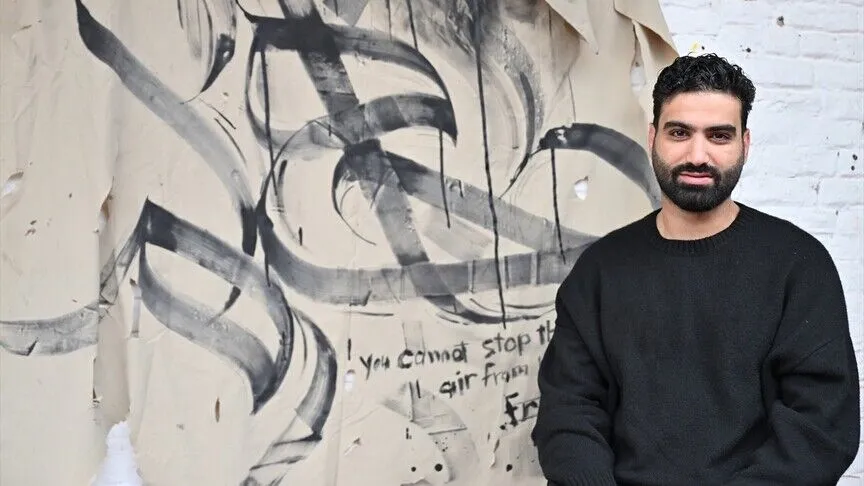
巴勒斯坦艺术家伊斯梅尔·马塔尔讲述了举办展览及获取创作资金所面临的重重困难,并对欧洲对艺术自由的限制提出质疑。两位艺术家均表示,自己的作品与个人经历密不可分,他们有责任站出来反对不公。随着加沙地带的种族灭绝行径步入第四年,这两位身处欧洲中心的艺术家坦言,为巴勒斯坦发声让他们付出了个人与职业上的代价。
Palestinian artist Ismail Matar describes barriers to exhibitions and funding, questions limits on artistic freedom in Europe Both artists say their work is inseparable from their experiences and their responsibility to speak out against injustice As the genocide in Gaza enters its fourth year, two artists in the heart of Europe say speaking out for Palestine has come at a personal and professional cost.
巴勒斯坦艺术家伊斯梅尔·马塔尔讲述了为展现祖国现状而举办展览、筹集资金时所遭遇的种种阻碍。
Palestinian artist Ismail Matar describes difficulties securing exhibitions and funding for work about his homeland.
比利时籍摩洛哥诗人欣德·埃尔贾迪德则透露,因在舞台上发声支持巴勒斯坦,她遭遇过任务被取消、死亡威胁甚至被拘留的经历。
Belgian-Moroccan poet Hind Eljadid says she has faced canceled assignments, death threats and detention after speaking about Palestine on stage.
在接受阿纳多卢通讯社采访时,两人均将艺术视为对抗不公、铭记那些常被简化为统计数据的普通人经历的重要方式。
terviews with Anadolu, both described art as a way to confront injustice and preserve the experiences of people whose lives are often reduced to statistics.
现居布鲁塞尔的跨界艺术家马塔尔表示,这种艺术与现实的联结始于童年时期。
For Matar, a multidisciplinary artist now based in Brussels, that connection began in childhood.
“我出生并成长于加沙南部的汗尤尼斯难民营,”他回忆道,“那时我便把营地的墙壁当作最初的画布,以此‘逃离加沙发生的一切’。”随着年龄增长,他逐渐意识到自己的艺术承载着对社区的责任,要记录下电视报道与新闻照片难以呈现的种种经历。
“I was born and raised in Khan Younis refugee camps, south of Gaza,” he said, recalling how he used the camp’s walls as his first canvases to “escape what was happening in Gaza.”As he grew older, he began to see his art as a responsibility toward his community, capturing experiences that television reports and news photographs could not always convey.
他在自家周围及整个难民营中作画,描绘孩童与长者,还融入了阿拉伯书法元素。受身边难民的启发,他希望在展现苦难的同时传递美好与希望。
He painted around his home and throughout the camp, depicting children and older people and incorporating Arabic calligraphy. Inspired by the refugees around him, he wanted to convey beauty and hope alongside suffering.
“我想讲述这里的人们的故事,至少展现一些美好的事物,向外界传递来自这片土地的希望信息,”马塔尔说道。
"I want to tell about the people, or at least to show something nice, and to send some hope messages from this place," Matar said.
对他而言,自由迁徙、自由旅行、无惧地生活正是其艺术创作的核心主题。“我梦想着自由,”他说道。
At the center of his work is the freedom to move, travel and live without fear. "I dream with freedom," he said.
“我的许多艺术作品都在探讨自由,因为这是我们所真正怀念的东西。自由本应是一项我们理应拥有的基本权利——仅仅为了自由而自由,能够行动、旅行、与同胞相会,不受控制、监视和限制地前往任何地方。”
“A lot of my artwork is talking about freedom because it's something that we really miss, and it's supposed to be like a normal right that we have to be free, just to be free. Just to be able to move and to travel and to meet your people and to go everywhere without being controlled and watched and limited.”
艺术与政治密不可分。尽管马塔尔并不主要将自己定义为政治艺术家,但他表示,自身的处境不可避免地使政治成为其作品的一部分。
Art inseparable from politics Although Matar does not describe himself primarily as a political artist, he said his circumstances inevitably make politics part of his work.
“这是必然的,因为你在谈论一个已经持续了78多年却毫无改变的问题,而且情况还在不断恶化。我们知道,艺术本身就是一种强有力的表达。”他说。他希望通过能够触动人们情感的作品来改变人们的看法。
“It needs to be because you are talking about an issue and it's been more than 78 years, and nothing changed. It's getting worse and worse. We know that art is a strong message,” he said. He hopes to change perceptions through work that reaches people emotionally.
“我认为政治和艺术确实紧密相连,无法彼此分离……我无法将我的艺术与所关注的问题割裂开来,因为这就是我的一部分。”他说。
"I think politics and art are really connected. You can't separate them from each other... I can't separate my art about my issue, and it's part of me," he said.
但他也指出,涉及巴勒斯坦的话题可能会让展览机会和资金筹集变得更加困难。
But addressing Palestine can make it harder to find opportunities to exhibit or secure funding, he said.
“你必须不断争取才能获得一些机会,尤其是当你谈论自己的背景或国家正在发生的事情时。你总会遇到那些试图排斥你的人。”马塔尔说。
"You need always to keep fighting to get some opportunities, especially when you are talking about your background or about what's happening in your country. You always face these people who are trying to avoid you," Matar said.
“如果你的作品与巴勒斯坦正在发生的事情有关,你就很难获得展示的机会或资金支持来继续你的项目。”他补充道。但这些障碍并未让他放弃。
"You don't get the chance to present or to fund to continue with your project if it was related to what's happening in Palestine," he added. Those obstacles have not persuaded him to stop.
“我会继续下去,绝不会停止。”他说,“尽管有时我也会感到失望。”“虚假的自由”马塔尔还质疑了他在欧洲部分地区所观察到的对“解放巴勒斯坦”等表达方式的限制。“我有权说出我想要自由,我想要夺回自己的土地。”他说。
"I'm going to continue. I'm not going to stop,” he said. “Even though I feel sometimes like disappointed.”'Fake freedom' Matar also questioned what he described as restrictions on expressions such as “Free Palestine” in parts of Europe. “I have the right to say that I want to have my freedom. I want to have my land back,” he said.
他表示,艺术家或许比其他人拥有更多表达自我的空间,但这种自由也是有界限的。
Artists may have more space than others to express themselves, he said, but that freedom has limits.
“但即便如此,有些国家仍然控制着你的行为,或者控制着你的艺术作品所表达的概念……你或许拥有一定的空间来表达情感,但这一切都是受控制的,”他说。
“But still, some countries, they control what you are doing, or they control the concept of your artwork ... You can have some space to express your feelings, but it's controlled,” he said.
他补充说,批评以色列而遭到反犹主义指控的恐惧,也可能限制艺术家和活动家的表达。
Fear of being accused of antisemitism for criticizing Israel can also constrain artists and activists, he added.
“这就像是一种虚假的自由或言论自由,而你知道自己其实是被控制的,”马塔尔说。他质疑为何呼吁巴勒斯坦自由的声音会遭到抵制。
“It's like it's a fake freedom or free speech, and you know that you are controlled,” Matar said. He questioned why calls for Palestinian freedom should face resistance.
“我不知道为什么。我不知道要求我们的自由,或询问我们和平生活的权利,有什么问题,”他说。“这是我的责任”对埃尔贾迪德而言,她的创作涵盖诗歌、书籍、口语表演和戏剧,拥有公共平台意味着她有责任直面不公。
“I don't know why. I don't know what's the problem with asking for our freedom or asking about our right to live in peace,” he said. 'It is my responsibility' For Eljadid, whose work spans poetry, books, spoken word and theater, having a public platform brings a responsibility to address injustice.
“我认为,作为一名艺术家,既然我拥有舞台,那么承担起责任就非常重要……因此,作为艺术家,我有责任利用这个舞台来反映社会,反映我们社会中正在发生的一切,”她说。与马塔尔一样,她也拒绝艺术与政治可以分离的说法。
"I think it's very important for me as an artist to take my responsibility since I have a stage ... then it's my responsibility as an artist to use that stage to mirror society, to mirror what's happening in our society," she said. Like Matar, she rejects the idea that art and politics can be separated.
“我认为一切事物都是相互交织的。我不认为可以将这两者分开来看。”但她的公开表态也带来了后果。
"I think everything is intertwined with each other. I don't think you can look at those two things separately." But her decision to speak publicly has come with consequences.
埃尔贾迪德表示,2024年初她在比利时舞台上谈论巴勒斯坦后,被警察带走。她说,她因涉嫌扰乱公共秩序而被拘留了大约七个小时。
Eljadid said police escorted her away after she spoke about Palestine on stage in Belgium in early 2024. She said she was detained for around seven hours over an alleged disturbance of the peace.
“在比利时这样一个国家,一位艺术家仅仅因为利用自己的舞台传递某种信息就被关进监狱,我当时感到非常震惊,”她说。
“I was quite in shock in a country as in Belgium that an artist who uses their stage to give a certain message would be put into jail,” she said.
她后来还收到了死亡威胁,并在接下来的几个月里看到自己的演出安排被取消,她说。然而,这并未改变她发声的决定。“这绝不意味着我会停止谈论巴勒斯坦,”埃尔贾迪德说。双重标准埃尔贾迪德将艺术表达的限制与比利时更广泛的歧视现象联系了起来。
She later received death threats and saw assignments canceled in the following months, she said. Yet it did not change her decision to speak. "That doesn't mean, in any way, that I would have stopped talking about Palestine," Eljadid said. Double standards Eljadid linked restrictions on artistic expression to wider discrimination in Belgium.
“在比利时,我们生活在一个结构性种族主义和结构性歧视真实存在的社会里,”她说。
“In Belgium we live in a society where structural racism and structural discrimination is a fact,” she said.
她认为,当言论自由涉及巴勒斯坦、苏丹和刚果时,往往存在双重标准。
She believes freedom of speech is subject to double standards when it comes to Palestine, Sudan and the Congo.
她说,当局可以通过警察干预、限制进入公共空间以及制造恐惧来压制抗议活动。她还补充说,文化组织在经济上也十分脆弱。
Authorities can discourage protest through police intervention, restrictions on access to public spaces and the creation of fear, she said. Cultural organizations are also financially vulnerable, she added.
“我们去年注意到,如果你批评得太尖锐,政府可能会撤销你的资助,而一些组织正是遭遇了这种情况,”她说。对埃尔贾迪德而言,问题的影响远不止艺术家及其作品。
“We noticed last year, if you are too critical, the government can take away your grants, and that is what happens with some organizations,” she said. For Eljadid, the stakes extend beyond artists and their work.
“言论自由权极其重要,因为如果我们让人民沉默,就等于让整个社会沉默,而这非常危险,”她说。
“The right of freedom of speech is so incredibly important because if we silence the people, then you silence society, and that's very dangerous,” she said.