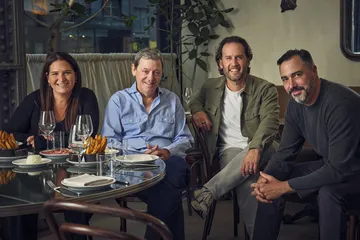
总部位于纽约市的风险投资公司 Union Square Ventures(USV)正在重塑自身,以更好地参与人工智能领域的竞争:其核心基金规模几乎翻倍,而普通合伙人团队则精简至仅四名投资者。
New York City-based venture firm Union Square Ventures is reinventing itself to better compete in the artificial intelligence race by nearly doubling the size of its core fund and whittling down its general partnership to just four investors.
该机构已筹集到 9 亿美元新资金,其中包括用于最新早期阶段基金的 5 亿美元,这一消息将于周四公布。对于 USV 而言,这是一次巨大的飞跃——其上一轮早期阶段基金筹集于 2024 年完成,金额为 2.75 亿美元。此外,该机构还为机会基金筹集了 4 亿美元,该基金用于后期交易以及对现有投资组合公司的追加投资;此前同类基金的规模则为 3.5 亿美元。
The firm has raised $900 million in new money, including $500 million for its latest early-stage fund, the partnership plans to announce Thursday. It’s a big jump for USV, which last raised $275 million in early-stage funds in 2024. The firm also raised $400 million for its opportunity fund, used for later-stage deals and follow-on investments in its existing portfolio companies; its previous comparable fund was $350 million.
USV 对基金规模进行“优化调整”的做法,只是投资者在人工智能市场调整策略的最新例证。在这一市场中,风险投资热情的激增和资本密集型技术已将早期初创公司的估值推升至令人眩晕的高度。今年夏天,过去只投资早期公司的 Benchmark 也首次设立了成长基金。作为一类资产,风险投资从未像现在这样庞大——Sequoia Capital 和 Lightspeed Venture Partners 等其他大型基金也吸引了越来越多巨额资金,并给规模较小的机构带来了追赶的压力。
USV’s move to “right-size” its funds is just the latest example of how investors are shifting their strategies in the AI market, where surging VC enthusiasm and capital-intensive technologyhave driven up even fledgling startup valuations to dizzying heights. This summer, Benchmark, which used to exclusively invest in early-stage companies, raised its first-ever growth fund. As an asset class, venture capital has never been bigger — other large funds, like Sequoia Capital and Lightspeed Venture Partners, have been pulling in increasingly larger hauls and putting pressure on smaller firms to keep up.
USV 联合创始人兼普通合伙人 Fred Wilson 在一次采访中表示,早在开始筹集最新一轮资金之前,该机构就已希望扩大基金规模——尤其是在人工智能市场的交易持续增加的情况下。
USV cofounder and general partner Fred Wilson said in an interview that the firm had been wanting to boost its funds well before it started raising the latest batch — especially as deals in the AI market kept growing.
Wilson 说:“如果我们想要有能力领投一笔 5000 万美元的 A 轮融资,就必须能开出 3000 万美元的支票。如果我们的基金规模太小,无法做到这一点,那就必须扩大基金规模。”
“If we’ve got to be able to write a $30 million check to lead a $50 million Series A, we have to figure out how to do that. And if our fund size is too small to be able to do that, then we need to have a bigger fund size,” Wilson said.
自2003年成立以来,USV一直专注于早期投资,并通过早期投资Coinbase Global Inc.、Twitter和Duolingo Inc.等公司,在纽约的风险投资界树立了良好声誉。在最新的基金中,USV延续了这一专注方向,并且在某些情况下,甚至希望比过去更早进行投资。为了在热门AI公司的股价飙升前获得有分量的股份,USV希望主导更多轮次融资,在种子阶段投资更多初创公司,并在公司内部孵化新的项目。
USV has focused on early-stage investments since its 2003 founding, establishing its reputation in the New York venture scene with early bets including Coinbase Global Inc., Twitter and Duolingo Inc. It’s keeping that focus with its latest funds and in some cases aims to invest even earlier than it has in the past. To secure meaningful stakes in hot AI companies before their prices surge, USV wants to lead more rounds, go after more startups at the seed stage and incubate new ones inside the firm.
上周宣布的最新举措是孵化Supertake Inc.,该公司利用AI代理为消费者进行股票交易。普通合伙人Michael Mignano在USV内部构建了核心产品,目前正寻求外部人才来领导这家初创公司。
Its most recent swing, announced last week, is its incubation of Supertake Inc., which uses AI agents to make stock trades on behalf of consumers. General partner Michael Mignano built the core product inside USV and is now seeking outside talent to lead the startup.
Supertake是USV自行开发的多个产品之一。2025年底,该公司暂停了其分析师计划,转而选择开发AI代理来自动化许多内部任务。如今,USV已拥有能够协助对潜在投资进行尽职调查、寻找新交易以及处理初级法律和行政事务的AI代理。此后,该公司也恢复了人类分析师的招聘,他们与这些AI代理协同工作。
Supertake is one of several products USV is building itself. In late 2025, the firm paused its analyst program and instead opted to build AI agents to automate many of its internal tasks. Now, USV has AI agents that help conduct diligence on its potential investments, source new deals and handle low-level legal and administrative tasks. The firm has since resumed hiring human analysts that work alongside the agents.
然而,随着USV扩大其业务范围,其核心投资团队却在缩减。该公司的四位合伙人已转为实际上属于兼职的角色:USV联合创始人Brad Burnham和John Buttrick在过去几年中已逐步减少投资活动;而Albert Wenger和Andy Weissman则因最新基金的推出而首次从投资中退居二线。尽管他们仍然可以参与新的投资并保留任何董事会职位,但预计他们将大幅减少投资活动。
As USV expands its remit, however, it’s shrinking its core investment team. Four of the firm’s partners have stepped down into what will effectively be part-time roles: USV cofounder Brad Burnham and John Buttrick, who’ve been winding down their investment activities for the past several years, as well as Albert Wenger and Andy Weissman, who are newly taking a step back from investing with the latest funds. While they’ll still be able to make new investments and will retain any board positions, they’re expected to significantly cut back on their investing activity.
USV目前将以四人普通合伙公司的形式运营,成员包括联合创始人Wilson、Nick Grossman、Rebecca Kaden以及今年4月加入公司的Mignano。
USV will now operate as a four-person general partnership, which includes cofounder Wilson, Nick Grossman, Rebecca Kaden and recent addition Mignano, who joined the firm in April.
威尔逊表示,风险投资要实现成功的代际交接,就必须让年轻投资者掌握主导权。
Wilson said a successful generational transfer in venture capital requires giving younger investors the helm.
“你必须赋予年轻一代掌控全局的能力——主导战略、主导关键投资决策,并且还要让他们获得大部分业绩分成收益,”威尔逊说,“如果你不愿意这样做,那就行不通。”USV 仍坚持其以投资逻辑为导向的策略,但也更新了愿意支持的公司类型,因为硅谷正将数十亿美元投入机器人等实体产业。尽管威尔逊承认自己过去对这类资本密集型投资持谨慎态度,但近年来 USV 已进行了多笔所谓的“深度科技”投资,支持了像估值 30 亿美元的机器人初创公司 Generalist AI 和估值 18 亿美元的核能公司 Radiant Nuclear 等企业。
“You have to give the younger generation the ability to drive the car — drive the strategy, drive the key investment decision-making, and you have to give them the majority of the carry economics,” Wilson said. “If you’re not willing to do that, it’s not going to work.”USV is maintaining its approach of thesis-driven investing, but it’s updated the types of companies it’s willing to back, too, as Silicon Valley pours billions of dollars into physical industries like robotics. While Wilson admits he previously shied away from such capital-intensive bets, USV has made several so-called deep tech investments in recent years, backing companies like $3 billion robotics startup Generalist AI and $1.8 billion nuclear energy company Radiant Nuclear.
格罗斯曼表示,关键在于找到能够吸引市场支持的企业创始人。“从投资更多资本密集型行业中学到的经验之一是,要善于识别那些在融资方面能力出众的创始人,”他说。
The key, Grossman says, is finding founders that can rally the market behind them. “One of the things we’ve learned from investing in more capital-intensive sectors is looking to identify founders that are great at fundraising,” he said.
尽管旧金山的风险投资市场持续占据主导地位,USV 却始终将团队保留在纽约。凯登表示,USV 不太可能在湾区开设办公室,但这家合伙企业正在“思考如何以我们希望的方式在那里展现自己”。“我认为旧金山的重要性比以往任何时候都更突出。”今年,几家筹集到更大规模资金的基金都是在向 Anthropic PBC 和 OpenAI 投资后才完成融资的。
USV has always kept its team in New York, despite the continued dominance of San Francisco’s venture market. While Kaden said USV is unlikely to open up an office in the Bay Area, the partnership is “thinking about what it means to show up there in the way we want to,” she said. “I think San Francisco is more important than ever.”Several firms this year that raised larger funds did so after writing checks into Anthropic PBC and OpenAI.
而 USV 尚未对这两家大型语言模型提供商进行投资。LGT Capital Partners 的管理董事、同时也是 USV 长期支持者的比泽尔·克拉克森表示,与早期阶段基金合作能为有限合伙人提供多样化的投资机会。
USV has not made an investment in either large language model provider. Beezer Clarkson, managing director at LGT Capital Partners and a longtime backer of USV, said that working with early-stage funds offers limited partners a diversification of deals.
Lindel Eakman 是 USV 第一支基金的早期有限合伙人,他表示很高兴看到这家基金管理机构募集到规模更大的基金,这些资金将在更长的时间跨度内,投资于未来几年成立的各类初创企业。
Lindel Eakman, an early limited partner in USV’s first fund, echoed that he’s happy to see the firm raise a larger fund that will be invested across a longer time period and several classes of startups founded over the next few years.
Eakman 说:“无论是有限合伙人(LP)还是普通合伙人(GP),我们都希望实现不同年份基金的投资组合多样化。基金规模本身就像一场游戏。”
“All of us, LPs and GPs, would prefer to have some vintage diversification,” said Eakman. “Fund sizing is a game.”