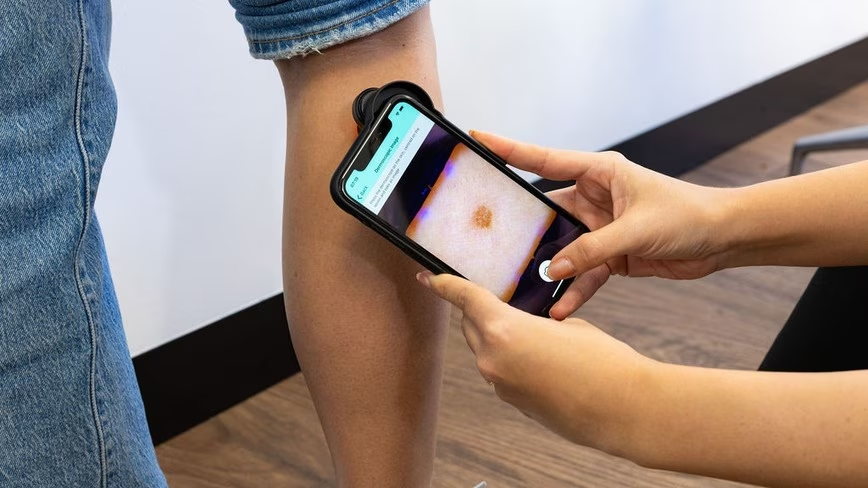
英国国家医疗服务体系(NHS)英格兰东南部地区正在部署一款人工智能系统,该系统能够在皮肤科医生未亲自接诊的情况下,对患有良性皮肤病变的患者进行出院处理。这款由伦敦公司Skin Analytics开发的系统名为DERM,将于今年秋季在该地区全部18家NHS信托机构上线运行,覆盖另外900万人口。
NHS England’s South East region is rolling out an AI that can discharge patients with harmless skin lesions without a dermatologist seeing them. DERM, made by London-based Skin Analytics, goes live in all 18 NHS trusts there from this autumn. It will cover another 9 million people.
Skin Analytics于周三宣布了这一部署计划,并称这是NHS历史上规模最大的自主医疗人工智能部署。该部署将持续三年。
Skin Analytics announced the rollout on Wednesday and called it the largest deployment of autonomous medical AI in NHS history. The rollout runs for three years.
NHS英格兰地区首席医疗官达格尼·拉贾辛格姆表示:“对患者而言,疑似癌症的转诊往往是一段令人焦虑的时光。”
“For patients, a suspected cancer referral can be an anxious time,” said Daghni Rajasingam, NHS England’s regional chief medical officer.
皮肤癌人工智能的工作原理:DERM会分析疑似皮肤癌转诊后发送的病变图像。如果系统判定病变为良性,NHS可在分诊阶段直接让患者出院。对于被标记为高风险的患者,系统会将其更快地转介给专科医生。
How the skin cancer AI works DERM analyses images of a lesion sent in after a suspected skin cancer referral. If it judges a lesion benign, the NHS can discharge the patient at that triage stage. Anyone it flags as higher risk is sent on faster to a specialist.
该公司表示,DERM是首个也是唯一一个获得III类CE标志认证、可用于自主医疗场景的人工智能。III类是医疗器械的最高类别。目前,英格兰已有25家NHS信托机构在使用该系统。Skin Analytics称,该系统已评估超过25万名患者,并发现了超过2.5万例癌症。
The company says DERM is the first and only AI certified for autonomous use under a Class III CE mark. That is the highest class for a medical device. Twenty-five NHS trusts in England already use it. Skin Analytics says it has assessed more than 250,000 patients and found more than 25,000 cancers.
该公司自身的监测数据显示,DERM在99.5%的情况下排除了皮肤癌的可能性,同时能发现约98%的皮肤癌病例。
The company’s own monitoring data says DERM rules out skin cancer 99.5% of the time. It also finds about 98% of skin cancers.
2024年7月,Edge Health为NHS英格兰门诊恢复计划撰写的一份白皮书将DERM与皮肤科医生进行了对比。研究发现,在面对面检查中,皮肤科医生正确排除黑色素瘤的准确率为98.9%。而在相似的疾病发生率下,DERM的准确率为99.8%。
An Edge Health white paper from July 2024, written for NHS England’s outpatient recovery programme, compared DERM with dermatologists. It found that dermatologists ruled out melanoma correctly 98.9% of the time in face-to-face checks. DERM scored 99.8% at a similar rate of disease.
NHS的预期:Skin Analytics表示,针对该地区的建模显示,NHS可能提前出院多达三分之一的紧急转诊患者。这将在首次门诊预约之前发生。据估计,这将每年释放13,500小时的顾问医生时间,相当于约27,000次门诊预约。
What the NHS expects Skin Analytics said modelling for the region shows the NHS could discharge up to a third of urgent referrals early. That would happen before a first outpatient appointment. It estimates that would free 13,500 consultant hours a year, or about 27,000 appointments.
在同一份新闻稿的其他部分,该公司将这一比例定为最高40%。无论是新闻稿还是NHS,均未公布该合同的金额。
Elsewhere in the same release, the company puts that figure at up to 40%. Neither the release nor the NHS has given the value of the contract.
“全国各地疑似皮肤癌患者的转诊数量持续上升,但现有的皮肤科医生数量远远不足以应对这些需求,”白金汉郡医院NHS信托基金的皮肤科顾问亚历山德拉·肯普博士表示。在该医院,DERM系统已经被投入使用。
“Across the country referrals for suspected skin cancer are continuing to rise and there are not enough dermatologists to manage these referrals,” said Dr Alexandra Kemp, a consultant dermatologist at Buckinghamshire Hospitals NHS Trust, where DERM is already in use.
北爱尔兰已经批准使用DERM系统来独立评估当地190万居民的皮肤癌病变情况。
Northern Ireland has already approved DERM to assess skin cancer lesions on its own for its 1.9 million people.
这一举措是在NHS(英国国家医疗服务体系)的其他领域率先应用人工智能技术之后的又一进展。在耗资100亿英镑的改革计划中,NHS应用程序将利用人工智能技术对患者进行初步分类(即“分诊”)。此外,NHS还允许Flok Health公司提供的AI辅助治疗系统在无需人工监督的情况下运行。今年8月,《TNW》杂志曾报道过:在NHS的医疗记录中,使用AI技术的医疗人员曾出现过错误地记录药物名称和诊断结果的情况。
The rollout follows other uses of AI on the front line of the NHS. The NHS App will use AI to triage patients under a £10bn overhaul. The NHS also lets Flok Health’s AI physiotherapist work unsupervised. In August, TNW reported that AI scribes were getting drug names and diagnoses wrong in NHS records.