
2014年9月,艾玛·苏尔科维奇开始背着重达23公斤的蓝色床垫,在大学的校园里四处走动。这种床垫与纽约哥伦比亚大学宿舍里使用的类似。苏尔科维奇称,两年前她曾在宿舍里被一名同学强奸。她的行为/耐力艺术作品构成了她的视觉艺术毕业论文,旨在引起人们对以下问题的关注:她的指控对象并未被提起刑事诉讼,且此人仍留在大学校园内。当她拖着床垫穿过校园时,其他人可以选择帮助她分担负担,而许多人确实这样做了。她还用日记记录了自己对这件作品的回应。
In September 2014, Emma Sulkowicz began to carry a blue mattress weighing 23kg around her university campus. The mattress was similar to the ones New York’s Columbia University used in its dorm rooms, where Sulkowicz said she had been raped by a fellow student two years earlier. Her performance/endurance artwork constituted her visual art senior thesis, drawing attention to the lack of criminal charges brought against her alleged attacker and his continued presence at the university. As she hauled it across campus, others could choose to assist her with her burden. Many did. She recorded responses to the piece in a diary.
“我本可以只带个枕头,”她当时对作家杰西卡·瓦伦蒂说,“但我希望人们看到,被校方管理层忽视、被警察骚扰,会给一个人带来多么沉重的负担。”她说,只要那名指控对象还在哥伦比亚大学,她就会一直背着这个床垫。最终,她一直背到了毕业典礼上,并在其他女性的帮助下,将床垫带上了舞台。然而,大学校长拒绝与她握手,反而转过身去。
“I could have taken my pillow,” she told the writer Jessica Valenti at the time. “But I want people to see how it weighs down a person to be ignored by the school administration and harassed by police.”Sulkowicz would carry the mattress, she said, for as long as her alleged attacker remained at Columbia. And so she ended up carrying it all the way to graduation where, helped by other women, she took it on stage. The university president refused to shake her hand, turning away from her instead.
《床垫表演》(“背负那重量”)的视频片段于2014年走红,当时#MeToo运动正逐渐兴起。如今,随着校园强奸指控再次引发公众愤怒,这件表演作品再度走红。简·多(Jane Doe,美国用于匿名身份的化名)正在起诉纽约的康奈尔大学及七名男子,指控他们在她2024年就读期间对其下药并实施轮奸。
Footage of Mattress Performance (Carry That Weight) went viral in 2014, just as the momentum for #MeToo was building. Now the performance piece has gone viral again, in response to public fury at another allegation of campus rape. Jane Doe (the female pseudonym used in the US for the purposes of anonymity) is suing Cornell University in New York, and seven men, claiming they drugged her and gang-raped her when she was studying there in 2024.
通过她的表演作品,苏尔科维奇加入了一个由众多女性组成的行列,她们以艺术回应强奸、性侵犯和家庭暴力。这构成了一种激进却鲜有被探讨的艺术传统,涵盖了极为广泛的不同回应方式。保拉·雷戈2008至2009年的作品《奥拉托里奥》是一件类似祭坛画的三联画,描绘了性侵犯的场景。1964年,小野洋子在《剪片》中邀请观众用剪刀剪下她身上衣物,而她则一动不动地跪在那里。
Through her performance work, Sulkowicz joined a long line of women who have made art in response to rape, sexual assault and domestic violence. It forms a radical, if rarely explored, canon that encompasses a huge range of responses. Paula Rego’s 2008-9 work Oratorio was an altarpiece-like triptych featuring scenes of sexual assault. Yoko Ono, in 1964’s Cut Piece, invited members of an audience to remove her clothing with scissors as she knelt unmoving.
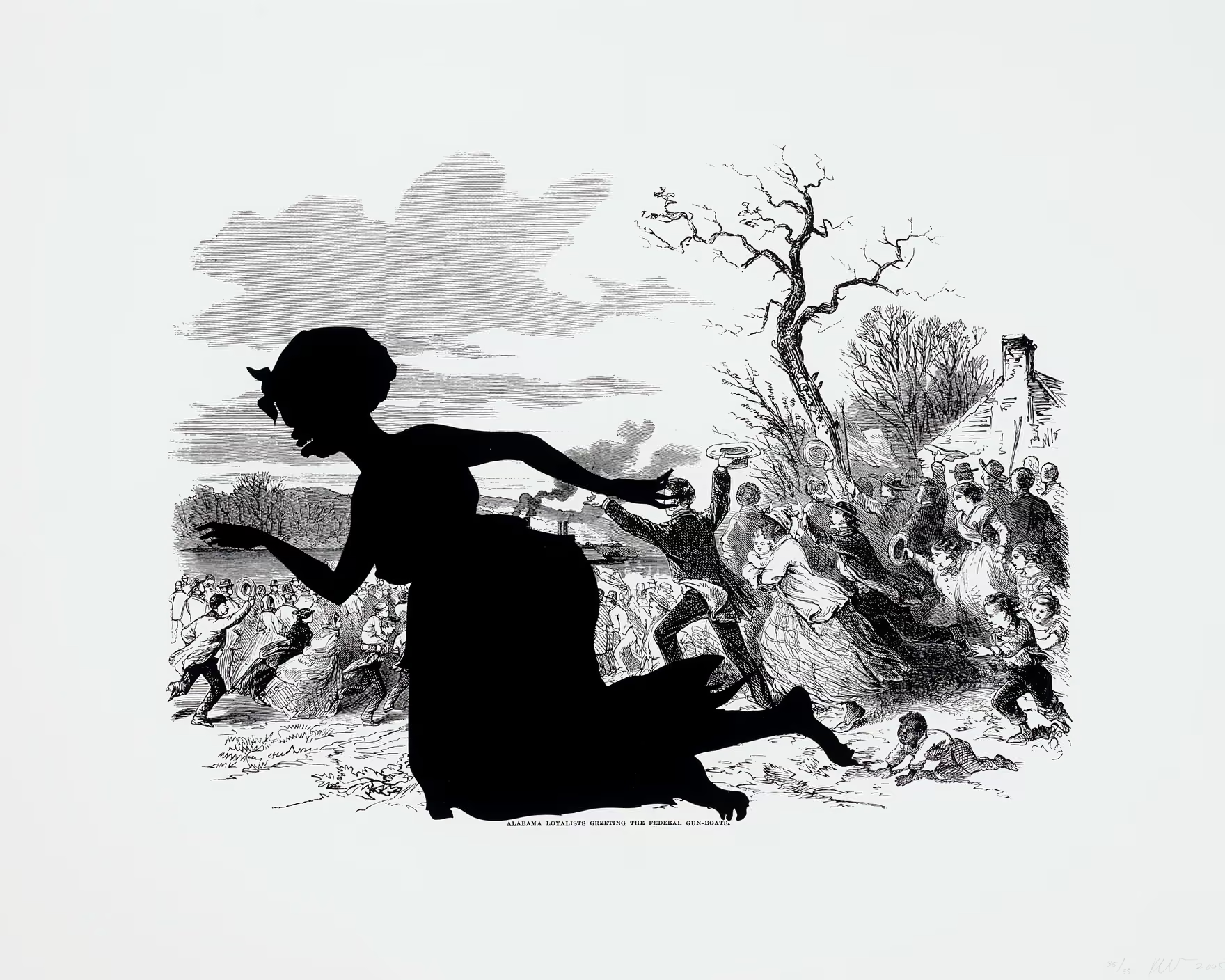
1994年,珍妮·霍勒在她的装置作品《欲望谋杀之桌》中使用了人类骨骼,探讨强奸在前南斯拉夫地区作为战争武器的现象。南·戈尔丁在《性依赖之歌》中记录了一段充满暴力的关系。而卡拉·沃克则创作了剪纸剪影,探索了美国南方白人男性权力所留下的残酷遗产。
Jenny Holzer used human bones in 1994’s Lustmord Table, her installation about rape as a weapon of war in the former Yugoslavia. Nan Goldin documented a violent relationship in The Ballad of Sexual Dependency. And Kara Walker made cut-paper silhouettes that explored the brutal legacy of white male power in the American south.
事实上,这一艺术传统至少可以追溯至17世纪。当时,阿尔泰米西娅·真蒂莱斯基遭受强奸,并在其强奸犯的审判过程中遭到进一步折磨,这无疑影响了她创作《朱迪莎斩杀何洛芳尼斯》(1612-13)时作品中那股核心愤怒。她已知最早的画作是1610年创作、时年17岁的《苏珊娜与长老们》,这幅画以极具冲击力的方式展现了她作为一个年轻女性,面对性虐待和骚扰时所感受到的脆弱与痛苦。
In fact, it’s a canon that stretches back at least as far as the 17th century, when Artemisia Gentileschi, whose rape and subsequent torture as part of her rapist’s trial no doubt informed the rage at the heart of her Judith Slaying Holofernes (1612-13). Her earliest known work, Susanna and the Elders, painted in 1610 when she was 17, viscerally conveys an intimate knowledge of how it feels to be a young woman vulnerable to sexual abuse and harassment.
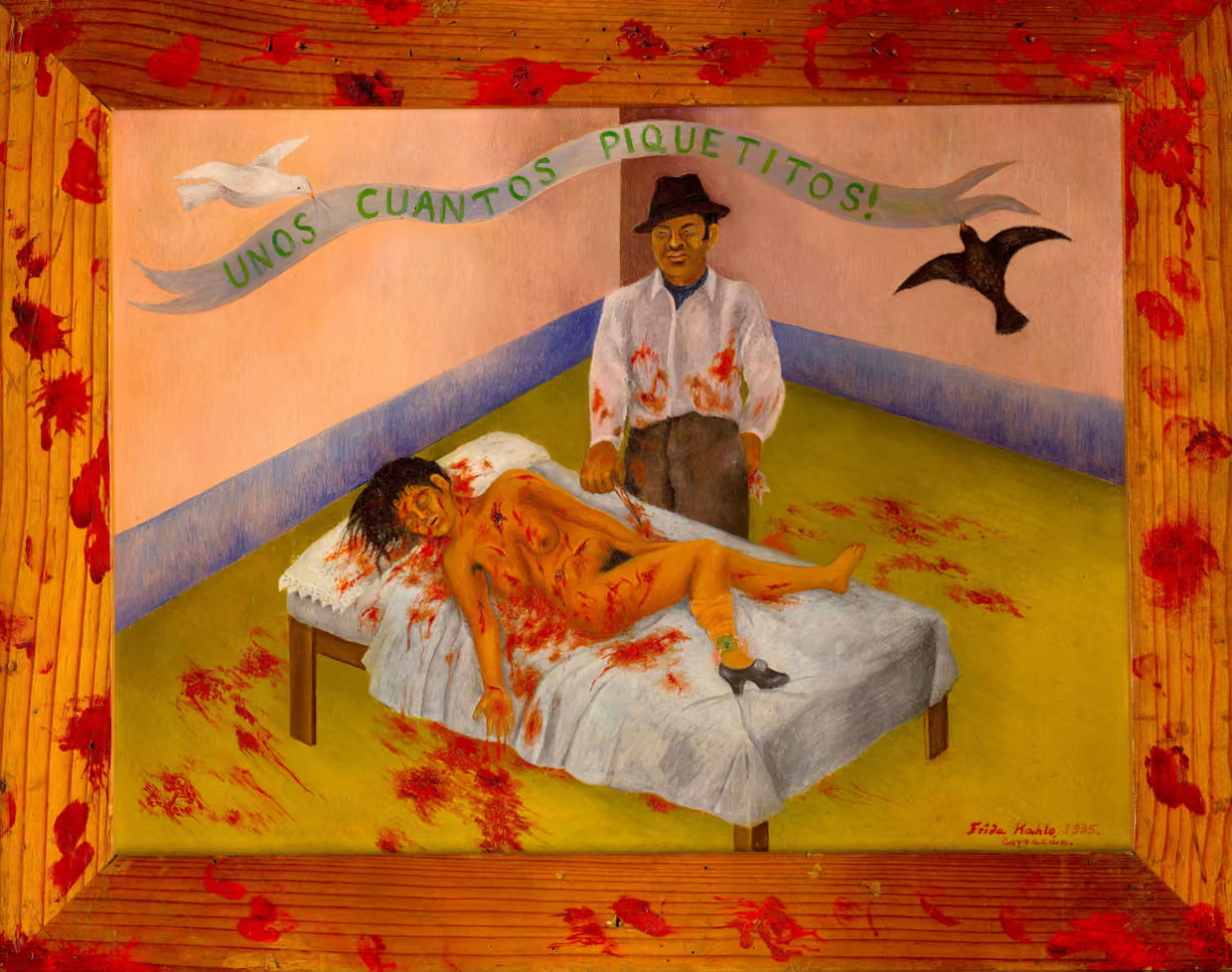
这种认知是许多人内心都存在的,因此,性与性别暴力成为女艺术家反复探讨的主题,也就不足为奇了。泰特现代美术馆目前正在举办的展览聚焦弗里达·卡罗的崇拜现象及其作品被商业化的过程,这恰好为我们提供了一个反思的契机:卡罗最具突破性的作品,绝不会出现在杯垫或托特包上。1935年的作品《几处小咬伤》描绘了一个赤裸的女性被刺伤后躺在血泊中的床铺上。
That knowledge is something many of us carry around, so it’s no surprise that sexual and gender-based violence is a subject that female artists return to again and again. The current Tate Modern show examining the cult and commercialisation of Frida Kahlo provides an apposite moment to reflect that Kahlo’s most groundbreaking works are never going to make it on to coasters and tote bags. A Few Small Nips, from 1935, shows a woman’s stabbed, naked body on a bed smeared with blood.
这件作品的灵感来自卡罗在报纸上读到的一则新闻:一名杀害妻子的男子轻描淡写地为自己的行为辩护,称“但我只是给了她几处小咬伤而已”。安娜·门迪埃塔对艾奥瓦大学女学生莎拉·安·奥滕斯被强奸并谋杀一案的回应同样血腥。《强奸场景》(1973)是她为同学们在公寓中上演的私密表演作品。为了重现性暴力,她半裸着身体,满身血迹,俯身伏在一张桌子上。她保持这个姿势超过一个小时,迫使观众直面男性对女性施暴的残酷与创伤性现实。
The work was inspired by a story Kahlo read in a newspaper in which a man who murdered his wife dismissed his actions with the words: “But I only gave her a few small nips.”No less bloody is Ana Mendieta’s response to the rape and murder of Sarah Ann Ottens, a female student at the University of Iowa. Rape Scene (1973) was a private performance piece that the artist staged in her apartment for fellow students. Recreating a sexual assault, she posed semi-nude, bloodied and bent over a table. She stayed in that position for over an hour, forcing her audience to confront the brutal, traumatic reality of male violence against women.
这件作品并未出现在泰特现代美术馆当前的门迪埃塔作品展中,但她在同一年为回应同一罪行而创作的电影《莫菲特大楼片段》却展出了其中。影片中,门迪埃塔在自家大楼外的地面上留下一滩血迹,并秘密拍摄了路人们经过时的反应——他们或视而不见,或绕道而行——这些反应成为社会如何掩盖针对女性暴力行为的隐喻。
It does not feature in the current Tate Modern exhibition of her work, but her film Moffitt Building Piece, made in the same year in response to the same crime, does. In it, passersby are filmed without their knowledge as they encounter a bloodstain left by Mendieta on the pavement outside her building. Their responses – to ignore, to sidestep – serve as a metaphor for how violence against women is occluded by society.
考虑到泰特美术馆展览中所隐藏的敏感议题,这一点显得尤为重要:门迪埃塔惨死的经过,以及她的遭遇为何在许多人眼中成了艺术界厌女现象的象征。许多人坚信,她从34层楼高的窗户坠下并非自杀,而是其丈夫卡尔·安德烈所为。后者虽经审判但最终被判无罪。由于卡尔·安德烈始终未对妻子的死承担任何责任,且门迪埃塔作为艺术家的身份也遭到忽视,后来举办的安德烈作品展多次引发女权主义者的抗议。
This feels all the more relevant in light of the gap at the heart of the Tate show: the violent manner of Mendieta’s own death and how her fate has for many come to represent misogyny in the art world. Many believe her fall from a 34th-floor window was not suicide, but rather a murder committed by Carl Andre, her husband, who was tried and acquitted (exhibitions of his work have attracted feminist protests due to what they say is his lack of accountability and her erasure as an artist).
展览方或许出于善意,试图避免将门迪埃塔塑造成“受害者”形象,因而刻意淡化其生平中的这一部分。然而这一做法反而掩盖了那份痛苦与愤怒——正是这些情绪赋予了她的作品强大力量,也剥夺了作品赖以存在的关键背景。
The decision to sideline this element of an artist’s biography, perhaps in a well-meaning attempt to prevent her being part of a “victim” narrative, ended up muffling the pain and the outrage that gives her works their power, robbing them of crucial context.
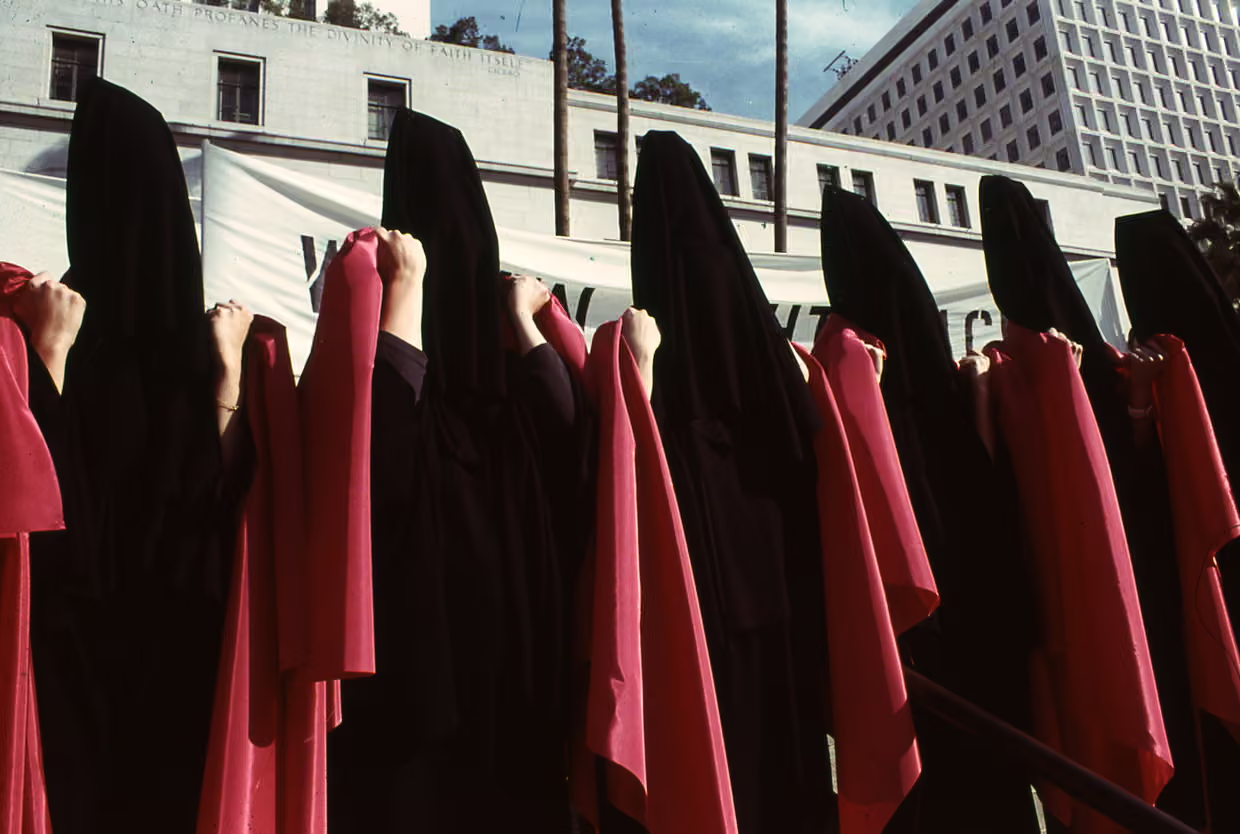
这种痛苦情绪在另一部女权主义表演艺术作品中得到了体现:1977年,苏珊娜·莱西与莱斯利·拉博维茨共同创作了《哀悼与愤怒》。当时,一名被媒体称为“山坡绞杀者”的连环杀手正在洛杉矶杀害女性。为对此作出回应,两位艺术家联合女权主义活动人士及部分受害者家属,组织了一场前往市政府的送葬车队。60多名女性跟在灵车之后,抵达后又有10名身着黑色丧服、身高达7英尺的女性从车中走出。
That pain was manifest in another feminist performance piece: Suzanne Lacy and Leslie Labowitz’s In Mourning and In Rage from 1977. At the time, a serial killer sensationalised by the media as “the hillside strangler” was murdering women in Los Angeles. In response, the two artists, along with feminist activists and some family members of the victims, staged a funeral motorcade to city hall. Over 60 women followed behind a hearse from which, on arrival, 10 others emerged, 7ft tall and clad in black mourning robes.
她们并非被动哀伤的受害者,而是一股充满愤怒与威严的力量。她们高声宣读宣言:“为纪念我们的姐妹,我们奋起反抗!”此前,莱西曾创作过《五月的三周》,她在作品中根据警方提供的统计数据每日更新洛杉矶的“强奸事件分布图”。这些行动无疑对当时警方与媒体处理性侵事件的方式产生了一定影响。
These were not passive, grieving victims but an imposing, rageful force, delivering statements and a chorus of: “In memory of our sisters, we fight back!”It followed Lacy’s work Three Weeks in May, which saw her daily updating a “rape map” of the city, based on statistics given to her by police. These interventions arguably had an impact on how the police and media in the city approached sexual assault at the time.
根据英国和威尔士强奸危机组织(Rape Crisis)的数据,四分之一的女性曾遭受过强奸或性侵犯,因此,这类艺术作品自然常常会让观者感到情绪沉重。然而,在平等与正义仍显得遥不可及、众多女性仍在背负着各自“床垫”般沉重经历的时刻,持续为这些经历发声显得至关重要。
Given that one in four women have been raped or sexually assaulted, according to Rape Crisis (England and Wales), such artworks will naturally often feel emotionally heavy for the viewer. Yet at a time when equality and justice can still feel so far away, when so many women are carrying around their own proverbial mattresses, it is crucial to continue to give voice to these experiences.
我知道,今年早些时候在泰特现代美术馆举办的特雷西·埃米(Tracey Emin)回顾展上,并非只有我一人因《第二次生命》(A Second Life)而泪流满面。当时我正在观看她1995年的短片《我为什么从未成为舞者》(Why I Never Became a Dancer),影片讲述了她青少年时期遭受性剥削的经历,以及在一场舞蹈比赛中所承受的羞辱。“Shane、Eddie、Tony、Doug、Richard……这部作品是献给你们。”她这样说道,随后伴随着《You Make Me Feel (Mighty Real)》的旋律,微笑着跳起舞来。
I know I am not the only woman who found herself in tears during A Second Life, Tracey Emin’s retrospective at Tate Modern earlier this year. This happened while I watched her 1995 short film Why I Never Became a Dancer, about her teenage experiences of sexual exploitation and the shaming she was subjected to during a dance competition. “Shane, Eddie, Tony, Doug, Richard … this one’s for you,” she says, before breaking into a smiling dance to You Make Me Feel (Mighty Real).
作为一件艺术品,它体现了反抗、力量与生存。而让我落泪的,是埃米在遭受虐待后仍坚持追求快乐的决心。令人痛心的是,这段经历至今依然显得如此切肤之痛。
As a work of art, it is defiance, strength and survival. What made me cry was Emin’s determination to be joyful despite the abuse she suffered. What’s a crying shame is that it still feels so painfully relevant.