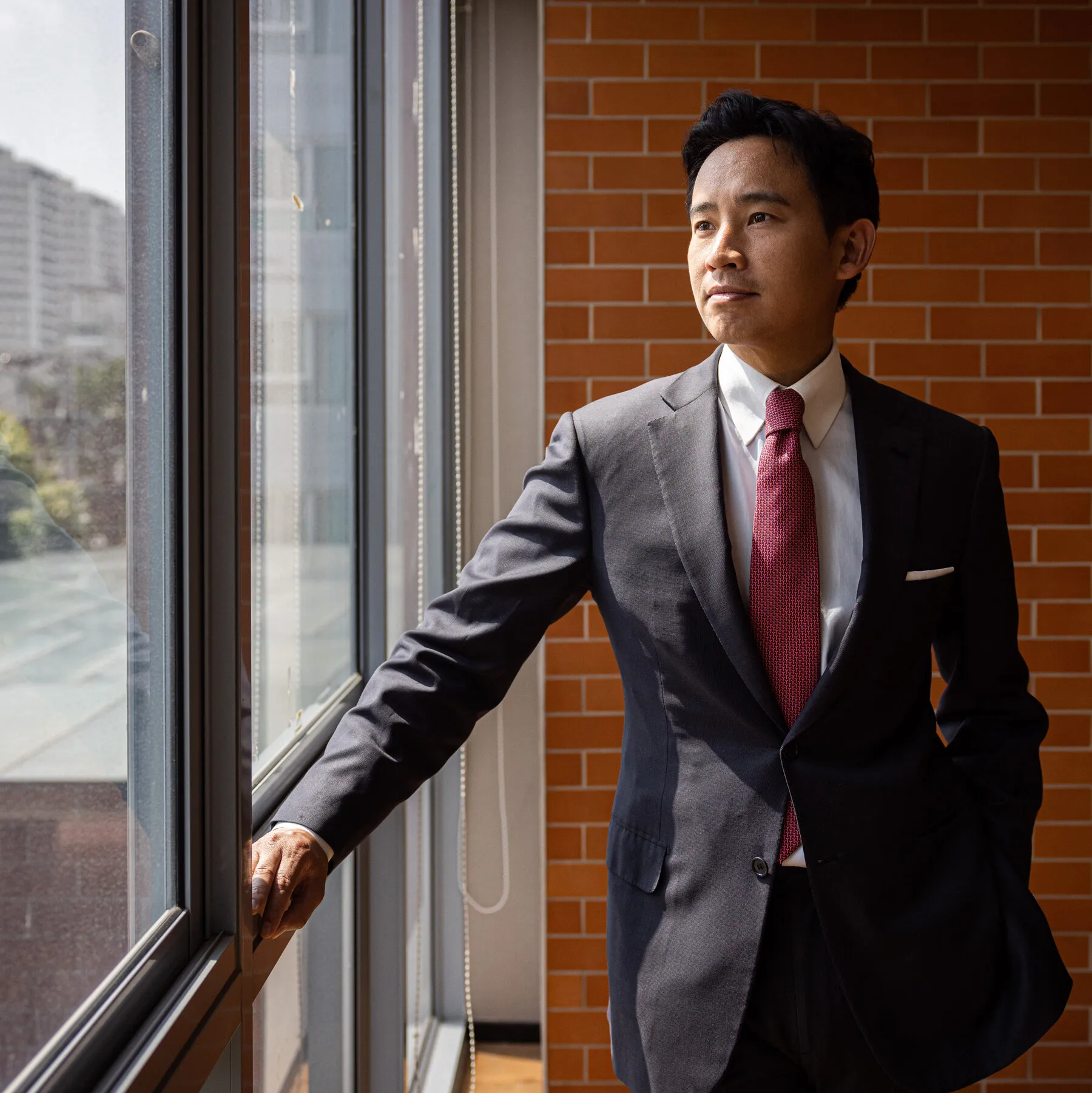
对前进党前领袖皮塔·林查伦拉特的采访。本文出自《纽约时报》合作举办的雅典民主论坛特别报道。上周,多位专家齐聚希腊首都,探讨全球性问题。
An interview with Pita Limjaroenrat, the former leader of the Move Forward party. This article is from a special report on the Athens Democracy Forum, held in association with The New York Times, where experts gathered in the Greek capital last week to discuss global issues.
如果泰国像英国一样是议会制民主国家,皮塔·林查伦拉特本可以在42岁时成为泰国总理。
Pita Limjaroenrat would have become Thailand’s prime minister at age 42 had his country been a parliamentary democracy such as Britain.
皮塔先生领导他的前进党在2023年5月的选举中意外获得第一名。此前,他致力于挑战现有体制。他的竞选纲领包括将同性婚姻合法化、设定13美元的最低工资标准以及大幅削减军队预算。在赢得超过1400万选民支持后,他宣称:“人民的新时代已经到来”,并组建了一个由八个政党组成的联盟,这使他得以执政。然而,在泰国的宪政体制下,前进党未能获得军方支持的参议院足够多的支持以夺取权力。到2024年8月,该党已被解散,皮塔先生也被禁止参与政治活动长达10年。
Mr. Pita led his Move Forward party to a surprise first-place finish in the May 2023 elections after campaigning to upend the status quo. His platform included legalizing same-sex marriage, setting a $13 minimum wage and slashing the army’s budget. Having won the backing of more than 14 million voters, he declared, “A new day for the people has arrived,” and formed an eight-party coalition that would allow him to govern. Yet under Thailand’s constitutional system, Move Forward failed to get enough support in the military-backed Senate to take power. By August 2024, the party had been disbanded, and Mr. Pita had been banned from politics for 10 years.
如今,皮塔先生回到了他熟悉的校园——哈佛大学肯尼迪政府学院,他于2011年在那里获得了公共管理硕士学位。这一次,他是一名教师。上周,他在雅典民主论坛上发表了演讲。该论坛是《纽约时报》合作举办的一项年度活动,汇集了政策制定者、商界领袖、学者和活动家。在论坛开始前的一次视频采访中,他探讨了泰国民主的未来,以及他如何培养自己的学生,让他们能够在各自的发展中国家竞选公职。此次对话经过编辑和删减。三年前,你几乎成为泰国总理。如今回望过去,你作何感受?
Today, Mr. Pita is back on a campus he knows well: Harvard University’s Kennedy School of Government, where he completed a Master in Public Administration in 2011. This time he is teaching. He was a speaker last week at the Athens Democracy Forum, an annual gathering of policymakers, business leaders, academics and activists held in association with The New York Times. In a video interview before the forum, he discussed the future of democracy in Thailand, and how he is grooming his students to run for office in their own developing nations. The conversation has been edited and condensed. You came very close to becoming Thailand’s prime minister three years ago. How do you feel, looking back on things today?
我非常担心,因为这种情况在未来可能会再次发生。泰国是一个竞争性威权体制,威权统治者允许你偶尔举行选举。但他们总能通过各种方式推翻人民的选择。
I’m very worried, because this could happen again in the future. Thailand is a competitive autocracy, where autocrats allow you to have elections once in a while. But they can always overturn the people’s choice in various ways.
直到二十年前,威权统治者还不太聪明。他们不得不在街头部署坦克,通过战争和暴力夺取权力。在过去二十年里,他们变得聪明得多,并掌握了暗中拘禁民众、禁止政治家活动、解散政党的手段。因此,他们不再需要在街头部署坦克。
Until two decades ago, autocrats were not very smart. They had to put tanks on the street, have warfare and violence on the street to seize power. In the last two decades, they have become much smarter, and mastered discreet ways of suspending people, banning politicians, dissolving political parties. So there’s no need for them to put tanks on the street.