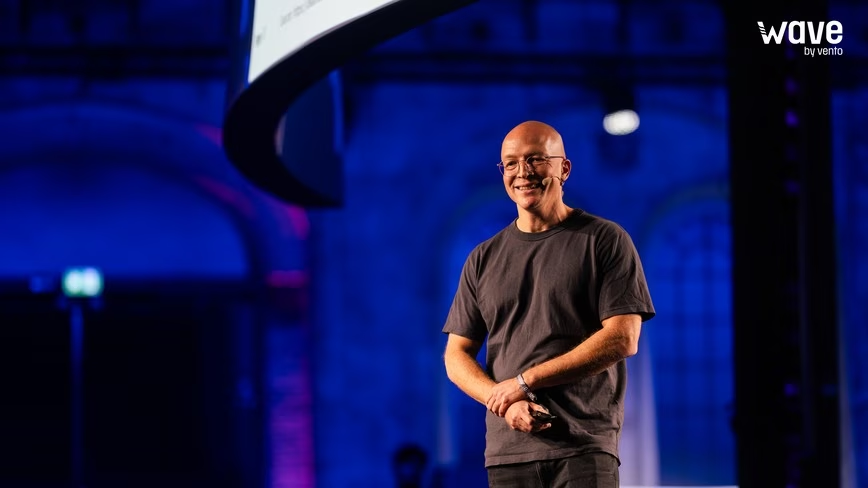
欧洲的风险投资支持公司在五年内的价值可能超过其工业基础,Dealroom创始人兼首席执行官Yoram Wijngaarde表示。他于周四在都灵的Wave by Vento活动上发表讲话。
Europe’s venture-backed companies could be worth more than its industrial base within five years, Dealroom founder and chief executive Yoram Wijngaarde said. He spoke at Wave by Vento in Turin on Thursday.
“我认为,风险投资支持的生态系统将在未来五年内,在我们正确布局的情况下,超越我们的工业基础,创造更大的总价值。我还认为,第一个万亿美元级的风险投资支持公司将会诞生。这家公司今天可能仍处于早期阶段,所以我们必须思考未来,并为此做好准备,创造实现这一目标的条件,”Wijngaarde说。
“I think that the VC-backed ecosystem is going to overtake our industrial base in terms of total value created within the next five years, if we play our cards right. And I think that also the first trillion-dollar VC-backed company is going to be created. And it’s a company that’s maybe still early stage today, so we have to think about that future and also prepare for it and have the conditions for that to really happen,” Wijngaarde said.
Wijngaarde在题为《欧洲科技生态系统现状》的会议上展示了Dealroom关于欧洲科技的数据。随后,他与风险投资公司Atomico的合伙人兼洞察主管Tom Wehmeier进行了对话。
Wijngaarde presented Dealroom’s data on European tech in a session titled “The state of the European Tech Ecosystem”. He then talked with Tom Wehmeier, partner and head of insights at the venture firm Atomico.
“欧洲已经构建了什么?”Wijngaarde说,欧洲的风险投资规模正以每年890亿美元的速度增长,并且还在上升。Mistral、Helsing和Isomorphic Labs等公司的大额融资正在推动这一趋势。Mistral在九月筹集了30亿欧元。
What Europe has built European venture investment is running at $89bn a year and rising, Wijngaarde said. Large rounds for companies such as Mistral, Helsing and Isomorphic Labs are driving it. Mistral raised €3bn in September.
他指出,欧洲目前拥有56家估值超过100亿美元的风险投资支持公司。这些公司的总价值达4.4万亿美元,几乎相当于欧洲股市价值的四分之一。今年风险投资支持公司的退出规模已超过往年所有年份的总和,其中包括米兰的Bending Spoons,该公司在七月的美国上市中筹得了16.8亿美元。
Europe now has 56 VC-backed companies worth more than $10bn, he said. Together, its VC-backed companies are worth $4.4tn, almost a quarter of the value of Europe’s stock market. Exits by VC-backed companies this year are larger than in previous years combined, he said. They include Milan’s Bending Spoons, which raised $1.68bn in its US listing in July.
Dealroom的数据显示,欧洲有54,771家创业公司融资至少10万美元,而美国为79,432家。随着融资阶段的提升,差距进一步扩大。欧洲有1,233家公司融资达到1亿美元以上,而美国为5,115家。四家欧洲公司估值超过1000亿美元——Arm、Booking.com和Revolut。美国有七家公司估值超过1万亿美元,而欧洲尚无此类公司。
Dealroom’s figures show 54,771 European startups that have raised at least $100,000, against 79,432 in the US. The gap widens at each stage. Europe has 1,233 companies that have raised $100m or more, against 5,115 in the US. Four European companies are worth more than $100bnArm, Booking.com and Revolut. The US has seven worth more than $1tn, and Europe has none.
Wijngaarde表示,在1亿美元或以上的融资轮次中,欧洲与美国存在四倍的差距。但他指出,在筹集到相同金额资本的情况下,欧洲初创企业成为“独角兽”的可能性与美国企业相当。
Rounds of $100m or more show a fourfold gap with the US, Wijngaarde said. But for the same amount of capital raised, European startups are as likely to become unicorns as American ones, he said.
Wijngaarde表示,资金流向方面,Sequoia、General Catalyst和Accel等美国公司今年对欧洲的投资几乎翻了一番。因此,海外投资者持有欧洲最成功初创公司后期阶段的大部分股份。这些公司的收益最终也流出了欧洲。
Where the money goes US firms such as Sequoia, General Catalyst and Accel have almost doubled their investment in Europe year on year, Wijngaarde said. As a result, overseas investors own most of the later-stage shares in Europe’s most successful startups. The gains from those companies then leave Europe, he said.
他表示,欧洲人储蓄很多,但大部分资金都进入了银行账户和房地产市场,而非股权投资。他称,如果仅将欧洲养老金资本的1%投入风险投资,就可为成长型初创企业提供的资金增加50%。
Europeans save a lot, he said, but most of it goes into bank accounts and housing, not into equity. Putting just 1% of Europe’s pension capital into venture capital would raise the money available to scale-ups by 50%, he said.
Wehmeier表示,欧洲养老基金和保险公司持有约1.5万亿欧元的资产。过去十年间,它们仅向风险投资投入了155亿欧元。而仅今年,约有500亿美元欧洲资本流入了美国超大规模科技公司发行的债券。
European pension funds and insurers hold about €15tn, Wehmeier said. Over the past decade, they put €15.5bn into venture capital. This year alone, about $50bn of European capital went into bonds issued by US hyperscalers, he said.
同样的差距也体现在人工智能领域。Nathan Benaich和Air Street Capital于周四发布的《2026年人工智能现状报告》指出,四家美国超大规模科技公司预计今年将在资本支出上投入约7330亿美元。欧盟对人工智能“超级工厂”的初始投入为10亿欧元,其计划目标是争取高达100亿欧元的公共资金以及至少200亿欧元的私人投资。Benaich写道,在欧洲建设数据中心,并不意味着欧洲就能掌控其中的模型。
The same gap shows up in AI. The State of AI Report 2026, published on Thursday by Nathan Benaich and Air Street Capital, says four US hyperscalers expect about $733bn in capital spending this year. The EU’s initial contribution to AI gigafactories is €1bn, within a plan seeking up to €10bn in public money and at least €20bn from private investors. A data centre in Europe does not give Europe control of the models inside it, Benaich writes.
Wijngaarde表示,这不仅仅是资本问题。仅靠增加资金本身并不足够。在西班牙、意大利和法国等公司重组成本高昂的国家,人均“独角兽”数量较少。而在丹麦和美国,这一成本则很低。他称,约42%的欧洲“独角兽”创始人是在美国建立其公司的。
Not only a capital problem More money will not be enough on its own, Wijngaarde said. Countries where restructuring a company is costly, such as Spain, Italy and France, have fewer unicorns per person. In Denmark and the US, the cost is low. About 42% of European unicorn founders built their companies in the US, he said.
他呼吁建立统一的欧洲资本市场,这一理念得到了Enrico Letta和Mario Draghi的支持。他还支持了“欧盟公司”(EU Inc)这一拟议中的公司形式,该形式可在整个欧盟范围内适用。
He called for a single European capital market, an idea Enrico Letta and Mario Draghi have backed. He also backed EU Inc, a proposed company form that would work across the EU.
欧洲各国政府每年在公共采购上花费约2万亿欧元,Wehmeier 说,但只有极少部分流向初创企业。他说,国防是例外,资金已经流向了如 Helsing 和 Quantum Systems 等公司。Quantum Systems 在七月筹集了12亿美元。Wehmeier 说,太空、能源和计算领域也需要同样的投入。
European governments spend about €2tn a year on public procurement, Wehmeier said, and only a tiny share reaches startups. Defence is the exception, he said, where money has flowed to companies such as Helsing and Quantum Systems. Quantum Systems raised $1.2bn in July. The same is needed in space, energy and compute, Wehmeier said.