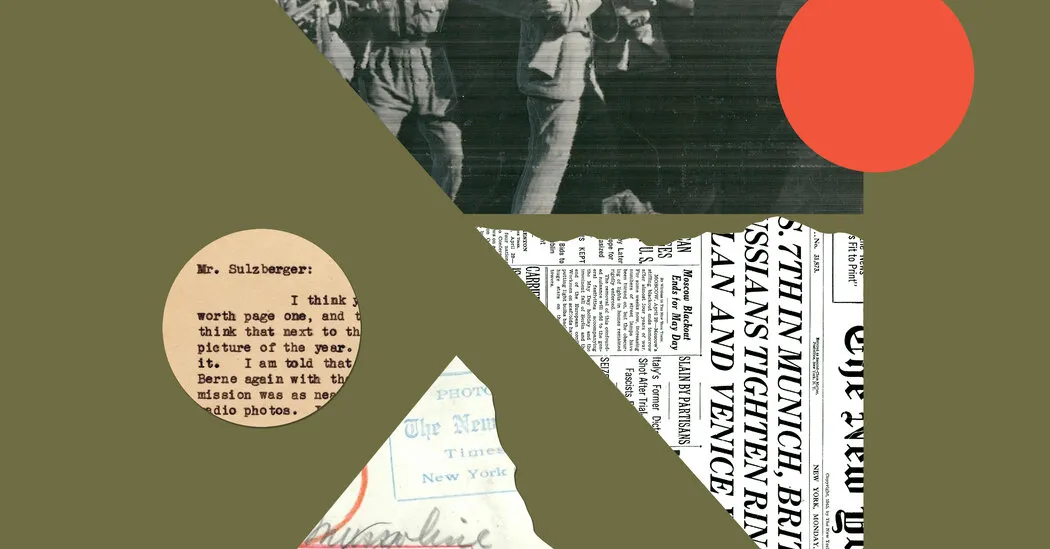
。
A Photo of Mussolini’s Corpse Led Page 1. How It Got There Is a Tale.
它经历了一次穿越阿尔卑斯山暴风雪的险途,向世界展示这位独裁者已死。这个故事是《纽约时报》175年目击新闻系列报道的一部分。
It took a perilous trip through an Alpine blizzard to show the world the dictator was dead.
亲眼目睹这一场景令人难以置信:在二战即将结束的日子里,被废黜的意大利法西斯领袖贝尼托·墨索里尼及其情人克拉拉·佩塔奇伤痕累累的尸体,像垃圾一样被丢弃在米兰的一个公共广场上。《纽约时报》记者米尔顿·布拉克尔于1945年4月29日——即欧洲胜利日(二战欧洲战场结束)前九天——亲临现场,记录下这一时刻。
This story is part of a series marking 175 years of eyewitness journalism from The New York Times. It was an incredible thing to see firsthand: the battered bodies of the deposed Italian fascist leader Benito Mussolini and his lover, Clara Petacci, dumped like so much rubbish in a public square in Milan in the waning days of World War II. The New York Times correspondent Milton Bracker was there on that day, April 29, 1945 — nine days before VE day, the end of the war in Europe — to take the measure of the moment.
“贝尼托·墨索里尼昨晚回到了他法西斯主义诞生的城市,”布拉克尔在次日头版文章中写道。“他躺在一辆封闭的搬家卡车地板上,尸体被扔在他的情妇和与他一同被枪杀的12名男子的尸体之上。”
“Benito Mussolini came back last night to the city where his fascism was born,” Bracker wrote in a front-page article in the next day’s paper. “He came back on the floor of a closed moving van, his dead body flung on the bodies of his mistress and 12 men shot with him.”
布拉克尔的报道以第一人称撰写,带有一种不寻常的道德义愤暗流,反映了这一事件的严重性,以及历史突然转向新方向的感觉。文章讲述了墨索里尼在支持土崩瓦解之际,驱车北上试图逃往瑞士。布拉克尔写道,在他到达之前,他被抓获,“如同逃亡的玛丽·安托瓦内特”。
Bracker’s account, written in the first person with an unusual undercurrent of moral indignation, reflected the gravity of the event, the sense that history had swerved suddenly in a new direction. It told how, his support crumbling away, Mussolini had driven north in an attempt to escape to Switzerland. Before he got there, Bracker wrote, he was caught, “like the fleeing Marie Antoinette.”
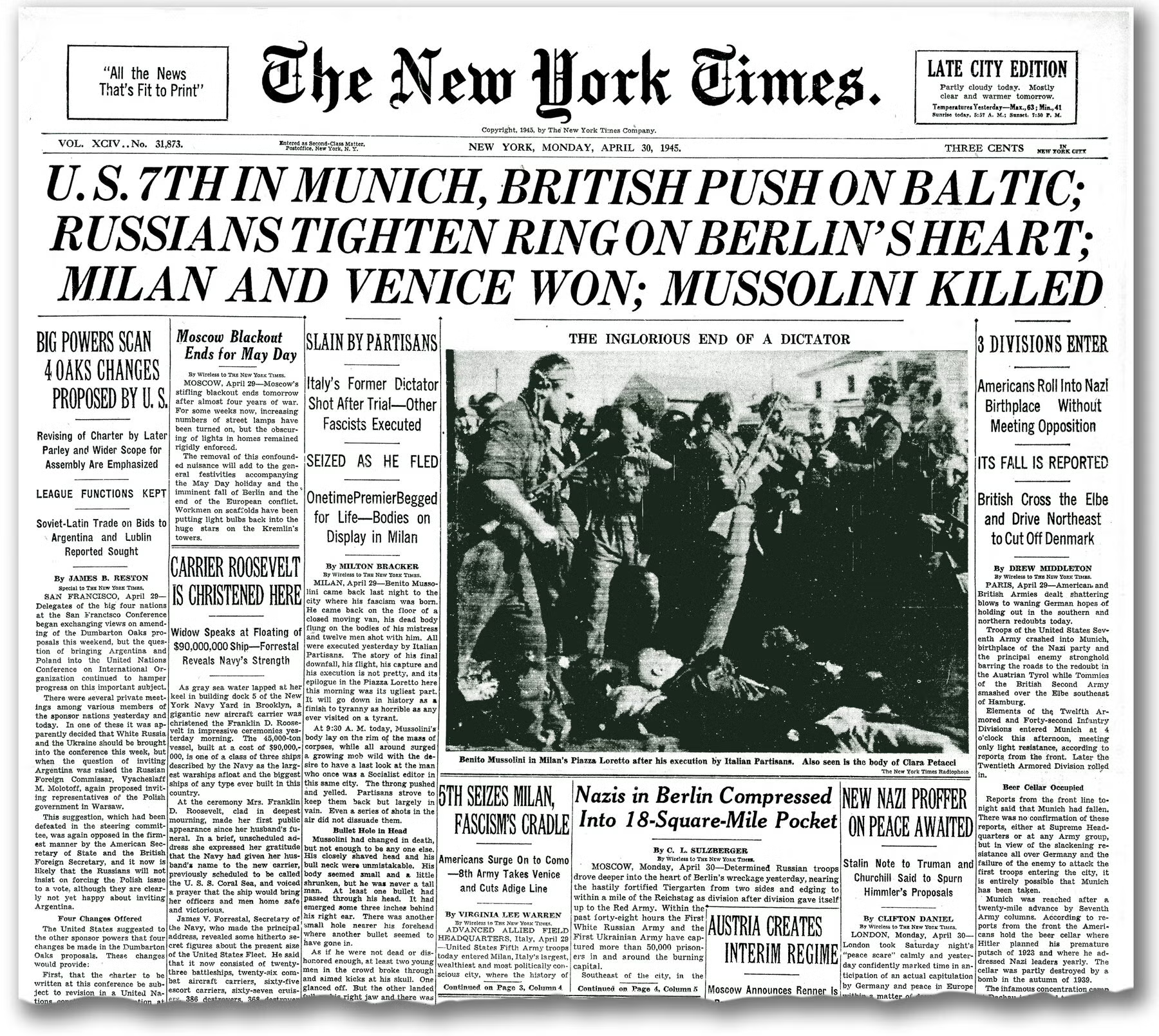
故事充满了细节。墨索里尼在意大利北部朱利诺·迪·梅泽格拉被迅速审判,并由行刑队与一群追随者一同处决。他们的尸体被堆进一辆货车,运到米兰的洛雷托广场,该地具有象征意义,“因为最近有15名爱国者在此被处决”。随后,愤怒的游击队员对尸体进行了野蛮攻击。布拉克尔说,他和另外几名美国记者被急于展示所发生之事的旁观者“推入死亡之圈”。
The story was packed with details. Mussolini’s speedy trial and summary execution by a firing squad along with a group of his followers in Giulino di Mezzegra, in northern Italy. How their bodies were heaped in a van and deposited in the Piazzale Loreto in Milan, of symbolic importance “because recently 15 patriots were executed there.”The bodies were then savagely attacked by angry partisans. Bracker said he and other American reporters had been “thrust into the circle of death” by onlookers eager to show them what had happened.